The Enchanting World of Fire Emblem: Three Houses

A captivating glimpse into the world of Fire Emblem: Three Houses.
Fire Emblem: Three Houses is a tactical role-playing game (tRPG) released by Intelligent Systems for the Nintendo Switch in 2019. It follows the story of the cadet Claude, who enters the prestigious Cadet Academy in the fictitious kingdom of Fódlan and finds himself caught between three factions vying for control over the nation. The game builds upon the rich tradition of the Fire Emblem series while introducing exciting new elements that make it stand out among its peers.
Setting and Characters
Fódlan is a vast land filled with diverse landscapes and fascinating locations. From bustling cities to eerie forests and sprawling battlefields, the game's environments are meticulously crafted to enhance the storytelling experience. Each region holds secrets and events unique to itself, encouraging players to explore thoroughly. The narrative revolves around Claude, a young cadet of neutral status with a mysterious background. As he navigates the complex political landscape, he encounters notable characters such as the charismatic House Leader of V Formation, Chancellor Ashen, and the cunning leader of Lysian, Duke Claude IV.
Gameplay Mechanics
Fire Emblem: Three Houses employs a turn-based battle system that requires strategic thinking and resource management. Unlike the previous titles, battles occur both in strategic locations and during events outside of these areas. This innovative approach adds depth to combat scenarios, allowing players to integrate story events and environmental factors into their tactics. For example, a battle may take place within a school building where different floors have unique terrain, and certain actions can only be performed on specific floors. Additionally, the game features a unique mechanic called "Diligence," which reflects a character's effort towards their goals. Higher Diligence can unlock special abilities and improve relationships with other characters, ultimately affecting the narrative outcomes.
The Three Houses
The central conflict is fueled by the existence of three prestigious houses—V Formation, Blue Lions, and House of Favre—and their respective leaders. Each house has its own unique characteristics and strengths, making them appealing options for characters to join. Choosing a house significantly impacts the storyline, with each path offering distinct quests, alliances, and potential endings. The gameplay mechanics vary slightly depending on which house you decide to support, providing a fresh experience even if you choose the same protagonist.
The Impact of Relationships
A core aspect of Fire Emblem: Three Houses involves forming strong bonds with characters through interactions and combat support. These relationships influence character development and can unlock new skills or abilities as they level up. The game emphasizes diplomacy over brute force, with characters often seeking to resolve conflicts through negotiation rather than immediate confrontation. Strategic manipulation of relationships can lead to powerful effects, including shifting allegiances and altering the course of events.
Ethical Dilemmas
The narrative in Fire Emblem: Three Houses presents players with a series of ethical choices that define their faction’s alignment and influence the outcome of the story. Players must weigh their commitments to moral principles against political pragmatism and personal ambitions. These dilemmas force players to consider the ramifications of their actions, pushing them to contemplate how their decisions impact others within the game world.
Music and Sound Design
The music in Fire Emblem: Three Houses plays a crucial role in enhancing the atmosphere and emotional impact of each scene. Composers Hitoshi Sakimoto and Hiroshi Kawaguchi have contributed compositions that capture the essence of Fódlan's varied environments and the intense nature of its conflicts. From epic orchestral arrangements to poignant piano melodies, the soundtrack complements the game's dramatic narrative effectively. Additionally, the sound design meticulously captures the sounds of battle and everyday life, immersing players in the game's intricate world.
Conclusion of Part One
FirEmblem: Three Houses sets itself apart through its rich storytelling, deep gameplay mechanics, and dynamic character relationships. Its exploration of political intrigue and moral quandaries creates a compelling narrative that challenges players to think critically about their decisions. The blend of established Fire Emblem traditions with innovative new elements ensures that the game resonates with both long-time fans and newcomers alike. In the following sections, we will delve deeper into the tactical gameplay, character development, and the expansive story of Three Houses further.
Stay tuned for the next part where we will dive into the detailed gameplay mechanics, character development, and the intricacies of the narrative structure.
Tactical Gameplay and Strategy
The tactical gameplay of Fire Emblem: Three Houses revolves around managing a diverse roster of units with unique classes, skills, and abilities. Battles can be divided into strategic and tactical aspects, requiring players to make careful decisions at every turn. In the strategic phase, movement and setup are determined, followed by individual turn-based combat in the tactical phase.
Units have different movements rates and terrains that require careful planning. Some areas are impassable or provide natural defenses, which players must navigate to create advantageous positions. Strategic decisions can include setting up traps, using walls to block enemy paths, and controlling choke points to limit an opponent's movements.
Tactical battles introduce various terrains like forests, buildings, and rivers, each with its own tactical benefits. Forests can provide cover and surprise attacks, while buildings offer higher ground and the opportunity to attack multiple targets. Each battle type—from castle sieges, castle defenses, and city battles—requires tailored strategies to take advantage of the unique conditions.
To further enhance strategic depth, the game introduces a resource management system. Units have different attributes such as strength, agility, and magic, which determine their effectiveness in battle. Managing resources like items, potions, and buffs is crucial to maintaining your units' health and morale. Additionally, players must carefully balance the deployment of units based on their strengths and weaknesses to exploit enemy vulnerabilities.
Character Development and Skill Trees
Characters in Fire Emblem: Three Houses grow and develop through their involvement in the game. As they gain experience in battles and complete quests, their stats improve, unlocking new skills and abilities. Character skill trees allow players to customize their units' capabilities, depending on their preferred playstyle and strategy.
The skill trees are extensive and flexible, offering a myriad of options. For example, a character specializing in剑术可以解锁一系列与之相关的技能树,如攻击、防御和特殊技能。这使得每个角色都能根据玩家的需求定制其战斗能力。同样地,法师可以通过学习不同的魔法来构建自己的施法路径,从治疗到致命伤害,每个决策都可能改变战斗的走向。
For example, a character specializing in saber techniques can unlock a tree focused on attack styles, defensive maneuvers, and special skills. Conversely, a mage might focus on different magical pathways, such as healing spells, offensive incantations, or elemental manipulations. These trees encourage players to experiment with various combinations to find the most effective build for their particular strategy.
Story Expansion and Side Quests
While the main storyline centers on the conflict between the three Houses, the game offers a wealth of side quests and optional content that expand the narrative and enrich the player's experience. These side quests can range from minor tasks for NPCs to more substantial missions that involve diplomacy, espionage, and military operations.
Completing side quests often provides valuable rewards, such as new units, weapons, and resources. They also contribute to the overall story, revealing hidden details and adding layers to the game's mythology. Players can choose to focus primarily on the main quest or explore the world more freely, balancing their efforts according to their preferences.
Narrative Structure and Choices
The narrative of Fire Emblem: Three Houses is intricately designed to engage players with its numerous branching paths and complex moral dilemmas. Major story events and minor quests often lead to significant forks in the plot, allowing players to shape the direction of the story.
At key moments, players must make critical decisions that have lasting consequences. These choices range from diplomatic negotiations with other factions to direct confrontations with opposing leaders. The game's writers have crafted a myriad of scenarios, each presenting unique challenges and rewards based on the player's actions.
For example, a decision made early in the game can affect how a character's relationship develops or how they are perceived by other factions. These decisions ripple through the narrative, influencing the outcome of key battles and the ultimate fate of Fódlan itself. This dynamic narrative structure keeps players engaged and invested in the game's story.
Visual Art and Animation
The visual and artistic direction of Fire Emblem: Three Houses is another notable feature. The game features stunning character designs and vivid environments that bring Fódlan to life. Character models and animations are carefully crafted to capture the emotions and dynamics of the story. Each unit has distinctive expressions and movements that add realism and depth to the gameplay.
The environments too are meticulously detailed, with intricate backgrounds and realistic lighting that enhance the immersive experience. From the grandeur of castle interiors to the ruggedness of wilderness regions, the visual elements contribute significantly to the overall atmosphere.
The animation style blends classical Fire Emblem aesthetics with modern techniques, providing a cohesive look that fits seamlessly into the game's narrative. Key animations for battles and storytelling moments are especially noteworthy, adding a sense of spectacle and drama to the proceedings.
Final Thoughts
Fire Emblem: Three Houses stands out not only for its engaging storyline but also for its thought-provoking gameplay mechanics and immersive narrative. The combination of strategic depth, character development, and dynamic storytelling creates a game that is both challenging and rewarding. Whether players are veterans of the series or newcomers, there is much to discover and enjoy in this rich and complex experience.
In the final part of our series, we’ll explore the game's multi-layered narrative and the impact of player choices on the vast world of Fódlan. Stay tuned for more insights into this captivating game.
Multi-Layered Narrative and Player Choices
The narrative of Fire Emblem: Three Houses is one of its most defining features, offering players a deeply engaging experience through its multi-layered storytelling and complex moral dilemmas. The game presents various story threads and branching paths that allow players to shape their journey, leading to several possible endings. Each path represents a different interpretation of the conflict between the three houses, and the choices made along the way have real and substantial consequences.
The player's decisions impact not only the immediate outcomes of battles and quests but also the relationships and allegiances formed between characters. For instance, supporting one character over another can have ripple effects throughout the game, influencing the loyalty of other units and altering the political landscape. These relationships play a crucial role in the player's overall success and the final outcome of the story.
The game's moral compass is a central theme, guiding players through a series of ethical dilemmas that test their integrity and judgment. Each choice can alter the narrative and change the course of history. Whether players choose to act with honor or pragmatism, the narrative branches to reflect these decisions, offering multiple paths to victory or defeat.
Possible Endings and Their Impacts
FirEmblem: Three Houses offers four main endings, each with distinct outcomes and implications for the future of Fódlan. These endings range from triumphs to tragedies, and the differences between them are significant and meaningful.
One possible ending involves aligning with the House Leader of V Formation and securing their victory at the expense of the other two factions. This path sees the V Formation become the dominant power in Fódlan, but it comes at a cost of unity and peace. The world remains divided, and the scars of war linger.
An alternative ending involves supporting the Blue Lions and achieving a more collaborative victory. This path seeks to unite the factions under a common banner, fostering peace and cooperation. However, it demands sacrifices and difficult choices, particularly regarding the fates of some characters.
An additional ending focuses on House of Favre, where the path to victory is achieved through cunning and subtlety. This route values diplomacy over overt conflict, leading to a world where the factions exist in delicate balance. Yet, the costs here lie in the compromise of personal ideals and political maneuvering.
A fourth ending, perhaps the bleakest, involves rejecting all houses and pursuing a path of independent action. This route sees the player working outside the established structures to bring about change. It can result in profound personal growth and a sense of freedom, but it also isolates the player from traditional support networks.
Community Impact and Legacy
The impact of player choices extends beyond the game's conclusion; it shapes the legacy of Fódlan for generations to come. The decisions made influence the way the world is remembered and the stories that are told about the events of the conflict. Some endings lead to lasting cultural shifts, while others cause long-standing grievances to persist.
Players are encouraged to explore these different paths, often revisiting parts of the game to see how different choices affect the narrative. This replayability is a hallmark of Fire Emblem: Three Houses and allows players to delve deeper into the stories and histories of Fódlan. Each playthrough offers new insights and revelations, enriching the overall gaming experience.
Beyond the Game: Impact on the Series
Fire Emblem: Three Houses is not merely another installment in the series; it represents a significant evolution in its scope and ambition. The game's rich narrative and deep gameplay mechanics set new standards for tactical RPGs. It has also inspired discussions about the role of player choices in video game storytelling, pushing the boundaries of what is possible within the genre.
The development team behind Three Houses clearly aimed to create a game that would resonate with fans and newcomers alike. Through meticulous world-building, complex characters, and compelling storylines, they have delivered an experience that transcends the typical boundaries of tactical RPGs. The game's success has paved the way for further innovation in the series, promising an exciting future.
As FirEmblem: Three Houses concludes, it leaves players with a sense of fulfillment and a desire to revisit the game’s world and characters. The game's legacy is defined by its ability to engage players on multiple levels, from tactical strategy to deep moral choices, making it a standout entry in the Fire Emblem series.
In conclusion, FirEmblem: Three Houses is a game that captivates players with its rich narrative, complex mechanics, and deep emotional resonance. It provides a unique blend of tactical depth and human drama, ensuring that every playthrough offers something new and engaging. The game's lasting appeal lies in its ability to provoke thought and evoke emotion, leaving a lasting imprint on those who experience Fódlan.


Welcome to the Intrigue of Among Us: A Comprehensive Guide
The phenomenon that is Among Us has captured the imaginations of players around the world since its release. This game, initially known as Codename: Among Us, was developed by InnerSloth and released on August 14, 2018. Its unique blend of social deduction and strategic thinking has made it a go-to choice for multiplayer entertainment.
The Basics of Among Us
At its core, Among Us is a cooperative and competitive party game where players are divided into two groups: crewmates and imposters. The crewmates aim to repair various systems on a space station while identifying the imposters who are trying to sabotage them. The imposters, conversely, wish to remain undiscovered long enough to kill three crewmates, after which they win. The game features a mix of hidden roles, secret objectives, and misdirection, creating a suspenseful and unpredictable experience.
Gameplay and Mechanics
Joining a Game
Players can access Among Us through various platforms, including Steam, Nintendo Switch, mobile devices, and web browsers. Upon joining a game, all players are randomly assigned roles. The roles can be customized, but typically include:
- Crewmate: The majority of players are given this role, tasked with repairing systems and completing their designated duties to ensure the ship's smooth operation.
- Imposter: Players assuming this role have the goal of remaining anonymous while sabotaging the ship and murdering crewmates before being exposed.
- Role Assignments: Certain roles like the Engineer, Scientist, Security Officer, etc., can also be assigned to give players additional abilities or goals.
- Hidden Roles: Some random players may be given secret identities, often imposter-like, which they must uncover and exploit.
- Misinformation Roles: Some players might have skills that give them an ability to mislead others, such as the Informant who can secretly reveal crewmate actions.
Real-Time Communication
The communication style in Among Us relies mainly on voice chat and visual indicators. Crewmates must work together using voice chat to complete tasks assigned by the Captain or designated roles. They use the in-game interface to report system statuses and make decisions through voting mechanisms. For instance, the crew must collectively vote to eject someone they believe is an imposter, based on evidence and intuition. The imposter communicates stealthily to avoid suspicion, making misdirection one of the key strategies.
Game Modes and Variations
Beyond the basic gameplay, Among Us offers several modes and variations, which provide endless replayability:
- Classic Mode: The fundamental and most popular mode, centered around the balance between cooperative play and the hunt for imposters.
- Quick Play Games: These games are shorter and allow for quick matches without the need for in-depth strategy sessions.
- Custom Games: Players can create and join custom games with specific rules and settings, including custom role pools and objectives, allowing for unique gaming experiences.
- Official Role Packs: InnerSloth periodically releases updates with new roles and themes, keeping the gameplay fresh and exciting.
- In-Game Events: Special events and challenges are regularly held, offering both fun and competitive play.
Evolving Tensions and Strategies
Tension and Suspicion
The psychological aspect of Among Us is deeply rooted in maintaining a healthy level of suspicion among crewmates. Players learn early on that trust is a double-edged sword – too much trust can lead to disaster, while too little can result in alienation and unnecessary conflicts. The game masterfully balances the tension by ensuring that not everyone is equally adept at identifying imposters. This creates a dynamic where skilled players are essential to the survival of the team.
Teamwork and Coordination
Effective teamwork and coordination are crucial for crewmates to succeed. Tasks like repairs and completing various objectives require close collaboration. Players must communicate their progress clearly and provide actionable information to other team members. Miscommunication or lack of coordination can quickly unravel even the most solid teams. Consequently, developing strong teamwork skills is a cornerstone of competitive play.
Strategic Play
Advanced players employ a variety of strategic techniques to stay ahead of the game. These strategies include:
- Task Allocation: Efficiently distributing tasks and responsibilities helps maximize output and prevent burnout among team members.
- Suspicion Management: Crewmates use various methods to gauge each other’s reliability, such as noting patterns of behavior, observing chat logs, or using the in-game reports. Successful players can manipulate this process to build or break trust strategically.
- Role Exploitation: Players take advantage of unique role abilities to gain an edge, such as the Security Officer's ability to lock doors or the Repairman’s power to fix systems.
- Voting Dynamics: Understanding voting patterns and manipulating them is critical for both crews and imps. Knowing when to vote and what votes to ignore can influence the game’s outcome significantly.
- Psychological Manipulation: Imposters often rely on psychological warfare to mislead their targets, playing with their minds to ensure they remain undetected until it's too late.
Community and Culture
Online Presence
The Among Us community is vibrant and active, with numerous online forums, channels, and dedicated websites contributing to the game's growth and evolution. Players can share tips, strategies, and personal stories, fostering a sense of camaraderie and shared experience. Many popular YouTube creators have hosted Among Us streams, bringing the game mainstream attention and encouraging new players to join the fun.
Competitive Scene
The competitive scene for Among Us has grown immensely over the years. Competitive players participate in tournaments and events, showcasing their proficiency in a structured environment. These competitions range from LAN parties to online tournaments, offering cash prizes and recognition. Organizations like Among Us Champions hold regular events that attract top players from around the world, driving innovation and skill refinement in the game.
Modding Community
The modding community is another significant contributor to Among Us's longevity and popularity. Modders create custom roles, themes, and mods that expand the game’s potential beyond its original scope. These modifications often introduce new gameplay mechanics and objectives, such as mini-games, new characters, or altered environments, providing a richer and more diverse set of experiences.
In summary, Among Us has evolved far beyond its initial concept, becoming a multi-layered platform that offers deep strategic gameplay balanced against the thrill of human interaction. Whether you're joining a casual game session with friends or competing in high-stakes tournaments, the game continues to captivate audiences with its engaging mix of cooperation and deception. Stay tuned for the next part of our guide where we'll delve deeper into advanced tactics and tips for surviving as either a crewmate or an imposter.
Advanced Tactics and Tips
Surviving as a Crewmate
If you find yourself on the Crewmate side, there are several strategies you can adopt to increase your chances of winning. Here are some advanced tactics that can help you navigate the game effectively:
Effective Communication
Clear and concise communication is vital for Crewmates to perform tasks and coordinate their efforts. Utilize in-game features like the Report Desk and the Chat Log effectively. For instance:
- Report Desks: Use the Report Desk to assign tasks to crewmates and monitor their progress. This tool helps keep track of ongoing repairs and ensures that everyone remains informed.
- Chat Logs: Regularly check the Chat Log to stay updated on recent conversations and understand any patterns or hints about imposters.
- Voting: Participate actively in voting sessions. Voting is crucial; if you suspect someone is an imposter, it's important to act decisively and vote out suspicious players. However, use your judgment wisely, as false accusations can lead to mistrust within the team.
Strategic Use of Roles
Certain roles can provide significant advantages during the game. Effective use of these roles can significantly impact the Crewmate's chances of victory:
- Engineer: The Engineer can lock doors, which can prevent imps from sneaking around undetected. Use this ability judiciously to protect high-risk areas or when the imposter is actively moving.
- Resupply Officer: The Resupply Officer can give out resources that can be useful in various ways, such as tools or emergency kits. Ensure that the crew has the necessary supplies to undertake critical tasks effectively.
- Scientist: The Scientist can test items, revealing whether they are functional or defective. This knowledge can be invaluable in troubleshooting issues with systems.
- Medic: The Medic can heal injured crewmates, providing a life-line in case of sabotage or accidents. Make sure the Medic stays in good health to keep the crew fighting fit.
Mindgames and Deception
While Crewmates should generally focus on completing tasks and maintaining a clear conscience, subtle mind games can sometimes be necessary for survival:
- Feigning Knowledge: Occasionally feigning knowledge about certain systems or areas can distract imps and maintain team morale.
- Tactics and Lies: Use tactics to spread misinformation without being obvious. For example, make false reports or suggest tasks that might confuse the imposter.
- Building Trust: Focus on building trust with the majority of the crew through consistent hard work and transparent behavior.
Surviving as an Imposter
Playing as an Imposter requires a different set of skills and strategies compared to Crewmates. Here are some advanced tactics to maximize your chances of success:
Disguise and Misdirection
Being an Imposter involves a lot of disguise and misdirection to hide your true intentions:
- Blend In: Use your ability to blend into the group by participating in tasks honestly. This makes it harder for Crewmates to identify you as the imposter.
- Manipulate Reports: Occasionally sabotage systems or tasks, but don’t do it too frequently. Random reports can throw off Crewmates and make it difficult for them to pinpoint you.
- Stealth: Stay out of the way during key moments. When crewmates are reporting on their efforts, be discreet and try to avoid drawing attention.
Voting Manipulation
Manipulating voting dynamics is a critical skill for Impostors:
- Voice Chat Strategy: Use voice chat strategically to sow discord among Crewmates. Hint at the presence of imps without outright accusing anyone to create confusion.
- Decoys: Create decoys by subtly influencing crewmates to vote against someone less suspicious. This can buy you time and avoid immediate detection.
- Evidence Manipulation: If you manage to sabotage a system successfully, use the opportunity to gather evidence that can frame Crewmates. This might lead them to question someone else rather than you.
Psychological Warfare
Effective Impostors rely heavily on psychological warfare to maintain their cover:
- Fake Concern: Show concern for the Crewmate’s well-being. This can create sympathy and make your misdeeds seem accidental.
- Diversion: Use diversionary tactics to distract from your true goals. For example, suggest that something minor is more critical than the real issues at hand.
- Flattery and Guilt: Use flattery to garner sympathy or guilt from Crewmates. This can make it harder for honest crewmates to call you out.
Tips for All Players
No matter which side you choose, here are some general tips that can enhance your overall gameplay experience:
- Patience: Success in Among Us often comes down to waiting for the right moment to act. Patience allows you to gather more information and strategize more effectively.
- Adaptability: Be prepared to adapt your strategies based on the game’s unfolding events. Flexibility is key in reacting to new information or sudden changes in the game state.
- Awareness: Always be aware of who is speaking in voice chat and what they are saying. This can provide valuable insights into the current state of the game.
- Trust but Verify: Always maintain a healthy dose of skepticism when interacting with teammates. Even the most seemingly trustworthy crewmate could have ulterior motives.
- Learn from Mistakes: Reflect on your actions and the outcomes of previous games. Understanding where you went wrong can help you improve and become a better player.
Conclusion
Among Us is a game that rewards both strategic thinking and social deduction. It is not only entertaining but also provides endless opportunities for learning and improvement. Whether you are a seasoned veteran or new to the game, there is always something new to discover and master. As the game continues to evolve with new content and updates, staying adaptable and embracing the challenge will keep the experience fresh and exciting.
Join us in the next part where we will explore the latest updates, new features, and future outlook for Among Us, ensuring you stay ahead of the curve in this ever-evolving digital playground!
Latest Updates and Future Outlook
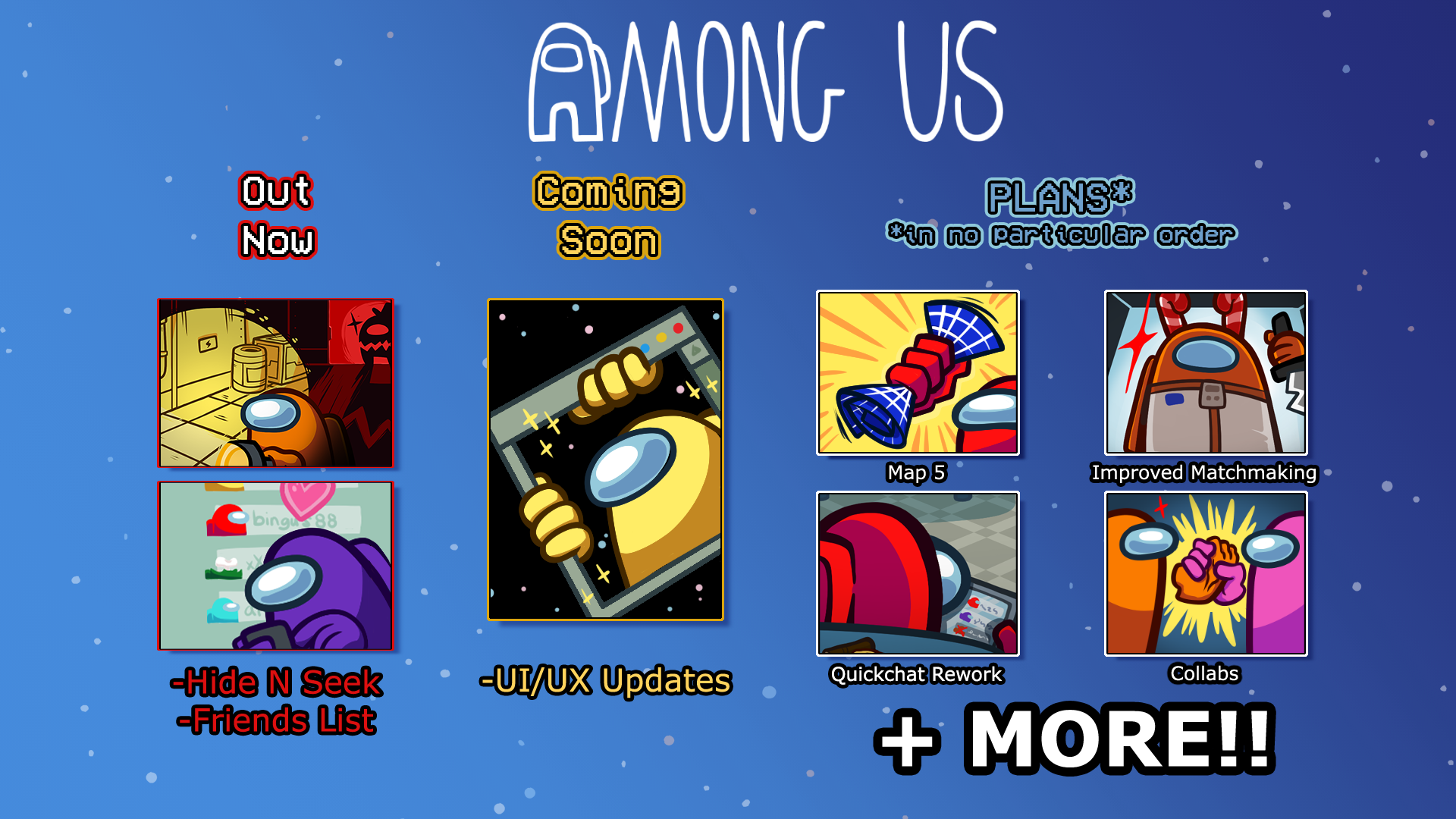
As Among Us has continued to grow in popularity, the development team, InnerSloth, has been constantly updating the game to add new features, roles, and improvements. These updates have not only enhanced the gameplay experience but also kept the game fresh and engaging for players of all skill levels.
New Roles and Hidden Roles
One of the most exciting aspects of Among Us is the periodic introduction of new roles, both for Crewmates and Imposters. These new roles often introduce unique abilities and strategies that can dramatically change the gameplay dynamics:
- New Crewmate Roles: These roles provide new ways to contribute to the game's objectives. For example, the Doctor has the ability to save crewmates from death, while the Cleaner can perform additional repairs. Each new role adds a new layer of complexity to gameplay and requires players to adapt their strategies accordingly.
- Hidden Roles: Hidden roles are secret identities given to a few unlucky Crewmates or Imposters. These roles often have the potential to dramatically alter the course of the game. For instance, the Informant can reveal hidden roles, while the Janitor can secretly move objects. These roles add an element of surprise and challenge, making each game unique.
Game Mechanics and Balance
InnerSloth has made several adjustments to the game mechanics to ensure a fair and enjoyable experience. These changes include:
- Imbalance Fixes: The developers have worked to address any imbalances in the game. For example, issues with the Engineer's ability to lock doors were reworked to prevent easy imposter escapes or to slow them down, ensuring that the Crewmates can still have a fighting chance.
- Timing Adjustments: Changes to the timing of certain events, such as voting intervals and the duration of game rounds, have been made to maintain a good balance between tension and gameplay flow.
- Performance Enhancements: With the growth in player numbers, InnerSloth has made significant efforts to optimize the game's performance. This includes reducing lag and improving stability, ensuring that players have a smooth and enjoyable experience regardless of their device or connection speed.
Community Feedback and Continuous Improvement
InnerSloth values the input and feedback of the Among Us community. By incorporating this feedback into their development process, the game developers are able to make informed decisions and create features that address the needs and wishes of their players:
- Player Suggestions: The community often suggests new features or improvements. InnerSloth actively listens to these suggestions and works to incorporate them when possible. This collaborative approach fosters a sense of ownership among players, leading to a more engaged and loyal community.
- Player Testing: InnerSloth conducts regular testing sessions with player feedback to ensure that new updates are well-received and work as intended. Players are often involved in beta tests and focus groups to provide their input, ensuring that the updates meet the expectations of the community.
- Regular Updates: InnerSloth regularly releases updates, often multiple times a year. These updates not only introduce new features and roles but also address player concerns and bug fixes, keeping the game fresh and bug-free.
Competitive Play and Esports
The competitive scene for Among Us continues to evolve, with players and teams pushing the boundaries of what is possible. Several initiatives have emerged to support and grow the competitive community:
- Tournaments and Events: Regular tournaments and events are held to showcase the top talent in the Among Us community. Events like Among Us Champions, Among Us Masters, and other local and international events provide a platform for players to compete and be recognized.
- Esports Organizations: Esports organizations are beginning to recognize the potential of Among Us and are investing in the community. Teams can now focus on training, strategy development, and player management, leading to more professional and organized competition.
- Esports Sponsorships: Corporate sponsorships and financial backing are helping to legitimize Among Us as a competitive sport. This not only provides financial support but also raises the profile of the game, attracting a broader audience and fostering growth.
Future Development and Roadmap
InnerSloth has already announced plans for several future updates and features. Here are some highlights from their roadmap:
- New Locations and Environments: Future updates will introduce new locations and environments, each with its unique set of challenges and gameplay mechanics. For example, an Arctic or a jungle setting could offer new opportunities for both cooperative and competitive play.
- Multilingual Support: InnerSloth is committed to expanding multilingual support, providing more players with the ability to enjoy the game in their native language. This expansion will help make Among Us more accessible to a global audience.
- Improved Voice Chat: The team is working on enhancing the voice chat system to ensure better clarity and performance, especially in high-lag scenarios. This will improve communication and coordination among players.
- Enhanced Social Features: New social features are being developed to allow for more interactive and engaging multiplayer experiences. These features could include mini-games, in-game events, and more ways to interact with other players.
Conclusion
The journey of Among Us has been one of constant evolution and growth. From its initial release to its current status as a cultural phenomenon, the game has continually adapted to meet the changing preferences and demands of its player base. With new roles, features, and improvements on the horizon, the future looks promising for Among Us.
Whether you are a casual player or a competitive enthusiast, There is always something new to explore and discover in this ever-evolving digital realm. Stay tuned for future updates and join the community to experience the magic of Among Us firsthand.


The Division 2: A Deep Dive into Ubisoft's Post-Apocalyptic Masterpiece
Introduction to The Division 2
Released in 2019 by Ubisoft, Tom Clancy's The Division 2 is an online action role-playing game set in a near-future Washington, D.C., ravaged by a deadly pandemic. As a sequel to the critically acclaimed The Division, this installment improves upon its predecessor in nearly every way—offering a richer open world, refined gameplay mechanics, and a more engaging endgame experience. Whether you're a veteran agent or a newcomer to the franchise, The Division 2 delivers an immersive loot-shooter experience that keeps players coming back for more.
The Setting: A Collapsed Capital
Unlike the snow-covered streets of New York City in the first game, The Division 2 transports players to a sweltering summer in Washington, D.C., seven months after the outbreak of the Green Poison virus. The once-powerful capital is now a lawless battleground where factions vie for control. Players take on the role of an elite Division agent tasked with restoring order, securing key locations, and aiding civilian survivors.
The open-world design is one of the game's strongest aspects. From iconic landmarks like the White House (now repurposed as the player's base of operations) to desolate suburbs, the attention to detail makes exploration feel rewarding. Dynamic weather, day-night cycles, and environmental storytelling add depth to the experience.
Gameplay Mechanics: Refined and Engaging
The Division 2 builds upon the third-person cover-based shooter mechanics of the first game while introducing meaningful improvements. Combat is tactical and rewarding, requiring players to strategize around enemy behavior and environmental advantages. The enemy AI is notably smarter, forcing players to adapt rather than rely on brute force.
Weapons and Gear
One of the defining elements of The Division 2 is its loot system. Weapons and gear come in varied rarities, each with unique stats and perks. Players can experiment with different builds—focusing on high damage, survivability, or skill efficiency—making for diverse playstyles. The introduction of brand sets (gear with thematic bonuses) encourages deeper customization.
Skills and Specializations
Unlike the first game, The Division 2 allows players to unlock and upgrade various skills early on. From deployable turrets and remote-controlled drones to healing chem launchers, these tools provide versatility in combat. Additionally, the game features three specializations (Sharpshooter, Demolitionist, Survivalist) that offer unique weapons and talents, further enhancing replayability.
Factions: Friend and Foe
Washington, D.C., is controlled by several warring factions, each with its own motives and tactics. The Hyenas are ruthless scavengers, the Outcasts are zealots spreading the virus, the True Sons are militarized defectors, and the Black Tusk—a high-tech mercenary group—enters the fray in the endgame. Each faction presents different combat challenges, keeping encounters fresh.
Multiplayer and Cooperative Play
Whether playing solo or with a squad, The Division 2 supports seamless multiplayer integration. Teaming up with friends (or matchmaking with strangers) enhances the experience, especially during challenging missions and incursions. The Dark Zone makes a return—providing a high-risk, high-reward PvPvE (Player versus Player versus Environment) area where betrayal and tension run high.
Endgame and Longevity
One of the biggest criticisms of the first Division was its lackluster endgame. The Division 2 addresses this with extensive post-campaign content. Once players reach the level cap (currently 40 with expansions), new activities unlock, including:
- Invaded Missions: Remixed versions of main missions with Black Tusk forces.
- Strongholds: Large-scale battles requiring coordination.
- The Summit: A 100-floor skyscraper challenge (added in later updates).
- Seasons: Rotating content with new storylines, gear, and events.
Final Thoughts (So Far)
The Division 2 successfully improves upon the foundation of its predecessor, offering a polished, content-rich experience. From its detailed open world to its deep RPG mechanics, the game provides hundreds of hours of gameplay. Whether you're a solo player or a co-op enthusiast, the dynamic world of post-apocalyptic D.C. has something for everyone. Stay tuned for the next part of this deep dive, where we’ll explore expansions, player-vs-player modes, and community-driven content.
Now that we’ve covered the basics, the adventure is just beginning. Ready your gear, Agent—there’s more to uncover.
>Exploring the Expansions: New Horizons in The Division 2
Warlords of New York: A Return to the Origins
One of the most significant expansions for The Division 2 is Warlords of New York, which brings players back to the streets of Lower Manhattan. This expansion introduces a new storyline centered around Aaron Keener, a rogue Division agent who has taken control of the city. Players must track down Keener and his lieutenants, each with their own unique abilities and combat styles, in a race to stop his plans for chaos.
The expansion also introduces the SHD Level system, a new progression mechanic that allows players to continue leveling up beyond the original level cap. This system rewards players with powerful perks and bonuses, making endgame content even more rewarding. Additionally, the expansion includes new gear, weapons, and a revamped loot system that ensures players always have something to chase.
Seasons and Manhunts: A Dynamic Endgame
With the introduction of seasonal content, The Division 2 has evolved into a constantly changing experience. Each season brings a new narrative arc, featuring a series of manhunts where players must track down high-value targets. These targets are often tied to the ongoing story, providing context and stakes to the missions.
Seasons also introduce Global Events, limited-time modifiers that alter gameplay in unique ways. These events encourage players to experiment with different builds and strategies, adding variety to the endgame. Completing seasonal challenges rewards players with exclusive cosmetics, gear, and other valuable items.
The Summit: A Test of Skill and Endurance
For players seeking a true challenge, The Summit is a 100-floor skyscraper filled with increasingly difficult enemies. Each floor presents unique objectives and modifiers, requiring players to adapt their tactics on the fly. The higher you climb, the better the rewards, culminating in exclusive loot and bragging rights for those who reach the top.
This mode is designed for both solo players and groups, with scaling difficulty to ensure a fair experience. Whether you're looking for a quick run or a marathon session, The Summit offers endless replayability.
Player vs. Player: The Dark Zone and Conflict
The Dark Zone: A Lawless Frontier
The Dark Zone returns in The Division 2, offering a tense and unpredictable PvPvE experience. Players must extract contaminated loot while fending off both AI enemies and other players who may turn rogue at any moment. The stakes are high, but the rewards are worth the risk.
With multiple Dark Zones to explore, each with its own unique layout and challenges, players must stay vigilant. The introduction of Landmarks—high-value areas filled with elite enemies—adds another layer of strategy to the experience.
Conflict: Structured PvP Battles
For those who prefer more structured PvP, Conflict offers fast-paced 4v4 battles in various game modes, including Domination and Skirmish. These matches are a great way to test your skills against other players and earn exclusive rewards.
With a focus on teamwork and strategy, Conflict provides a competitive outlet for players who enjoy the thrill of player-versus-player combat.
Community and Future Content
Community-Driven Updates
Ubisoft has shown a strong commitment to supporting The Division 2 with regular updates and community-driven content. Player feedback has led to numerous improvements, including balance changes, quality-of-life updates, and new features.
The introduction of Apparel Events and Global Events keeps the community engaged, offering fresh challenges and rewards on a regular basis.
What’s Next for The Division 2?
With the game still receiving updates and expansions, the future of The Division 2 looks bright. Rumors of new storylines, factions, and gameplay mechanics continue to circulate, keeping the community excited for what’s to come.
Whether you’re a veteran agent or a newcomer, there’s never been a better time to dive into the world of The Division 2.
Conclusion
From its deep RPG mechanics to its dynamic endgame content, The Division 2 offers a rich and rewarding experience for players of all playstyles. With expansions like Warlords of New York, seasonal updates, and a thriving PvP scene, the game continues to evolve and captivate its audience.
Stay tuned for the final part of this deep dive, where we’ll explore the game’s community, modding scene, and the future of the franchise.
The Division 2 Community: A Living Ecosystem
The Power of Player Collaboration
One of The Division 2's greatest strengths lies in its vibrant community. From Discord servers to dedicated subreddits, players have built thriving ecosystems where strategies are shared, builds are optimized, and friendships are forged. The game's clan system encourages teamwork, offering exclusive rewards for coordinated play. Weekly clan caches and seasonal leaderboards foster healthy competition among groups, while also promoting long-term engagement.
Content creators have played a significant role in keeping the community alive. YouTube guides, Twitch streams, and detailed build breakdowns help both new and veteran players navigate the game's complex systems. The Division community's dedication is evident in projects like the fan-made "Division Map" app, which tracks loot drops, enemy spawns, and collectibles with impressive precision.
Community Challenges and Special Events
Ubisoft has consistently engaged with players through special community-wide challenges. These events often require collective participation to unlock rewards for all players, creating a sense of shared accomplishment. Past challenges have included clearing a certain number of Strongholds or donating massive quantities of resources to civilian settlements.
The annual "Day 1" events commemorating the game's launch have become particularly beloved. These celebrations feature special vendors, returning apparel sets from previous seasons, and bonus XP events. Such initiatives demonstrate how developer support and player enthusiasm combine to keep the game feeling fresh years after release.
Modding and Customization: Beyond Official Content
The Unofficial Modding Scene
While The Division 2 doesn't officially support mods in the traditional sense, the community has developed creative workarounds. ReShade presets allow for visual customization, with players creating and sharing filters that enhance the game's atmospheric lighting. Some dedicated fans have even developed tools for inspecting gear stats outside the game, helping optimize builds without laborious in-game testing.
The most impressive fan creations are the detailed spreadsheets and damage calculators that have emerged. These tools decode the game's complex damage formulas, allowing theorycrafters to simulate weapon performance under different conditions. This unofficial "modding" scene has become an essential resource for min-maxers looking to push their builds to the limit.
Cosmetic Expression and Identity
Apparel plays a surprisingly meaningful role in player expression. With hundreds of clothing items, dyes, and weapon skins available, agents can create truly unique looks. Community fashion shows occasionally spring up in social spaces, with players showing off coordinated outfits or recreating characters from other media.
The apparel system also tells the story of a player's journey. Event-exclusive outfits serve as badges of honor, showing participation in special activities. Some particularly dedicated collectors pride themselves on obtaining every possible cosmetic, turning inventory management into its own endgame pursuit.
The Future of the Franchise
Economic Innovations: The Division 2's Business Model
Ubisoft's approach to monetization has evolved throughout the game's lifecycle. While the base game and expansions require purchase, the seasonal content model provides regular free updates alongside optional premium tracks. The in-game store focuses primarily on cosmetics, avoiding the pay-to-win pitfalls that plague some live service games.
Recent seasons have introduced an interesting twist: some premium cosmetic sets can now be earned through gameplay by completing particularly challenging content. This hybrid model rewards dedicated players while still offering convenient purchase options, striking a balance that keeps the community satisfied.
Technical Evolution: The Next Generation
With the release of next-gen consoles, The Division 2 received a significant technical upgrade. The game now runs at 60 FPS in 4K resolution, with improved loading times and enhanced visual effects. These upgrades have breathed new life into the experience, making combat more fluid and the world more immersive.
Looking ahead, rumors suggest Ubisoft may be developing a new snowdrop engine, potentially for a future Division installment. If true, this could mean even more detailed environments, improved AI behavior, and deeper simulation systems in whatever comes next for the franchise.
The Road Ahead: Potential Sequels and Spin-offs
While Ubisoft remains tight-lipped about The Division 3, several clues hint at the franchise's continued expansion. Job listings for the studio mention work on an "ambitious new Division project," while trademark filings suggest potential spin-offs could explore new settings or gameplay styles.
The successful launch of The Division: Heartland, a free-to-play standalone experience, demonstrates Ubisoft's commitment to expanding the franchise in multiple directions. This experimental approach suggests the Division universe may soon offer experiences catering to different types of players - from hardcore looter-shooter fans to more casual audiences.
Final Thoughts on The Division 2's Legacy
Over four years after its release, The Division 2 stands as a testament to the potential of live service games when they receive dedicated support. What began as a solid sequel has evolved into one of the most content-rich looter shooters available, with systems and mechanics that continue to improve through thoughtful updates.
The game's success stems from its ability to satisfy different player motivations. Story-focused agents can lose themselves in the atmospheric world and narrative arcs. Min-maxers can obsess over perfecting builds for high-end content. Social players have found a welcoming community in clans and multiplayer activities. This breadth of experience ensures there's always something to do, no matter your playstyle.
As we look to the future, The Division 2 serves as both a complete package and a promising foundation. Whether through future expansions, sequels, or entirely new directions for the franchise, the world of The Division has established itself as one of gaming's most compelling shared universes. For both current agents and those yet to enlist, the fight for Washington D.C. - and whatever challenges come next - remains an adventure worth undertaking.


Exploring the Epic Universe of Halo: Infinite
An Iconic Franchise Returns
Halo: Infinite marks the return of one of gaming's most iconic franchises. Developed by 343 Industries and published by Xbox Game Studios, this installment signifies a whole new chapter in the Halo series, continuing the legacy of Master Chief. With an open-world design, enhanced graphics, and a powerful narrative, Halo: Infinite is set to redefine the first-person shooter genre for a new generation of gamers. In this article, we'll delve into the intriguing elements that make Halo: Infinite a monumental release in the gaming world.
The Evolution of Halo
Halo has been a cornerstone of the gaming industry since its debut in 2001 with Halo: Combat Evolved. The series quickly gained a massive following for its immersive universe, compelling storyline, and innovative multiplayer experiences. Over the years, Halo has evolved through various installments, each pushing the envelope in terms of gameplay mechanics, visuals, and storytelling. Halo: Infinite continues this tradition by leveraging the latest technology to create an experience that feels both nostalgic and refreshingly modern.
Setting the Stage: The Storyline
The narrative of Halo: Infinite picks up after the events of Halo 5: Guardians, diving deeper into the lore of the Halo universe. Players once again step into the shoes of Master Chief, the legendary Spartan supersoldier. The game is set on a new Halo ring, known as Installation 07, which is controlled by a highly advanced and enigmatic enemy faction called The Banished. Led by War Chief Escharum, The Banished pose a significant threat that challenges the very survival of humanity.
With the fate of the galaxy hanging in the balance, players are tasked with unraveling mysteries, forming alliances, and taking on formidable foes. The storyline of Halo: Infinite is crafted to encourage exploration and discovery, weaving together elements of past Halo games with fresh new arcs that will captivate both longtime fans and newcomers.
Open World Exploration
One of the most exciting aspects of Halo: Infinite is its open-world environment. For the first time in the series, players have the freedom to explore the vast and dynamic landscape of Installation 07. This open-world design offers players unprecedented levels of freedom, allowing them to engage in missions, uncover secrets, and interact with an ecosystem teeming with life. From lush forests to towering mountains, the environment is both a playground and a battleground, fostering an experience that is as rich in wonder as it is in danger.
The open-world approach not only enhances the gameplay experience but also allows the narrative to unfold in a more organic and immersive manner. Players can choose their path, tackle objectives in a non-linear fashion, and immerse themselves in the intricate details of the Halo universe.
Cutting-Edge Graphics and Audio
Halo: Infinite harnesses the power of next-gen hardware to deliver stunning visuals and an unparalleled audio experience. The game runs on the Slipspace Engine, which enables detailed environments, realistic lighting effects, and lifelike character models. From the intricate armor of Master Chief to the sprawling vistas of Installation 07, every aspect of the game is meticulously crafted to create a visually breathtaking experience.
The audio design in Halo: Infinite also plays a crucial role in immersing players in its world. The iconic soundtrack, composed by Gareth Coker, Curtis Schweitzer, and Joel Yarger, seamlessly blends with the game's action-packed sequences and emotional moments. Coupled with directional audio effects and ambient sounds, the audio design ensures that players are fully engaged with every firefight, ambient exploration, and pivotal narrative moment.
Multiplayer: Returning to Its Roots
Multiplayer has always been a key component of the Halo experience, and Halo: Infinite aims to reignite the magic of past installments. The game employs a free-to-play multiplayer model, making it accessible to a broader audience. Emphasizing a return to classic mechanics and gameplay, the multiplayer experience is designed to be fast-paced, strategic, and highly competitive.
Players can expect a variety of modes, from classic team deathmatches to innovative playlists that blend different elements of the Halo universe. The multiplayer aspect is further enriched by the inclusion of Forge Mode, where players can unleash their creativity to build and customize maps, adding a layer of community-driven content to the game.
Stay tuned for the next part of this article, where we'll dive deeper into player customization, the impact on the gaming community, and what the future holds for Halo: Infinite.
Deep Dive into Player Customization
One of the standout features of Halo: Infinite is its extensive player customization options. Understanding the importance of personal expression and identity within the gaming community, 343 Industries has implemented a comprehensive customization system that allows players to tailor their experience to their liking. From armor aesthetics to weapon skins, the possibilities are nearly endless, providing players with the tools to make their Spartan truly unique.
The cornerstone of this customization system is the Armor Coating feature, which offers a palette of colors, patterns, and textures for players to apply to their gear. This feature not only enhances visual personalization but also ties into the game’s progression system. As players engage in battles and complete challenges, they unlock new coatings and gear, encouraging them to tailor their Spartan’s look while showcasing their in-game achievements.
Furthermore, the game introduces a more dynamic Battle Pass system. Unlike traditional limited-time passes, Halo: Infinite's Battle Passes do not expire, allowing players to progress at their own pace without the fear of missing out. This system respects players' time and commitment, fostering a more relaxed and enjoyable multiplayer experience.
Impact on the Gaming Community
Halo: Infinite’s launch and ongoing updates have had a profound impact on the gaming community. As one of the flagship titles for the Xbox Series X|S and a centerpiece for Microsoft’s Game Pass service, the game has drawn in both veterans of the series and newcomers alike. The decision to make the multiplayer mode free-to-play has significantly broadened its audience, encouraging diversity in every match, lobby, and social interaction.
Community engagement is further amplified by Forge Mode and the presence of community events and competitions. The creative potential enabled by Forge Mode empowers players to design their own maps and game modes, fostering a culture of sharing and collaboration. This mode turns players into developers of sorts, allowing them to contribute to the ever-evolving Halo sandbox.
Additionally, 343 Industries’ commitment to transparency and active communication with the player base has solidified a strong relationship between developers and the community. Feedback is frequently solicited and addressed, ensuring that the game evolves in ways that align with player expectations and desires. This openness is exemplified by regular updates, patches, and the announcement of content roadmaps, keeping the community informed and involved in the game’s ongoing development.
Innovations in Gameplay Mechanics
While maintaining the core elements that have always defined the Halo series, Halo: Infinite introduces several innovative gameplay mechanics that enhance the overall experience. Notably, the Grappleshot adds a dynamic layer to both movement and combat. This new tool allows players to traverse the environment with greater agility, grappling onto ledges, vehicles, and even opponents. It significantly expands tactical options, enabling players to engage in vertical combat, execute surprise flanking maneuvers, and explore the open world with unparalleled freedom.
Another notable addition is the Drop Wall, a deployable shield that provides tactical cover during battles. This feature allows for strategic gameplay, enabling players to adapt to changing combat situations by using the environment to their advantage. Whether in intense firefights or while evading enemy fire, these new tools increase the depth and complexity of encounters, making each battle feel fresh and exciting.
The Future of Halo: Infinite
The future of Halo: Infinite is bright, with numerous updates, expansions, and events planned to sustain player engagement. 343 Industries is committed to building on the game's successful launch with a robust line-up of post-launch content, including additional campaign expansions, multiplayer maps, and special thematic events that breathe new life into the Halo universe.
Moreover, the integration within Microsoft’s Game Pass service ensures a steady influx of players, fostering a vibrant community that thrives on interaction and cooperation. This commitment to expanding the Halo ecosystem is poised to secure its relevance well into the future, ensuring that Master Chief's legacy continues to inspire new generations of gamers.
The Halo franchise has always been synonymous with Epic battles, expansive lore, and community-driven experiences. As Halo: Infinite continues to evolve and expand, it not only preserves but also enriches this legacy, reaffirming its position as a quintessential gaming experience. Stay tuned for the final part of this article, where we will explore community feedback, competitive esports potential, and the longevity of Halo: Infinite in a rapidly changing gaming landscape.
Community Feedback: A Catalyst for Growth
Halo: Infinite's development and ongoing updates have been heavily influenced by community feedback, establishing a symbiotic relationship between fans and developers. From the initial reveal, where the graphics were met with some criticism, to the subsequent delays aimed at improving the final product, 343 Industries has shown a readiness to listen and respond to player concerns.
Feedback mechanisms have been effectively integrated through multiple channels such as forums, social media, and official updates. This openness has allowed players to voice their opinions on everything from game balance to content diversity. The result is a game that evolves in tandem with the community's expectations and preferences, ensuring that the experience remains relevant and engaging.
Furthermore, specific community-driven improvements, such as tweaks to game mechanics and the introduction of new features, demonstrate the positive influence players have on the development process. Such collaboration nurtures a sense of ownership and dedication among players, strengthening the bond between the game and its fanbase.
Halo: Infinite in the Competitive Esports Arena
With its intense gameplay and strategic depth, Halo: Infinite holds significant potential within the competitive esports arena. Historically, Halo has carved out a niche in the esports world with events like the Halo Championship Series (HCS). Halo: Infinite builds on this tradition, incorporating features that cater to competitive play, such as customizable playlists and robust spectator tools.
The game’s design prioritizes balance, ensuring that competition is fair and skill-based. Maps are meticulously crafted to accommodate a variety of playstyles, while the sandbox mechanics support both individual prowess and team coordination. This balance provides a solid foundation for thrilling esports events that are as entertaining for spectators as they are challenging for participants.
Halo: Infinite’s growing presence in the esports scene is further supported by partnerships with professional gaming organizations and broadcast platforms. These collaborations promise to enhance the reach and visibility of competitive Halo, potentially drawing in new audiences and elevating the series to new heights within the global esports community.
Longevity in a Rapidly Changing Gaming Landscape
In today’s fast-evolving gaming industry, sustaining interest and engagement over time is a key challenge. Halo: Infinite is poised to address this with a strategy that includes regular updates, seasonal content, and community-centered initiatives. By continuously introducing fresh content and experiences, the game maintains a dynamic and enduring appeal.
Seasonal events play a crucial role in this strategy, offering players thematic challenges, exclusive rewards, and unique gameplay opportunities. These events foster ongoing engagement by rewarding dedicated play and incentivizing return visits. Coupled with the ever-evolving Battle Pass system, players are motivated to invest time and effort in the game, ensuring long-term participation.
Interestingly, Halo: Infinite’s integration with the broader Xbox ecosystem, including cross-platform play and Xbox Cloud Gaming, broadens accessibility and ensures that the game remains a staple in diverse gaming setups. This flexibility not only reaches underserved markets but also taps into the growing trend of mobile and on-the-go gaming.
Conclusion: Halo's Timeless Legacy and Future Prospects
As Halo: Infinite forges ahead, it continues to honor the timeless legacy of the franchise while charting new territories in game design and community interaction. By embracing innovation and player feedback, 343 Industries has crafted an experience that resonates with both new players and long-standing fans.
The challenges of meeting high expectations and integrating fresh ideas have been met with a determination to grow and adapt. Halo: Infinite emerges not just as a continuation of the Master Chief saga, but as a reflection of the gaming community’s desire for quality, significance, and connection in their gaming experiences.
With its strong foundation and promising outlook, Halo: Infinite is more than just a game; it's a celebration of teamwork, strategy, and the enduring spirit of adventure. As the series evolves, it ensures that the iconic green armor of Master Chief will remain a symbol of excellence in gaming for years to come. In this ever-changing landscape, Halo stands firm, echoing the ideals of bravery and heroism that have defined it for over two decades. As players continue to explore Installation 07 and battle The Banished, the legacy of one of gaming's greatest franchises remains as vibrant and influential as ever.
Exploring the Vast Universe of Warframe: A Beginner's Guide
Warframe, developed by Digital Extremes, is a free-to-play online action game characterized by its fast-paced gameplay, cooperative objectives, and a robust sci-fi universe that draws players into a vast world of adventure. Since its release in 2013, Warframe has continuously evolved, offering an immersive experience with a rich lore, complex mechanics, and a dynamic community. This guide serves as an introduction to the world of Warframe, providing new players with a solid foundation to start their journey as a Tenno, the game's space-ninja protagonists.
The Origin of the Tenno
In the universe of Warframe, players assume the role of the Tenno, a race of ancient warriors who utilize biomechanical combat suits known as Warframes. These powerful suits grant players unique abilities and are at the core of gameplay. The Tenno are awakened from centuries of cryosleep by the Lotus, a mysterious guide who aids them in their fight to restore peace and balance across the system.
The lore reveals that the Tenno are descendants of the Orokin Empire, a once-great civilization that ruled the Solar System. The Tenno were formed to combat a deadly threat known as the Sentients, leading to an intricate web of alliances and rivalries that persist. Understanding this lore enriches the gameplay, adding layers of meaning to the missions and interactions players engage in.
Getting Started with Warframe
For new players, stepping into the vast world of Warframe can be overwhelming. However, the game's beginner-friendly tutorials and guides ensure a smooth introduction. Players start by selecting their first Warframe from three options: Excalibur, Mag, or Volt. Each Warframe has unique abilities that cater to different playstyles. Excalibur is a balanced frame ideal for beginners, offering straightforward combat capabilities.
After selecting a Warframe, players unlock their starting weapons, a primary, secondary, and melee weapon, forming the basic loadout for missions. The player’s spaceship, the Orbiter, serves as the central hub where players navigate menus, customize their loadouts, and access missions. The user interface is intuitively designed to help new players transition into the game’s extensive systems.
Understanding Gameplay Mechanics
Warframe's gameplay is divided into various missions and activities scattered across different planets and locations in the Solar System. Missions vary from straightforward extermination objectives to complex multi-step tasks that require teamwork and strategy. The game's core mechanics revolve around parkour-like movements, allowing players to traverse environments using sliding, jumping, and wall-running—a testament to the game's inspiration from ninja-like agility.
Customization is a hallmark feature of Warframe. Players can tailor their Warframes with Mods—enhancements that boost various stats and abilities. Acquiring and upgrading Mods becomes a key element of the gameplay, influencing how players engage in missions and adapt to challenges. Additionally, crafting and upgrading weapons and Warframes are crucial activities, requiring players to scavenge for resources and blueprints scattered throughout the game.
The Multiplayer Aspect
Warframe is designed to be a cooperative multiplayer experience, promoting teamwork and collaboration. Players can embark on missions alone or join squads, enhancing the gameplay by allowing diverse strategies and coordination. The in-game chat system and clans provide social platforms for players to connect, share tips, and undertake missions together. Joining a clan offers additional benefits, such as access to clan-specific research and resources, fostering a sense of community within the game.
Continuous Development and Updates
One of Warframe's defining features is its constant evolution. Digital Extremes frequently introduces updates, new content, and story expansions that keep the game fresh and engaging. From new Warframes and weapons to expansive open-world areas like the Plains of Eidolon and Orb Vallis, the developers are committed to enhancing the player's experience. Regularly hosted events and updates ensure that there is always something new for both veterans and beginners to explore.
Conclusion: Embarking on the Warframe Adventure
Warframe invites players into a universe rich with lore, action, and community engagement. As a newcomer, the vast array of choices and mechanics might seem daunting, but with dedication and exploration, the game's depth becomes a rewarding playground for creativity and strategy. Whether you're drawn to the game's cooperative missions, intricate lore, or the allure of mastering different Warframes, Warframe offers a unique gaming experience that continues to captivate millions worldwide. As the world of the Tenno expands, new players are welcomed aboard this thrilling and ever-evolving journey.
The Evolution of Warframe's Story
Warframe stands out not only for its thrilling action and gameplay mechanics but also for its rich narrative depth. As players progress, they unravel an intricate storyline filled with twists, mysteries, and a variety of fascinating characters. The game's missions often interweave to form narrative arcs, leading up to major story quests that provide a deeper understanding of the Warframe universe.
One of the significant aspects of Warframe’s storytelling is its use of cinematic quests. These quests, such as "The Second Dream" and "The War Within," are considered pivotal moments that not only expand the lore but also fundamentally change players' perspectives about their role in the universe. These story missions often come with dramatic revelations about the Tenno and their origins, compelling players to reflect on the events they've experienced.
Deep Dive into the Open Worlds
In recent years, Warframe has expanded its universe with open-world areas, offering players a fresh perspective on gameplay. These areas are designed to immerse players in expansive landscapes with unique environments and activities. The introduction of the Plains of Eidolon and Orb Vallis allows players to step away from traditional corridor missions and explore large, open spaces teeming with life and opportunities for adventure.
The Plains of Eidolon, located on Earth's surface, is the first open-world area introduced to Warframe. Here, players can engage in various activities, such as fishing, mining, and hunting. Additionally, the transition from day to night in the Plains presents different challenges and perks; while the day offers easier exploration, the night brings the formidable Eidolon bosses, which demand teamwork and preparation to be conquered.
The Orb Vallis, situated on Venus, showcases a different aspect of open-world gameplay with its high-tech environment and complex weather systems. Its diverse ecosystem challenges players to adapt as they navigate its cold, harsh climates and engage in bounties to aid the local Solaris United faction against the oppressive Corpus regime.
Building Your Arsenal
In Warframe, the sense of progression is intricately tied to the acquisition and customization of Warframes and weapons. Players are encouraged to constantly expand their arsenal by crafting new Warframes and armaments. The crafting system relies on collecting materials and blueprints, obtained through mission rewards, in-game purchases, or trading with other players.
Each Warframe possesses four unique abilities and attributes, allowing for varied play styles ranging from stealth and support to direct combat. Selecting a new Warframe effectively presents players with a new way to experience the game, unlocking different strategies and methods of interaction with enemies and environments.
Weapons in Warframe are of three types: primary, secondary, and melee. Each category offers a wide range of options, with weapons varying in functionality, damage types, and aesthetics. The diversity of weapons means that players can mix and match to find ideal combinations for their personal playstyle. Mastery of different weapons is rewarded with increased Mastery Rank, unlocking further customization and gameplay opportunities.
Trading and Economy in Warframe
The trading system within Warframe provides a vibrant marketplace for players to exchange items, enabling players to trade Mods, Prime parts, and other valuable items. Prime parts, in particular, are highly sought after due to their enhanced attributes and rarity. This feature allows players to engage in a dynamic economy, earning in-game currency known as Platinum, which can be used to purchase various items and enhancements.
Warframe's unique economy empowers players to decide how they invest their time, whether by farming resources and crafting gear or by using trading to acquire specific items faster. This economic model encourages interaction within the community, as players negotiate and share resources to optimize their progression.
The Role of Community and Feedback
Warframe is home to a passionate and dedicated community, which plays a significant role in the game's ongoing development. Digital Extremes actively engages with players through forums, social media, and live streams to gather feedback, discuss updates, and share development insights. This commitment to community interaction cultivates a sense of belonging and involvement, as players see their suggestions and ideas reflected in game updates and new content.
Various community events and contests are periodically organized, encouraging players to showcase their creativity and skills. These events often highlight user-generated content, such as fan art, fashion frame contests, and custom loadouts, adding an additional layer of immersion and engagement to the Warframe experience.
The Endless Journey Continues
As players delve deeper into Warframe, they discover that the journey is ever-expanding and full of surprises. With constant updates, story arcs that challenge players' understanding of the universe, and a robust community supporting its evolution, Warframe offers not just a game, but an ever-evolving platform for action, exploration, and creativity. The blend of cooperative gameplay, enriching lore, and a wide array of activities ensure that there is always more to explore for both new and veteran players. As the saga of the Tenno unfolds, players are invited to partake in this dynamic universe and shape their legacy within it.
Mastering Warframes and Abilities
The true essence of Warframe lies in mastering the diverse set of Warframes, each embodying unique skills and specializations. With over 40 different Warframes available, players have the freedom to experiment and adapt their strategies to different missions and challenges. Each Warframe comes equipped with four abilities that can be leveled up and enhanced through Mods. These abilities range from offensive strikes to defensive maneuvers and supportive tactics, giving players endless possibilities to tailor their gameplay approach.
To optimize the performance of a Warframe, players often engage in crafting customized Mod setups, known as "builds." Crafting effective builds requires understanding the interactions between different abilities and Mods, allowing players to enhance their strengths and mitigate weaknesses. As players test and refine these builds, they develop a deeper understanding of their Warframe's capabilities, enabling them to tackle even the most challenging missions with finesse.
In-Game Challenges and Achievements
Warframe offers a myriad of challenges and achievements that encourage players to test their skills and perseverance. The game presents a structure of daily and weekly missions known as Nightwave, which introduces players to unique quests that grant various rewards upon completion. These missions often require players to step out of their comfort zones, offering new puzzles and tasks that test their adaptability and creative problem-solving abilities.
Additionally, Warframe features high-level missions such as Sorties, Arbitrations, and the elite mode called Steel Path. These missions present scaled-up difficulties and unique modifiers that challenge players to apply tactical strategies and leverage their full mastery of weapons and Warframes. Each success in these missions brings significant rewards and a sense of accomplishment, as they require cooperation, coordination, and strategic planning.
Fashion Frame and Personalization
One of the unique appeals of Warframe is the deep customization options for aesthetics, often referred to as "Fashion Frame." This aspect of the game allows players to personalize their Warframes through a variety of skins, color palettes, syandanas (capes), and other cosmetic accessories. The deep customization options enable players to express their individuality and creativity, turning their Warframes into personalized works of art.
The game's marketplace offers an extensive collection of cosmetic items, with many being community-designed through TennoGen, a program that allows players to submit their own creations for inclusion in the game. This feature supports a diverse range of designs, ensuring that every Tenno's aesthetic preferences are catered to. Fashion Frame has become a significant aspect of player engagement, often showcasing these customizations to other players and sharing them on social platforms.
Exploring Railjack and Space Combat
Warframe expands beyond terrestrial missions with the introduction of Railjack—a game mode that allows players to command massive, customizable spacecraft known as Railjacks to partake in space battles. This mode brings a new dimension to Warframe's gameplay, offering cooperative space combat where players can pilot the craft, manage onboard systems, and defend against boarding parties.
The Railjack experience is enhanced by the addition of Intrinsics—progression systems that enable players to specialize in different roles such as Pilot, Gunner, Engineer, and other crew functions. This layer of decision-making and specialization fosters teamwork and enhances the cooperative aspects of gameplay.
Looking to the Future
Warframe's commitment to continuous development means the game is always evolving, with the potential for future updates and expansions. Upcoming story arcs and new gameplay features are often teased through developer streams, generating excitement and anticipation among players. The game's vision is centered around enriching the player experience and expanding the universe, ensuring that both new and veteran Tennos have fresh content and challenges to explore.
One anticipated feature is "The Duviri Paradox," a storyline that promises to delve further into the complex lore of Warframe, offering new narrative dimensions and potentially fresh gameplay mechanics. These planned expansions underscore Digital Extremes’ dedication to maintaining Warframe's relevance and appeal as a dynamic and engaging universe for players.
Conclusion: A Legacy of Exploration and Combat
Warframe offers a multifaceted adventure that blends intense combat, strategic depth, and a richly woven narrative. The game's appeal lies in its ability to cater to different playstyles, whether players seek cooperative missions, complex storylines, or the sheer joy of aesthetic personalizations. The dedicated community and developer commitment ensure that Warframe remains a staple in the free-to-play gaming landscape, encouraging both individual exploration and collaborative efforts.
As players navigate their path through the vast and ever-expanding universe of Warframe, they become part of a larger narrative that transcends traditional gaming boundaries. This game is a testament to creative storytelling, iterative development, and communal feedback, creating an engaging experience that continues to captivate and inspire players worldwide. Whether you're drawn to the action, the story, or the community, Warframe invites you to forge your path and leave your mark as one of the legendary Tenno.