Alessandro Volta: The Pioneer of Electricity and His Legacy
Alessandro Volta, an Italian physicist and chemist, is celebrated as the inventor of the first electric battery, the voltaic pile. His groundbreaking work in the late 18th century laid the foundation for modern electrochemistry and revolutionized our understanding of electricity. This article explores Volta's life, his major inventions, and the lasting impact of his discoveries on science and technology.
Early Life and Education
Born on February 18, 1745, in Como, Italy, Alessandro Giuseppe Antonio Anastasio Volta came from a noble family. From a young age, he showed a keen interest in the natural sciences. By the age of 20, he was already conducting experiments in the laboratory of his friend Giulio Cesare Gattoni.
Volta's early education was largely self-directed. He published his first scientific paper on triboelectricity in 1765, demonstrating his early fascination with electrical phenomena. His dedication and innovative thinking quickly gained recognition, leading to his appointment as a professor of physics at the Royal School in Como in 1774.
Major Inventions and Discoveries
The Electrophorus
In 1775, Volta invented the electrophorus, a device designed to produce and transfer static electricity. Although the principles behind the electrophorus were known before Volta's time, his improved design made it more efficient and practical. This invention showcased his ability to refine existing ideas and turn them into functional tools.
Isolation of Methane Gas
Between 1776 and 1778, Volta made another significant discovery: he isolated methane gas from swamp marshes. To demonstrate the flammable nature of methane, he created the "Voltaic pistol", a device that used an electric spark to ignite the gas. This experiment not only highlighted the properties of methane but also foreshadowed the development of internal combustion engines.
The Voltaic Pile: A Revolutionary Invention
Volta's most famous invention, the voltaic pile, was introduced in 1800. This device was a stack of alternating zinc and silver disks separated by brine-soaked cloth. The voltaic pile was the first to provide a continuous electrical current, marking a major milestone in the history of electricity.
The invention of the voltaic pile was a result of Volta's debate with Luigi Galvani, who believed in the concept of "animal electricity". Volta's experiments proved that electricity was generated by the contact of different metals, not by biological tissue. This discovery led to the development of the voltaic pile and debunked the theory of vitalism in electricity.
"The voltaic pile was the first practical method of generating electricity and laid the groundwork for the electrical revolution of the 19th century."
Impact and Legacy
Contributions to Electrochemistry
Volta's work had a profound impact on the field of electrochemistry. His invention of the voltaic pile provided a steady source of electrical current, enabling further research and development in this area. Scientists could now conduct experiments that required a continuous flow of electricity, leading to numerous advancements in the understanding of chemical reactions and electrical phenomena.
The Unit of Measurement: Volt
In recognition of his contributions, the SI unit of electric potential, the volt (V), was named after Alessandro Volta in 1881. This honor underscores the significance of his work and its enduring influence on the field of electrical engineering.
Influence on Modern Technology
The principles behind the voltaic pile have influenced the development of modern batteries. From the early 1V cells of Volta's time to today's advanced lithium-ion batteries, the evolution of battery technology can be traced back to his groundbreaking invention. Additionally, Volta's experiments with methane have inspired contemporary research into green fuels and sustainable energy solutions.
Conclusion
Alessandro Volta's contributions to science and technology are immeasurable. His inventions and discoveries not only advanced our understanding of electricity but also paved the way for numerous technological innovations. As we continue to explore sustainable energy solutions and advance battery technology, Volta's legacy remains as relevant as ever.
The Galvani-Volta Debate: A Turning Point in Electrical Science
The late 18th century saw a fierce scientific debate between Alessandro Volta and Luigi Galvani that would shape the future of electrical research. Galvani, an Italian physician, observed that frog legs twitched when touched by different metals, leading him to propose the existence of "animal electricity"—a vital force inherent in living tissue. Volta, however, was skeptical of this idea and set out to prove that the electricity originated from the contact between dissimilar metals, not from the biological material itself.
Volta's Experiments and the Disproof of Animal Electricity
Volta conducted a series of experiments to test Galvani's theory. He found that the muscle contractions occurred even when non-biological conductors were used, suggesting that the electricity was generated by the metals rather than the frog's tissue. This led Volta to develop his theory of "contact electricity", which stated that electricity arises from the interaction between different metals.
To further support his argument, Volta created the voltaic pile, a device that produced a continuous electrical current without the need for biological material. This invention effectively disproved Galvani's theory of animal electricity and established Volta as a leading figure in the study of electricity.
"Volta's work not only debunked the myth of animal electricity but also provided the first reliable source of continuous electrical current, revolutionizing the field of electrochemistry."
The Electromotive Series: Ranking Metals by Voltage Potential
As part of his research, Volta compiled the first electromotive series, a ranking of metals based on their voltage potential. This series helped scientists understand which combinations of metals would produce the strongest electrical currents. Some key metals in Volta's series included:
- Zinc (Zn): One of the least noble metals, often used as the negative electrode.
- Copper (Cu): A common conductor with moderate voltage potential.
- Silver (Ag): A more noble metal with higher voltage potential, used as the positive electrode in the voltaic pile.
This electromotive series laid the foundation for modern electrode potentials and remains a critical concept in electrochemistry today.
Volta's Career and Academic Contributions
Early Academic Appointments
Volta's academic career began in 1774 when he was appointed professor of physics at the Royal School in Como. His reputation as a brilliant experimenter grew rapidly, and by 1779, he secured a position as a professor of physics at the University of Pavia, one of the most prestigious institutions in Italy at the time.
During his tenure at the University of Pavia, Volta continued to conduct groundbreaking research. His laboratory became a hub for scientific innovation, attracting scholars and students from across Europe. Volta's teaching methods were highly regarded, and he was known for his ability to explain complex scientific concepts in a clear and engaging manner.
Travels and Collaborations with Prominent Scientists
Volta's scientific contributions earned him international recognition, leading to invitations to travel and collaborate with other prominent scientists. Some of his notable interactions included:
- Benjamin Franklin: Volta met the renowned American scientist during his travels and discussed various electrical phenomena.
- Antoine Lavoisier: The French chemist, known as the "father of modern chemistry," engaged in scientific discussions with Volta, further enriching his understanding of chemical reactions.
These collaborations not only expanded Volta's knowledge but also helped disseminate his ideas across Europe, solidifying his reputation as a leading scientist of his time.
Public Demonstration of the Voltaic Pile
In 1799, Volta publicly demonstrated his voltaic pile for the first time. This event marked a significant milestone in the history of electricity, as it provided the first practical method of generating a continuous electrical current. The demonstration was met with widespread acclaim, and Volta's invention quickly gained recognition as a major scientific breakthrough.
The following year, Volta wrote a detailed letter to the Royal Society in London, describing the construction and function of the voltaic pile. This letter, published in 1800, cemented his place in scientific history and inspired further research into electrical phenomena.
The Voltaic Pile: Construction and Function
Design and Materials
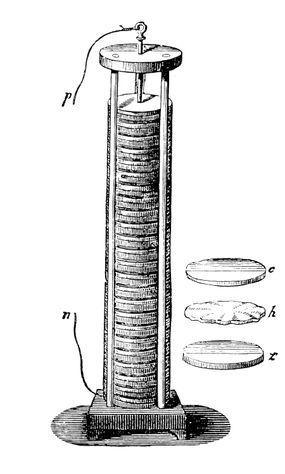
The voltaic pile consisted of a stack of alternating disks made of zinc and silver, separated by layers of brine-soaked cloth or cardboard. The zinc disks served as the negative electrodes, while the silver disks acted as the positive electrodes. The brine-soaked material between the disks facilitated the flow of ions, allowing the chemical reactions necessary to produce an electrical current.
Volta's initial design included seven pairs of zinc and silver disks, which produced approximately 1 volt (V) of electricity per cell. This modest output was sufficient to demonstrate the principle of continuous electrical current and paved the way for more advanced battery designs.
Chemical Reactions and Electrical Current
The voltaic pile operated based on redox (reduction-oxidation) reactions. When the zinc and silver disks were connected by a conductor, the following reactions occurred:
- Oxidation at the zinc electrode: Zinc atoms lost electrons, becoming zinc ions (Zn²⁺).
- Reduction at the silver electrode: Silver ions gained electrons, becoming silver atoms.
These reactions created a flow of electrons through the external circuit, generating a continuous electrical current. The brine-soaked material between the disks allowed ions to move freely, maintaining the balance of charge and ensuring the steady production of electricity.
Applications and Impact of the Voltaic Pile
The invention of the voltaic pile had far-reaching implications for both scientific research and practical applications. Some of the key impacts included:
- Advancements in electrochemistry: The voltaic pile enabled scientists to study chemical reactions driven by electricity, leading to the discovery of new elements and compounds.
- Development of telegraphy: The continuous electrical current provided by the voltaic pile was essential for the early development of telegraph systems, which relied on electrical signals to transmit information over long distances.
- Inspiration for modern batteries: The principles behind the voltaic pile influenced the design of subsequent battery technologies, from the Daniell cell to modern lithium-ion batteries.
Volta's invention marked the beginning of the electrical revolution of the 19th century, laying the groundwork for the technological advancements that would follow.
Honors and Recognition
The Volt: A Lasting Tribute
In 1881, the international scientific community honored Alessandro Volta by naming the SI unit of electric potential after him. The volt (V) is defined as the difference in electric potential between two points of a conducting wire when an electric current of one ampere dissipates one watt of power between those points. This unit is fundamental to the study and application of electricity and serves as a lasting tribute to Volta's contributions.
Legacy in Modern Science and Culture
Volta's legacy extends beyond the scientific community. His inventions and discoveries have been commemorated in various ways, including:
- UNESCO recognition: Volta's laboratory in Como has been recognized as a site of historical significance, preserving his contributions for future generations.
- Museum exhibits: Institutions such as the MIT Lemelson Center and the National MagLab feature exhibits highlighting Volta's role in the history of electrical technology.
- Educational programs: Schools and universities worldwide teach Volta's principles as part of their physics and chemistry curricula, ensuring that his work continues to inspire new generations of scientists.
As we look to the future, Volta's influence remains evident in the ongoing development of sustainable energy solutions and advanced battery technologies. His pioneering spirit and dedication to scientific inquiry continue to drive innovation in the 21st century.
Modern Applications of Volta's Discoveries
The principles established by Alessandro Volta continue to influence modern technology in profound ways. His voltaic pile remains the foundational model for all subsequent battery designs, from early Daniell cells to today’s advanced lithium-ion batteries. Modern devices, including smartphones, electric vehicles, and renewable energy storage systems, owe their functionality to the continuous electrical current first generated by Volta’s invention.
Specifically, the voltaic pile’s ability to produce approximately 1V per cell directly influenced the development of today’s 3.7V lithium-ion cells, which power everything from laptops to electric vehicles. Researchers continue to study Volta’s work to improve energy density and efficiency in next-generation batteries.
Bio-Batteries and Microbial Fuel Cells
Volta’s experiments with chemical reactions to generate electricity have inspired innovative fields such as bio-batteries and microbial fuel cells. These technologies mimic the voltaic pile by using organic materials or microorganisms to produce electricity through redox reactions. For example:
- Microbial fuel cells convert waste materials into electrical energy, aligning with sustainable development goals.
- Bio-batteries use enzymes or bacteria to generate power, reducing reliance on traditional metals.
These applications demonstrate how Volta’s foundational insights continue to drive sustainable energy solutions in the 21st century.
Volta in Education and Inspiration
Alessandro Volta’s legacy extends far beyond his scientific contributions; he remains a central figure in science education and cultural heritage. His life and work are frequently featured in academic curricula, inspiring students to explore physics, chemistry, and engineering.
UNESCO Recognition and Heritage Sites
In recognition of Volta’s enduring impact, UNESCO has designated his laboratory in Como, Italy as a World Heritage site. This preservation effort ensures future generations can learn about the conditions and mindset that led to his groundbreaking discoveries. Key aspects of the heritage site include:
- Original equipment used in Volta’s experiments.
- Detailed documentation of his research process.
- Interactive exhibits demonstrating the function of the voltaic pile.
Museums and Exhibits
Museums worldwide celebrate Volta’s achievements. Institutions such as the MIT Lemelson Center and the National MagLab showcase exhibits that highlight his role in the history of electricity. These exhibits often include:
- Replicas of the voltaic pile allowing visitors to witness its function.
- Timelines illustrating the evolution from Volta’s 1V cells to modern batteries.
- Interactive displays explaining the electromotive series and its relevance today.
"Volta’s work is not just history—it’s the bedrock upon which modern energy technology is built."
The Future of Energy: Lessons from Volta
As the world faces growing demands for clean and sustainable energy, Volta’s innovative spirit offers valuable lessons. His approach to problem-solving—combining rigorous experimentation with theoretical insight—remains a model for contemporary researchers tackling energy challenges.
Green Fuels and Sustainable Innovations
Volta’s early experiments with methane gas and its combustion have found new relevance in today’s push for green fuels. Modern scientists are revisiting his methods to develop carbon-neutral energy sources, such as:
- Methane-derived biofuels that reduce dependency on fossil fuels.
- Electrocatalysis techniques inspired by Volta’s understanding of electron transfer.
These innovations aim to balance energy needs with environmental stewardship, echoing Volta’s own curiosity and adaptability.
Global Battery Technology and Sustainability
The global battery market, valued at over $150 billion in recent years, continues to evolve with Volta’s principles at its core. Current trends include:
- Solid-state batteries offering higher safety and energy density.
- Recycling programs aimed at reducing lithium and cobalt waste.
- Grid-scale storage systems enabling wider adoption of renewable energy.
Each advancement builds on the continuous current principle first demonstrated by the voltaic pile, underscoring Volta’s enduring relevance.
Conclusion
Alessandro Volta’s life and work exemplify the power of scientific inquiry and perseverance. From his early experiments with static electricity to the invention of the voltaic pile, Volta transformed our understanding of electrical energy and laid the groundwork for countless technological advancements.
Key takeaways from his legacy include:
- The volt (V) remains the global standard for measuring electric potential.
- Continuous electrical current revolutionized electrochemistry and enabled modern electronics.
- Educational and cultural preservation ensures his contributions inspire future innovators.
As we advance into an era increasingly defined by sustainable energy and cutting-edge technology, Volta’s pioneering spirit continues to illuminate the path forward. His ability to bridge theory and practical application remains a timeless reminder of how scientific discovery can reshape the world.
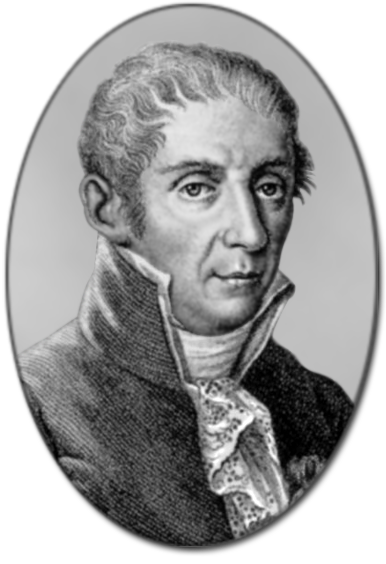

Alessandro Volta: The Pioneer of Electrical Science
Introduction
Alessandro Volta, an Italian physicist and chemist, is one of the most influential figures in the history of science. Born in 1745, Volta's groundbreaking work in electricity laid the foundation for modern electrical engineering and technology. His invention of the electric battery, known as the Voltaic Pile, revolutionized the way scientists understood and harnessed electrical energy. This article explores Volta's life, his contributions to science, and the lasting impact of his discoveries.
Early Life and Education
Alessandro Giuseppe Antonio Anastasio Volta was born on February 18, 1745, in Como, a town in the Duchy of Milan (now part of Italy). Coming from a noble family, Volta demonstrated an early fascination with natural phenomena, particularly electricity. Despite his family's wishes for him to pursue a legal career, Volta's passion for science led him to study physics and chemistry independently. By the age of 18, he was already corresponding with prominent scientists of his time, sharing his observations and experiments.
Volta's formal education began at the local Jesuit school, but he soon abandoned the traditional path to focus on his scientific pursuits. His early experiments involved studying static electricity and the properties of gases. In 1774, he was appointed as a professor of physics at the Royal School in Como, where he began his systematic investigations into electricity.
Early Scientific Contributions
Volta's first significant contribution to science was the invention of the electrophorus in 1775. This device, capable of generating static electricity, was a breakthrough in the study of electrical phenomena. The electrophorus consisted of a dielectric plate and a metal plate with an insulating handle. By rubbing the dielectric plate and then placing the metal plate on top, Volta demonstrated how static electricity could be stored and transferred.
In 1776, Volta turned his attention to chemistry, particularly the study of gases. He discovered methane (then called "inflammable air") by collecting gas released from marshes. His experiments with gases earned him recognition from the scientific community, and he was elected as a fellow of the Royal Society of London in 1791.
The Controversy with Luigi Galvani
One of the most famous episodes in Volta's career was his disagreement with fellow Italian scientist Luigi Galvani. In the late 1780s, Galvani observed that frog legs twitched when touched with two different metals, leading him to propose the theory of "animal electricity." Galvani believed that living tissues generated electricity intrinsically.
Volta, however, was skeptical of this idea. He hypothesized that the electricity observed by Galvani was not produced by the frog's tissues but was instead generated by the contact between the two dissimilar metals. To test his theory, Volta conducted a series of experiments, eventually concluding that the metals alone could produce electricity without any biological material. This disagreement sparked a heated debate in the scientific community and motivated Volta to develop his most famous invention: the Voltaic Pile.
The Invention of the Voltaic Pile
In 1800, after years of experimentation, Volta announced his invention of the Voltaic Pile, the first true battery capable of producing a steady electric current. The device consisted of alternating discs of zinc and copper separated by pieces of cardboard soaked in brine (saltwater). When connected in a circuit, the pile produced a continuous flow of electricity, proving that chemical reactions could generate electrical energy.
The Voltaic Pile was a monumental achievement for several reasons. First, it provided a reliable source of electricity, enabling further experiments in electrochemistry and electromagnetism. Second, it debunked the theory of animal electricity, establishing that electricity could be produced purely through chemical means. Finally, it paved the way for future advancements, such as the development of more efficient batteries and the exploration of electric circuits.
Recognition and Legacy
Volta's invention earned him widespread acclaim. In 1801, he was invited to Paris by Napoleon Bonaparte, who awarded him a gold medal and made him a count. The unit of electrical potential, the volt (V), was named in his honor, cementing his place in scientific history. Volta continued to conduct research and publish papers until his retirement in 1819. He passed away on March 5, 1827, in Como, leaving behind a legacy that would shape the future of science and technology.
Volta's contributions extended beyond the Voltaic Pile. His work on capacitance, voltage, and electrical resistance provided essential insights into the nature of electricity. He also made advancements in meteorology, developing devices to measure atmospheric electricity. His interdisciplinary approach exemplified the spirit of the Enlightenment, where curiosity and experimentation drove scientific progress.
Conclusion of Part One
Alessandro Volta's early life and revolutionary inventions laid the groundwork for modern electrical science. From his humble beginnings in Como to his rise as a celebrated scientist, Volta's story is one of perseverance, innovation, and intellectual brilliance. In the next part of this article, we will delve deeper into the technical aspects of the Voltaic Pile, its impact on contemporary science, and how Volta's work influenced future generations of inventors and researchers.
The Science Behind the Voltaic Pile
Alessandro Volta's Voltaic Pile was far more than just an experimental gadget – it represented a fundamental shift in the understanding of electricity. Unlike earlier devices like the Leyden jar, which stored static electricity, the Voltaic Pile generated a continuous electric current through chemical reactions. The alternating layers of zinc and copper acted as electrodes, while the brine-soaked cardboard served as an electrolyte, facilitating ion exchange. This elegant design exploited the principle of redox (reduction-oxidation) reactions, where zinc atoms oxidized (lost electrons), and copper ions reduced (gained electrons), creating a directional flow of electrons.
Volta initially called his invention the "artificial electric organ," drawing parallels to Galvani’s frog experiments. However, the Voltaic Pile worked independently of biological material, validating Volta’s argument against animal electricity. Scientists soon replicated his design, confirming its reliability. The pile typically produced around 0.76 volts per cell, and stacking multiple cells in series increased the voltage – a principle still used in modern batteries. This scalability made the Voltaic Pile indispensable for laboratory experiments.
Immediate Impact on Scientific Research
The invention sparked a flurry of discoveries. Within months of Volta’s 1800 announcement, English scientists William Nicholson and Anthony Carlisle used the pile to electrolyze water, separating it into hydrogen and oxygen for the first time. This breakthrough marked the birth of electrochemistry, a field later expanded by Humphry Davy, who isolated sodium, potassium, and other elements using Voltaic Piles. Meanwhile, physicists like Hans Christian Ørsted and André-Marie Ampère investigated the relationship between electricity and magnetism, laying the groundwork for electromagnetism.
Volta’s work also had practical applications. Early versions of telegraphs, developed in the early 19th century, relied on voltaic batteries. The medical field experimented with electric currents for therapy, albeit crudely. While these applications were rudimentary, they demonstrated the potential of controlled electricity – a concept unimaginable before Volta’s pile.
Volta vs. Galvani: Resolving the Debate
The scientific duel between Volta and Galvani wasn’t merely academic; it reshaped electrophysiology. Galvani’s nephew, Giovanni Aldini, famously used voltaic electricity to stimulate the muscles of executed criminals, sensationalizing the idea of "reanimation." Though Aldini’s demonstrations bordered on spectacle, they highlighted a kernel of truth: electricity did play a role in biological systems.
Volta’s insistence on metallic electricity was vindicated, but Galvani wasn’t entirely wrong. Later scientists, including Carlo Matteucci and Emil du Bois-Reymond, proved that nerves transmit signals via electrochemical processes – a refinement of Galvani’s "animal electricity" theory. Volta’s skepticism had pushed the field toward rigor, but the irony is that his own invention eventually helped validate some of Galvani’s ideas.
Volta’s Later Experiments and Innovations
After the Voltaic Pile, Volta shifted focus to improving electrical measurement. He developed the "condensing electroscope," a sensitive device detecting weak charges, and studied the relationship between temperature and electrical potential. His 1796 discovery of the "contact potential" between metals was pivotal, showing that dissimilar metals in contact generate voltage – a principle underlying thermocouples and modern sensors.
Volta also explored atmospheric electricity, designing instruments to measure charge in the air. His 1780s "electrical pistol," which used methane and sparks to study gaseous combustion, even hinted at applications in internal combustion engines. Though these inventions lacked immediate practical use, they showcased his relentless curiosity.
Tributes and Honors
Napoleon’s admiration for Volta extended beyond medals; he funded Volta’s research and secured him a pension. In 1815, Emperor Francis I of Austria appointed Volta as director of the philosophical faculty at the University of Padua. The volt (V), named posthumously in 1881, became the standard unit of electric potential, ensuring his name endured in every physics textbook.
Volta’s legacy also thrived through institutions. The Voltian Temple in Como, built in 1927, houses his original instruments and manuscripts. His face adorned Italian currency (the 10,000 lira note), and craters on the Moon and Mars bear his name. Perhaps most tellingly, the IEEE honors outstanding electrical engineers with the "IEEE Alessandro Volta Award."
Challenges and Controversies
Despite acclaim, Volta faced criticism. Some contemporaries accused him of downplaying predecessors like Johann Georg Sulzer, who observed the metallic taste of paired metals in 1764. Others noted that Galvani’s work inspired Volta’s pile, even if their interpretations diverged. Historians debate whether Volta fully grasped the chemical nature of his battery; he attributed the current solely to contact between metals, missing the electrolyte’s role. Still, his empirical approach triumphed where theory lagged.
Volta’s Personality and Philosophy
Colleagues described Volta as humble and generous, often sharing credit with assistants. His refusal to patent the Voltaic Pile contrasted starkly with today’s proprietary research culture. A devout Catholic, he saw science as a means to uncover divine order, once writing, "The book of nature is written by the hand of God." This worldview fueled his optimism – even failures were steps toward truth.
His loyalty to Como was legendary. Despite offers from elite European institutions, he rarely left his hometown, preferring its lakeside serenity. When not experimenting, he enjoyed playing the harpsichord or writing poetry in Latin and Italian.
Conclusion of Part Two
Volta’s middle and later years solidified his status as a titan of science. Beyond the Voltaic Pile, his methodological rigor and interdisciplinary approach set standards for experimental physics. Yet his story isn’t just about batteries or awards; it’s a testament to curiosity’s power. In the final installment, we’ll examine how Volta’s discoveries catalyzed the Electrical Age, his enduring influence on technology, and why his legacy remains relevant in the 21st century.
The Dawn of the Electrical Age
Alessandro Volta's inventions didn't just advance scientific understanding - they sparked a technological revolution that continues to shape our world today. The Voltaic Pile marked the beginning of humanity's ability to harness electricity as a controllable, sustainable power source. Within decades of its invention, scientists and engineers were building upon Volta's work to create technologies that would transform every aspect of daily life. This final section explores how Volta's legacy evolved into the modern electrical era and why his contributions remain fundamentally important in an age of smartphones and renewable energy.
From Laboratory Curiosity to Industrial Application
The 19th century saw Volta's invention evolve from a scientific novelty to an industrial necessity. By the 1820s, improved versions of the Voltaic Pile, such as John Daniell's more stable "Daniell cell," were powering early telegraph systems. The first commercial telegraph line between Paddington and West Drayton in England (1839) owed its existence to Volta's breakthrough. As battery technology improved, so did communication networks, culminating in the transatlantic telegraph cables of the 1850s that shrank global communication from weeks to minutes.
The medical field also saw dramatic changes thanks to Volta's work. While early electrical therapies were often dangerous pseudoscience, by the mid-19th century, physicians were developing legitimate applications. The invention of the electrocardiogram (EKG) in the early 20th century, which measures the heart's electrical activity, was a direct descendant of Volta's investigations into bioelectricity. Today, pacemakers, defibrillators, and neurostimulators all trace their lineage back to those first experiments with the Voltaic Pile.
The Evolution of Battery Technology
Modern batteries, from AA cells to lithium-ion power packs, are all spiritual descendants of Volta's original design. The key innovation paths include:
- Lead-acid batteries (1859): The first rechargeable batteries, still used in automobiles today
- Dry cell batteries (1886): Portable power sources making household electronics possible
- Nickel-cadmium batteries (1899): The foundation for portable power tools and early electronics
- Lithium-ion batteries (1991): Revolutionizing mobile technology with high energy density
What's remarkable is how accurately Volta's original principles - two dissimilar electrodes separated by an electrolyte - persist in these modern designs. Contemporary researchers are now working on "beyond lithium" technologies like solid-state batteries and sodium-ion cells, yet they still operate on the same fundamental electrochemical concepts that Volta discovered.
Volta's Influence on Electrical Theory
Beyond physical inventions, Volta's work established crucial theoretical frameworks in electrical science. His meticulous documentation of how different metal pairs produced varying voltages led to the electrochemical series, a fundamental tool in chemistry and materials science. The discovery of electromagnetism by Ørsted in 1820 - which occurred because he was experimenting with a Voltaic Pile - opened entirely new fields of study in physics.
Volta's quantitative approach to measurement also set new standards. By carefully documenting voltage outputs from different metal combinations, he helped establish the culture of precision that defines modern experimental science. This methodology inspired later scientists like Georg Ohm, who formulated Ohm's Law in 1827 while working with Voltaic cells, and Michael Faraday, whose laws of electrolysis (1834) grew directly from Volta's chemical discoveries.
Volta in the 21st Century
In our modern world of wireless charging and quantum computing, Volta's influence might seem distant. Yet nearly every electronic device we use today owes something to his pioneering work. Consider these contemporary connections:
- Renewable energy storage: Massive battery banks storing solar and wind power use scaled-up versions of Volta's principles
- Electronics miniaturization: The development of micro-batteries for medical implants and IoT devices follows Volta's electrochemical traditions
- Materials science: Research into better battery electrodes directly extends Volta's comparative studies of metal pairs
- Space exploration: Every Mars rover and satellite carries Volta's legacy in its power systems
Perhaps most significantly, the global shift toward electric vehicles represents the ultimate vindication of Volta's vision. When Tesla Motors (named for another electrical pioneer) began revolutionizing the auto industry with lithium-ion batteries, they were fulfilling a technological lineage that began with Volta's stacked metal discs.
Teaching Volta's Legacy
Educational approaches to Volta's work have evolved alongside the technology it spawned. Where once students might have built replica Voltaic Piles, they now use sophisticated simulation software - yet the core principles remain unchanged. Modern physics curricula still introduce circuit theory through Volta's concepts of potential difference (voltage) and current, while chemistry students learn about redox reactions through battery chemistry experiments.
Science museums worldwide feature interactive exhibits demonstrating Volta's discoveries, often emphasizing how this 18th century research underpins today's digital world. The Tempio Voltiano in Como remains a pilgrimage site for engineers and historians, preserving original instruments and manuscripts that reveal Volta's thinking process.
An Enduring Scientific Legacy
What makes Volta's contributions so timeless? Several factors explain why his work remains relevant over two centuries later:
- Foundational Simplicity: His discoveries revealed fundamental truths about energy that transcend specific technologies
- Interdisciplinary Impact: The work straddled physics and chemistry, benefiting both fields tremendously
- Quantitative Rigor: His meticulous measurements established standards for scientific practice
- Practical Orientation: Unlike purely theoretical scientists, Volta created immediately useful inventions
As we face 21st century challenges like climate change and sustainable energy, Volta's example remains instructive. His ability to combine basic research with practical applications provides a model for today's scientists working on renewable energy storage and green technologies.
Final Reflections
Alessandro Volta's story is ultimately about human curiosity's power to illuminate and transform the world. From a curious boy in Como to one of history's most celebrated scientists, his journey demonstrates how systematic inquiry and innovative thinking can change civilization's course. The glow of every smartphone screen, the hum of every electric vehicle, and the pulse of every medical implant carries echoes of Volta's genius.
As we continue exploring frontiers like solid-state batteries and bioelectronic medicine, we walk paths Volta first charted. His legacy reminds us that today's fundamental research becomes tomorrow's world-changing technology - and that even the most abstract scientific debate (like his with Galvani) can spark revolutions. The electrical age Volta initiated shows no signs of ending, only evolving in ways that continue to prove the enduring value of his pioneering vision.
:max_bytes(150000):strip_icc()/GettyImages-703637529-58efda4a5f9b582c4d5cf35f.jpg)
The Exciting World of FIFA 22: A Comprehensive First Look
FIFA 22, the latest installment in the long-standing EA Sports FIFA franchise, continues the tradition of revolutionizing the virtual soccer experience. With its release, fans around the globe eagerly anticipated the enhancements and innovations promised by EA Sports. The game, released in 2021, offers a fresh take on gameplay, improved graphics, and features designed to immerse players in the world of soccer like never before.
Introducing HyperMotion Technology
At the heart of FIFA 22’s most significant enhancements is the groundbreaking HyperMotion technology. This revolutionary system combines Advanced 11v11 Match Capture and machine learning to deliver the most fluid and realistic gaming experience seen in any FIFA title to date. HyperMotion technology records the movements of 22 professional footballers playing at high intensity. This data is then processed by a cutting-edge algorithm that writes new animations in real-time, transforming how players move both with and without the ball.
The result is a game that feels more lifelike than ever. Players will notice the fluidity and realism in player interactions and animations, offering an experience that mirrors real-world soccer play. The innovative animations provide a more responsive feel, whether dribbling past defenders, netting a goal, or defending the line.
Gameplay Mechanics and Tactical Advancements
FIFA 22 has also introduced significant changes to its gameplay mechanics, focused on enhancing the realism and authenticity. Defensive AI has been reworked to enable better positioning, creating more intuitive off-ball runs, and understanding player space, making both attacking and defending a more strategic endeavor.
Moreover, ball physics have seen a noticeable improvement, offering a more precise trajectory, with accurate spins, bounces, and an overall realistic flight pattern. These refinements make for strategic shooting and passing, forcing players to strategize even the smallest moves to secure a victory.
The new Advanced Attacking Tactics feature provides players with the capability to customize their team's offensive style, allowing more control over how your team approaches each half of the match. This level of customization empowers players to set up their preferred gameplay dynamics and adapt under various circumstances unique to each game.
Enhanced Graphics and Visual Realism
FIFA 22 takes visual immersion to the next level, boasting improved detail and depth across the entire experience. From the lush, meticulously crafted grass on the pitch to the flickered detail of a player's sweat under the stadium lights, everything has been meticulously re-created to reflect an actual match’s visual spectacle.
The crowds are more dynamic, with enhanced animations that convey a more authentic atmosphere, reacting to every goal, save, or miss with the intensity one would expect from a live match. Stadium environments across the globe are more detailed and vibrant, underscoring FIFA 22's commitment to delivering an unparalleled sense of realism.
In addition, player likeness has been significantly enhanced. EA Sports has worked closely with numerous professional athletes to perfect the digital representation of their appearances and movements. This attention to detail ensures that every slide tackle, kick, and goal is performed with astounding authenticity.
A Focus on Career Mode
For those who love delving into team management, FIFA 22's Career Mode brings exciting new possibilities. It offers an augmented depth that provides users with a more immersive and strategic approach to club management. Managers can build their custom club, create a unique identity, and rise through the ranks by overcoming challenges presented throughout the career.
The revamped Player Career Mode introduces new goals and objectives, steering the development of personal player stories. This character-driven approach allows for a deeper engagement in the journey, with increased chances to enhance player ratings and make meaningful progressions.
As FIFA 22 continues to redefine the virtual soccer experience, players worldwide are eager to explore these exhilarating new features and improvements. Whether you’re a long-time fan or a newcomer to the series, FIFA 22 promises an unforgettable gaming experience that is both groundbreaking and soulfully enjoyable.
Ultimate Team Gets an Upgrade
One of FIFA's most popular modes, Ultimate Team, sees significant enhancements in FIFA 22, attracting both seasoned veterans and newcomers alike. The FIFA Ultimate Team (FUT) environment immerses players in a competitive platform where they build and manage their fantasy teams, competing against others worldwide to climb the ranks.
This year, FUT introduces the FUT Heroes items, celebrating some of football’s fan favorites alongside past legends who've left an indelible mark on the sport. These items offer unique chemistry bonuses, adding strategic depth to team building, as fans can create squads reflecting historical moments or their favorite leagues.
Moreover, the new Division Rivals progression system revamps competitive play, creating a more streamlined pathway to the top with seasonal rewards. The focus is on delivering competitive matches that fit any skill level, with milestones offering beneficial rewards even if you’re not at the top of the leaderboards.
Squad Battles, another vital component of FUT, bring a heightened sense of challenge with adaptive AI. This feature keeps players engaged as they tweak their teams to overcome increasingly difficult AI squads, earning weekly rewards based on performance.
Volta Football: Street Soccer Reimagined
Volta Football, the street soccer mode introduced in FIFA 20, returns with exciting new features in FIFA 22. It’s a mode that allows players to escape the traditional field game, offering a high-speed, small-sided play experience. The revamped Volta Football focuses on giving players more control and fluidity in play.
This year, the introduction of Volta Arcade injects a sense of fun into the series with a collection of mini-games that can be enjoyed with friends. These games range from dodgeball-style challenges to precision shooting missions, providing a break from the traditional competitive matches and allowing players to showcase their skills in a light-hearted and entertaining format.
New Skill Meter and Signature Abilities bring an added layer of strategy to Volta matches, enabling players to leverage unique skills that can change the tide of a game within seconds. Whether it’s unleashing powerful shots, exhibiting deft dribbling, or performing feats of aerial agility, players can adapt their style to whatever challenge they face on the various iconic street courts.
Pro Clubs: A Cooperative Experience
The Pro Clubs mode in FIFA 22 offers a fresh take on social soccer gaming, allowing players to team up and control a single player in a team of customized avatars. This mode is perfect for those looking to combine their individual skills and work together, sharing the triumphs and challenges of competitive play seamlessly with their friends.
FIFA 22 emphasizes customization and progression within Pro Clubs. A significantly expanded player customization suite offers everything from visual tweaks to new kits and badge designs, allowing for a unique team identity.
Additionally, the integration of seasonal progression gives players goals to work towards collectively, adding layers to player development and club growth. It ensures that each match contributes to the club’s progress, making every effort count in their quest for victory.
Improved Accessibility Features
Understanding that gaming is for everyone, FIFA 22 introduces several accessibility features designed to ensure that as many people as possible can enjoy the beautiful game. These features do not only make the game more inclusive but also pave the way for a broader community within FIFA.
Colorblind options, text-to-speech functionality, and customizable subtitles are among the tools that ensure an accessible experience tailored to individual needs. Advanced controller remapping provides flexibility in gameplay, ensuring everyone can partake in the thrill of FIFA 22 regardless of physical limitations.
The inclusion of such measures confirms FIFA 22's status not only as a leading sports title in terms of technology and innovation but also in fostering a community that values inclusivity and diversity.
As we navigate through the initial months post-launch, FIFA 22 continues to demonstrate the series' evolution, driven by technological advancements and a keen eye for player feedback. This installment exemplifies how EA Sports continues to maintain its reputation for creating the most engaging and dynamic soccer simulation on the market, clearly setting the bar for future iterations. With every match played, FIFA 22 promises excitement, competition, and a deep love for the world's favorite sport.
Community Feedback and Ongoing Updates
A significant strength of the FIFA series has always been its dedication to incorporating community feedback into its development process. FIFA 22 is no exception, as EA Sports actively listens to player communities for suggestions and feedback, implementing changes and improvements through regular updates.
These updates not only focus on ironing out any gameplay issues but also introduce new content, keeping the experience fresh and engaging. Regular patches improve balance, resolve bugs, and sometimes even alter gameplay dynamics to address any concerns raised by the community. This responsive approach ensures that FIFA 22 evolves post-launch, reflecting the desires and feedback of its player base.
Moreover, players can look forward to special events and promotions throughout the year, adding seasonal flair and unique challenges that keep the game exciting. Aligning FIFA's content releases with real-world soccer events further enriches the player's connectivity with the sport, providing a deeper level of immersion.
The Competitive Scene: FIFA 22 Esports
In recent years, esports have grown exponentially, and FIFA 22 is no stranger to this trend. The game plays a central role in many competitive gaming circuits, attracting top-tier talent from around the globe. The FIFA Global Series serves as a crucial platform where players vie for prestige, cash prizes, and coveted spots at the FIFA eWorld Cup.
Aspiring professionals and amateurs are provided numerous opportunities to showcase their skills, with events catering to various skill levels. The competitive structure in FIFA 22 is designed to be inclusive, allowing a vast array of participants to engage in the exhilarating world of FIFA esports.
Tournaments are broadcast globally, fostering a robust community of fans who follow their favorite teams and players. The excitement generated by these live events mirrors the enthusiasm found in traditional soccer matches, complete with jaw-dropping goals and nail-biting finales that captivate audiences.
Navigating Real-World Challenges
The development and release of FIFA 22 have come during a time of significant global challenges, impacting not only sports but various entertainment sectors worldwide. Despite these challenges, EA Sports has managed to roll out a game that remains true to its legacy of delivering high-quality and engaging content.
The ability to play FIFA 22 online has been a refuge for many, offering a sense of connection and competitiveness in a period characterized by physical distancing. As communities around the world continue to adapt to changing circumstances, FIFA 22 serves as a consistent reminder of the joy and unity that soccer brings to people from diverse backgrounds.
FIFA 22 mirrors the unpredictable nature of the real-world sport, maintaining its spontaneity, excitement, and the fundamental essence of soccer – a sport that brings people together regardless of locale.
A Future of Possibilities
As FIFA 22 cements its place in gaming history, fans are already looking forward to what the future holds for the franchise. With technological advancements showing no signs of slowing down, the possibilities for subsequent FIFA installments are limitless. As we gear up for more innovations, players can expect even richer experiences, potentially integrating emerging technologies like virtual reality to push the boundaries of gameplay immersion.
Moreover, the continued emphasis on diversity, inclusion, and community engagement will ensure that future titles remain relevant and socially resonant.
FIFA 22 has set a high bar with its immersive features, stunning visuals, and gameplay enhancements. It stands as a testament to EA Sports' dedication to refining the art of soccer simulation, providing a robust experience that appeals to casual players and die-hard soccer enthusiasts alike. As it captivates millions worldwide, FIFA 22 assures its players of a thrilling journey filled with the love and passion that only the beautiful game can ignite.