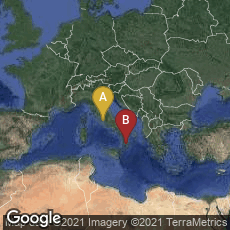
Cassiodorus: Preservation of Ancient Knowledge
Cassiodorus, born Magnus Aurelius Cassiodorus Senator around 485 CE, stands as a pivotal figure bridging the Roman Empire and early medieval Christianity. As a statesman, scholar, and monk, he preserved classical texts and shaped Christian education. His legacy remains vital in understanding the transition from antiquity to the Middle Ages.
Early Life and Political Career
Cassiodorus was born in Scyllacium, modern-day Squillace in Calabria, to a prominent senatorial family. His ancestors defended Rome against Vandal invasions, setting the stage for his influential career.
Key Political Roles
- Quaestor (c. 507): Served as Theodoric the Great's legal secretary.
- Consul (514): Held high office in Rome during Ostrogothic rule.
- Praetorian Prefect (533–538): Functioned as prime minister, overseeing taxes and justice.
His career spanned three Ostrogothic rulers, navigating tensions between Catholic Romans and Arian Goths. His writings promoted Gothic rule as a continuation of Roman traditions.
Literary and Scholarly Contributions
Cassiodorus authored several influential works, including the Variae, a collection of official letters. These texts justified Ostrogothic governance while maintaining Roman administrative practices.
Major Works
- Variae: 12 books containing approximately 468 letters guiding policy.
- Institutiones: Divided liberal arts into trivium and quadrivium, endorsing Dionysius Exiguus' calendar reforms.
- Historia Gothorum: Now lost, known through later summaries.
"Cassiodorus sought to harmonize Greek-Latin learning with Christian doctrine, creating a framework for medieval education."
Foundation of Vivarium Monastery
After retiring around 540 CE, Cassiodorus established the Vivarium monastery near Calabria. This center became a hub for copying classical and Christian texts, ensuring their survival.
Vivarium's Impact
- Housed approximately 40 monks dedicated to scholarly work.
- Produced estimates of 500+ manuscripts, preserving works by Aristotle and Plato.
- Influenced later Benedictine monasticism, despite no direct link to St. Benedict.
The scriptorium at Vivarium became a model for knowledge preservation during the so-called Dark Ages.
Cassiodorus as a Transmitter of Antiquity
Cassiodorus earned the title “transmitter of antiquity” by ensuring classical knowledge survived the upheavals of the early medieval period. His Vivarium monastery became a beacon of learning, preserving texts that might otherwise have been lost.
Preservation Through Manuscript Copying
- The scriptorium at Vivarium produced an estimated 500+ manuscripts, including works by Aristotle and Plato.
- Monks copied both Christian scriptures and pagan classics, creating a bridge between eras.
- These efforts influenced later Benedictine monasticism, despite no direct connection to St. Benedict.
His Institutiones guided medieval education by organizing learning into the trivium and quadrivium, a framework still echoed in classical Christian schools today.
Enduring Influence on Liberal Arts
Cassiodorus’s educational model shaped the seven liberal arts schema that dominated medieval universities. His emphasis on structured learning resonated during the Carolingian Renaissance in the 12th century.
“Cassiodorus’s Institutiones provided a roadmap for integrating classical learning with Christian theology, influencing scholars for centuries.”
Cultural Diplomacy and Religious Conversion
Between the fall of the Western Roman Empire in 476 CE and the rise of Byzantine power, Cassiodorus balanced complex political and religious tensions. His career spanned three Ostrogothic rulers, each with differing agendas.
Navigating Roman-Gothic Tensions
- He promoted Gothic rule as a continuation of Roman governance through the Variae.
- His policies sought harmony between Catholic Romans and Arian Goths, mitigating conflict.
- Cassiodorus converted to Christianity at the peak of his career, aligning his scholarly work with faith.
This delicate diplomacy helped stabilize Italy during a period of frequent warfare and cultural transition.
Bridging Greek and Latin Traditions
Cassiodorus’s writings referenced broader historical contexts, including Sasanian Persia and its kings. His Chronica demonstrated a keen interest in connecting diverse cultures and eras.
- He facilitated the transfer of Greek philosophical texts into Latin-speaking circles.
- His works served as a vital link between classical antiquity and early medieval scholarship.
Modern Scholarship and Digital Preservation
Contemporary interest in Cassiodorus focuses on his role in preserving knowledge and his relevance to modern education. Digital initiatives have revitalized studies of his texts and legacy.
Digital Editions and Classical Education
- Projects now offer digital editions of the Variae and Institutiones for use in classical Christian schools.
- These resources revive the liberal arts curriculum he championed, emphasizing grammar, rhetoric, and logic.
Scholars analyze how Cassiodorus’s administrative practices influenced tax systems and cultural diplomacy, linking history with economics.
Vivarium’s Legacy in the “Dark Ages” Narrative
Modern analyses challenge the notion of a knowledge vacuum during the so-called Dark Ages. The Vivarium model demonstrates sustained intellectual activity.
- Researchers examine the scriptorium’s methods for medieval knowledge preservation.
- Interdisciplinary studies connect Cassiodorus’s work to fields like economic history and manuscript studies.
“The Vivarium stands as a testament to Cassiodorus’s vision: a monastery where faith and learning coexisted, safeguarding antiquity for future generations.”
Ongoing Exhibitions and Curatorial Work
Institutions like the University of Missouri highlight Cassiodorus through manuscript fragments, showcasing his enduring impact. These exhibitions underline ongoing efforts to curate and interpret his legacy.
- Permanent collections feature manuscript fragments from his era, offering tangible links to the past.
- Academic conferences increasingly address Cassiodorus’s role in early medieval education.
Enduring Legacy in Medieval and Modern Thought
Cassiodorus’s influence extended far beyond his lifetime, shaping medieval education and inspiring scholars across centuries. His vision for preserving knowledge remains a cornerstone of intellectual history.
Medieval Educational Frameworks
- His liberal arts schema became the foundation of medieval university curricula.
- The Carolingian Renaissance in the 12th century cited Cassiodorus as a key authority.
- Monastic schools adopted his emphasis on integrating classical texts with Christian theology.
By organizing learning into the trivium and quadrivium, Cassiodorus created a structured approach that endured for generations.
Renaissance Revival and Digital Initiatives
During the Renaissance, humanists rediscovered Cassiodorus’s works, recognizing their value in reviving ancient learning. Today, digital projects continue this tradition.
- Digital editions of the Institutiones and Variae are now accessible to scholars worldwide.
- Academic databases analyze his administrative records to explore economic history and governance.
“Cassiodorus’s Vivarium was not just a monastery—it was a think tank for preserving civilization’s most precious texts.”
Conclusion: Cassiodorus’s Legacy as a Bridge Between Eras
Cassiodorus stands as a vital link between the classical Roman world and the emerging medieval Christian era. His statesmanship, scholarship, and monastic vision ensured that antiquity’s wisdom survived.
Key Takeaways
- Lifespan: Active for over a century, from c. 485–585 CE.
- Major Offices: Quaestor, Consul, and Praetorian Prefect under Ostrogothic rule.
- Key Works: Variae (468 letters), Institutiones, and Expositio Psalmorum.
- Vivarium Impact: Housed ~40 monks and preserved an estimated 500+ manuscripts.
Through political acumen and scholarly dedication, Cassiodorus fortified the transmission of knowledge. His legacy endures in modern classrooms, digital archives, and the enduring belief that education bridges past and future.
“Cassiodorus taught us that to save tomorrow, we must first preserve yesterday.”
As we navigate our own era of rapid change, his example reminds us that safeguarding wisdom—whether on parchment or pixel—is a timeless act of courage and hope.
In conclusion, Cassiodorus's life and work exemplify the crucial role of preserving knowledge during times of transition. His efforts as a statesman, scholar, and monk ensured that classical texts and Christian education would endure, shaping the course of history. As we reflect on his legacy, let us consider how we, too, can safeguard and pass on the wisdom of the past to future generations.
Cassiodorus and the Evolution of Monastic Libraries
Cassiodorus’s Vivarium monastery not only preserved texts but also pioneered the concept of the monastic library as an organized, systematic repository of knowledge. Unlike earlier collections, which were often disorganized or focused solely on religious texts, Vivarium’s library was meticulously cataloged and included a wide range of secular and sacred works. This innovation set a precedent for medieval libraries, influencing institutions such as the Library of Monte Cassino and the Scriptorium of Bobbio. By emphasizing the importance of both preservation and accessibility, Cassiod