The Life and Legacy of Titus: Rome’s Beloved Emperor
Introduction: The Rise of a Flavian Prince
Titus Flavius Vespasianus, known simply as Titus, was a Roman emperor whose brief but impactful reign left an indelible mark on history. Born on December 30, 39 AD, Titus was the eldest son of Vespasian, the founder of the Flavian Dynasty. His life was intertwined with the tumultuous events of the 1st century AD, including military conquests, political intrigue, and natural disasters. Despite ruling for only two years (79–81 AD), Titus earned a reputation as one of Rome’s most benevolent and effective leaders.
Early Life and Military Career
Titus grew up in the imperial court, receiving an elite education in rhetoric, philosophy, and military strategy. His father, Vespasian, was a seasoned commander who had served under Emperor Claudius during the invasion of Britain in 43 AD. Titus followed in his father’s footsteps, joining the military at a young age. By the time he was in his twenties, Titus had already distinguished himself as a capable leader.
One of the pivotal moments in Titus’ early career came during the Jewish Revolt (66–70 AD). Appointed by Emperor Nero to quell the rebellion, Vespasian led the Roman legions into Judea, with Titus serving as his second-in-command. After Nero’s suicide in 68 AD and the subsequent Year of the Four Emperors, Vespasian emerged victorious as the new ruler of Rome, leaving Titus to complete the siege of Jerusalem.
The Siege of Jerusalem
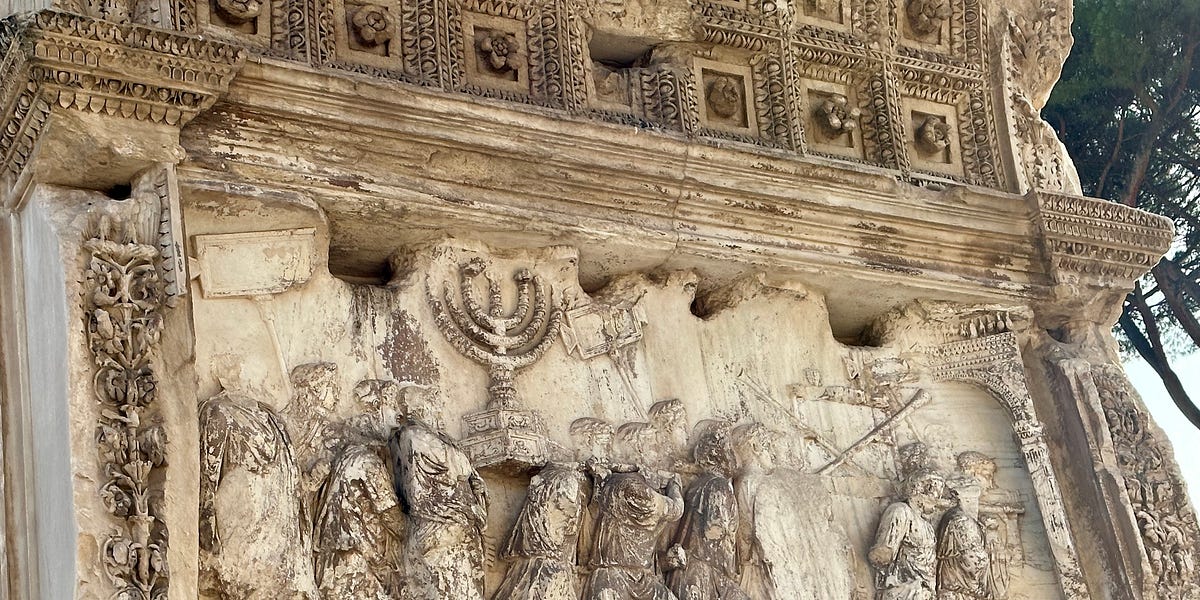
The fall of Jerusalem in 70 AD was a defining moment for Titus. The siege lasted months, with the Jewish defenders fiercely resisting the Roman forces. Titus ordered the construction of massive siege ramps and battering rams to breach the city’s formidable walls. When Jerusalem finally fell, the city and its Temple were destroyed, an event immortalized in the Arch of Titus in Rome.
The destruction of the Second Temple had profound consequences for Judaism, reshaping its religious practices and identity. For Rome, the victory solidified Titus’ reputation as a brilliant commander and a ruthless enforcer of Roman authority. The spoils from Judea, including the golden menorah from the Temple, were paraded through Rome in a grand Triumph.
Titus as Emperor: A Reign of Compassion
When Vespasian died in 79 AD, Titus ascended to the throne as Emperor. Unlike many of his predecessors, Titus was already a popular figure among the Roman people. His charm, generosity, and military successes made him a natural leader. Despite initial fears that his rule might mirror the tyranny of Nero or the instability of the Year of the Four Emperors, Titus proved to be a compassionate and effective ruler.
Disasters and Rebuilding
Titus’ reign was marked by two major catastrophes: the eruption of Mount Vesuvius in 79 AD and a devastating fire in Rome in 80 AD. The eruption buried the cities of Pompeii and Herculaneum under volcanic ash, killing thousands. Titus responded swiftly, allocating vast resources to relief efforts and rebuilding. He personally visited the disaster zones, offering aid and comfort to survivors.
The fire in Rome, which destroyed parts of the Capitoline Hill and the Temple of Jupiter, was another test of Titus’ leadership. Once again, he spearheaded reconstruction efforts and provided financial assistance to those who lost their homes. His actions during these crises endeared him even more to the Roman populace.
A Leader Loved by the People
Titus was known for his accessibility and kindness. Unlike emperors who ruled with an iron fist, he avoided unnecessary executions and promoted a sense of unity. He famously said, “No one should leave the emperor’s presence sorrowful,” a philosophy that guided his reign. He also disbanded the informants (delatores) who had terrorized citizens under previous regimes.
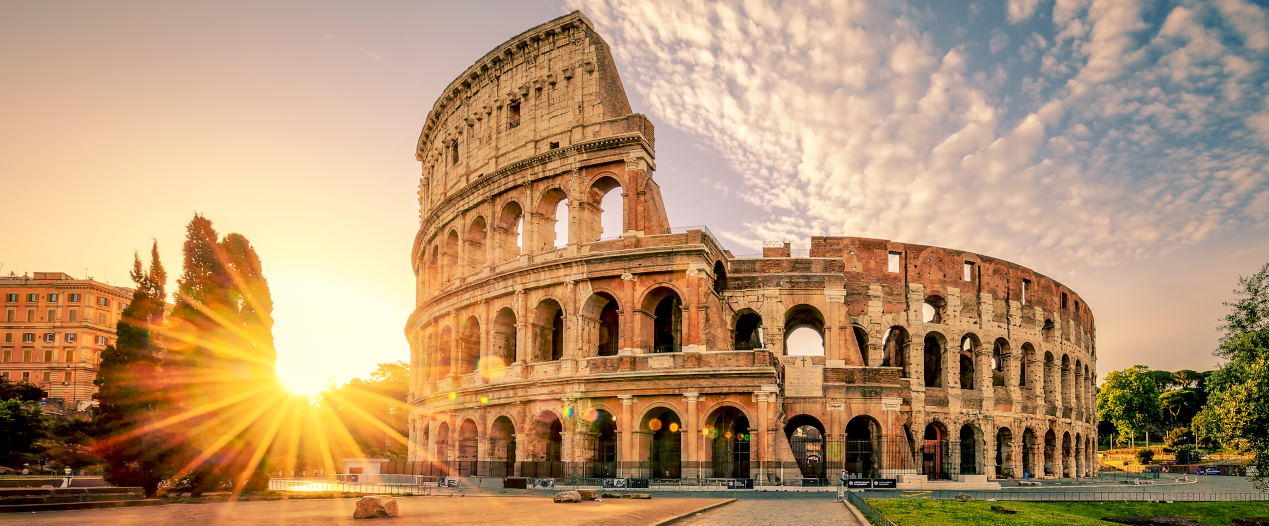
One of his most enduring legacies was the completion of the Colosseum, begun by his father. The inauguration of this grand amphitheater in 80 AD was accompanied by 100 days of games, including gladiatorial combats and mock naval battles, further cementing his popularity.
Conclusion of Part One: A Legacy Cut Short
Titus’ reign was a golden period for Rome, but it was tragically short-lived. In 81 AD, he fell ill and died at the age of 41. Rumors of poisoning circulated, though most historians believe he succumbed to natural causes. His death was met with widespread mourning, and his brother Domitian succeeded him as emperor.
Despite his brief time on the throne, Titus’ legacy endured. He was deified by the Roman Senate, and his reign was remembered as one of peace, generosity, and stability—a stark contrast to the chaos that had preceded it. In the next part of this article, we will explore Titus’ personal life, his relationships, and the controversies surrounding his rule.
The Personal Life of Titus: Affections, Scandals, and Controversies
While Titus is often remembered for his military victories and benevolent rule, his personal life was equally complex. Unlike many Roman emperors, who indulged in excess and scandal, Titus maintained a relatively restrained private demeanor—yet his relationships and alleged vices remained subjects of speculation both during his lifetime and in later historical accounts.
The Women in Titus’ Life: Love and Political Marriages
Roman politics demanded strategic marriages, and Titus was no exception. His first marriage was to Arrecina Tertulla, the daughter of a former Praetorian prefect, which strengthened his political connections. However, Tertulla died young, leaving Titus a widower. He then married Marcia Furnilla, a noblewoman from a powerful family, but this union ended in divorce shortly after the birth of their daughter, Julia Flavia.
The most controversial figure in Titus’ romantic life was Berenice, the Jewish queen of Judea. The daughter of King Herod Agrippa I, Berenice had been married multiple times before forming a liaison with Titus during the Jewish Revolt. Their relationship was passionate but politically explosive—Rome viewed foreign queens with suspicion, and the Senate feared she might exert undue influence. Despite initially bringing Berenice to Rome, Titus eventually sent her away to preserve his reputation.
Titus and His Brother Domitian: A Fraught Relationship
Titus’ relationship with his younger brother, Domitian, was fraught with tension. While Titus was charismatic and beloved, Domitian was ambitious and viewed with suspicion. Some ancient historians, such as Suetonius, suggest that Domitian resented Titus’ success and even plotted against him. However, others argue that their rivalry was exaggerated by later writers to contrast Titus’ "good" reign with Domitian’s more autocratic rule.
Despite underlying tensions, Titus entrusted Domitian with significant responsibilities, including governing Rome in his absence. Yet whispers of betrayal persisted. Some claimed Domitian attempted to seize power prematurely when Titus fell ill, though no concrete evidence supports this.
A Man of Contradictions: The Darker Side of Titus
Titus was celebrated for his clemency, but his reputation was not without blemishes. As a young military commander, he displayed ruthless efficiency during the siege of Jerusalem, ordering the slaughter of rebels and the enslavement of thousands. Critics argued that his later generosity was calculated to soften this earlier brutality.
Another stain on his record was his brief role as Praetorian prefect under his father, Vespasian. In this position, Titus oversaw the execution of rivals and dissenters, including members of the Stoic opposition who challenged imperial authority. While these actions were standard for maintaining power, they contrasted sharply with his later image as a merciful ruler.
Titus as Emperor: Diplomacy and Governance
Beyond disasters and court intrigues, Titus proved a shrewd diplomat and administrator. He maintained stability in the empire through pragmatic policies, avoiding unnecessary wars and focusing on domestic prosperity.
Foreign Policy and Military Restraint
Unlike emperors such as Trajan or Augustus, who expanded Rome’s borders aggressively, Titus favored consolidation. He refused calls to invade Britain or Parthia, instead reinforcing existing frontiers through alliances and defensive measures. This approach minimized financial strain and endeared him to a war-weary populace.
His diplomatic skill was evident in handling client kingdoms like Armenia, where he negotiated peace without bloodshed. Even former enemies, such as the Batavian rebels, were reintegrated into the empire rather than crushed.
Economic Reforms and Public Works
Titus inherited a treasury depleted by civil war and Nero’s extravagance, yet he avoided heavy taxation. Instead, he funded relief efforts and infrastructure projects through careful management of imperial finances. The completion of the Colosseum was just one of many public works—roads, aqueducts, and baths were also prioritized.
One of his most significant economic moves was reforming the grain dole system, ensuring Rome’s poor received consistent supplies. This not only averted riots but solidified his reputation as the "delight of mankind" (deliciae generis humani), a title bestowed upon him by contemporaries.
Cultural Contributions and Patronage
Titus was a patron of the arts and literature, fostering a cultural revival in Rome. Unlike Nero, who monopolized artistic glory, Titus encouraged public participation in theaters and festivals.
The Inauguration of the Colosseum
The Flavian Amphitheatre, later known as the Colosseum, was Titus’ crowning architectural achievement. Its opening games—featuring gladiators, exotic beasts, and even flooded naval battles—were unprecedented in scale. These spectacles served a dual purpose: celebrating Roman grandeur while distracting citizens from recent hardships.
Literature and Historical Legacy
Titus’ reign coincided with the works of influential writers like Pliny the Elder (who died during the Vesuvius eruption) and Josephus, the Jewish historian who chronicled the siege of Jerusalem. Josephus, once a prisoner of Titus, became his client and propagandist, shaping the emperor’s legacy as a magnanimous victor.
However, not all accounts were flattering. Christian writers later vilified Titus as the destroyer of Jerusalem, while Roman satirists like Juvenal hinted at rumors of decadence beneath his polished image.
Conclusion of Part Two: The Shadow of Mortality
By 81 AD, Titus was at the height of his power—admired abroad, adored at home, and seemingly destined for a long reign. Yet his sudden death shocked the empire. Some whispered that Domitian had hastened his demise, but most scholars attribute it to fever, possibly malaria.
Titus’ funeral was a spectacle of grief, with the Senate declaring him a god (Divus Titus) posthumously. His brief rule became a benchmark for "good emperors," revered for balance and humanity. In the final part of this article, we will examine Titus’ enduring legacy—how later emperors invoked his name, his depiction in art and media, and why his two-year reign still captivates historians today.
The Enduring Legacy of Titus: From Ancient Rome to Modern Memory
Titus’ reign may have been brief, but his impact resonated far beyond his lifetime. Unlike many Roman emperors whose names faded into obscurity or became synonymous with tyranny, Titus was enshrined in history as an ideal ruler. His posthumous reputation evolved through the ages, shaped by historians, artists, and political leaders who sought to invoke his image for their own purposes.
Divine Honors and Imperial Propaganda
Almost immediately after his death, the Roman Senate deified Titus, declaring him *Divus Titus*—a testament to his widespread admiration. His brother and successor, Domitian, constructed the Arch of Titus in 81 AD to commemorate his victories, particularly the Siege of Jerusalem. The arch’s intricate reliefs depict Roman soldiers carrying the spoils of the Temple, including the menorah, immortalizing Titus’ military triumph.
Domitian, despite their fraught relationship, leveraged Titus’ legacy to legitimize his own rule. By emphasizing his familial connection to the beloved emperor, he sought to quell dissent and present the Flavian dynasty as a divinely favored line. However, the contrast between Titus’ leniency and Domitian’s autocratic tendencies only deepened nostalgia for the former’s reign.
Titus in Later Roman Thought: A Model for Good Governance
In the centuries following his death, Titus became a benchmark against which other emperors were measured. The historian Tacitus, though generally cynical about imperial power, acknowledged his competence, while Suetonius portrayed him as a ruler who overcame the vices of youth to embrace virtue.
The 2nd-century emperor Antoninus Pius consciously modeled his reign after Titus’, prioritizing public welfare over military expansion. Similarly, Marcus Aurelius referenced Titus in his *Meditations*, praising his ability to balance power with compassion. Even as Rome declined, Titus remained a symbol of the empire’s golden age—a ruler who embodied *civilitas* (citizen-like humility) in stark contrast to later despots.
The Jewish and Christian Perspectives
Titus’ legacy diverged sharply in Jewish and Christian traditions. For Jews, he was the destroyer of Jerusalem, a figure of devastation akin to Nebuchadnezzar. Rabbinic texts recount his arrogance—claiming he blasphemed God by slashing the Temple curtain—and his tragic death was interpreted as divine punishment. The Arch of Titus, with its spoils from Jerusalem, became a painful symbol of exile.
Early Christians, meanwhile, saw Titus’ victory as fulfillment of Jesus’ prophecy about the Temple’s destruction (Matthew 24:2). Some Church Fathers, like Tertullian, depicted him as an unwitting agent of God’s will. Ironically, despite his role in their persecution under Nero, Christians later softened their view of Titus, contrasting him with more overtly brutal emperors.
Titus in Art and Popular Culture
The emperor’s allure endured through the Renaissance and into modern times, inspiring artists, writers, and filmmakers who reinterpreted his life to fit contemporary narratives.
Renaissance Revival and Baroque Grandeur
During the Renaissance, classical figures like Titus fascinated scholars and patrons. The Arch of Titus was studied by artists such as Michelangelo, who admired its proportions. Paintings of the siege of Jerusalem often highlighted Titus’ (sometimes fictionalized) magnanimity, portraying him as a noble conqueror—a trope that ignored the conflict’s brutality.
In the Baroque era, Italian composer Antonio Cesti penned *Il Tito* (1666), an opera that romanticized Titus’ clemency. The work exaggerated his mercy, depicting him pardoning conspirators—an embellishment drawn more from Renaissance ideals than historical fact.
Modern Depictions: From Film to Fiction
In the 20th century, Titus appeared in films like *The Fall of the Roman Empire* (1964) and BBC documentaries, often as a secondary character eclipsed by Nero or Vespasian. More recently, video games like *Total War: Rome II* and *Civilization* feature him as a wise military leader, reinforcing his strategic acumen.
Historical novels, such as Lindsey Davis’ *The Course of Honor*, explore his relationship with Berenice, blending fact with dramatic license. Meanwhile, Jewish narratives—like Joseph Telushkin’s *Jewish Literacy*—continue to grapple with his complicated legacy as both a destroyer and a ruler of surprising restraint.
The Arch of Titus: A Symbol Reclaimed
Today, the Arch of Titus stands as one of Rome’s most iconic monuments—but its meaning has evolved. For centuries, Jews avoided walking beneath it, viewing it as a monument to their subjugation. Yet in 1948, when Israel was established, Roman Jews staged a joyous procession through the arch, symbolizing their resilience. Modern replicas of the menorah looted from Jerusalem now reside in Israel, turning Titus’ trophy into a testament of survival.
Why Titus Still Matters
Beyond historical curiosity, Titus’ reign offers enduring lessons about leadership in crisis, the duality of conquest, and the fragility of reputation.
Leadership in Disaster: A Blueprint for Crisis Management
Titus’ response to Vesuvius’ eruption and the Rome fire set a precedent for disaster relief. His hands-on approach—distributing aid, rebuilding infrastructure, and offering emotional support—mirrors modern ideals of empathetic governance. Politicians and historians still cite his actions as a model for effective crisis leadership.
The Conqueror’s Paradox: Brutality Beneath Benevolence
Titus’ legacy underscores how history sanitizes complex figures. While remembered for generosity, his early ruthlessness in Judea complicates the narrative. This duality invites reflection on how societies memorialize leaders: Are they judged by their best moments or their worst?
A Reign Cut Short: The "What Ifs" of History
Had Titus ruled longer, would Rome’s trajectory have changed? Scholars debate whether he could have averted Domitian’s tyrannical excesses or stabilized the empire’s finances further. His death at 41 remains one of history’s tantalizing "might-have-beens."
Final Thoughts: The Virtues and Vulnerabilities of Power
Titus Flavius Vespasianus was neither a saint nor a villain, but a man who wielded power with rare self-awareness. His reign reminds us that leadership is measured not just in years, but in the weight of one’s choices. In an era where Roman rulers often succumbed to corruption or megalomania, Titus’ insistence on leaving "no one sorrowful" stands as a timeless ideal—one that continues to inspire nearly two millennia after his death.
From the ruins of Jerusalem to the roaring crowds of the Colosseum, his story encapsulates the grandeur and contradictions of Rome. Though his life was short, Titus’ name endures—not as a conqueror alone, but as a fleeting glimpse of what empire could be at its best: strong, compassionate, and human.