Exploring the Depths of Time: The Enigma of Gobekli Tepe
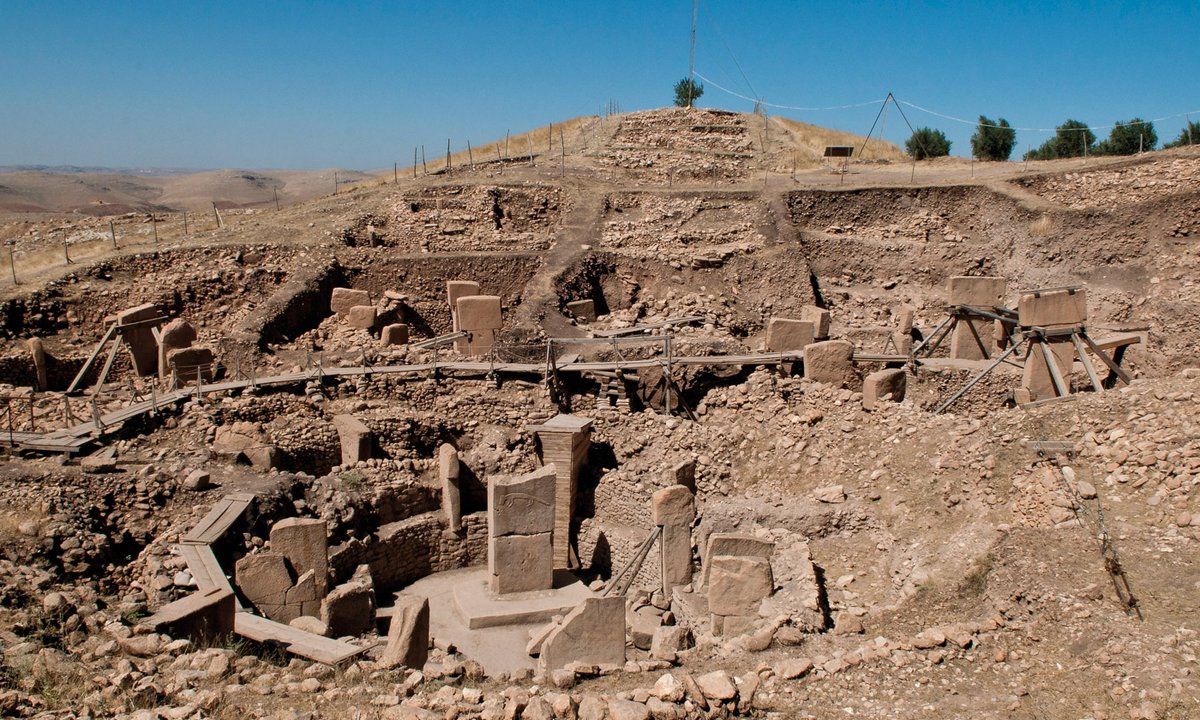
Nestled on a barren hilltop in southeastern Turkey lies one of history's most perplexing archaeological sites: Gobekli Tepe. Its monumental structures, intricate carvings, and the mystery surrounding its purpose continue to baffle experts and capture public imagination. Discovered in the mid-1990s during a routine survey, Gobekli Tepe has dramatically altered our understanding of human civilization, pushing back the inception of complex societies by millennia.
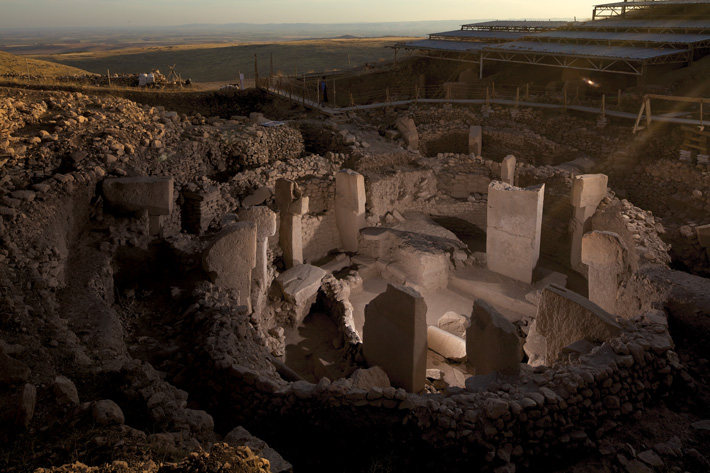
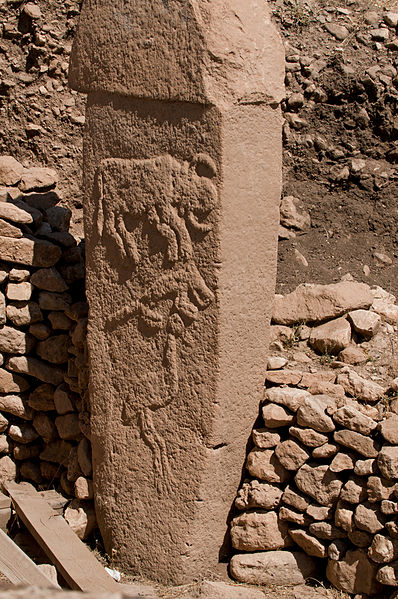
Constructed more than 11,000 years ago, Gobekli Tepe predates Stonehenge by 6,000 years and the Great Pyramids of Giza by 7,000. It comprises numerous T-shaped megalithic pillars arranged in a set of circles, with some reaching up to 20 feet in height and weighing upwards of 10 tons. These monoliths are adorned with a diverse array of carvings, depicting animals such as lions, bulls, and birds, as well as abstract symbols whose meanings have been lost to time. The craftsmanship and scale of this site suggest that a considerable population with sophisticated organizational skills must have labored over it.
The site's discoverer, German archaeologist Klaus Schmidt, was the first to dig extensively at Gobekli Tepe. He believed that the site was a sanctuary, a place of worship, or perhaps the first known temple in the world. Remarkably, Gobekli Tepe seems to have been built by hunter-gatherers, a notion that flies in the face of conventional historical understanding that such large projects could only be undertaken by settled farming communities. Indeed, the site's origins date back to a time when humanity was on the cusp of transitioning from a nomadic to a sedentary, agrarian lifestyle.
One of the most intriguing aspects of Gobekli Tepe is its apparent deliberate burial. Around 1000 years after its construction, the site was covered with soil and abandoned. This burial has served to preserve the pillars and walls but has obscured its purpose. Was it ritualistically sealed upon the completion of its use, or was it a time capsule meant for future generations?
Initial findings seemed to negate the likelihood of the site being a settlement. No domestic refuse, such as pottery shards or the usual detritus associated with habitation, has been found. Furthermore, there is little evidence of farming — the surrounding region would have been forested at the time, requiring considerable agriculture to feed a large workforce, yet there’s no trace of such activity. Instead, the presence of large quantities of animal bones suggests that for its users, Gobekli Tepe was a site of feasts, likely tied to rituals or commemorations.
The construction of such a site by a supposedly egalitarian society raises questions about social organization during the late Pleistocene. To erect these megaliths, a well-organized workforce with knowledge of quarrying, transport, and masonry was necessary. It implies a hierarchical society with leaders, planners, and skilled laborers, again challenging the assumption that complex social structures only emerged with the advent of agriculture and permanent settlements.
Gobekli Tepe's discovery has catalyzed a reassessment of such fundamental questions as the nature of religion and its role in societal development. Schmidt's interpretation of the site as a temple suggests that the need to worship and connect through communal labor could have been a critical driving force in human history, possibly as significant as the development of agriculture in spawning settled communities. Religion and ritual may have predated and even precipitated the establishment of complex societies.
The site's carvings are yet another source of intrigue. Some researchers suggest that they contain celestial symbols that may have served as a prehistoric observatory or a repository of astral knowledge. Others have read in them mythological narratives or records of historical events such as cometary impacts which might have had a profound effect on the local environment and the people who built Gobekli Tepe.
As one stands amidst the encircling pillars silently keeping their sentinel watch over the ages, Gobekli Tepe compels the observer to question what it might reveal about the shared ancestry of human civilization. While archaeologists continue to excavate and interpret its mysteries, the site's significance extends far beyond the stones themselves, providing a haunting glimpse into the genesis of human culture and spirituality.To gaze upon the intricate carvings of Gobekli Tepe is to peer into a world both alien and familiar. Each pillar serves as a testament to the rich spiritual and mythological landscape of its makers. These haunting monoliths, with arms and hands depicted reaching toward their beltstones, suggest a representation of the human form, perhaps the earliest monumental depictions of our species. Alongside are carvings of wild animals — creatures that would have roamed the ancient Anatolian plains, as well as more enigmatic figures. From lithe foxes to menacing boars, these images could symbolize various clans or represent totemistic deities of a long-forgotten pantheon, a connection between the community and the land they lived in.
The carvings of fearsome creatures like scorpions and snakes also suggest a fascination with the natural world's more dangerous aspects. Within these depictions lie potential evocations of the struggle between man, nature, and the supernatural. Could these fearsome creatures have been included to ward off evil, or were they worshipped in an attempt to appease the more malevolent forces of nature?
Further analysis reveals that the site’s alignment may coincide with the solstices, hinting at an understanding of the solar year. Some suggest that specific pillars align with constellations as they would have appeared in the sky thousands of years ago. If true, this would not only provide a window into the astronomical knowledge of the period but would also bolster the theory that Gobekli Tepe served a ritualistic purpose tethered to celestial events.
The contexts of the Gobekli Tepe carvings offer fertile ground for debate. One of the most tantalizing explanations is that they represent a sort of narrative or codified understanding shared by prehistoric hunter-gatherers. Were these stories passed down orally until finally immortalized in stone? As there is no written record from the era, only educated conjecture can piece together the fractured tale these symbols may tell.
Despite these insights, numerous questions persist. The most fundamental remains: why was Gobekli Tepe built? Theories range from the site being a religious sanctuary, to a social gathering place, to an astronomical observatory. Yet none of these alone fully satisfy the evidence at hand. Gobekli Tepe may represent a unique convergence of several societal functions that are inseparable in prehistoric contexts — where the sacred and profane, practical and spiritual were intertwined.
Furthermore, the intentional burial of Gobekli Tepe hints at a possible self-awareness and foresight by the prehistoric people. Did they ceremoniously inter their sacred site, much as one might respectfully bury the dead? Or was the entombment of this temple space an effort to preserve its sanctity from future change — a conscious attempt to stamp their existence on the timeline of history? Some researchers suggest that the burial could be symptomatic of a dramatic cultural shift or a response to an external threat.
The tools left behind — flint blades, pounders, and scrapers — provide insights into the nature of construction but not the rationale behind it. They remind us that although the builders of Gobekli Tepe were capable of creating a monument that would last millennia, in their everyday lives they were not so different from other hunter-gatherer societies of their age.
One of the most perplexing complexities of Gobekli Tepe is what its existence indicates about the development of agriculture and urbanization. Its early date suggests that it predates the agricultural revolution, yet evidence indicates that it may have been a factor in the eventual domestication of plants and animals. Some scholars argue that sites like Gobekli Tepe were magnets for gatherings, leading to the need for more consistent food sources and ultimately sedentary communities.
Archaeological work at Gobekli Tepe and its surrounding areas is ongoing, with each season of excavation offering the potential for new revelations. It stands as an enduring artifact of humanity's past — an obscure relic that has, so far, defied definitive understanding but has immensely enriched our knowledge of the prehistoric world. It is an enigma that continues to fuel scholarly discussion and fascinate the public, carving out its place not just in the physical ground of history, but in the collective imagination of humankind as well.
As we delve deeper into the secrets of Gobekli Tepe, we may find that the lines between art, religion, and survival are blurred, revealing that the capacity for complex thought and the yearning for meaning have deep roots in the human legacy. What remains is a sense of awe for the capacities of our ancestors, who, under the same stars we gaze upon today, built a monument that would endure long beyond their lifetimes, leaving us with the task of piecing together their forgotten dreams.
The Enigmatic Stones of Stonehenge: Unveiling the Mysteries of a Prehistoric Marvel
Nestled in the rolling hills of Wiltshire, England, lies one of the world's most famous and enigmatic prehistoric monuments—Stonehenge. This awe-inspiring stone circle has stood the test of time, with its origins and purposes shrouded in mystery, captivating the imaginations of historians, archaeologists, and tourists alike. In recent years, groundbreaking research and modern archaeological methods have peeled back layers of the Stonehenge enigma, offering intriguing insights into the people who built this ancient structure and why.
The construction of Stonehenge spanned several phases, beginning as early as 3000 BCE, during the late Neolithic Age. At this embryonic stage, the site comprised a simple earthwork enclosure, where prehistoric peoples possibly gathered for ceremonies or communal activities. However, the Stonehenge that is so iconic today began to take shape around 2500 BCE, with the arrival of the massive sarsen stones that form its outer circle and horseshoe arrangement.
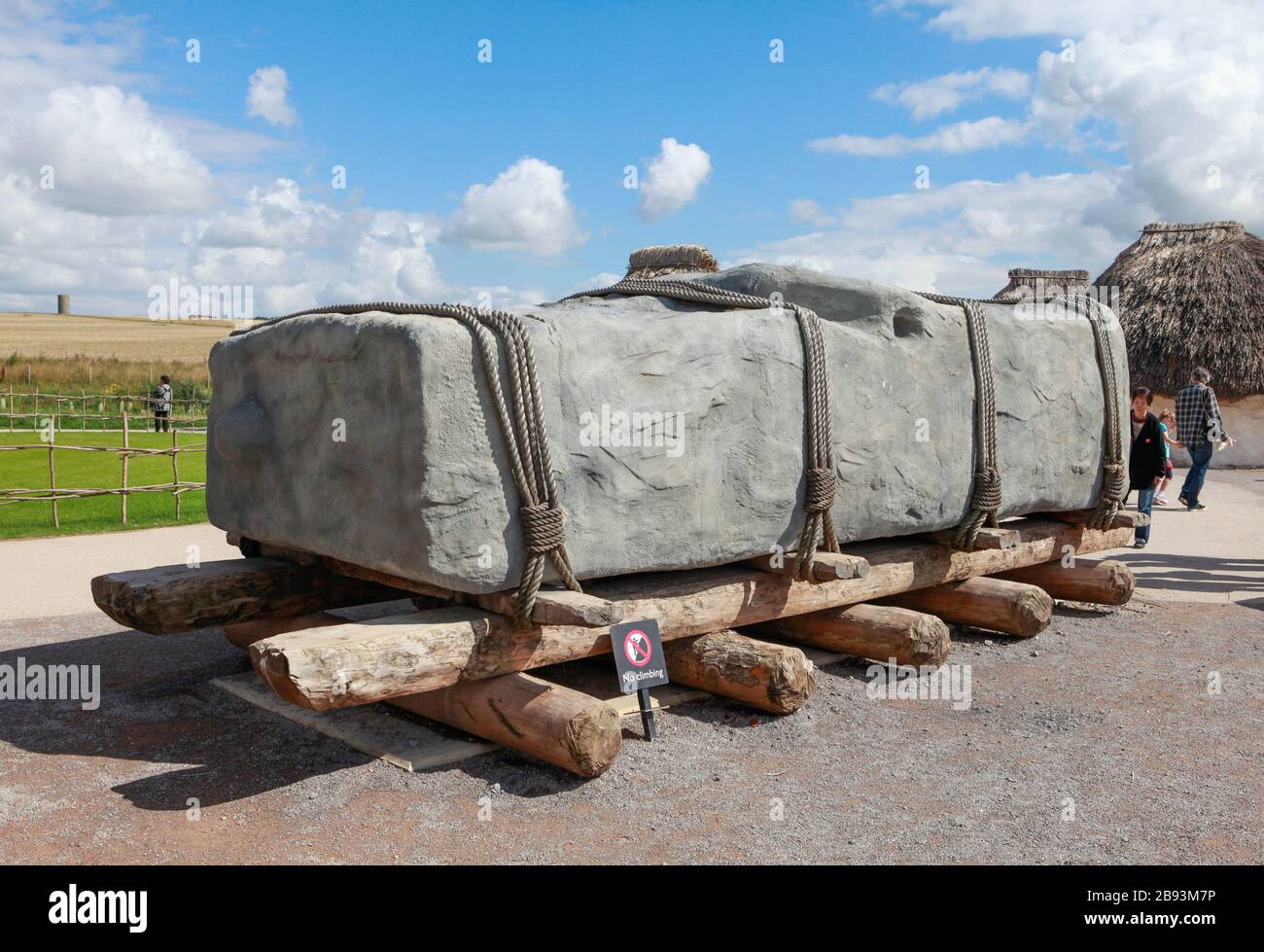
The immense scale of this undertaking begs the question: how did a society without modern tools and machinery manage to transport, shape, and erect these towering stones? The largest of the sarsen stones weigh up to 25 tons and, according to most estimations, were likely sourced from Marlborough Downs, some 20 miles to the north. Recent discoveries have shed light on the possible methods of transportation, including the use of sledges and rollers, moved along trackways of specially prepared surfaces, which show the remarkable ingenuity of these ancient engineers.
The smaller bluestones, some of which weigh up to 4 tons, present an even more bewildering puzzle, as they come from the Preseli Hills in Wales, over 150 miles away. Their journey to Stonehenge is a topic of ongoing research and debate, with theories ranging from human transport to glacial action being responsible for their presence at the site.
Archaeological excavations have revealed a wealth of artifacts and human remains around Stonehenge, which point towards the site being much more than a mere feat of engineering. Radiocarbon dating indicates that these burials took place between 3000 BCE and 2500 BCE, coinciding with the most significant Stonehenge construction periods. The bones, many of which exhibited signs of injury and disease, suggest that the area served as a burial ground, possibly holding ritual significance for the people who built it.
The alignment of the stone circle has long fascinated researchers, noting its orientation towards the summer solstice sunrise and the winter solstice sunset. This celestial connection underscores the likelihood that the monument functioned as a calendrical marker or a site for astronomical observations, rituals, and festivals. Stonehenge's layout appears to encode sophisticated knowledge of the heavens, echoing the importance of celestial bodies to Neolithic people.
Recent digs and geophysical surveys have revealed an even broader context for Stonehenge within a vast network of ceremonial sites across the British landscape. Just two miles away, the discovery of the Durrington Walls—a site believed to be a large settlement and ceremonial complex—provides clues about the lives of the people who built Stonehenge. Analysis of animal bones found here suggests that people traveled from across Britain to feast and partake in rituals, indicating that Stonehenge was part of a wider cultural and religious landscape.
Despite centuries of scrutiny, Stonehenge retains its sense of enigma and wonder. Contemporary observers may never fully grasp the motivations and beliefs of the people who toiled over its massive stones, but the monument stands as a testament to their incredible determination and skill. It is this sustained mystery, combined with the tangible connections to our distant ancestors, that continues to draw visitors and scholars to Stonehenge, ensuring its place as a perpetual source of fascination and reverence.
As we delve further into its mysteries, Stonehenge remains a symbol of our enduring quest to understand the origins and the very nature of human culture. The stones, silent for millennia, seem to echo with the echoes of forgotten ceremonies and whispers of the distant past. Yet, they stand resilient, challenging us to unravel their secrets and offering a glimpse into an era that shaped the foundations of human society as we know it.The mysteries of Stonehenge are not confined to the towering stones and the vast landscape they dominate; instead, they are woven into the very fabric of the soil. As researchers continue to unearth the layers beneath this ancient site, they encounter an intricate tapestry of human activity that extends beyond the stones themselves. Beyond the perimeter of the iconic sarsen circle, the land conceals a complex network of pits, ridges, and adjacent structures that paint a picture of a society profoundly connected to this place.
One such enigmatic feature is the ring of pits known as the 'Aubrey Holes,' named after 17th-century antiquarian John Aubrey, who first identified them. These pits, which form a circle inside the sarsen stone ring, may have initially held wooden posts and were later reused to house cremated human remains. Radiocarbon dating places these burials in the same period as the second phase of construction, underscoring the site's dual roles as both sacred temple and tomb.
To the northeast, the Heel Stone, a massive unworked sarsen, stands sentinel. It is aligned with the avenue – a processional path that links Stonehenge to the River Avon. This alignment with the sunrise of the summer solstice suggests that the avenue may have served as an ancient ceremonial route taken during rituals and celebrations, further indicating the site's role in marking seasonal events. These processional routes are testimony to the fact that Stonehenge was not an isolated monument but part of a greater religious landscape, integrated into the ceremonies that defined Neolithic life.
Excavations in the surrounding countryside have also identified numerous other ceremonial sites and burial mounds, known as barrows, which had significance in the wider religious context of which Stonehenge was the centerpiece. It is becoming increasingly clear that this was not a static monument but part of a dynamic cultural region, evolving over centuries of use.
Technological advancements have played a significant role in expanding our understanding of Stonehenge and its environment. Non-invasive techniques like ground-penetrating radar, remote sensing, and laser scanning have revealed hitherto unseen details, such as buried features and subtle changes in the landscape. These methods allow archaeologists to explore the site in more detail without disturbing the ground, offering a respectful approach to studying such a revered place.
One of the most compelling theories about Stonehenge is the notion that it may have represented a domain of the dead, a counterpart to the vibrant life at nearby Durrington Walls, often referred to as a 'domain of the living.' This theory is supported by the contrasting finds of numerous animal bones at Durrington Walls, indicative of feasting and dwellings suggestive of seasonal occupation, versus the austere ceremonial nature of Stonehenge with its burial sites.
Moreover, recent analysis of the human remains found at Stonehenge suggests that these were people of high status, perhaps ancestral figures or leaders. Some of the cremated remains were encased in chalk coverings known as "incense cups," which may have been used in funerary practices. The isotopic signatures of some skeletons indicate that at least a few individuals may not have been local to the region, hinting at the far-reaching influence or importance of Stonehenge in the Neolithic world.
In reassessing Stonehenge as part of a broader ceremonial landscape, we gain a more nuanced picture of its function and significance. It emerges as a node within a tapestry of ritual activity that extended across the terrain, intertwining the cycles of life and death with the rhythms of the cosmos. Stonehenge's builders were not isolated artisans but part of a complex society that perhaps made pilgrimages to this site, contributing to its construction as an act of unification and celebration.
This concept of movement and convergence is crucial in understanding Stonehenge. It was not merely a monument to observe but a place to be experienced: a destination for gatherings, a focus of travel, and a monument that demanded engagement, both physical and spiritual. Its enduring legacy lies not only in the immense stones but in the journeys it inspired and the community it fostered.
As we forge ahead, piecing together the echoes of the ancient past, Stonehenge remains a powerful symbol - a nexus point where history, archeology, and human ingenuity intersect. With each layer unearthed, with each theory proposed, the story of this prehistoric marvel evolves. And while we may unravel many of its mysteries, Stonehenge retains an air of enigmatic grandeur, reminding us that our search for understanding is as timeless as the stones themselves. As the sun continues to rise and set over Salisbury Plain, the quest to decode the secrets of Stonehenge persists, an enduring testament to our enduring desire to connect with the ancients and the landscapes they hallowed.