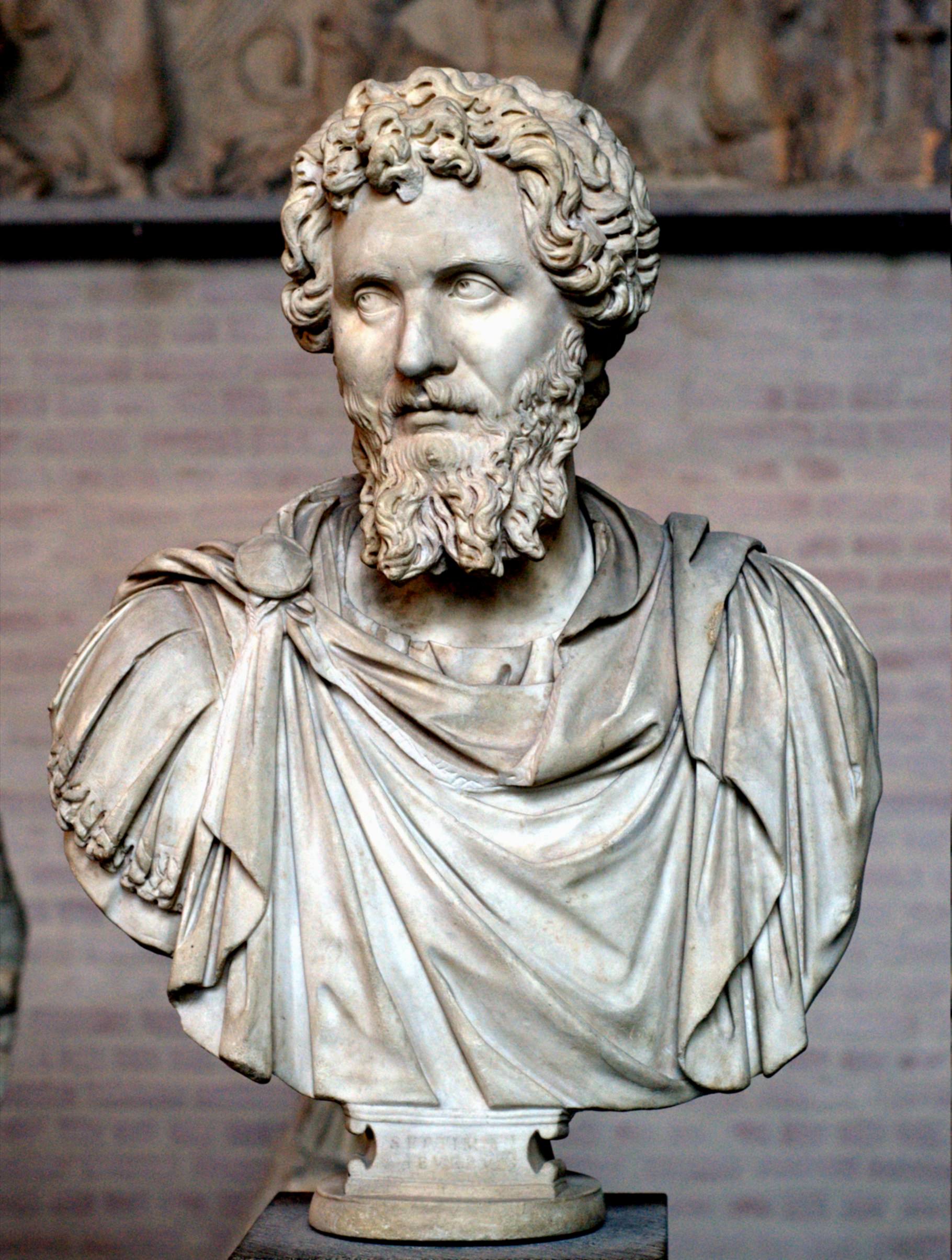
Lucius Septimius Severus: The Pious Emperor and His Legacy
Introduction
On January 18, 193 AD, Lucius Septimius Severus ascended the throne as the Roman emperor, marking the beginning of his 18-year reign. Born Carausius to a family of minor provincial origin, Severus transformed from a humble provincial soldier into one of the most powerful Men in the Roman Empire. His rule was a pivotal period in the history of the empire, characterized by military campaigns across its territories, administrative reforms, and the promotion of a cult of personality centered around piety and imperial virtues.
Background and Early Career
Lucius Septimius Severus was born in Leptis Magna, Libya (modern-day Libya) around 145 AD. His father's name is unknown, and it is believed that his mother came from a minor provincial family. Raised in relative obscurity, Severus received a good education, which prepared him for military service. He joined the army in Moesia, a region known for its harsh winters and fierce fighting, where he proved himself through his military prowess.
Severus' rise to prominence began during the reign of Commodo, a young and inexperienced emperor. Serving under Pertinax as a legatus (senior officer), Severus demonstrated exceptional leadership abilities and strategic acumen. In March 193 AD, Pertinax was assassinated by the Praetorian Guard, leading to a succession crisis that resulted in several claimants vying for power.
Severus, recognizing the opportunity, swiftly moved to secure the throne. With his reputation and proven military skills, he quickly gained support from the army, particularly among the veterans from the Danubian borders who admired his discipline and combativeness. By June 193 AD, Severus emerged victorious, securing his position as emperor after defeating both Didius Julianus and Publius Helius Pertinax.
The Reign of Lucius Septimius Severus
Domestic Reforms and Administration
Once established, Severus initiated extensive renovations and repairs of infrastructure within Italy, aiming at improving living conditions and public works. His efforts included restoring temples, rebuilding roads, and enhancing defenses along the empire's borders. These actions not only enhanced the public image of his reign but also addressed longstanding issues that had plagued the empire during the preceding decades.
In an attempt to stabilize the financial situation, Severus implemented significant fiscal policies. He increased the tax burden on wealthy citizens, particularly the senatorial class, while reducing taxes for the poorer classes. These measures were designed to reduce the empire's dependency on the often unreliable contributions of local elites. Additionally, Severus reformed military pay and benefits, ensuring better living conditions for the troops, which helped enhance loyalty and morale.
Military Campaigns and Expansion
One of Severus' primary objectives was the expansion of the empire, which he pursued through continuous military campaigns. Notably, he led a successful campaign against the Parthians in 197 AD, which marked a significant victory over the Eastern neighbors. The campaign resulted in the capture of Ctesiphon, the Parthian capital, a tremendous victory that solidified Severus' status as a pious and powerful leader.
However, beyond the eastern borders, Severus faced greater challenges. In Britain, he launched a major invasion aimed at putting down a revolt led by Caractacus, a chieftain who had continued to resist Roman control even after Claudius' conquest. This campaign, initiated in 208 AD, was one of the longest and bloodiest campaigns of his reign, lasting until 210 AD. While initially met with fierce resistance, Severus eventually subdued the tribes, establishing Roman dominance over Britain once more.
His military strategy extended to northern Africa as well. Between 202 and 203 AD, Severus fought against the Numidians, a tribal coalition that threatened stability in North Africa. Despite facing severe logistical challenges and a resilient enemy, Severus managed to suppress this insurrection, securing the province's loyalty to Rome.
Promotion of Piety and Personal Cult
While Severus was an effective military and political leader, his reign was also characterized by the promotion of a strong personal cultural and religious identity. He emphasized the virtue of piety, which became central to his persona as an emperor. To this end, he instituted numerous religious reforms and public works centered around the worship of gods and ancestral spirits.
A significant aspect of his religious program was the restoration and construction of temples dedicated to Mars, his patron deity, and other Roman gods. One of his notable achievements was the completion of the Arch of Severus in Lugdunum (modern-day Lyon, France), an impressive structure that celebrated his victories and served as a symbol of imperial might. Additionally, Severus promoted the construction of numerous baths, theaters, and other public buildings in various provinces, reflecting the empire’s dedication to civic pride and cultural enrichment.
Furthermore, Severus initiated the practice of deifying his ancestors, thereby linking his rule to a lineage of great Roman leaders. This act of personal worship reinforced the idea of continuity between past and present emperors and further cemented his connection to Roman traditions.
Personal Life and Family
Lucius Septimius Severus' reign was not only marked by military conquest and administrative reform but was also deeply personal, involving his relationships with his family and his religious observances.
Severus married Julia Domna, a wealthy Syrian woman, around the age of 14. Their marriage was a significant political alliance, furthering his standing among the Roman nobility and enhancing his social status. Julia Domna played a vital role in advising her husband, supporting his military endeavors, and promoting a sense of shared piety among the imperial family.
Julia was a learned individual with a keen interest in philosophy, particularly Stoicism. She used her influence to promote the study and teachings of Stoic philosophy, encouraging scholars and thinkers to engage in debates and discussions that enhanced the intellectual atmosphere of Rome. Her interest in astrology also contributed to the mystique surrounding Severus, although these beliefs were not officially endorsed by the state.
Severus and Julia were parents to four sons—Caracalla, Geta, Fulvius Alexander, and Antoninus Gordian III—though all except Caracalla would die young. Their eldest son, Caracalla, born around 188 AD, would succeed him as emperor. Caracalla is remembered for his controversial actions and reforms, which greatly impacted the later years of the Severan dynasty.
Towards the end of Severus' life, conflicts arose between his two surviving sons, Caracalla and Geta, stemming from their different aspirations within the imperial succession. Despite attempting to forge a united front, tensions escalated, eventually resulting in Geta's assassination in 212 AD. This event marked a dark chapter in Severus' reign, ending the possibility of a peaceful transition of power to a united dynasty.
Conclusion
In summary, Lucius Septimius Severus ascended to the Roman throne amid turmoil and instability, yet his tenure as emperor was defined by his relentless quest for territorial expansion, administrative reforms, and a deep commitment to religious piety. Through his military campaigns, his domestic policies, and his efforts to reshape the very fabric of Roman society, Severus left an indelible mark on the empire. However, his legacy is also shadowed by internal strife and the eventual fragmentation of the dynasty he sought to establish.
To be continued...
The Final Years and Legacy
Final Years and Death
As Lucius Septimius Severus' reign neared its end, several important events took place that would shape the future of the empire. In 211 AD, Severus began a journey from Britain to Africa, where he planned to oversee military campaigns and administrative reforms. During this extensive tour, he visited various military and civilian units to assess their readiness and loyalty. This journey was a testament to his commitment to maintaining control over the empire's vast territories.
On the way back from Africa, Severus fell ill and eventually died at Erythrae (modern-day Antakya in Turkey) in 211 AD. He was 65 years old at the time of his death. His body was returned to Rome, where he was interred in a mausoleum on the Campus Martius, near the Temple of Venus.
Severus was succeeded by his two sons, Caracalla and Geta. However, their relationship was strained from the outset, exacerbated by the political maneuvering of their mother, Julia Domna. The conflict between the brothers culminated in a tragic duel, in which Geta was killed on 26 December 212 AD. This event marked the end of the Severan dynasty, as Caracalla ascended to the throne alone.
Legacy and Impact on the Empire
The reign of Lucius Septimius Severus left a lasting impact on the Roman Empire. His efforts in expanding the frontiers of the empire, particularly in Mesopotamia and Britain, secured these territories for the future generations. Moreover, his military campaigns and administrative reforms laid the groundwork for the Severan dynasty's rule.
Severus' military strategy and expansion were critical in consolidating the empire's control over newly acquired territories. The Parthian War of 197 AD, for example, resulted in the establishment of Roman dominance in the eastern provinces, including Mesopotamia. This victory not only expanded the empire's borders but also secured a more stable security situation along these new frontiers. Similarly, the campaign in Britain, though prolonged and costly, solidified Roman control over the island and expanded the empire's influence in Northwestern Europe.
Severus' administrative reforms focused on improving infrastructure and public works. His efforts in repairing and constructing roads, restoring temples, and other public buildings not only enhanced the living conditions of the populace but also served to strengthen the empire's infrastructure. Additionally, he reformed military pay and benefits to improve the living conditions and morale of the troops, creating a more loyal and effective military force.
The promotion of piety and his personal cult of piety played a significant role in Severus' reign. He emphasized the virtues of piety and moral conduct, which were reflected in his policies and public works. The construction of numerous temples and the deification of his ancestors reinforced the connection between the emperor and the gods, ensuring a sense of religious and cultural continuity. The promotion of Stoic philosophy and the study of astrology further contributed to the intellectual and cultural atmosphere of the empire.
Challenges and Criticisms
Despite his achievements, Severus' reign was not without its challenges and criticisms. His military campaigns were often costly and sometimes resulted in heavy casualties, which placed a significant burden on the empire's resources. The prolonged campaign in Britain, for instance, consumed vast amounts of manpower and financial resources. Additionally, his efforts to increase taxes and tighten fiscal policies were met with resistance from both the elite and the general populace.
There were also criticisms regarding his personal rule and the suppression of dissent. The forced assimilation of local customs and the harsh suppression of rebellions sometimes resulted in unrest and resistance from the provinces. Moreover, his policy of deifying his ancestors and promoting a cult of personal worship was seen by some as a form of autocracy and the undermining of traditional republican values.
Ancient and Modern Perspectives
Ancient historians, such as Cassius Dio and Herodian, provided detailed accounts of Severus' reign. However, their perspectives were often shaped by their political allegiances and the prevailing ideological views of their times. Cassius Dio, for instance, viewed Severus' military conquests positively but was critical of his harsh rule and the suppression of dissent. In contrast, Herodian saw Severus as a shrewd and effective military leader but was less impressed by his administrative reforms and personal cult.
From a modern historical perspective, Severus is often praised for his military and administrative achievements. His success in expanding the empire and securing its frontiers is generally acknowledged, although the cost in terms of resources and lives is also highlighted. The impact of his personal cult of piety and the emphasis on moral and religious values continue to be studied and debated, offering insights into the complex dynamics of imperial rule and the maintenance of order in the Roman Empire.
Conclusion and Reflection
Lucius Septimius Severus' reign was a period of significant transformation and expansion for the Roman Empire. His military campaigns, administrative reforms, and promotion of piety left an indelible mark on the empire's history. However, his reign also faced challenges and criticisms, particularly regarding its costs and the nature of his personal rule.
Severus' legacy is complex, reflecting the tensions between expansionary policies and traditional values. His efforts to modernize the empire and maintain its stability, while fostering a sense of imperial piety, are subjects of ongoing historical inquiry. The study of Severus' reign continues to provide valuable insights into the challenges and opportunities faced by Roman rulers in an increasingly complex and diverse empire.
To be continued...
Modern Interpretations and Legacy
Modern historians have engaged in extensive analysis of Severus' reign, offering a more nuanced understanding of his impact on the Roman Empire. One significant aspect of modern interpretation is the reassessment of Severus' military campaigns and their consequences. While he successfully expanded the empire, the costs in terms of resources, manpower, and political stability cannot be overlooked. The prolonged campaigns, such as those in Britain and Parthia, strained the empire's economic and military capabilities, leading to increased fiscal and social tensions.
The expansion of the empire also brought challenges in governance. Governing the newly-acquired territories required significant administrative and logistical efforts, which tested the limits of the Roman system. The imposition of Roman laws and customs in these regions often resulted in resistance from local populations, leading to sporadic rebellions and uprisings. These challenges were compounded by the vast distances and limited communication networks of the time, making effective governance a daunting task.
Despite these difficulties, modern historians also highlight Severus' contributions to the legal and administrative framework of the Roman Empire. His reforms, such as the standardization of military pay and benefits, and the expansion of public works, reflected a pragmatic approach to governance. These measures not only improved the living conditions of the populace but also enhanced the efficiency and cohesion of the empire.
Impact on Religion and Culture
Severus' promotion of piety and his personal cult of piety had a lasting impact on Roman religion and culture. The emphasis on religious devotion and the construction of numerous temples and public works played a crucial role in reinforcing the connection between imperial power and religious authority. However, this focus on personal cults and the deification of ancestral figures also raised questions about the separation of religion and state under Roman rule.
Modern scholars have debated the extent to which Severus' religious policies reflected broader cultural changes within the empire. The promotion of Stoic philosophy and the study of astrology, for example, suggest a more cosmopolitan and intellectual approach to governance. These interests were not unique to Severus but were part of a wider trend of cultural and intellectual exchange within the empire.
Contemporary Influences and Cultural Continuity
The reign of Lucius Septimius Severus left a lasting legacy in terms of cultural and intellectual continuity. His efforts to maintain and enhance the Roman infrastructure, such as roads, aqueducts, and public buildings, contributed to the preservation of Roman culture and its transmission to subsequent generations. The ongoing study and restoration of these structures continue to provide insights into the daily life and governance of the Roman Empire.
Moreover, the promotion of Stoicism and the study of astrology resonated with scholars and intellectuals of the time, influencing the development of philosophical and astronomical thought. Severus' support for these disciplines not only enhanced the intellectual atmosphere of the empire but also fostered a more nuanced understanding of the complex relationship between religion, politics, and culture.
Conclusion
In conclusion, Lucius Septimius Severus' reign stands as a significant chapter in the history of the Roman Empire. His military campaigns, administrative reforms, and promotion of piety left a lasting impact on the empire's borders, governance, and culture. While his rule was marked by both success and challenges, Severus' contributions to the Roman Empire's legacy continue to be studied and debated by historians.
Through his efforts to expand and stabilize the empire, Severus set the stage for the Severan dynasty's rule and the eventual decline of the Western Roman Empire. His reign serves as a reminder of the complex interplay between military conquest, administrative reform, and cultural and religious policies in shaping the fortunes of a great empire.
Lucius Septimius Severus' legacy continues to be a subject of academic interest, offering valuable insights into the challenges and achievements of Roman rulers in an era of expanding empires and complex societal changes.
Related Articles



Clodius Albinus: The Unfulfilled Aspirations of a Roman Usurper
Introduction to Clodius Albinus
In the lore of Roman political history, Clodius Albinus stands out as a figure encapsulating both ambition and tragedy—traits characteristic of those who dared to vie for the imperial purple during the tumultuous Year of the Five Emperors. His life, dedicated to military and political ascendancy, was marked by war and intrigue. Recent historical examinations place him in a somewhat sympathetic light, contrasting with his portrayal in contemporaneous sources as a mere usurper seeking power at all costs.
Early Life and Rise to Power
Born around 150 AD in Hadrumetum, a city in the Roman province of Africa, Decimus Clodius Albinus entered a world transitioning from the prosperous era under the "Five Good Emperors" to the pivotal and often chaotic periods that followed. Though much about his early life remains obscured by time, records suggest he hailed from a noble family, which positioned him well for a career in the Roman military—a common avenue for ambitious young men seeking prominence.
His distinguished military capability quickly garnered the attention of emperors such as Marcus Aurelius and Commodus. Clodius Albinus's leadership during these times of tension not only solidified his position within the Roman army but also cultivated a reputation for loyalty and valor. By the time he was appointed as governor of Britannia, his status as a key military leader was well-established, overseeing one of the empire's most volatile and isolated provinces.
The Political Chessboard of Rome
Clodius Albinus's political acumen was as significant to his rise as his military prowess. His governorship in Britannia offered him the political platform necessary to project power and influence across the empire, forming alliances that would later define his fate. Tensions in Rome escalated following the assassination of Commodus in 192 AD, leading to the ascension of Pertinax, and subsequently Didius Julianus in the tumult of 193 AD. The empire verged on the brink of collapse with competing generals from different regions declaring themselves emperor.
Amid this chaos, Albinus aligned with Septimius Severus, then a powerful general. This alliance was strategic, as Severus sought to consolidate power by eliminating rivals and ensuring loyalty among Rome's vast legions. In a bid to secure Albinus's allegiance, Severus bestowed upon him the title of Caesar—a clear indication of imperial favor and a stepping stone to future claim to the throne.
The Path to Conflict
Despite the apparent alliance between Albinus and Severus, tensions simmered beneath the surface, fueled by ambition and mistrust. As Severus campaigned eastward against his rivals, Clodius Albinus's influence grew considerably. His governorship in Britannia and command over its legions gave him a formidable power base.
In 195 AD, with Severus consolidating control in the East, a break between the two allies became imminent. Severus declared his sons as successors, contravening Albinus’s expectations of shared power. Feeling marginalized and deceived, Clodius Albinus proclaimed himself emperor, sparking a violent struggle that would shape the contours of Roman politics in this era.
The Civil War and Fall at Lugdunum
The conflict between Albinus and Severus epitomized the volatility of Roman imperial successions. As Severus's forces marched from the East, Albinus mobilized his forces from Britannia, moving swiftly to Gaul, where a showdown was inevitable. Their forces clashed in the Battle of Lugdunum in 197 AD, a confrontation that would decide the fate of the empire's leadership.
The battle was one of the largest and most brutal of its time, with both sides suffering heavy losses. However, Severus's experience and superior tactics eventually prevailed, leading to Albinus's defeat. After the battle, Albinus met a tragic end, as he was captured and executed on Severus's orders—an outcome extending Severus’s unchallenged control of the Roman Empire.
With Clodius Albinus's demise, the hopes of those who favored a divided control between powerful military leaders over a single ruler were dashed. His life and death reflect the aspirations and pitfalls of Rome’s power struggles, highlighting tensions between ambition and loyalty, power, and legitimacy. However, in the annals of history, Albinus's legacy remains as a symbol of resistance against the centralization of authority—a poignant reminder of Rome's complex and often brutal quest for power.
As we continue to explore the intricate web of Albinus's historical context, subsequent sections will delve deeper into the implications of his struggle and its enduring impact on Roman political dynamics.
The Historical Context and Cultural Climate
Understanding Clodius Albinus’s rise and eventual fall requires a deeper exploration of the unique historical context in which these events unfolded. The late second century CE was a period marked by both the strength and fragility of the Roman Empire. The empire's vast territories spanned from the deserts of North Africa to the moors of Britain, each province with its own unique challenges and demands. Maintaining cohesion across such a diverse expanse was a task that fell heavily on the shoulders of Roman emperors, often leading to complex coalitions and dangerous rivalries.
This era followed the comparatively stable period fostered by the so-called "Five Good Emperors," which ended with the erratic rule of Commodus. His assassination plunged Rome into chaos and set the stage for the phenomenon of multiple simultaneous claimants, each backed by powerful legions willing to contend for the throne. In such an environment, personal loyalty often outweighed central authority, with generals like Albinus and Severus leveraging their military might to assert claims over the empire.
The Military Might of Clodius Albinus
Clodius Albinus's military influence in Britannia was a critical factor in his ability to stake his claim to the throne. Britannia, geographically removed from the heart of Rome, was often seen as a touchstone for military strength because of its active and restless legions. As governor, Albinus proved adept at maintaining both the defensive and administrative aspects of the province, further reinforcing his authority amidst the empire's broader instability.
At the time, Britain’s legions were seasoned, having been involved in numerous campaigns against the Picts and other tribes. Unlike civilian political power, which was often seen as fragile and fleeting, military clout in Rome was tangible and direct. Thus, Albinus’s control over these forces afforded him significant leverage in the power struggles of the day. His ability to mobilize and lead these troops was essential not only in his initial alliance with Severus but also in his eventual challenge against him.
The Aftermath of Lugdunum
The defeat of Clodius Albinus at the Battle of Lugdunum had immediate and lasting repercussions for the Roman Empire. Severus's victory not only secured his position as the uncontested ruler but also set a precedent for how imperial power could be seized and maintained. This was an era where power came from the sword as much as it did from political maneuvering, and the defeat of a rival could often lead to brutal reprisals.
Following the battle, Severus executed Albinus and ordered the eradication of his supporters. This purge demonstrated the ruthlessness characteristic of imperial politics but also highlighted Severus’s need to consolidate authority quickly to stave off any further challenges. Those associated with Albinus faced dire consequences, with many stripped of positions, property, and lives—a grim reminder of the cost attached to failed aspirations in Rome.
Legacy and Historical Interpretation
The historical interpretation of Clodius Albinus's life and actions is colored by the sources available, many of which are influenced by the victors of these conflicts. Roman historians, often patronized by the ruling elite, depicted Albinus as a usurper, omitting the complexities and perhaps the legitimacy of his claims to a measure of power. However, more modern historians have sought to reassess his role within the broader narrative of Rome’s history, revealing a picture of a man driven not purely by ambition but by circumstances and an unyielding drive to survive and thrive in a tumultuous period.
In modern retellings, Albinus’s attempt to claim the throne is often viewed as an early warning of the shifts that would ultimately lead to greater power struggles throughout the Third Century Crisis. His story serves as an insightful case study into the nature of Roman imperial authority during a period when the lines between legitimate claim and usurpation were blurred and contested militarily across vast expanses of land.
The Enduring Fascination with Clodius Albinus
Even centuries after his death, Clodius Albinus continues to intrigue historians and enthusiasts of Roman history. His life encapsulates themes of ambition, loyalty, and the high stakes of military and political power in ancient Rome. The complexities of his alliances and conflicts illustrate the ever-present tension between regional power bases and the centralized authority of Rome.
As with many figures in history, the narrative surrounding Albinus is multifaceted, characterized by both feats of considerable prowess and the harsh realities of political machinations. His impact, though ultimately overshadowed by the likes of Severus, continues to resonate in discussions on the governance and decline of Rome, offering lessons on the volatile intersection of ambition and power.
As our exploration continues, we will delve further into Clodius Albinus’s military leadership style, his influence over Britannia, and the nuanced legacy he left within the rich tapestry of Roman history. His story is one of many that remind us of the often-unpredictable path of historical narratives and the individuals whose aspirations helped shape the world they inhabited.
The Strategic Leadership of Clodius Albinus
Clodius Albinus was not merely a political figure but also a strategic military leader whose actions during his governorship in Britannia proved decisive in shaping the region’s stability. His tenure came at a time when the Roman Empire struggled to maintain control over its far-flung territories, including the British Isles. By employing a mix of diplomatic acumen and military prowess, Albinus managed to maintain a tenuous peace in a province often riddled with uprisings and external threats.
One of Albinus's noteworthy strategies was fortifying the defense lines, including enhancing the protection of Hadrian’s Wall, the northern boundary that marked Roman control. This foresight helped mitigate incursions from hostile tribes, ensuring a more stable environment which allowed Roman civilian administration and local economies to flourish. Such actions not only reinforced his status as a capable leader but also showcased his understanding of the delicate balance needed to rule successfully.
The Role of Britannia in Albinus's Campaign
During Albinus's revolt against Severus, his command over Britannia was pivotal. Britannia provided him with crucial resources and seasoned soldiers who were ready to battle the imperial forces sent by Severus. The province's geographic position, while remote, allowed Albinus a degree of autonomy in mobilizing his troops, training them without immediate interference from Roman central power.
Moreover, the legions of Britannia, trained in harsh conditions and battle-hardened, formed the core of Albinus's military might during the campaign in Gaul. Able to project power across the channel into mainland Europe, Albinus demonstrated an understanding of utilizing regional advantages in his broader strategic plan to challenge Severus. Despite his eventual defeat, the campaign underscored the importance of provincial power bases in the imperial politics of Rome.
The Psychological and Cultural Impacts of Albinus's Defeat
The defeat of Clodius Albinus had significant psychological and cultural repercussions within the Roman Empire. For his supporters, the loss symbolized the futility of challenging the increasingly autocratic nature of imperial rule. Severus's swift and merciless repression of Albinus's faction underscored the severe consequences faced by those who opposed the emperor.
Culturally, the events surrounding Albinus highlighted the shifting perception of Rome's traditional power structures. The Senate, once a cornerstone of Roman political life, was increasingly sidelined as emperors relied more heavily on military loyalty to maintain control. Albinus’s campaign, though ultimately unsuccessful, reflected a broader discourse about the nature of Roman governance—a discourse that would continue to evolve as emperors grappled with challenges to their authority from both within and outside the empire.
Re-evaluating Clodius Albinus's Place in History
As historians reassess the significance of Clodius Albinus in Roman history, his role is increasingly viewed through a lens that considers the complexity of the times in which he lived. Unlike simplified portrayals of him as merely a usurper, modern analysis often highlights his capabilities as a military leader and his strategic vision for both his immediate jurisdiction and the broader imperial landscape.
Albinus's ambition, far from being an anomaly, was a common thread among many Roman figures of his era, where the tumultuous environment necessitated both bold aspirations and decisive action. By exploring his story, historians gain insights not only into the life of a man of ambition but also into the fundamentally restless and opportunistic nature of Roman political culture during the 2nd century.
The Lessons of Clodius Albinus's Struggle
The saga of Clodius Albinus offers enduring lessons about the nature of leadership, ambition, and the interplay between military force and political power. His trajectory illustrates the precarious balance leaders must maintain between vying for personal authority and adhering to broader political structures. In the fiercely competitive and often brutal world of Roman imperial politics, Albinus's rise and fall serve as cautionary tales.
Moreover, Albinus's experience underscores the importance of adaptable strategy and the critical role of regional autonomy within larger political entities. His use of Britannia as a springboard for his challenge against Severus highlights how regional dynamics can influence even the most centralized systems of governance.
In conclusion, Clodius Albinus remains a fascinating figure whose life sheds light on an era of significant transformation in Roman history. His story reminds us of the fragility of power, the relentless pursuit of ambition, and the complex web of alliances and enmities that defined Roman imperial politics. As history continues to be studied, Albinus’s contributions and struggles will remain integral to understanding the rich mosaic of the Roman Empire's past.


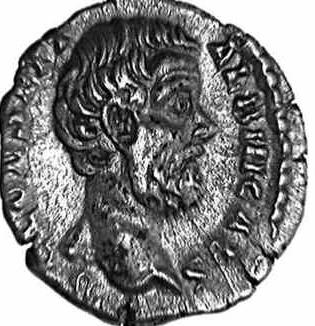
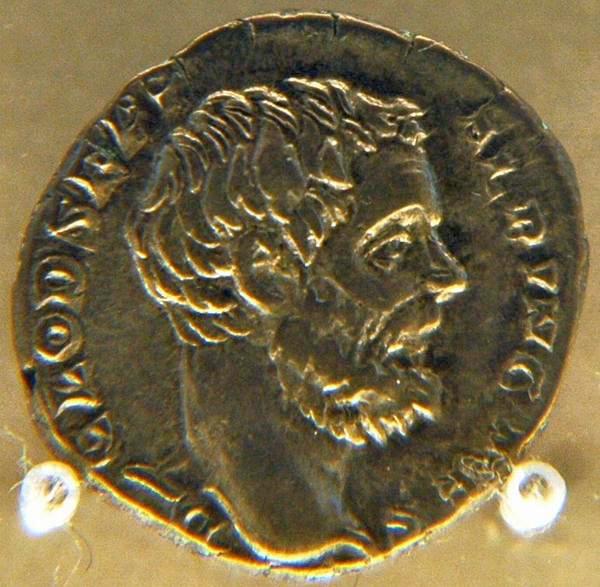
Septimius Severus: Architect of a New Roman Era
The dawn of the 3rd century CE marked a pivotal chapter in the history of the Roman Empire, as it transitioned from the tumultuous year of the five emperors in 193 CE. Emerging from this chaos was a leader of remarkable tenacity and strategic acumen, Lucius Septimius Severus. He stood out not only for his military prowess but also for his ability to navigate the intricate politics of an empire in flux. Severus, with origins far removed from the traditional power centers of Rome, rose to reforge an empire battered by internal dissent and external threats.
Early Life and Rise to Power
Septimius Severus was born on April 11, 145 CE, in Leptis Magna, a prominent city of the Roman province of Africa, located in modern-day Libya. His family was of Berber origin, tinged with Punic heritage, and he was related through his mother to a distinguished North African family which wielded considerable local influence. This background, though distant from the Roman aristocracy, did not deter Severus from pursuing a future within the greater machinations of the empire.
From an early age, Severus was endowed with a keen intellect and a desire to serve Rome. He moved to the capital to seek higher education and to immerse himself in the vast opportunities the city offered. In 162 CE, under the reign of Marcus Aurelius, Severus entered the Roman Senate. His ascent through the Roman political and military hierarchy was steady; he held various magistracies that honed his understanding of governance and military command.
The sudden assassination of Emperor Pertinax in 193 CE plunged Rome into a period of uncertainty, known as "the Year of the Five Emperors." In the resulting power struggle, Severus, who was then the governor of Pannonia Superior (a region in present-day Hungary and Austria), saw an opportunity. With his legions' backing, he marched on Rome, outmaneuvering rivals such as Didius Julianus, whose short reign ended with his execution on the orders of the Senate.
The Severan Campaigns
Severus’ claim to the imperial purple was solidified not by his entry into Rome but through subsequent military campaigns that showcased his strategic genius. His major rival, Pescennius Niger, had declared himself emperor in the eastern provinces. Severus demonstrated his command of military logistics in a campaign marked by swift movements and brutal efficiency. By 194 CE, Niger was vanquished, securing Severus control over the Eastern Empire.
With Rome’s eastern frontiers stabilized, Severus turned his attention to Clodius Albinus in the west, who had been named Caesar (junior emperor) by Severus himself in a tactical maneuver to stave off initial confrontation. However, ambition dictated otherwise, leading to a decisive battle at Lugdunum (modern-day Lyon) in 197 CE. The victory reaffirmed Severus’ supremacy.
Architect of Internal Reforms
The consolidation of power allowed Severus to initiate reforms that would leave a lasting imprint on the Roman administrative and legal systems. Understanding the necessity of a resilient military to sustain his rule, he undertook extensive reforms to enhance the pay and status of the Roman legions. Veterans were granted land, and the emperor’s favoring of the military over the traditional senatorial class was clear, establishing a new power paradigm within the empire.
A notable aspect of his reforms was the opening of the Roman empire's elite circles to the provinces—a nod to his own provincial origins. This strategic inclusion of provincial elites into the central administration helped weld far-flung regions more tightly to Rome, ensuring their loyalty through representation and opportunity.
Severus’ reforms extended to the realm of law, where he sought to professionalize its administration. Jurists like Papinian began working under his aegis, a testament to his commitment to justice and order. His focus on jurisprudence laid the groundwork for what would later be known as the Severan juristic revolution.
As Severus journeyed deeper into his reign, the delicate balancing act between maintaining the power of the military, appeasing the Senate, and attending to the needs of the Roman populace became increasingly complex. His approach was both a brand of harsh pragmatism and visionary ambition that sought to unify the empire’s diverse cultures and strengthen its foundations against growing internal and external pressures.
As we delve further into the legacy of Septimius Severus, his actions illuminate the complexities of Roman leadership. His successes and failures provide a lens through which to view an empire on the cusp of transformation—an empire that he endeavored to stand at the helm of not merely as an emperor, but as a reformer and unifier in a time of prolific change.
Construction and Urban Development
Septimius Severus, a man enamored with the vision of a grand Rome, turned his attention towards monumental construction and urban renewal. His reign was marked by ambitious architectural projects that not only served as symbols of his desire to rejuvenate the empire, but also as attempts to legitimize his rule in the eyes of the populace. Through construction and development, Severus sought to leave an indelible mark on the urban landscape of the empire.
One of his most famous contributions was the expansion and embellishment of the city of Rome itself. Under his authority, the Forum Romanum, the political and civic heart of the city, saw significant enhancements. The Arch of Septimius Severus, erected in 203 CE at the northwest end of the Roman Forum, served as a public reminder of his military victories in Parthia. Decorated with exquisite reliefs depicting scenes from his campaigns, the arch was not only a testament to his triumphs but also a strategic narrative tool that continuously communicated his strength and legitimacy.
Beyond the grandeur of Rome's capital, Severus was deeply invested in the transformation of his birthplace, Leptis Magna. He initiated a massive urban development project that reshaped the city, including the construction of a new forum, basilica, and amphitheater. These projects not only emphasized the imperial connection to Africa but also positioned Leptis Magna as a vital hub in North Africa's Roman provinces.
His reign also saw the implementation of improvements to infrastructure across the empire. Roads and aqueducts were constructed or restored, further integrating the diverse territories of the Roman world and facilitating efficient administration and troop movement. Such enhancements were pivotal for maintaining the cohesion and operational efficiency of the empire during times of strife.
Challenges and Dynastic Concerns
Despite these accomplishments, Severus’ reign was not without its challenges. The stability he had worked so diligently to achieve was constantly threatened by internal dissent and rival claims. The empire was vast, and controlling its many corners required energies that stretched even his formidable abilities.
A significant aspect of Severus' rule was his focus on his dynasty's succession. The emperor's ambition was not just for his reign but for establishing a lasting Severan dynasty. To this end, he involved his two sons, Caracalla and Geta, in the affairs of governance from a young age, grooming them for future rule. However, internal family tensions threatened the unity of his lineage. The sibling rivalry between Caracalla and Geta was infamous and would prove to be a thorn in the dynasty’s side.
Severus’ efforts to cement his sons' positions included their elevation to the status of co-emperors during his lifetime. This strategy was intended to ensure continuity and shared power, with Caracalla being favored as the primary heir. Nevertheless, this focus on dynastic succession also sowed seeds of discord that would manifest tragically after Severus’ death.
Last Campaigns and Final Years
In the twilight of his reign, Septimius Severus embarked on one last significant military campaign. With an eye towards ensuring security and Rome's continued dominance, he turned his attention to Britain. The northern frontiers of the province were restive, with Picts and other tribes posing continuous threats. Severus launched an ambitious campaign in 208 CE to subdue these northern regions definitively.
The campaign demonstrated Severus’ enduring military acumen and determination, even as he advanced in years. Accompanied by both his sons, the campaign further served as a platform to reinforce their roles in military leadership. However, the harsh conditions and the resilience of the local tribes tested the Roman forces. While Severus managed some degree of success in temporarily stabilizing the frontiers, the campaign's toll was heavy, particularly on the aging emperor.
Severus’ health declined during the arduous campaigns in the damp climate of Britain. In February 211 CE, he succumbed to illness in the city of Eboracum (modern-day York). His death marked the end of a storied reign marked by both consolidation and the looming shadow of uncertainty that his familial ambitions cast over the empire.
Severus' final words to his sons reportedly were, "Be harmonious, enrich the soldiers, scorn all others." These reflections encapsulated a lifetime's worth of political wisdom, a poignant summation of an emperor who understood the delicate balance of power that his successors would need to maintain if they hoped to preserve his hard-won gains.
As the torch passed to Caracalla and Geta, the legacy of Severus hung heavily over the empire, a testament to his vision and an ominous reminder of the challenges his successors would face. An empire transformed under his hand stood poised between the height of imperial grandeur and the undercurrents of familial discord that would shape the next chapter of its storied history.
The Legacy of Septimius Severus
The death of Septimius Severus ushered in a complex transition period within the Roman Empire. The emperor’s legacy, enduring and multifaceted, would come to define the early years of the Severan dynasty. However, the seeds of familial discord sown during his reign soon bore fruit, inflicting challenges his successors found difficult to overcome.
Severus’ dual focus on military expansion and internal consolidation had fundamentally redefined his empire. His strengthening of the legions and the increased reliance on military support as a political bedrock shifted the imperial paradigm. This approach, while effective for Severus, sowed seeds for future dependency on military approval, creating a precedent that would reverberate throughout the emperors that followed.
Dynastic Troubles and Internal Conflict
Following Severus’ death, a bitter power struggle erupted between his sons, Caracalla and Geta. Despite their father’s hopes for a unified co-emperorship, sibling rivalry escalated to fratricidal levels. In late 211 CE, Caracalla orchestrated Geta’s murder, an act that shattered any semblance of unity within the Severan family. The consequences were dire, undermining Severus’ dream of a lasting familial legacy.
Caracalla’s subsequent sole rule was marked by increased militarization and further integration of the provinces. He continued to expand on his father’s policies, notably through the issuance of the Constitutio Antoniniana in 212 CE. This significant edict extended Roman citizenship to all free men within the empire, a move designed to unify the diverse peoples under Roman rule and increase tax revenues. While visionary, it also shifted existing social dynamics, further illustrating how Severus’ policies shaped and transformed the Roman world.
Enduring Influence on Roman Governance
Septimius Severus’ emphasis on strengthening the empire’s legal and administrative systems resonated far beyond his reign. His initiatives to professionalize the legal profession laid foundational principles that would evolve into Roman jurisprudence under later emperors. The Severan dynasty’s sponsorship of leading jurists played a significant role in shaping the Roman legal corpus used across the empire.
Additionally, Severus’ open acceptance and promotion of provincial elites into the empire’s administrative framework marked a progressive shift towards a more inclusive governance model. This systemic approach allowed for a more diverse representation, enduring as a strategic advantage in managing the far-reaching empire. Regions formerly distant in influence were woven into the empire’s political tapestry, ensuring their stake in the preservation of imperial unity.
Transformations in Urban and Architectural Legacy
Severus’ ambitious urban projects left tangible imprints on Rome and other significant cities. His architectural contributions, including expansions in Rome and restoration in other regions, projected imperial power and unity while celebrating cultural fusion. These buildings stood as testaments to his reign’s lasting influence, embedding his image in the public square and the cultural memory of the Roman populace.
The transformations he instigated in Leptis Magna exemplified the Severan tendency to elevate regional cities to major urban centers. This strategic development was a visible assertion of the empire’s interconnected nature, marking a high point in the Severan ability to integrate and celebrate the diverse components of their vast dominion.
Conclusion: The Complex Heritage of a Transformative Leader
The complex legacy of Septimius Severus is marked by a blend of innovation, ambition, and underlying tension. His reign forged pathways for future leaders through transformative policies and abrupt challenges in an era characterized by shifting power dynamics and expanded imperial reach. However, his steadfast reliance on military power and the complications of his dynastic strategy left ripples that would lead to volatility once central control weakened.
As a historical figure, Severus stands out as both a unifier and a disruptor, a leader who bridged the old and the new in Roman civilization with dual tenacity and complexity. His capacity to mold an empire while navigating the inherent contradictions of his position underscores the multifaceted demands on leadership within the ancient world.
The studies of Severus’ reign illuminate the intricacies of Roman power structures and the shifting sands of imperial governance. Through his military conquests, architectural endeavors, and administrative reforms, Septimius Severus sculpted a new Roman landscape that continued to evolve long after his passage. Through examination of his life and rule, one gains insight not only into the legacy of a significant emperor but also into the broader context of Rome’s imperial story—a formidable empire in both ascent and adaptation, striving to maintain its place within the annals of history.