Alexis Alford: A Young Traveler's Journey to Exploring the World
Introduction
Alexis Alford, also known as Lexie, is a young adventurer who has captured the hearts of many with her passion for travel and exploration. Born in California, Lexie developed a love for discovering new cultures and places at an incredibly young age. By the time she was 21, she had already visited all 196 countries in the world, making her one of the youngest people to achieve this remarkable feat. Her story is not just about ticking off destinations but about embracing diversity, overcoming challenges, and inspiring others to step out of their comfort zones.
Early Life and the Spark of Wanderlust
Lexie’s journey began in a small town in California, where she was raised in a supportive family that encouraged curiosity and learning. Her parents played a significant role in nurturing her love for travel, taking her on trips to different states and countries from a young age. By the time she was 10, Lexie had already visited several countries, including Mexico and Canada. These early experiences ignited a deep passion for exploring the world and understanding different cultures.
Unlike many teenagers who spend their high school years focused on local activities, Lexie was already dreaming of global adventures. She saved money from part-time jobs and researched extensively about different countries, planning her future travels. Her determination was evident even then—she wasn’t just waiting for opportunities; she was actively creating them.
The Decision to Travel the World
At 18, Lexie made a bold decision: she would travel to every country in the world before turning 21. This was no small goal, considering the logistical, financial, and personal challenges it entailed. However, Lexie was undeterred. She understood that this journey would require sacrifices, including postponing traditional college plans and finding unconventional ways to fund her travels.
Lexie’s approach was strategic. She combined personal savings, sponsorships, and freelance work to finance her trips. She also leveraged social media to document her adventures, sharing her experiences with a growing audience. Her authenticity and enthusiasm resonated with people, and soon, she gained a following that supported her mission.
Challenges and Triumphs on the Road
Traveling to every country in the world is no easy feat, and Lexie faced numerous obstacles along the way. From visa issues to language barriers, cultural misunderstandings to health scares, her journey was far from smooth. However, each challenge only strengthened her resolve.
One of the most difficult aspects of her travels was navigating countries with political instability or limited infrastructure. Lexie visited places like Syria, Yemen, and South Sudan, where safety was a constant concern. Yet, she approached these destinations with respect and an open mind, learning invaluable lessons about resilience and humanity.
Another challenge was the emotional toll of constant travel. Being away from family and friends for extended periods was tough, and there were moments when Lexie questioned her decision. However, the connections she made with people around the world kept her going. She often stayed with local families, immersing herself in their way of life and forming bonds that transcended borders.
Cultural Immersion and Personal Growth
For Lexie, travel was never just about collecting passport stamps—it was about understanding the world on a deeper level. She made a conscious effort to immerse herself in local cultures, whether by learning basic phrases in different languages, participating in traditional ceremonies, or trying regional cuisines.
These experiences shaped her worldview in profound ways. Lexie realized that despite cultural differences, people everywhere share common values—kindness, hospitality, and a desire for connection. She also became more adaptable, learning to thrive in unfamiliar environments and embrace uncertainty.
One of her most memorable experiences was in Bhutan, where she trekked through the Himalayas and learned about the country’s philosophy of Gross National Happiness. In Rwanda, she visited gorilla sanctuaries and witnessed the country’s incredible conservation efforts. Each destination left a lasting impression, contributing to her personal and intellectual growth.
Breaking Records and Gaining Recognition
In 2019, at the age of 21, Lexie achieved her goal of visiting all 196 countries. This accomplishment earned her a place in the record books as one of the youngest people to do so. Her story was featured in major media outlets, including Forbes, BBC, and National Geographic.
However, Lexie remained humble about her achievement. She emphasized that her journey was not about breaking records but about inspiring others to pursue their passions, no matter how unconventional they may seem. She encouraged young people, especially women, to embrace adventure and challenge societal expectations.
Life After the Journey
Completing her goal of visiting every country was just the beginning for Lexie. She continued to travel, focusing on deeper explorations of regions she had previously only briefly visited. She also began sharing her knowledge and experiences through public speaking, mentoring aspiring travelers, and collaborating with organizations promoting global citizenship.
Lexie’s story is a testament to the power of determination, curiosity, and an open heart. She proved that age is no barrier to achieving extraordinary dreams and that the world is far more accessible than many believe.
Conclusion
The first part of Lexie’s journey is a remarkable tale of ambition, courage, and cultural discovery. From her early travels with her family to her record-breaking achievement, she has shown that with passion and perseverance, anything is possible. Her story continues to inspire countless individuals to step out of their comfort zones and explore the world with an open mind.
Stay tuned for the second part of this article, where we’ll delve deeper into Lexie’s post-travel endeavors, her impact on the travel community, and her future aspirations.otec.
Lexie’s Impact on the Travel Community
Lexie Alford’s journey has not only been about personal achievement but also about inspiring a new generation of travelers. Through her social media platforms, blog, and public speaking engagements, she has shared invaluable insights into the realities of global travel. Her transparency about the challenges—such as budgeting, safety, and cultural adaptation—has made her a trusted voice in the travel community.
One of the most significant ways Lexie has influenced others is by debunking myths about travel. Many people assume that extensive travel is only for the wealthy or that certain destinations are too dangerous to visit. Lexie’s experiences prove otherwise. She has shown that with careful planning, resourcefulness, and respect for local cultures, anyone can explore the world. Her budget-friendly tips, such as leveraging travel rewards programs and staying with locals through homestays, have empowered many to take their first steps toward international travel.
Lexie also emphasizes the importance of responsible tourism. She advocates for sustainable travel practices, such as reducing plastic use, supporting local economies, and respecting wildlife. Her visits to conservation projects in countries like Rwanda and Costa Rica highlight how travelers can contribute positively to the places they visit.
Overcoming Stereotypes and Breaking Barriers
As a young woman traveling solo to every country, Lexie has faced her share of stereotypes and skepticism. Many questioned her ability to navigate complex destinations or assumed she was merely a privileged tourist. However, Lexie’s approach to travel—immersive, respectful, and deeply educational—silenced critics.
She has spoken openly about the challenges female travelers face, from safety concerns to cultural expectations in conservative regions. By sharing her strategies for staying safe—such as researching local customs, dressing appropriately, and trusting her instincts—Lexie has become a role model for women who aspire to explore the world independently.
Her journey also challenges the notion that travel is a luxury reserved for later in life. Lexie’s story proves that age should not limit one’s ambitions. Whether it’s backpacking through Southeast Asia at 18 or negotiating visas for conflict zones at 20, she has demonstrated that youth can be an asset in travel, offering energy, adaptability, and a fresh perspective.
Lessons from the Road
Lexie’s travels have taught her lessons that extend far beyond geography. One of the most profound realizations she shares is the universality of human kindness. Despite language barriers and cultural differences, she encountered countless strangers who offered help, hospitality, and friendship. From a family in Iran who invited her for dinner to a taxi driver in Nigeria who guided her through the city, these interactions reinforced her belief in the goodness of people.
Another key lesson is the value of discomfort. Lexie often says that growth happens outside one’s comfort zone, and her travels were full of moments that tested her resilience. Whether it was falling ill in a remote village or getting lost in a bustling metropolis, each challenge taught her problem-solving skills and self-reliance.
She also learned the importance of flexibility. Travel rarely goes as planned, and Lexie’s ability to adapt—whether it was changing itineraries due to political unrest or finding last-minute accommodations—was crucial to her success. This mindset is something she encourages in others, both in travel and in life.
Life Beyond the 196-Country Goal
After achieving her record-breaking feat, Lexie didn’t slow down. Instead, she shifted her focus to deeper exploration and advocacy. She revisited countries she had only skimmed during her initial journey, spending weeks or months in places like India, Brazil, and Japan to truly understand their cultures.
She also began collaborating with travel organizations and brands, using her platform to promote meaningful travel experiences. Lexie works with companies that prioritize sustainability and ethical tourism, ensuring her partnerships align with her values. Additionally, she mentors young travelers, offering advice on everything from packing lists to navigating cultural nuances.
Lexie has also ventured into content creation, producing documentaries and writing articles that highlight lesser-known destinations. Her work aims to showcase the diversity of the world and encourage travelers to look beyond tourist hotspots.
Future Aspirations
Looking ahead, Lexie’s ambitions are as bold as ever. She plans to continue exploring, with a focus on regions like Central Asia and the Pacific Islands, where she believes there’s much more to discover. She’s also working on a book that will delve deeper into her journey, offering readers a more intimate look at her experiences and the lessons she’s learned.
Beyond travel, Lexie is passionate about education. She hopes to develop programs that teach young people about global citizenship, encouraging them to think critically about the world and their place in it. Whether through workshops, online courses, or school partnerships, she wants to make travel and cultural exchange more accessible to everyone.
Final Thoughts
Lexie Alford’s story is a powerful reminder that the world is full of possibilities for those willing to pursue them. Her journey from a curious teenager to a globally recognized traveler is a testament to the transformative power of travel. By embracing challenges, fostering connections, and staying true to her values, Lexie has not only achieved an extraordinary goal but also inspired countless others to dream bigger.
As she continues to explore and share her adventures, one thing is clear: Lexie’s impact on the travel world is just beginning. Her story encourages us all to step outside our comfort zones, embrace the unknown, and discover the beauty of our diverse planet.
Stay tuned for the third and final part of this article, where we’ll explore Lexie’s most transformative travel moments, her advice for aspiring adventurers, and her vision for the future of travel.
Transformative Travel Moments That Shaped Lexie's Perspective
Among the hundreds of destinations Alexis Alford visited, certain experiences stood out as genuinely life-changing. One such moment occurred in Varanasi, India, where she witnessed the spiritual intensity of the Ganges River at dawn. "Seeing thousands of pilgrims bathing in sacred waters while funeral pyres burned nearby was humbling," she recalls. "It taught me how differently cultures approach life, death, and spirituality."
Her time with the Maasai community in Kenya proved equally profound. Living with a tribal family for two weeks, she participated in their daily routines - herding cattle, fetching water, and learning ancient survival skills. "They had so little materially, yet their community bonds were stronger than anything I'd seen in developed nations," Lexie reflects. This experience fundamentally altered her understanding of wealth and happiness.
Perhaps her most challenging moment came in Venezuela during the country's political crisis. Trapped in Caracas amid protests with dwindling cash (ATMs weren't functioning), Lexie had to rely on the kindness of locals who sheltered her and helped her escape to Colombia. "That experience stripped away any remaining naive ideas I had about travel," she admits. "But it also showed me humanity's incredible capacity for compassion in crisis."
Lexie's Top Advice for Aspiring World Travelers
Drawing from her unparalleled experience, Lexie has developed key principles for meaningful travel:
1. **Start Before You're "Ready"**
"The perfect time, budget, or itinerary doesn't exist. I visited my first solo destination with $500 and a vague plan. You learn by doing."
2. **Embrace Discomfort**
"Real growth happens when things go 'wrong.' Missed buses, language mishaps, and cultural faux pas make the best stories and lessons."
3. **Travel Slowly When Possible**
"After my 196-country sprint, I realized depth matters more than stamps. Spend a month in one country rather than a week in four."
4. **Let Locals Guide You**
"My best meals weren't in guidebook restaurants, but in homes where grandmothers taught me family recipes. Always say yes to local invitations."
5. **Document Thoughtfully**
"Balance capturing memories with being present. I designate camera-free days to fully immerse myself."
The Unexpected Challenges of Life After 196 Countries
Adjusting to stability after years of constant movement presented unique difficulties Lexie hadn't anticipated. "Reverse culture shock hit hard," she explains. "Simple things like grocery shopping felt overwhelming with so many choices. I'd gotten used to markets with just a few options."
She also struggled with the interrogative "What's next?" from well-meaning acquaintances. "People expected some grand new goal, but I needed time to process what I'd already done." This led to valuable insights about achievement culture. "We're so focused on chasing the next milestone that we forget to integrate the lessons from our last one."
Financially, rebuilding was challenging after depleting savings on her travels. Lexie turned this into an opportunity by creating ethical monetization strategies, combining sponsorships with educational content that actually helped travelers rather than just selling products.
Lexie's Vision for the Future of Travel
Looking at global tourism's trajectory, Lexie advocates for several paradigm shifts:
**Responsible Mass Tourism**
"Overtourism isn't solved by shame, but by redistribution. Instead of avoiding Venice altogether, go in offseason and stay in Mestre to support businesses outside the center."
**Technology as a Bridge, Not Buffer**
"Use translation apps to connect with locals, not just order food. I learned basic phrases in every country - even 'hello' breaks barriers."
**Changing the Instagram Effect**
"Popular spots get destroyed when thousands recreate the same photo. I encourage finding unique perspectives or highlighting lesser-known places nearby."
**Democratizing Travel Education**
"Many schools teach about cultures without cultivating curiosity. We need programs showing students how to respectfully engage with difference."
Myths About World Travel Lexie Wants to Debunk
**"It's Too Dangerous"**
"Most places are safer than media suggests. Crime statistics are often localized - know which neighborhoods to avoid, just as you would at home."
**"You Need Lots of Money"**
"I slept in dorms, took overnight buses, and ate street food. The average $1,300/month I spent is less than many people's rent back home."
**"It's Selfish or Escapist"**
"Travel at its best fosters global understanding. The connections I've made have led to fundraising for schools, hospitals, and conservation projects."
How Lexie Measures Success Now
With her initial goal achieved, Lexie has redefined success in more nuanced terms:
- **Depth Over Distance**
Instead of counting countries, she now tracks meaningful interactions - like how many families have hosted her or how many local traditions she's participated in authentically.
- **Sustainable Impact**
She evaluates her travels by their positive ripple effects, whether supporting women-owned tourism businesses or bringing attention to deserving NGOs.
- **Knowledge Sharing**
Success now means seeing others achieve their travel dreams using advice she's provided, especially first-generation travelers and those from disadvantaged backgrounds.
Final Reflections and Lasting Legacy
Lexie's journey represents more than just youthful adventure - it's a case study in intentional living. "The world became my classroom," she muses. "Every border crossing taught me about history, economics, and human nature in ways no textbook could."
Her greatest hope is that her story inspires people to engage with the world more courageously and compassionately - whether that means trying an ethnic restaurant in their hometown or boarding a flight to a completely unfamiliar country.
"Travel at its core isn't about places," Lexie concludes. "It's about tearing down the imaginary walls we build between 'us' and 'them.' When you realize how much alike we all are beneath the surface, that's when real change becomes possible - both in ourselves and in the world."
Thus ends the extraordinary account of Alexis Alford's global odyssey - not as a final destination, but as an ongoing invitation to explore, connect, and grow without limits. Her legacy continues with every person she inspires to take that first uncertain step toward adventure.



Understanding Different Types of Cryptocurrencies
The realm of cryptocurrencies has revolutionized how we perceive and utilize money, breaking conventional boundaries in the financial sector. As digital currencies continue to gain traction, it's essential to understand the diverse array of cryptocurrencies that comprise this dynamic digital landscape. This article explores some of the most prominent types and categories of cryptocurrencies, from pioneers like Bitcoin to innovative newcomers that are redefining blockchain applications.
Bitcoin: The Trailblazer
When discussing cryptocurrencies, Bitcoin often emerges as the first—and sometimes the only—name people recognize. Created in 2009 by an anonymous figure or group known as Satoshi Nakamoto, Bitcoin was the first decentralized cryptocurrency. Its primary innovation was the introduction of blockchain technology—a decentralized ledger that ensures the integrity of the financial transactions conducted with Bitcoin.
Bitcoin's design is inherently deflationary with its capped supply of 21 million coins. This scarcity model has contributed significantly to its value and positions Bitcoin not just as a currency but as a store of value, akin to "digital gold." Its decentralized nature is further reinforced by its network of miners, who validate and record transactions through complex problem-solving processes known as proof-of-work.
Ethereum: Beyond Currency
While Bitcoin was the first to introduce the concept of a decentralized currency, Ethereum emerged in 2015 to expand on blockchain technology. Founded by Vitalik Buterin and a team of developers, Ethereum introduced the idea of smart contracts—self-executing contracts with the terms of the agreement directly written into code.
Ethereum’s native cryptocurrency, Ether (ETH), fuels transactions and smart contracts on its platform. What sets Ethereum apart is its flexibility as a platform capable of supporting decentralized applications (dApps). This functionality has made Ethereum the foundation for a wide array of projects, including decentralized finance (DeFi) services and non-fungible tokens (NFTs).
Ripple: Engineered for Banks
Ripple challenges the concept of cryptocurrencies purely being for individuals by aiming at financial institutions. Created by Ripple Labs in 2012, Ripple functions not just as a digital currency (XRP) but also as a digital payment protocol. Unlike Bitcoin or Ethereum, Ripple isn’t based on blockchain technology but utilizes a consensus ledger and validating servers.
XRP's primary use is in international money transfers, where it helps reduce the friction and costs associated with cross-border transactions. Its appeal lies in its speed and scalability, making it particularly attractive to banks and financial service companies seeking more efficient alternatives to traditional SWIFT systems.
Litecoin: The Silver to Bitcoin’s Gold
Litecoin is often referred to as "the silver to Bitcoin's gold." Created by Charlie Lee in 2011, Litecoin was one of the earliest spinoffs of Bitcoin, or "altcoins." It was designed to serve as a lightweight, faster alternative for everyday transactions. Litecoin’s block time of just 2.5 minutes—significantly faster than Bitcoin's 10-minute block time—enables quicker transaction confirmations.
Litecoin employs a different proof-of-work algorithm called Scrypt, which makes it less complex to mine compared to Bitcoin. This design choice was intended to make mining more accessible to individuals using standard consumer hardware, promoting decentralization and user participation across a wide audience.
Stablecoins: Stability in the Volatile
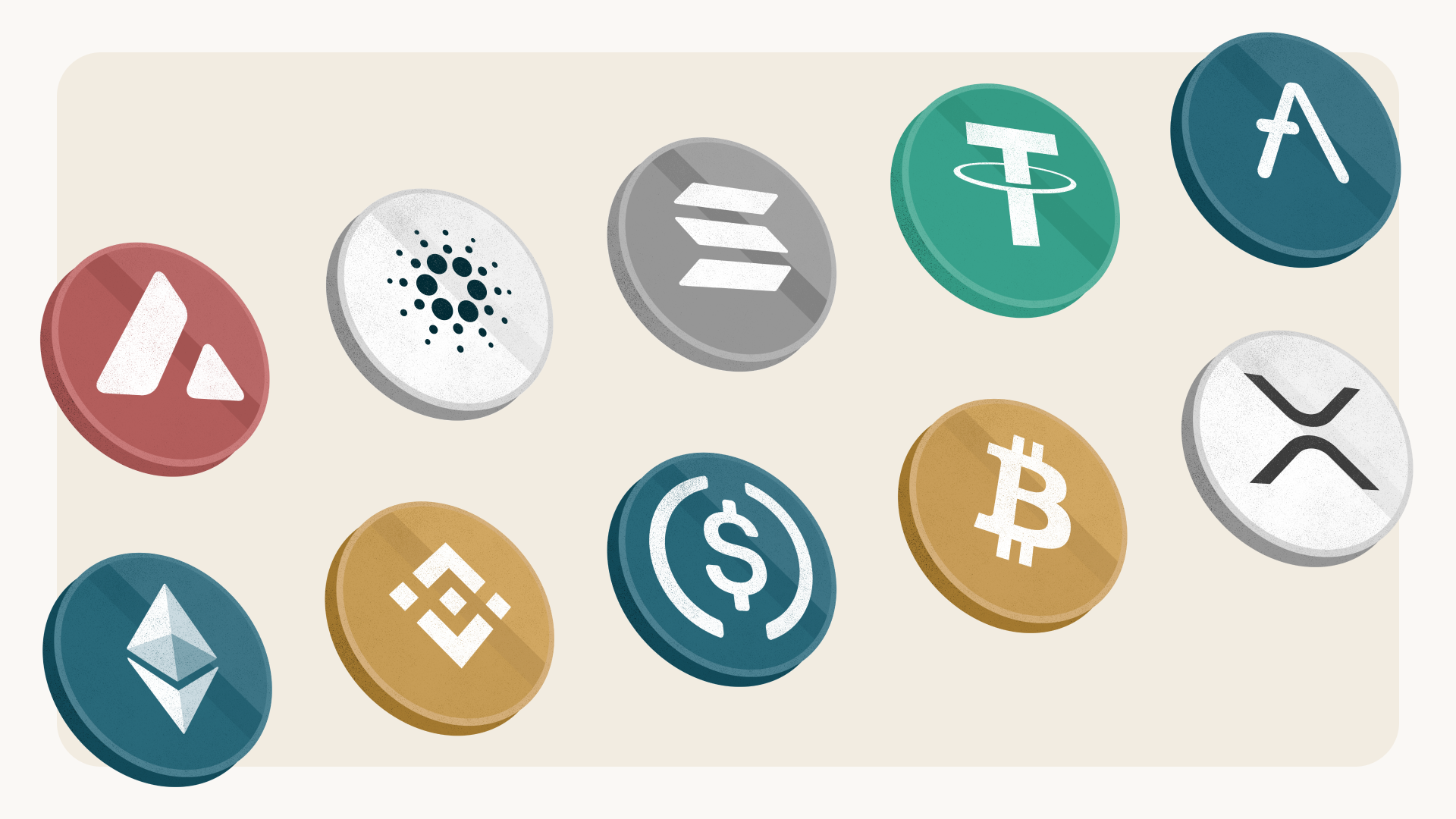
In the world of cryptocurrencies, where volatility is a defining feature, stablecoins offer a refuge by pegging their value to stable assets, such as the US dollar or gold. Popular stablecoins like Tether (USDT), USD Coin (USDC), and Binance USD (BUSD) are valued one-to-one with the US dollar, ensuring that users can avoid the price fluctuations typical in the crypto space.
Stablecoins serve multiple roles: they act as safe havens during times of market volatility, serve as mediums of exchange, and facilitate trading on cryptocurrency exchanges by allowing lower-cost cross-border transactions. The demand for stablecoins demonstrates a significant step toward integrating crypto into mainstream financial systems by ensuring certainty and reliability in value transfer.
Conclusion
These cryptocurrencies represent just a snapshot of the ever-evolving digital currency ecosystem. While each offers unique features and serves different purposes—from digital gold like Bitcoin to transactional assets like XRP and Ether's innovative platform for decentralized applications—the core premise remains the same: leveraging technology to create secure, decentralized means of value exchange.
In the next part, we will delve deeper into other types of cryptocurrencies, exploring those with unique use-cases, and discussing innovative developments in this fascinating domain. Stay tuned to learn more about privacy coins, utility tokens, and how meme-inspired coins are reshaping the cryptocurrency world.
Privacy Coins: Ensuring Anonymity
As the adoption of cryptocurrencies continues to grow, so too does the focus on privacy and anonymity in transactions. This is where privacy coins come into play. Unlike other cryptocurrencies, privacy coins are designed to provide enhanced security by obscuring transaction details to protect the identities of the parties involved.
One of the most well-known privacy coins is Monero (XMR). Monero employs advanced cryptographic techniques, such as ring signatures and stealth addresses, to ensure the sender, receiver, and transaction amount remain confidential. This focus on privacy makes Monero an attractive option for individuals and entities seeking to conduct transactions without prying eyes.
Another significant privacy coin is Zcash (ZEC). Zcash offers the option of "shielded" transactions, leveraging a technology called zk-SNARKs (zero-knowledge succinct non-interactive arguments of knowledge), which ensures complete privacy by proving the transaction's validity without revealing any sensitive information.
Privacy coins, however, face regulatory scrutiny due to their potential misuse in illicit activities. This ongoing debate highlights the balance between individual privacy rights and the need for regulatory oversight in the financial ecosystem.
Utility Tokens: Empowering Digital Ecosystems
Utility tokens are a distinct class of cryptocurrencies that go beyond mere financial transactions. These tokens are intended to provide users with access to products or services within a specific blockchain ecosystem. They play a vital role in facilitating functionality and interactions on decentralized platforms.
Ethereum’s Ether (ETH) is a prime example, as it acts both as a cryptocurrency and a utility token, powering transactions and computational services on the Ethereum network. Similarly, Binance Coin (BNB) is used for reducing trading fees on the Binance Exchange and powering the Binance Smart Chain's numerous decentralized applications.
Another notable utility token is Chainlink (LINK), which bridges the gap between smart contracts and real-world data. Chainlink enables smart contracts to securely interact with external data sources, facilitating services ranging from weather data to financial information.
These tokens not only provide specific utilities within their ecosystems but also often represent a way for projects to raise capital through initial coin offerings (ICOs). The versatility and functionality of utility tokens have garnered them substantial attention, leading to their proliferation across diverse blockchain projects.
Central Bank Digital Currencies (CBDCs): Bridging Traditional and Digital Finance
Central Bank Digital Currencies (CBDCs) have emerged as a concept that blends traditional fiat currencies with the technological advancements of digital currencies. Unlike cryptocurrencies, CBDCs are issued and regulated by central banks, representing the digital form of a nation's fiat currency.
Numerous countries, including China with its Digital Yuan and Sweden with the E-krona, are actively exploring or piloting CBDCs. These digital currencies aim to improve payment efficiency, reduce costs associated with cash handling, and promote financial inclusion. For instance, the Digital Yuan is designed to enhance the speed and security of domestic transactions while supporting the development of China's digital economy.
CBDCs can fundamentally transform how monetary policy is implemented, offering a direct channel between central banks and citizens. However, their introduction raises questions about privacy, cybersecurity, and the potential impact on the existing banking system. The global discourse around CBDCs signifies a pivotal shift in the way nations approach and adapt to the digitalization of their currencies.
Meme Coins: The Culture Drivers
While most cryptocurrencies serve practical purposes, meme coins are a whimsical yet significant part of the crypto ecosystem. These coins, often lacking any substantial technological innovation, gain value primarily through cultural virality and community momentum.
Dogecoin (DOGE) is the most prominent example of a meme coin. Originally created as a joke in 2013, featuring the Shiba Inu dog from the “Doge” meme, it has gained substantial popularity, fueled by internet culture and endorsements from high-profile figures like Elon Musk. Despite its humorous origins, Dogecoin has achieved mainstream acceptance and is used for tipping and charitable causes.
The success of Dogecoin has inspired the creation of other meme coins, such as Shiba Inu (SHIB), which further capitalizes on pop culture references and the power of community-driven speculation. Although these coins are primarily driven by humor, they underscore the influence of social media and digital culture in shaping the financial landscape.
Conclusion
The diversity among cryptocurrencies reflects the multifaceted nature of blockchain technology and digital finance. From privacy coins safeguarding anonymity to utility tokens enabling decentralized ecosystems, each type plays a unique role in advancing the goals and capabilities of the crypto space. Meanwhile, CBDCs illustrate the convergence of traditional finance with digital innovation, and meme coins highlight the cultural dimension of cryptocurrencies.
Understanding these different types of cryptocurrencies equips individuals and institutions with the knowledge to navigate this rapidly evolving landscape. In the concluding section of this article, we will explore upcoming trends and future outlooks for cryptocurrencies, delving into the technologies and innovations likely to shape the next era of finance. Stay tuned to uncover how emerging developments are poised to redefine our interaction with money.
The Rise of DeFi Tokens: Decentralizing Finance
Decentralized Finance, or DeFi, represents a transformative wave in the cryptocurrency sphere, aiming to recreate traditional financial systems like lending, insurance, and exchanges using blockchain technology. DeFi tokens serve as the backbone of these innovative financial services, allowing users to engage in activities once confined to centralized institutions, all while maintaining control over their assets.
One notable DeFi token is Uniswap (UNI), which powers the Uniswap protocol—a decentralized trading platform used for swapping various ERC-20 tokens on Ethereum. Uniswap's automated market maker (AMM) model and liquidity pools eliminate the need for traditional intermediaries, fostering a more open and accessible trading environment.
Another key player in the DeFi space is Maker (MKR). The Maker platform functions as a decentralized credit system on Ethereum, allowing users to lock in Ether as collateral to generate the Dai stablecoin. This process is governed by MKR holders, who vote on changes to the protocol, exemplifying decentralized governance in action.
DeFi tokens have not only democratized access to financial services but have also introduced novel concepts like yield farming and liquidity mining. These trends have attracted significant capital and interest, reflecting a growing appetite for financial autonomy and innovation.
Non-Fungible Tokens (NFTs): Unique Digital Assets
In recent years, Non-Fungible Tokens (NFTs) have taken the digital world by storm, representing a distinct category within the cryptocurrency space. Unlike fungible cryptocurrencies like Bitcoin or Ethereum, each NFT is unique and cannot be exchanged on a one-to-one basis with another.
NFTs are typically used to certify ownership of digital assets, including art, music, videos, and even virtual real estate. The Ethereum blockchain is the leading platform for NFTs due to its robust support for smart contracts. Through smart contracts, creators can embed metadata describing the NFT's attributes and ownership details, making them viable for verifying authenticity and provenance.
CryptoPunks and Bored Ape Yacht Club are among the most iconic NFT collections, known for their distinctive art and exclusivity. Beyond collectibles, NFTs have expanded into domains like gaming and ticketing, allowing for new models of ownership and revenue streams for creators.
Despite their popularity, NFTs are not without controversy. Issues related to environmental impact, copyright infringement, and market volatility have sparked debates on their long-term sustainability. Nevertheless, NFTs represent an exciting frontier at the intersection of art, technology, and finance.
Crypto Futures: What Lies Ahead?
As the landscape of cryptocurrencies continues to evolve, several trends and developments are likely to shape its future trajectory. One such trend is the ongoing expansion of blockchain scalability solutions. Projects like Ethereum 2.0 aim to improve transaction throughput through mechanisms like sharding and Proof of Stake consensus, addressing current limitations of speed and cost.
Interoperability is another crucial area of focus. With numerous blockchains existing independently, solutions that facilitate seamless communication and transfer of assets across different networks are gaining importance. Polkadot and Cosmos are leading projects in this field, striving to create a more connected and cohesive blockchain ecosystem.
Moreover, regulatory clarity will play a pivotal role in determining the future of cryptocurrencies. As governments navigate the complexities of digital currencies, collaboration between industry stakeholders and regulators will be essential in establishing frameworks that protect investors while encouraging innovation.
Finally, the integration of artificial intelligence (AI) with blockchain technology presents exciting possibilities. AI algorithms can enhance decision-making, security, and personalization in blockchain applications, opening new avenues for growth and creativity.
Conclusion
The vast array of cryptocurrencies available today reflects the innovation and diversity inherent in the blockchain space. From foundational coins like Bitcoin and Ethereum to specialized tokens driving DeFi, NFTs, and cross-border solutions, each type serves a distinct purpose and caters to varying user needs and preferences.
As the industry matures, these cryptocurrencies will continue to influence and reshape financial landscapes across the globe. Whether fostering financial inclusion, disrupting traditional systems, or crafting new cultural paradigms, cryptocurrencies are at the frontier of a revolution that transcends money, touching on technology, governance, and society.
Staying informed and adaptable will be crucial for anyone navigating the complexities of the cryptocurrency world. As innovations unfold and new concepts inevitably emerge, maintaining a forward-thinking perspective will be vital in harnessing the full potential of this transformative digital phenomenon.



Understanding the Rise and Journey of Ruby Franke
In the ever-evolving landscape of social media, there are few personalities that simultaneously captivate and divide audiences quite like Ruby Franke. Known for her popular YouTube channel and her distinctive persona, Ruby Franke has etched her place in the annals of internet fame through a combination of familial dynamics, transparent storytelling, and sometimes polarizing viewpoints. Her journey, from an obscure creator to a prominent influencer, is a fascinating tale of ambition, authenticity, and the challenges of public life.
Early Life and Background
Ruby Franke was born and raised in a modest town with values deeply rooted in family and community. While much about her early life remains private, her upbringing in a tight-knit environment is often mirrored in the content she produces. Franke’s strong familial ties and traditional values have been the bedrock of her personal brand, influencing the narrative she builds in her videos and the conversations she fosters online.
Her educational journey was equally significant, shaping her worldview and equipping her with the skills she would later utilize in her digital career. Despite the modern milieu she later infiltrated, Ruby retained an appreciation for the simplicity and authenticity of her roots—values she would carry with her into the spotlight.
The Emergence of 8 Passengers
Ruby Franke is perhaps best known for "8 Passengers," a YouTube channel chronicling the daily experiences of her family of eight. This endeavor began in early 2015, as Franke, alongside her husband, Kevin, sought to document the nuances and challenges of raising six children in a world increasingly driven by digital technology.
The concept of “8 Passengers” was simple: a candid portrayal of family life, saturating their content with the highs and lows of parenting and the chaos and joy inherent in a large household. This genuine representation resonated with countless viewers, drawing in a subscriber base that spans continents, fundamentally altering the landscape of family vlogging.
The channel’s success, marked by millions of subscribers and billions of cumulative views, can be attributed to its authentic approach. Franke’s willingness to showcase unfiltered moments created a paradigm shift in the genre, setting a standard for other content creators who aspired to mirror their personal narratives online.
Content Creation: Balancing Authenticity and Privacy
At the heart of Ruby Franke's content is a perpetual balancing act between openness and privacy. While her viewers are drawn to her authenticity, the choice to unveil intimate family moments on a global stage is fraught with its own set of challenges. Franke navigates this terrain with calculated tact, drawing boundaries where necessary to protect her family’s well-being while continuing to engage her audience effectively.
This balancing act is a testament to her adaptability as a content creator. There is an understanding implicit in her work that transparency need not equate to total openness. Franke manages to maintain an enigmatic allure despite the otherwise candid content, ensuring her family’s narrative is theirs to tell on their terms.
The Power and Influence of Relatability
Ruby Franke's influence extends beyond the confines of her vlogs. She wields considerable clout in discussions revolving around parenting, family dynamics, and lifestyle choices. Much of this influence stems not just from her visibility but from her relatability. Viewers find in her content a reflection of their own lives—the struggles, the mundane, and the unexpected joys.
This relatable quality establishes a profound connection between creator and audience. Ruby's narrative isn't one of an influencer perched atop a pedestal but rather of a fellow traveler navigating the challenges of life. Her honesty affords her credibility, making her an authoritative voice in a crowded digital space.
Challenges and Controversies
The pathway to prominence, however, has not been devoid of challenges. With increased visibility come amplified scrutiny and controversy—both of which Ruby Franke has faced in different capacities. Various aspects of her approach to discipline and parenting have sparked debates online, inciting both support and critique from diverse corners of the internet.
Critics often question whether the portrayal of her family life is genuinely beneficial to her children or if it crosses boundaries into exploitative territory. These concerns reflect broader discussions about the ethics of family vlogging, where the line between content and privacy is constantly tested.
In response, Franke has emphasized the thoughtfulness and consideration underlying her content choices, continually asserting her commitment to her family's well-being. The inclination to put her family first is a repeated motif in her narrative, underscoring both the opportunities and responsibilities associated with her online presence.
The discourse surrounding Ruby Franke is a reflection of the broader ethical conversations within the digital content sphere. As she continues to grow her platform, her story contributes to the evolving narrative of social media influence and its implications for the families at its core.
Navigating Public Life and Personal Identity
Navigating public life while maintaining a personal identity is a formidable challenge that Ruby Franke faces daily. As a figure constantly in the public eye, she must reconcile her personal beliefs and values with the personas expected by her audience. This delicate dance of identity is evident in how she crafts her content to reflect her values while also adapting to the demands of her diverse and dynamic audience.
Ruby's content offers a nuanced insight into the intersection of authenticity and the expectations of digital fame. Her willingness to express her viewpoints on subjects like family discipline, education, and lifestyle, even when they diverge from popular opinion, speaks to her commitment to honesty. This unyielding authenticity is both a strength and a vulnerability, as it invites a spectrum of responses from her viewers, ranging from unwavering support to vocal criticism.
The Impact of Social Media on Family Dynamics
The advent of social media has significantly influenced family dynamics, and the Franke family is no exception. With their lives documented on a global platform, the balance between public and private becomes increasingly complex. Social media has redefined family interaction, creating a space where every candid moment has the potential to be analyzed, critiqued, and consumed by millions.
In this digital era, children are growing up with an unprecedented level of visibility. For Ruby Franke's children, their experiences are both personalized and universally shared through the lens of a camera. This exposure offers unique opportunities for connection but also presents potential challenges, such as privacy concerns and the pressure to meet audience expectations.
Ruby is acutely aware of these dynamics and strives to protect her children from the potential pitfalls of digital exposure. She actively promotes the significance of family consent and agency, fostering an environment where her children can express their comfort levels with sharing aspects of their lives. Her strategy underscores a commitment to maintaining the integrity of her family's interactions and well-being in spite of a global audience.
Ruby Franke's Influence Beyond the Screen
While Ruby Franke's digital presence is undeniably significant, her influence extends beyond the screen into real-world impacts. As an influencer, she possesses the ability to shape conversations, inspire action, and influence decisions across a variety of contexts. Her contributions to discussions around family life, mental health, and personal development underscore her role as more than just an entertainer; she is an educator and advocate for transformative conversations.
Ruby’s ability to evoke widespread engagement is a testament to her effective communication skills and her capacity to foster communities around shared experiences. Her audience isn’t just comprised of passive viewers; they are active participants in discussions perpetuated by Ruby’s content. She leverages this engagement to uplift issues that resonate with her followers, creating a space for constructive dialogue and mutual learning.
Advocacy and Community Building
Community building is an integral aspect of Ruby Franke's brand. Beyond the internet, she has nurtured a sense of community among her viewers, encouraging supportive interactions and connections. This approach amplifies her influence, allowing her message to ripple through her audience and beyond.
Her advocacy efforts are particularly prominent in addressing issues pertinent to mental health and personal development. By sharing personal stories and experiences, Ruby fosters a safe space for dialogue that transcends typical influencer content. She advocates for self-awareness, empowerment, and realistic expectations—all pivotal elements that resonate deeply with her audience.
Through her ability to inspire, educate, and advocate, Ruby transforms traditional influencer dynamics, cultivating a community rooted in empathy and understanding. She emphasizes the importance of collective growth and the value of shared stories in creating a supportive, dynamic environment.
Future Directions and Legacy
Looking ahead, the trajectory of Ruby Franke's career is one of continued evolution and impact. As she navigates an increasingly complex digital landscape, her focus remains on creating meaningful content that resonates with her audience while safeguarding the privacy and autonomy of her family.
Future aspirations for Ruby include broadening her reach through various media formats, from public speaking engagements to writing endeavors, enabling her to expand her influence and deepen the connection with her audience. With an acute awareness of her platform, she aims to use her visibility to champion causes that align with her values and contribute meaningfully to societal discourse.
As Ruby Franke continues to chart her course, she is poised to leave a lasting legacy in the digital realm—a legacy defined by authenticity, advocacy, and the ability to connect with people on a profoundly human level. Her journey, marked by both triumphs and challenges, illustrates the complex yet rewarding nature of life in the digital age and the enduring power of storytelling to unite and inspire.
The Digital Landscape: Navigating Change and Evolution
Ruby Franke's journey through the digital landscape is emblematic of the rapid changes that characterize the world of content creation. As platforms evolve and audience preferences shift, she continues to adapt her strategies, ensuring her content remains relevant and engaging. This adaptability is a hallmark of successful influencers, reflecting an understanding of audience dynamics and the continually changing algorithms that dictate content visibility.
Her ability to stay ahead of trends while retaining her unique voice demonstrates a keen insight into the mechanics of digital platforms. The evolving landscape presents both challenges and opportunities for Ruby, as she experiments with new content forms and explores emerging platforms to connect with her audience in innovative ways.
Ruby's engagement in this dynamic environment is guided by a commitment to remaining true to her values while exploring new frontiers of digital storytelling. Her presence on platforms like Instagram and TikTok, alongside her established YouTube channel, speaks to her versatility and willingness to embrace change while expanding her reach.
The Ethics of Family Vlogging
One of the most pressing conversations surrounding Ruby Franke's career is the ethical considerations of family vlogging. As this genre grows in popularity, it raises important questions about the responsibilities of creators towards their children and the potential consequences of living life under a public lens.
Ruby is at the forefront of addressing these ethical challenges, initiating conversations about consent and agency for children in the world of digital content. She advocates for clear guidelines and standards to protect the interests of minors in vlogs, emphasizing the importance of consent and understanding in participation.
Through her actions, Ruby underscores the need for family vloggers to prioritize the welfare and autonomy of their children. Her advocacy for ethical practices highlights a deeper recognition of the power dynamics at play within family content creation and the pivotal role that responsible creators have in shaping the future of this genre.
The narrative she constructs around ethical vlogging is one that encourages dialogue and awareness, fostering a community of creators invested in promoting both creative expression and the safeguarding of those involved.
Engaging with a Global Audience
Ruby Franke's influence is not limited to her immediate community but extends to a global audience that finds resonance with her content's themes of family, authenticity, and growth. Engaging this diverse audience necessitates a nuanced approach, one that considers cultural variances and the universal aspects of human experience that transcend geographical boundaries.
Ruby skillfully navigates this global platform by creating content with a universal appeal—her focus on genuine family moments and shared human experiences echoes across cultures. This universality helps her build connections with an audience that might span different time zones and cultural contexts but shares a common appreciation for authenticity and relatability.
Her approach to engagement is interactive, fostering a sense of community among her followers worldwide. By addressing the cultural nuances and celebrating the diversity within her audience, Ruby creates an inclusive space where viewers feel seen and heard regardless of their background.
The Role of Mentorship and Collaboration
Collaboration and mentorship are pivotal elements in Ruby Franke's ongoing narrative. By collaborating with other content creators and engaging with community-driven initiatives, Ruby amplifies her impact and diversifies her influence. These partnerships allow her to explore fresh perspectives and foster creativity within her content, enhancing the value she provides to her audience.
Moreover, Ruby embraces the role of mentor within her community, offering guidance to emerging creators and encouraging the sharing of knowledge within the digital creator space. Her willingness to uplift others and share her journey offers invaluable insights to those navigating similar paths, building a supportive network of creators committed to shared growth.
Her legacy of mentorship reflects her belief in the transformative power of community and collaboration, highlighting her commitment to fostering an environment where creators can learn from and support each other.
Concluding Thoughts: Ruby Franke's Lasting Impact
Ruby Franke's journey as a content creator and influencer is a testament to the power of storytelling and the impact of authenticity in the digital age. Her ability to navigate the complexities of family life, personal identity, and public influence demonstrates a nuanced approach to content creation that resonates with audiences worldwide.
As she continues to evolve and adapt to new challenges, Ruby remains a compelling figure in the landscape of digital media, driven by a commitment to authenticity, ethical responsibility, and community engagement. Her story is one of resilience, adaptability, and the enduring human spirit that seeks connection and understanding through the art of digital storytelling.
In an ever-changing digital world, Ruby Franke's legacy will likely endure as a model for future generations of creators who aspire to share their stories with authenticity and integrity. Her influence is marked not only by her substantial online following but by the meaningful conversations she inspires and the lasting community she has built. Through her journey, Ruby Franke exemplifies the transformative potential of digital platforms to create lasting, positive impact, shaping a narrative that goes beyond the lens—to the realm of true human connection.


Understanding Public Key Infrastructure (PKI): The Foundation of Secure Digital Communication
In today’s digital age, the exchange of information occurs at a pace faster than ever imaginable. From personal emails to financial transactions, every byte of data needs assurance of privacy and authenticity. Public Key Infrastructure (PKI) emerges as the backbone of this secure digital environment, enabling encrypted communications and digital signatures that verify identities. But what exactly is PKI, and why is it indispensable in today’s interconnected world?
What is Public Key Infrastructure?
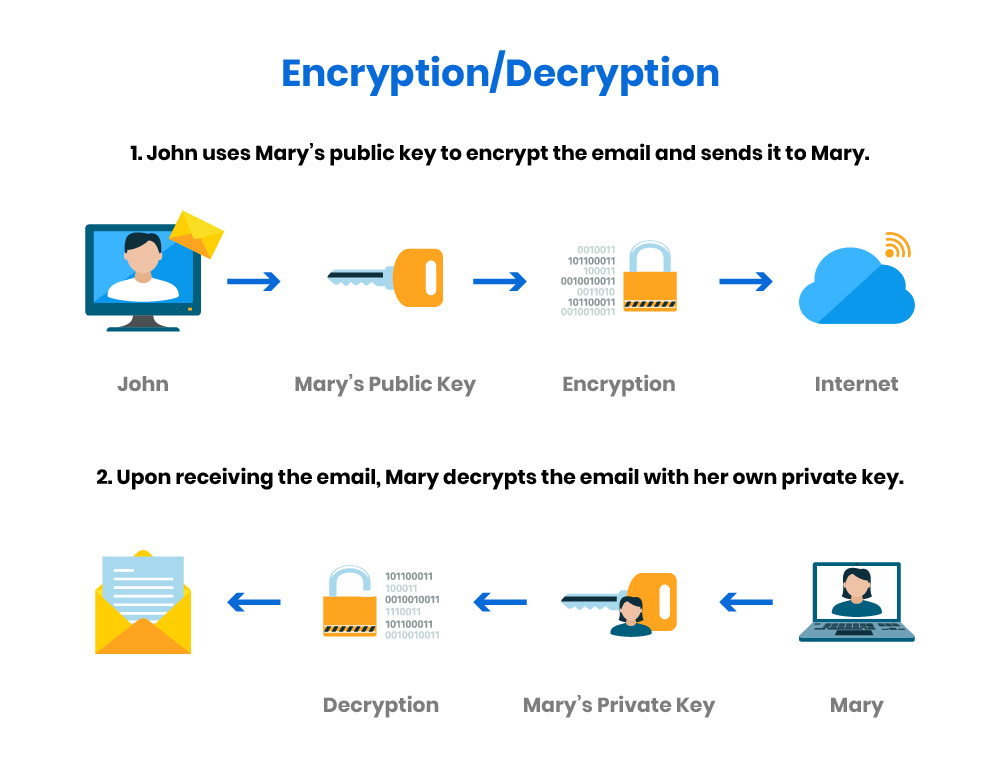
Public Key Infrastructure (PKI) is a framework of technologies, standards, and practices used to secure communications and authenticate identities across digital networks. At its core, PKI involves the use of cryptographic keys—specifically, a paired set of keys known as the public key and the private key. This pairing allows users to encrypt their data with one key which can only be decrypted with the other key in the pair, thus ensuring secure data exchange.
The infrastructure of PKI is composed of several components, including:
- Certificates: Digital documents that link a public key with an entity's identity, issued by trusted entities known as Certificate Authorities (CAs).
- Certificate Authorities (CAs): Trusted organizations responsible for issuing, revoking, and managing digital certificates.
- Registration Authorities (RAs): Entities that verify the identities of individuals or organizations requesting a digital certificate before it is issued by a CA.
- Certificate Repositories: Secure locations where certificates and their status are stored and made accessible.
- Revocation systems: Mechanisms to invalidate certificates that are no longer trustworthy or required.
The Role of Cryptography in PKI
Cryptography is the science of converting messages into a secure format that can only be understood by intended recipients. PKI makes extensive use of asymmetric cryptography, which employs a pair of mathematically linked keys:
- Public Key: A key that can be freely distributed to anyone who wants to send an encrypted message.
- Private Key: A secret key kept by the owner, used to decrypt messages and sign digital documents to ensure their authenticity.
The public key encrypts data that only the corresponding private key can decrypt, providing a secure means of communication. Conversely, data signed with a private key can be verified using the public key, providing integrity and authentication to digital interactions.
Applications of PKI
The versatility of PKI extends across various applications, significantly enhancing security and trustworthiness in digital operations. Some of the essential applications include:
- Secure Communications: Ensures the confidentiality and privacy of messages using encryption protocols like SSL/TLS, widely used in securing websites and emails.
- Digital Signatures: Provide verification of the authenticity and integrity of electronic documents, ensuring that data has not been altered.
- User Authentication: Replaces traditional password-based systems with certificate-based authentication, increasing security in enterprise environments.
- IoT Device Security: Secures the interactions between internet-connected devices, preventing unauthorized access and data breaches.
Benefits of Implementing PKI
Organizations that adopt PKI benefit from a reliable and scalable security framework. Key advantages include:
- Enhanced Security: Robust encryption and authentication mechanisms reduce vulnerabilities and protect sensitive information from cyber threats.
- Scalability: PKI can easily accommodate the growth of users and devices, making it suitable for both small businesses and large corporations.
- Cost-Effectiveness: By streamlining security protocols and reducing the risks of breaches, PKI can lead to reduced operational costs over time.
- Improved Trust: Digital certificates foster trust between parties, ensuring the authenticity of participants in digital communications.
As digital transformation continues to advance, the reliance on PKI as a cornerstone of secure digital communication becomes increasingly crucial. Yet, understanding the mechanics, benefits, and challenges of PKI is essential for organizations and individuals alike.