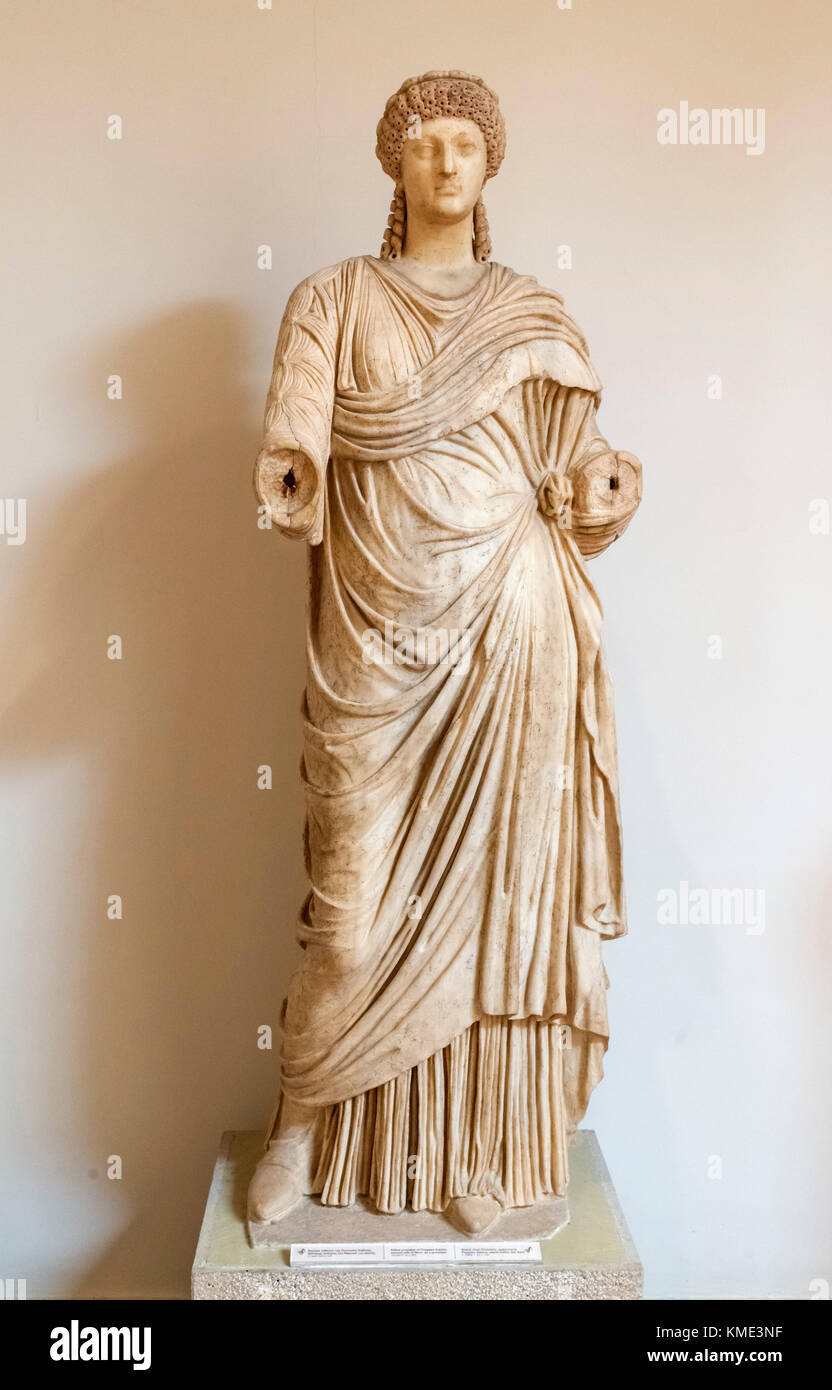
Poppaea Sabina: The Powerful Empress of Nero’s Rome
Poppaea Sabina remains one of the most intriguing figures of ancient Rome, known for her beauty, ambition, and influence as the second wife of Emperor Nero. Born around 30 CE, she rose to prominence in the volatile political landscape of the Julio-Claudian dynasty. Her life, marked by strategic marriages and court intrigues, offers a fascinating glimpse into the role of women in Roman imperial politics.
Early Life and Noble Origins
Poppaea Sabina hailed from a wealthy and influential family with ties to Pompeii. Her father, Titus Ollius, was a prominent figure, and her mother, also named Poppaea, was a noblewoman of considerable means. This elite background provided her with the social connections and financial resources necessary to navigate the treacherous waters of Roman high society.
Her early life was shaped by the political ambitions of her family. The Poppaea clan was known for their business ventures, including brickworks in Pompeii, which underscored their economic influence. This wealth and status would later play a crucial role in her ascent to power.
Marriages and Political Alliances
First Marriage: Rufrius Crispinus
Poppaea’s first marriage was to Rufrius Crispinus, a member of the Praetorian Guard. This union was likely a strategic alliance, bolstering her family’s connections within the imperial administration. However, this marriage did not last, as Poppaea’s ambitions soon outgrew this initial alliance.
Second Marriage: Marcus Salvius Otho
Her second marriage to Marcus Salvius Otho further elevated her status. Otho, who would later become a brief but notable Roman Emperor in 69 CE, was a close friend of Nero. This marriage placed Poppaea in the inner circles of imperial power, setting the stage for her eventual union with Nero himself.
It was during this period that Poppaea began to exert her influence more directly. Her beauty and charm were legendary, and she quickly became a central figure in the Roman court. Ancient sources, including Tacitus and Suetonius, describe her as a woman of extraordinary ambition, willing to use her wit and allure to achieve her goals.
Rise to Power: Becoming Nero’s Empress
The Fall of Octavia
Poppaea’s path to becoming Nero’s empress was fraught with political maneuvering. Nero’s first wife, Claudia Octavia, was the daughter of Emperor Claudius and a symbol of his early reign. However, Poppaea’s influence over Nero grew, and she reportedly played a pivotal role in Octavia’s downfall.
Ancient historians suggest that Poppaea orchestrated Octavia’s exile and subsequent execution, clearing the way for her own marriage to Nero. This period highlights the ruthless nature of Roman court politics, where alliances were fragile and betrayal was common.
Marriage to Nero and Imperial Influence
Poppaea’s marriage to Nero, likely occurring in the mid-50s CE, marked the pinnacle of her political career. As empress-consort, she wielded significant influence over Nero’s decisions. Her role extended beyond that of a mere consort; she was an active participant in the governance of the empire.
Her tenure as empress was relatively short but impactful. She bore Nero a daughter, Claudia Augusta, who tragically died in infancy. Despite this personal loss, Poppaea’s influence remained strong, and she continued to shape the political landscape of Rome.
Poppaea’s Legacy and Historical Perception
Ancient Sources and Biases
The primary sources that document Poppaea’s life, including the works of Tacitus, Suetonius, and Cassius Dio, are often colored by the biases of their time. These historians, writing in a period when imperial women were frequently portrayed in a negative light, often depicted Poppaea as a scheming and manipulative figure.
Modern scholars, however, approach these accounts with caution. While Poppaea’s ambition is undeniable, recent research suggests that her actions were not merely the result of personal greed but were strategic moves within the context of elite female power dynamics in ancient Rome.
Archaeological Evidence and the Villa Poppaea
One of the most tangible links to Poppaea’s life is the Villa Poppaea at Oplontis, near Pompeii. This lavish estate, often attributed to her, showcases the opulence and sophistication of Roman aristocratic life. The villa’s intricate frescoes, expansive gardens, and luxurious amenities reflect the wealth and status of its owner.
While the direct connection between Poppaea and the villa is based on circumstantial evidence, it remains a key site for understanding the material culture of her era. The villa’s preservation, thanks to the eruption of Mount Vesuvius in 79 CE, provides invaluable insights into the domestic life of Rome’s elite.
Conclusion: A Complex Figure in Roman History
Poppaea Sabina’s life story is a testament to the complexity of women’s roles in ancient Rome. Far from being a passive figure, she actively shaped the political and social landscape of her time. Her marriages, her influence over Nero, and her strategic maneuvering within the imperial court highlight the agency and ambition of elite Roman women.
While ancient sources often paint her in a negative light, modern scholarship offers a more nuanced view. Poppaea’s legacy is not merely one of intrigue and manipulation but also of strategic acumen and resilience in a world dominated by men. Her story continues to captivate historians and enthusiasts alike, offering a rich tapestry of power, politics, and personal ambition in the heart of the Roman Empire.
In the next part of this series, we will delve deeper into Poppaea’s political strategies, her role in Nero’s court, and the circumstances surrounding her untimely death in 65 CE.
Poppaea’s Political Strategies and Court Influence
Poppaea Sabina was not merely a passive observer in Nero’s court; she was an active and calculated participant. Her political strategies were marked by a keen understanding of Roman power dynamics, allowing her to navigate the treacherous waters of imperial politics with remarkable skill.
Manipulating Nero’s Favor
One of Poppaea’s most significant achievements was her ability to secure and maintain Nero’s favor. Ancient sources suggest that she used a combination of charm, intelligence, and political acumen to influence the emperor. Suetonius and Tacitus both highlight her role in shaping Nero’s decisions, often portraying her as a driving force behind some of his more controversial actions.
Her influence extended to key appointments and policy decisions. For instance, she is believed to have played a role in the exile and execution of Nero’s first wife, Octavia, as well as the downfall of other political rivals. This ruthless approach underscores her determination to secure her position and eliminate threats to her power.
Building Alliances and Patronage
Poppaea’s political strategy also involved building alliances with influential figures in Rome. She understood the importance of patronage and used her wealth and status to cultivate relationships with key senators, military leaders, and other elite figures. This network of allies helped her maintain her influence and protect her interests.
Her marriage to Marcus Salvius Otho, a close friend of Nero, was a strategic move that further solidified her position. Otho’s later rise to the throne in 69 CE underscores the far-reaching impact of Poppaea’s political maneuvering.
The Circumstances Surrounding Poppaea’s Death
Ancient Accounts and Theories
Poppaea’s death in 65 CE remains a subject of historical debate. Ancient sources provide varying accounts of the circumstances surrounding her demise, with some suggesting foul play and others attributing it to natural causes.
Tacitus and Suetonius both mention that Poppaea died as a result of a miscarriage, possibly caused by a violent kick from Nero during a fit of rage. However, these accounts are often viewed with skepticism, as they may be influenced by the hostile narratives surrounding Nero and his court.
Imperial Funeral and Deification
Regardless of the cause, Poppaea’s death was met with extraordinary honors. Nero ordered an elaborate state funeral, complete with a partially mummified embalming process, a rarity in Roman tradition. This grand gesture underscored the significance of her role as empress and Nero’s deep attachment to her.
In a further display of his devotion, Nero deified Poppaea, elevating her to the status of a goddess. This act of apotheosis was a powerful statement, reinforcing her legacy and ensuring her place in Roman history.
Poppaea’s Cultural and Historical Legacy
Reevaluating Ancient Portrayals
Modern scholarship has begun to reevaluate the ancient portrayals of Poppaea Sabina. While traditional sources often depict her as a scheming femme fatale, contemporary historians argue that these narratives are colored by the moralizing tendencies of Roman historians.
Recent studies emphasize the need to understand Poppaea’s actions within the context of elite female strategies for wealth, status, and patronage. Her political maneuvering was not merely a result of personal ambition but a reflection of the complex power dynamics of the Roman court.
Archaeological Insights: The Villa Poppaea
The Villa Poppaea at Oplontis remains one of the most tangible connections to her life. This lavish estate, often attributed to her, showcases the opulence and sophistication of Roman aristocratic life. The villa’s intricate frescoes, expansive gardens, and luxurious amenities reflect the wealth and status of its owner.
While the direct link between Poppaea and the villa is based on circumstantial evidence, it provides invaluable insights into the material culture of her era. The villa’s preservation, thanks to the eruption of Mount Vesuvius in 79 CE, offers a unique window into the domestic life of Rome’s elite.
Poppaea Sabina in Modern Scholarship
Recent Academic Interest
Poppaea’s life and legacy continue to captivate modern scholars. A 2019 monograph titled Poppaea Sabina: The Life and Afterlife of a Roman Empress, published by Oxford University Press, collects modern research on her biography and reception. This work signals a sustained academic interest in her as both a historical actor and a posthumous figure in Roman cultural memory.
The monograph highlights the importance of interdisciplinary approaches, combining literary analysis with archaeological evidence to trace Poppaea’s socioeconomic footprint. This holistic approach provides a more nuanced understanding of her role in Roman society.
Public History and Tourism
The Villa Poppaea continues to be a focal point in public history and tourism. The site is often highlighted in museum narratives and heritage studies, attracting visitors interested in imperial domestic architecture. This ongoing fascination underscores Poppaea’s enduring legacy and her place in the popular imagination.
Her story is not merely one of political intrigue but also of cultural and historical significance. As modern scholarship continues to uncover new insights, Poppaea Sabina’s legacy as a powerful and influential figure in Roman history remains secure.
Key Takeaways: Poppaea’s Impact on Roman History
- Political Influence: Poppaea played a crucial role in shaping Nero’s decisions and eliminating political rivals.
- Strategic Marriages: Her unions with Rufrius Crispinus and Marcus Salvius Otho were key to her ascent.
- Cultural Legacy: The Villa Poppaea offers insights into the opulence of Roman aristocratic life.
- Modern Reevaluation: Scholars are reassessing her portrayal, emphasizing her strategic acumen.
In the final part of this series, we will explore Poppaea’s lasting influence on Roman culture, her depiction in literature and art, and the ongoing debates surrounding her historical legacy.
Poppaea Sabina’s Lasting Influence on Roman Culture
Literary and Artistic Depictions
Poppaea Sabina’s influence extended beyond the political realm into the cultural fabric of Rome. Ancient literature and art frequently referenced her, often reflecting the complex perceptions of her character. While some portrayals emphasized her beauty and charm, others highlighted her ambition and political cunning.
In Roman poetry, Poppaea was sometimes depicted as a symbol of feminine power, a figure who could rival even the most influential men of her time. These literary representations contributed to her enduring legacy, shaping how future generations would perceive her.
Architectural and Material Legacy
The Villa Poppaea at Oplontis stands as a testament to her architectural and material influence. This grand estate, with its intricate frescoes and luxurious design, reflects the opulence and sophistication of Roman aristocratic life. The villa’s preservation offers modern scholars and visitors a glimpse into the domestic world of one of Rome’s most powerful women.
Beyond the villa, Poppaea’s influence can be seen in the material culture of her era. Her wealth and status allowed her to commission art, jewelry, and other luxury items that showcased her refined taste and social standing.
Poppaea’s Role in the Downfall of Nero
Political Maneuvering and Its Consequences
Poppaea’s political strategies were not without consequences. Her influence over Nero contributed to a series of decisions that ultimately weakened his reign. The exile and execution of Octavia, along with the purging of other political rivals, created a climate of instability and fear within the Roman court.
While Poppaea’s actions were driven by a desire to secure her position, they also contributed to the erosion of Nero’s support among the Roman elite. This political turmoil would eventually play a role in Nero’s downfall and the collapse of the Julio-Claudian dynasty.
The Aftermath of Her Death
Poppaea’s death in 65 CE marked a turning point in Nero’s reign. The elaborate funeral and deification that followed underscored her significance, but it also highlighted the volatility of Nero’s rule. Without her stabilizing influence, Nero’s decisions became increasingly erratic, leading to further political unrest.
Her death also had a profound impact on the Roman public. The grand funeral procession and the subsequent deification were seen as both a tribute to her power and a reflection of Nero’s growing tyranny.
Modern Reinterpretations of Poppaea Sabina
Challenging Ancient Narratives
Modern scholarship has begun to challenge the ancient narratives that portray Poppaea as a mere scheming femme fatale. Historians now recognize that these accounts were often shaped by the biases and moralizing tendencies of Roman historians.
Recent studies emphasize the need to understand Poppaea’s actions within the context of elite female strategies in ancient Rome. Her political maneuvering was not merely a result of personal ambition but a reflection of the complex power dynamics of the Roman court.
Interdisciplinary Approaches to Her Legacy
Scholars are increasingly using interdisciplinary approaches to study Poppaea’s life and influence. By combining literary analysis with archaeological evidence, researchers can trace her socioeconomic footprint and the material dimensions of her power.
This holistic approach provides a more nuanced understanding of her role in Roman society, highlighting her as a complex and multifaceted figure rather than a one-dimensional villain.
Poppaea Sabina’s Enduring Legacy
Lessons from Her Life and Influence
Poppaea Sabina’s life offers valuable lessons about the role of women in ancient Rome. Her story underscores the agency and ambition of elite Roman women, who often navigated the treacherous waters of imperial politics with remarkable skill.
Her ability to secure and maintain power in a male-dominated world is a testament to her strategic acumen and resilience. Poppaea’s legacy serves as a reminder of the complexity of female power in ancient societies.
Her Place in Roman History
Poppaea Sabina remains one of the most fascinating and controversial figures of the Roman Empire. Her influence on Nero’s reign, her political strategies, and her cultural legacy continue to captivate historians and enthusiasts alike.
As modern scholarship continues to reevaluate her life, Poppaea’s place in Roman history is becoming increasingly clear. She was not merely a passive consort but an active participant in the political and cultural life of her time.
Conclusion: The Complex Legacy of Poppaea Sabina
Poppaea Sabina’s life story is a rich tapestry of power, politics, and personal ambition. From her strategic marriages to her influence over Nero, she played a pivotal role in shaping the history of the Roman Empire. While ancient sources often portray her in a negative light, modern scholarship offers a more nuanced and balanced perspective.
Her legacy is not merely one of intrigue and manipulation but also of strategic brilliance and cultural influence. The Villa Poppaea, her political maneuvering, and her enduring presence in literature and art all attest to her significance.
As we continue to explore the complexities of her life, Poppaea Sabina remains a symbol of female power in ancient Rome. Her story challenges us to look beyond the simplistic narratives of the past and to recognize the multifaceted roles that women played in shaping history.
- Political Mastery: Poppaea’s ability to navigate and influence Roman politics.
- Cultural Impact: Her influence on art, architecture, and literature.
- Modern Reevaluation: The ongoing reassessment of her historical role.
In the end, Poppaea Sabina’s life reminds us that history is not merely a record of events but a complex interplay of power, ambition, and human agency. Her story continues to inspire and challenge, offering valuable insights into the dynamics of ancient Rome and the enduring legacy of its most influential figures.