Max Delbrück: Nobel-Winning Pioneer of Molecular Biology
Introduction to a Scientific Revolutionary
Max Delbrück was a visionary scientist whose groundbreaking work in bacteriophage research laid the foundation for modern molecular biology. Born in Germany in 1906, Delbrück transitioned from physics to biology, forever changing our understanding of genetic structure and viral replication. His contributions earned him the 1969 Nobel Prize in Physiology or Medicine, shared with Salvador Luria and Alfred Hershey.
Early Life and Academic Foundations
Delbrück was born on September 4, 1906, in Berlin, Germany, into an academic family. His father, Hans Delbrück, was a prominent historian, while his mother came from a family of scholars. This intellectual environment nurtured young Max's curiosity and love for science.
Education and Shift from Physics to Biology
Delbrück initially pursued theoretical physics, earning his PhD from the University of Göttingen in 1930. His early work included a stint as an assistant to Lise Meitner in Berlin, where he contributed to the prediction of Delbrück scattering, a phenomenon involving gamma ray interactions.
Inspired by Niels Bohr's ideas on complementarity, Delbrück began to question whether similar principles could apply to biology. This curiosity led him to shift his focus from physics to genetics, a move that would redefine scientific research.
Fleeing Nazi Germany and Building a New Life
The rise of the Nazi regime in Germany forced Delbrück to leave his homeland in 1937. He relocated to the United States, where he continued his research at Caltech and later at Vanderbilt University. In 1945, he became a U.S. citizen, solidifying his commitment to his new home.
Key Collaborations and the Phage Group
Delbrück's most influential work began with his collaboration with Salvador Luria and Alfred Hershey. Together, they formed the Phage Group, a collective of scientists dedicated to studying bacteriophages—viruses that infect bacteria. Their research transformed phage studies into an exact science, enabling precise genetic investigations.
One of their most notable achievements was the development of the one-step bacteriophage growth curve in 1939. This method allowed researchers to track the replication cycle of phages, revealing that a single phage could produce hundreds of thousands of progeny within an hour.
Groundbreaking Discoveries in Genetic Research
Delbrück's work with Luria and Hershey led to several pivotal discoveries that shaped modern genetics. Their research provided critical insights into viral replication and the nature of genetic mutations.
The Fluctuation Test and Spontaneous Mutations
In 1943, Delbrück and Luria conducted the Fluctuation Test, a groundbreaking experiment that demonstrated the random nature of bacterial mutations. Their findings disproved the prevailing idea that mutations were adaptive responses to environmental stress. Instead, they showed that mutations occur spontaneously, regardless of external conditions.
This discovery was pivotal in understanding genetic stability and laid the groundwork for future studies on mutation rates and their implications for evolution.
Viral Genetic Recombination
In 1946, Delbrück and Hershey made another significant breakthrough by discovering genetic recombination in viruses. Their work revealed that viruses could exchange genetic material, a process fundamental to genetic diversity and evolution. This finding further solidified the role of phages as model organisms in genetic research.
Legacy and Impact on Modern Science
Delbrück's contributions extended beyond his immediate discoveries. His interdisciplinary approach, combining physics and biology, inspired a new generation of scientists. The Phage Group he co-founded became a training ground for many leaders in molecular biology, influencing research for decades.
The Nobel Prize and Beyond
In 1969, Delbrück was awarded the Nobel Prize in Physiology or Medicine for his work on viral replication and genetic structure. The prize recognized his role in transforming phage research into a precise scientific discipline, enabling advancements in genetics and molecular biology.
Even after receiving the Nobel Prize, Delbrück continued to push the boundaries of science. He challenged existing theories, such as the semi-conservative replication of DNA, and explored new areas like sensory transduction in Phycomyces, a type of fungus.
Conclusion of Part 1
Max Delbrück's journey from physics to biology exemplifies the power of interdisciplinary thinking. His work with bacteriophages not only advanced our understanding of genetics but also set the stage for modern molecular biology. In the next section, we will delve deeper into his later research, his influence on contemporary science, and the enduring legacy of his contributions.
Later Research and Challenging Established Theories
After receiving the Nobel Prize, Max Delbrück continued to push scientific boundaries through innovative experiments and theoretical challenges. His work remained focused on uncovering fundamental biological principles, often questioning prevailing assumptions.
Challenging DNA Replication Models
In 1954, Delbrück proposed a dispersive theory of DNA replication, challenging the dominant semi-conservative model. Though later disproven by Meselson and Stahl, his hypothesis stimulated critical debate and refined experimental approaches in molecular genetics.
Delbrück emphasized the importance of precise measurement standards, stating:
"The only way to understand life is to measure it as carefully as possible."This philosophy driven his entire career.
Studying Phycomyces Sensory Mechanisms
From the 1950s onward, Delbrück explored Phycomyces, a fungus capable of complex light and gravity responses. His research revealed how simple organisms translate environmental signals into measurable physical changes, bridging genetics and physiology.
- Demonstrated photoreceptor systems in fungal growth patterns
- Established quantitative methods for studying sensory transduction
- Influenced modern research on signal transduction pathways
The Max Delbrück Center: A Living Legacy
Following Delbrück's death in 1981, the Max Delbrück Center (MDC) was established in Berlin in 1992, embodying his vision of interdisciplinary molecular medicine. Today, it remains a global leader in genomics and systems biology.
Research Impact and Modern Applications
Delbrück's phage methodologies continue to underpin contemporary genetic technologies:
- CRISPR-Cas9 development builds on his quantitative phage genetics
- Modern viral vector engineering relies on principles he established
- Bacterial gene expression studies trace back to his fluctuation test designs
The MDC currently hosts over 1,500 researchers from more than 60 countries, continuing Delbrück's commitment to collaborative science.
Enduring Influence on Modern Genetics
Delbrück's approach to science—combining rigor, creativity, and simplicity—shapes current research paradigms. His emphasis on quantitative analysis remains central to modern genetic studies.
Philosophical Contributions
Delbrück advocated for studying biological systems at their simplest levels before tackling complexity. This "simplicity behind complexity" principle now guides systems biology and synthetic biology efforts worldwide.
His legacy endures through:
- Training generations of molecular biologists through the Phage Group
- Establishing foundational methods for mutant strain analysis
- Promoting international collaboration in life sciences
Legacy in Education and Mentorship
Max Delbrück’s influence extended far beyond his publications through his role as a mentor and educator. His leadership of the Phage Group created a model for collaborative, interdisciplinary training that shaped generations of scientists.
Training Future Scientists
Delbrück emphasized quantitative rigor and intellectual curiosity in his students. At Cold Spring Harbor, he fostered a community where physicists, biologists, and chemists worked together—a precursor to modern systems biology.
- Mentored Gordon Wolstenholme, who later directed the Salk Institute
- Inspired Walter Gilbert, a future Nobel laureate in chemistry
- Established a culture of critical debate that accelerated scientific progress
Current Applications of Delbrück's Work
Delbrück’s methods and discoveries remain embedded in today’s most advanced genetic technologies. His approach continues to inform cutting-edge research across multiple fields.
Impact on Modern Genetic Engineering
The principles Delbrück established through bacteriophage studies are foundational to tools transforming medicine and agriculture:
- CRISPR-Cas9 gene editing relies on phage-derived mechanisms
- Viral gene therapy vectors use designs first explored in his labs
- Bacterial mutagenesis studies follow protocols he refined
"Delbrück taught us to see genes not as abstract concepts, but as measurable molecular machines."
Advancing Genomics and Virology
Today’s genomic research owes a debt to Delbrück’s emphasis on precise measurement. Modern sequencing technologies and viral dating methods build directly on his frameworks.
Key ongoing applications include:
- Pandemic preparedness through phage-based virus tracking
- Cancer genomics using mutation rate analysis he pioneered
- Synthetic biology circuits inspired by his Phycomyces studies
Conclusion: The Enduring Impact of Max Delbrück
Max Delbrück transformed our understanding of life at the molecular level through visionary experiments, interdisciplinary collaboration, and unwavering intellectual rigor. His work remains a cornerstone of modern genetics.
Key Takeaways
The legacy of Delbrück endures through:
- Nobel-recognized discoveries in viral replication and mutation
- The Max Delbrück Center’s ongoing research in molecular medicine
- A scientific philosophy that values simplicity behind complexity
As biology grows increasingly complex, Delbrück’s insistence on quantitative clarity and collaborative inquiry continues to guide researchers worldwide. His life’s work proves that understanding life’s simplest mechanisms remains the surest path to unlocking its deepest mysteries.



Hermann von Helmholtz: The Visionary Scientist Who Bridged Disciplines
The Early Years and Academic Foundations
Hermann von Helmholtz, born on August 31, 1821, in Potsdam, Prussia, was one of the most influential scientists of the 19th century. His work spanned multiple disciplines, including physics, physiology, psychology, and philosophy, making him a true polymath. The son of a gymnasium teacher, Helmholtz grew up in an intellectually stimulating environment, which nurtured his natural curiosity and passion for learning. Despite financial constraints, his father arranged for him to receive a strong education, setting the stage for his future achievements.
Helmholtz initially pursued a medical degree due to a state-funded scholarship that required military service afterward. He studied at the Royal Medico-Surgical Institute in Berlin, where he was deeply influenced by the teachings of physiologist Johannes Müller. Müller’s emphasis on the importance of physics and chemistry in understanding biological processes left a lasting impression on Helmholtz and shaped his interdisciplinary approach to science.
The Conservation of Energy: A Revolutionary Contribution
One of Helmholtz’s most groundbreaking contributions was his formulation of the principle of the conservation of energy. In 1847, at just 26 years old, he published On the Conservation of Force, a treatise that mathematically demonstrated that energy within a closed system remains constant—only transforming from one form to another. Though others had hinted at this concept, Helmholtz provided the rigorous mathematical foundation that solidified it as a fundamental principle of physics.
This work was met with skepticism at first, as many scientists still clung to the idea of vitalism—the belief that living organisms operated under different laws than inanimate matter. Helmholtz’s findings bridged the gap between biology and physics, proving that the same energy principles governed both living and non-living systems. His insights laid the groundwork for thermodynamics and influenced future giants of science, including James Clerk Maxwell and Max Planck.
Pioneering Work in Physiology
Beyond physics, Helmholtz made significant strides in physiology, particularly in the study of vision and hearing. His invention of the ophthalmoscope in 1851 revolutionized eye medicine by allowing doctors to examine the interior of the eye in detail. This device, still used today in modified forms, enabled the diagnosis of previously undetectable eye diseases and cemented Helmholtz’s reputation as a brilliant experimentalist.
Helmholtz also conducted extensive research on color vision and perception, building on the earlier work of Thomas Young. His trichromatic theory proposed that the human eye perceives color through three types of receptors sensitive to red, green, and blue light. This theory, later validated, remains central to our understanding of color vision and has applications in modern display technologies, such as televisions and computer screens.
The Nature of Perception and the Speed of Nerve Impulses
Another landmark achievement was Helmholtz’s experimental measurement of the speed of nerve impulses. Contrary to the prevailing belief that nerve signals were instantaneous, Helmholtz demonstrated that they traveled at a finite, measurable speed. Using frog muscles and precise electrical stimulation, he calculated the conduction velocity, proving that neural signals were not instantaneous but propagated at around 25 meters per second.
This discovery had profound implications for both physiology and psychology. It suggested that human perception was not immediate but rather involved measurable delays, raising questions about the nature of consciousness and reaction times. Helmholtz’s work in this area contributed to the emerging field of experimental psychology and influenced later thinkers like Wilhelm Wundt, often regarded as the father of psychology.
Acoustics and the Science of Sound
Helmholtz’s interests extended to the study of sound and hearing, where he made pioneering contributions. He developed the concept of resonance theory, which explained how the ear distinguishes different pitches. According to his theory, different parts of the inner ear’s cochlea resonate at specific frequencies, allowing the brain to interpret pitch. This idea, though refined over time, remains a cornerstone of auditory science.
He also invented the Helmholtz resonator, a device used to analyze sound frequencies. This simple yet effective tool allowed scientists to isolate and study specific tones, advancing both musical acoustics and the understanding of auditory perception. Helmholtz’s work in acoustics demonstrated his ability to merge theoretical insights with practical experimentation, a hallmark of his scientific method.
Academic Career and Legacy
Throughout his career, Helmholtz held prestigious academic positions, including professorships at the universities of Königsberg, Bonn, Heidelberg, and Berlin. He was a sought-after lecturer and mentor, inspiring generations of scientists. His ability to synthesize knowledge across disciplines made him a unifying figure in an era of increasing scientific specialization.
Helmholtz’s legacy endures not only in his specific discoveries but also in his approach to science. He championed the idea that scientific understanding required a combination of empirical observation, mathematical rigor, and theoretical innovation. His interdisciplinary mindset foreshadowed modern fields such as biophysics and cognitive science, demonstrating that the boundaries between disciplines are often artificial.
Hermann von Helmholtz passed away on September 8, 1894, but his ideas continue to resonate across multiple scientific domains. His life and work serve as a testament to the power of curiosity, persistence, and the relentless pursuit of knowledge.
To Be Continued…
Helmholtz and the Intersection of Science and Philosophy
Hermann von Helmholtz was not only a brilliant experimentalist but also a deep thinker who engaged with philosophical questions about the nature of reality and perception. His work bridged the gap between empirical science and epistemology, particularly in how humans acquire and process knowledge. Influenced by Immanuel Kant's philosophy, Helmholtz explored the idea that human perception is inherently shaped by the physiological structures of our senses and the mind.
In his 1867 work, Handbuch der physiologischen Optik (Handbook of Physiological Optics), Helmholtz argued that perception is an inferential process. He proposed that the brain constructs reality based on sensory inputs combined with learned assumptions—an idea that foreshadowed modern cognitive science. Unlike Kant, who believed in innate categories of thought, Helmholtz saw perception as an adaptive process refined through experience. This view aligned him with empiricism and influenced later psychologists and neuroscientists.
The Unconscious Inference Theory
A key concept in Helmholtz’s philosophical explorations was his theory of "unconscious inference." He suggested that much of human perception relies on subconscious deductions based on prior experiences. For example, when we see an object at a distance, our brain automatically infers its size, position, and depth—not through conscious calculation but through ingrained neural processes.
This idea was revolutionary, as it implied that perception was an active, interpretative process rather than a passive reception of sensory data. Helmholtz’s notion of unconscious inference laid the groundwork for later theories in cognitive psychology, including Hermann Lotze’s "local signs" theory and modern computational models of vision. His insights also challenged strict materialist views by suggesting that mental processes could not be reduced purely to physical laws without accounting for psychological adaptations.
Contributions to Electromagnetism and Fluid Dynamics
While Helmholtz is often celebrated for his work in physiology and energy conservation, his contributions to physics extended into electromagnetism and fluid dynamics. His investigations into vortices and their stability were foundational for both meteorology and astrophysics. In 1858, he introduced the concept of vortex motion, describing how swirling fluids (or gases) behave under different conditions.
This work had far-reaching implications: Lord Kelvin drew upon Helmholtz’s vortex theories to propose his atomic vortex model, and James Clerk Maxwell incorporated his ideas into electromagnetic field theory. Helmholtz’s mathematical treatment of vortices remains relevant in modern fluid mechanics, influencing studies of turbulence, weather systems, and even quantum fluids.
The Helmholtz Equation and Wave Theory
Another significant contribution was his formulation of the Helmholtz equation, a partial differential equation that describes wave propagation in various media. This equation became a cornerstone of acoustics, optics, and quantum mechanics. Physicists later used it to model everything from sound waves in concert halls to the behavior of electron orbitals in atoms.
Helmholtz’s wave theory also intersected with his physiological studies. He proposed that the ear’s ability to analyze complex sounds into individual frequencies—a principle now known as Fourier analysis in hearing—relied on resonant structures in the cochlea. This insight demonstrated his unique ability to connect abstract mathematical concepts with tangible biological phenomena.
Pioneering Meteorology and Environmental Science
Helmholtz’s fascination with fluid dynamics led him to investigate atmospheric phenomena, making him an early pioneer in meteorology. He studied the formation of weather patterns, including the dynamics of storms and cloud formations, and proposed theories about the Earth’s heat distribution. His work on thermal convection currents helped explain large-scale climatic processes, influencing later research into global atmospheric circulation.
Beyond theory, Helmholtz advocated for systematic, data-driven meteorological observations. His emphasis on precision measurement and interdisciplinary collaboration set standards for modern environmental science. Today, his ideas underpin climate modeling and weather prediction systems, underscoring his enduring impact on how we understand Earth’s complex systems.
Helmholtz’s Influence on Psychology and Neuroscience
Helmholtz’s research on perception and neural processes positioned him as a foundational figure in experimental psychology. His empirical approach to studying sensation and reaction times shifted psychology away from speculative philosophy toward rigorous laboratory science. Wilhelm Wundt, who established the first formal psychology laboratory in 1879, was one of Helmholtz’s students and built upon his mentor’s methods.
Modern neuroscience also owes much to Helmholtz. His work on nerve conduction velocity, sensory adaptation, and spatial perception anticipated later discoveries about neural plasticity and brain mapping. Researchers like Santiago Ramón y Cajal, who pioneered neuron theory, credited Helmholtz’s ideas as influential in shaping their understanding of neural organization.
The Mind-Body Problem and Scientific Materialism
Helmholtz’s views on the relationship between mind and body reflected the tensions of 19th-century scientific thought. While he upheld a materialist perspective—asserting that mental processes arise from physical brain activity—he rejected reductionist extremes. His emphasis on perception as an active, inferential process suggested that subjective experience could not be entirely explained by physiology alone.
This nuanced stance influenced later debates in philosophy of mind, particularly the discourse between dualism and physicalism. Helmholtz’s work provided a framework for exploring consciousness without abandoning scientific rigor, a balance that continues to resonate in contemporary cognitive science.
Recognition and Honors
Helmholtz’s brilliance earned him widespread acclaim during his lifetime. He was appointed to the Order Pour le Mérite, Prussia’s highest civilian honor, and received the Copley Medal from the Royal Society for his contributions to science. The Helmholtz Association of German Research Centers, one of Europe’s largest scientific organizations, bears his name as a testament to his enduring influence.
His interdisciplinary legacy is perhaps best encapsulated by the breadth of phenomena named after him: the Helmholtz coil (used in magnetic field experiments), Helmholtz free energy (in thermodynamics), and even the lunar crater Helmholtz. Each reflects his unparalleled ability to traverse scientific domains and uncover unifying principles.
Personal Life and Final Years
Behind the towering intellect was a man of quiet discipline and warmth. Helmholtz married Olga von Velten in 1849, and their partnership provided stability amid his demanding career. After her death, he remarried Anna von Mohl, who supported his work and hosted gatherings that brought together Europe’s leading intellectuals.
In his later years, Helmholtz suffered from declining health but remained intellectually active. He continued lecturing and writing until shortly before his death in 1894. His final works revisited themes of perception and epistemology, reflecting a lifetime of grappling with the mysteries of human understanding.
To Be Continued…
The Enduring Impact of Helmholtz’s Scientific Legacy
Hermann von Helmholtz’s influence extended far beyond the 19th century, shaping multiple scientific disciplines well into the modern era. His multidisciplinary approach—merging physics, biology, psychology, and mathematics—created frameworks that scientists still rely upon today. Unlike many of his contemporaries whose work became obsolete, Helmholtz’s theories often proved adaptable, evolving with new discoveries while retaining their foundational principles.
Helmholtz and the Foundations of Modern Neuroscience
One arena where Helmholtz’s impact is particularly pronounced is neuroscience. His experiments on nerve conduction velocity not only disproved the myth of instantaneous signaling but also demonstrated that the nervous system operates on measurable, electrochemical principles. This insight paved the way for future breakthroughs like Hodgkin and Huxley’s model of action potentials in the 1950s. Today, advanced imaging technologies like fMRI and EEG, which map brain activity in real time, owe an indirect debt to Helmholtz’s pioneering electrophysiology.
His ideas about perception also anticipated later discoveries about neural plasticity. Helmholtz’s "unconscious inference" theory suggested that the brain continuously refines its interpretations based on experience—a concept now confirmed by studies showing how neural pathways reorganize in response to learning or injury. Modern neurology often frames perception as a dynamic, predictive process, echoing Helmholtz’s views more than a century later.
The Helmholtz Legacy in Physics and Engineering
In physics, Helmholtz’s work on energy conservation and thermodynamics influenced the development of statistical mechanics and quantum theory. His mathematical rigor provided a template for later physicists like Ludwig Boltzmann and Max Planck, who expanded upon his thermodynamic models. Even the Helmholtz free energy equation (ΔA = ΔU – TΔS) remains a staple in physical chemistry, used to predict the spontaneity of reactions under constant temperature and volume.
Engineering applications of his research are equally pervasive. The Helmholtz resonator, originally designed for acoustic analysis, now appears in exhaust systems, musical instruments, and even architectural acoustics. Aerospace engineers apply his vortex theories to improve wing designs and turbulence management, while electrical engineers use Helmholtz coils—pairs of circular coils that generate uniform magnetic fields—in MRI machines and particle accelerators.
Helmholtz’s Unexpected Influence on Art and Music
Beyond hard science, Helmholtz’s studies on sound and vision had a surprising cultural impact. His 1863 book On the Sensations of Tone became essential reading for musicians and composers. By explaining how harmonics and overtones create timbre, Helmholtz provided a scientific basis for musical tuning systems. Innovators like Thomas Edison consulted his acoustical research when developing early sound recording devices.
Similarly, his color vision theory influenced the Impressionist and Neo-Impressionist movements. Artists like Georges Seurat applied Helmholtz’s principles of optical mixing—the idea that juxtaposed colors blend in the eye—to develop pointillism. Even modern display technologies, from RGB screens to digital printing, rely on his trichromatic model.
The Helmholtz Institutes: Carrying Forward a Vision
Perhaps the most visible testament to Helmholtz’s ongoing relevance is the Helmholtz Association, Germany’s largest scientific organization. Founded in 1948, its 18 research centers tackle complex challenges—climate change, neurodegenerative diseases, renewable energy—through the same interdisciplinary lens Helmholtz championed. The Association’s motto, “Understanding the Systems of Life and Technology,” mirrors his belief in unifying theoretical and applied science.
Notable initiatives include the Fritz Haber Institute (studying catalysis and sustainable chemistry) and the Alfred Wegener Institute (polar and marine research). These institutions embody Helmholtz’s ethos by fostering collaboration between physicists, biologists, and engineers, proving that his systemic approach remains vital in solving contemporary problems.
Debates and Reinterpretations: Helmholtz in Historical Context
While Helmholtz was widely revered, some of his ideas faced criticism or revision. His deterministic view of perception initially clashed with Gestalt psychologists, who emphasized innate organizational principles over learned inferences. Later, cognitive scientists bridged these perspectives, showing that perception involves both bottom-up sensory data (as Helmholtz argued) and top-down mental frameworks.
Similarly, his strict materialist stance drew fire from philosophers who accused him of neglecting subjective experience. Yet current neurophenomenology—which integrates neuroscience with first-person consciousness studies—reflects Helmholtz’s nuanced balance between empiricism and the complexities of human cognition.
Helmholtz vs. Contemporary Thinkers: A Comparative View
Helmholtz’s debates with contemporaries like Emil du Bois-Reymond (on the limits of scientific explanation) or Gustav Fechner (on psychophysics) reveal the intellectual ferment of his era. Unlike Fechner, who sought quantitative laws linking mind and matter, Helmholtz focused on mechanistic explanations of sensory processes. This tension between holistic and reductionist approaches persists in today’s brain research.
Helmholtz’s Pedagogical Influence: Shaping How Science is Taught
As an educator, Helmholtz transformed academic training by emphasizing laboratory experimentation alongside theory. His teaching methods at Berlin University inspired the modern research university model, where students engage in hands-on discovery. Pioneers like Albert A. Michelson (the first American Nobel laureate in physics) credited Helmholtz’s mentorship with shaping their experimental rigor.
His lectures for general audiences—collected in works like Popular Lectures on Scientific Subjects—were masterclasses in clear communication. By distilling complex ideas without oversimplifying, Helmholtz set a standard for public science education that influencers like Carl Sagan and Neil deGrasse Tyson would later emulate.
Final Days and Posthumous Recognition
In his last years, Helmholtz suffered from severe migraines and deteriorating vision—ironic for a man who revolutionized ophthalmology. Yet he continued writing, completing Epistemological Writings shortly before his death in 1894. His funeral in Berlin drew scientists, statesmen, and students, reflecting his stature as a national icon.
Today, Helmholtz’s name graces asteroids, lunar features, and countless scientific terms. But his true legacy lies in the ecosystems of interdisciplinary research he pioneered—from bioengineering labs merging medicine and robotics to AI researchers using his perceptual theories to train neural networks. In an age of hyperspecialization, his ability to synthesize knowledge across fields remains a guiding ideal.
Conclusion: The Polymath for the Ages
Hermann von Helmholtz was more than a summation of his discoveries; he represented a way of thinking about science itself. By refusing to compartmentalize nature into rigid disciplines, he revealed hidden connections—between sound and mathematics, energy and life, eye and mind. His career defied the modern dichotomy between “theoretical” and “applied” science, showing instead how each enriches the other.
As we face global challenges—from climate crises to AI ethics—Helmholtz’s example reminds us that solutions often lie at disciplinary intersections. Whether in a physicist studying neural networks or a musician exploring auditory neuroscience, his spirit endures wherever curiosity refuses boundaries. Two centuries after his birth, Helmholtz remains not just a historical figure, but a perpetual collaborator in humanity’s quest to understand its world.


Eudald Carbonell: Unraveling the Mysteries of Human Evolution
Introduction to a Pioneering Archaeologist
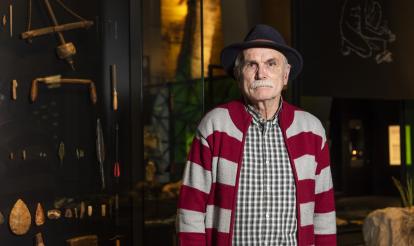
Eudald Carbonell is one of the most influential figures in contemporary archaeology and anthropology. Born on February 17, 1953, in Ribes de Freser, Catalonia, Spain, Carbonell has dedicated his life to the study of human evolution, prehistoric technology, and the origins of human cognition. His groundbreaking work at the Atapuerca archaeological site in northern Spain has reshaped our understanding of early human history in Europe.
A professor of Prehistory at the Rovira i Virgili University in Tarragona and co-director of the Atapuerca research project, Carbonell has become synonymous with cutting-edge archaeological methodology and revolutionary theories about human development. His interdisciplinary approach combines archaeology, paleoanthropology, geology, and cutting-edge scientific techniques to reconstruct our ancestral past.
Early Life and Academic Formation
Carbonell's fascination with human origins began at an early age. Growing up in the mountainous regions of Catalonia, he developed a deep appreciation for landscapes shaped by geological time. He studied at the University of Barcelona, where he earned degrees in both Geology and Prehistory - an unusual combination that would later define his holistic approach to archaeological research.
His doctoral thesis, completed in 1982 at the University of Paris (Pierre and Marie Curie Campus), focused on the technological evolution of early humans, particularly the transition from Oldowan to Acheulean tool cultures. This work established Carbonell as an emerging authority on prehistoric technology and its implications for cognitive development.
Carbonell's international education continued with postdoctoral studies at various institutions including the University of California, Berkeley, where he was exposed to new approaches in evolutionary anthropology. These formative experiences shaped his belief in archaeological research as a global scientific endeavor requiring collaboration across borders and disciplines.
The Atapuerca Revolution
Carbonell's most significant contributions began when he joined the Atapuerca project in the 1980s. The Sierra de Atapuerca, a small limestone hill near Burgos in northern Spain, had been recognized as an important prehistoric site since the late 19th century, but it was Carbonell and his colleagues who transformed it into one of the most important paleoanthropological sites in the world.
As co-director of the Atapuerca research team, Carbonell helped develop rigorous excavation methodologies that revolutionized the field. The site's Gran Dolina cave yielded groundbreaking discoveries, including the fossils of Homo antecessor in 1994 - a possible common ancestor of Neanderthals and modern humans dating back approximately 800,000 years.
Under Carbonell's leadership, Atapuerca became a treasure trove of prehistoric evidence, providing:
- The oldest known hominin remains in Western Europe
- Evidence of controlled fire use dating back 400,000 years
- Extraordinary samples of early hominin behavior and social structure
- Critical insights into human cannibalism and mortuary practices
Theoretical Contributions and Scientific Philosophy
Beyond his field discoveries, Carbonell has developed influential theories about human evolution. His "Social Dysfunction Theory" proposes that technological, biological, and social evolution are deeply interconnected. He argues that technological advances create social asymmetries which in turn drive further biological and cultural evolution - a perspective that challenges traditional models of linear progress.
Carbonell also introduced the concept of "techno-economies" to describe how hominin groups organized their technological knowledge and material production. His work emphasizes that tool production wasn't merely about survival, but represented early forms of accumulated knowledge and social transmission - the foundations of human culture.
A key aspect of Carbonell's philosophy is his emphasis on what he calls "conscious evolution" - the idea that humanity has reached a point where we must actively guide our own evolutionary development through ethical scientific progress. This concept features prominently in his later work on technological evolution and human futures.
Methodological Innovations
Carbonell's approach to archaeology is distinguished by his innovative methodologies:
- Three-dimensional recording systems: He developed advanced techniques for documenting finds in situ with millimeter precision.
- Microstratigraphic analysis: Applying geological methods to study the finest layers of archaeological deposits.
- Experimental archaeology: Reconstructing prehistoric technologies to understand manufacturing processes and cognitive requirements.
- Interdisciplinary integration: Combining geology, physics, chemistry, and biology to extract maximum information from archaeological evidence.
Perhaps most importantly, Carbonell instilled a culture of meticulous documentation and long-term data preservation at Atapuerca, ensuring that future generations of researchers will be able to benefit from and re-examine the team's findings.
Impact and Recognition
The scientific community has recognized Carbonell's contributions through numerous awards and honors, including:
- Prince of Asturias Award for Scientific and Technical Research (1997)
- National Prize for Archaeology and Paleontology (2000)
- Honorary Doctorate from the University of Bordeaux (2015)
- Member of the French Legion of Honor (2011)
Beyond academic circles, Carbonell has worked tirelessly to communicate science to the public. He has authored numerous popular science books, participated in documentary films, and given countless lectures to make archaeological discoveries accessible to broader audiences. His ability to connect prehistoric research with contemporary human concerns has made him one of Spain's most visible scientists.
Expanding the Horizons of Human Evolution Research
Building upon his groundbreaking work at At the Atapuerca site, Carbonell has extended his research to other significant archaeological locations across Europe and Africa. His comparative studies have helped establish connections between different hominin populations and their technological developments. This broader perspective has allowed him to develop more comprehensive theories about the spread of early humans across continents and the environmental factors that influenced their migration patterns.
One of Carbonell's most ambitious projects involves tracing the technological evolution of early humans from Africa to Europe. His research suggests that the development of stone tools followed a complex pattern of innovation, adaptation, and sometimes regression, rather than a simple linear progression. This work has challenged traditional views of human technological advancement and opened new avenues for understanding how early humans adapted to different environments.
Pioneering Digital Archaeology
In recent years, Carbonell has embraced digital technologies to enhance archaeological research. His team has developed sophisticated 3D modeling techniques to reconstruct archaeological sites and artifacts with unprecedented accuracy. These digital reconstructions allow researchers to analyze finds from multiple angles and share them with colleagues worldwide without physical access to the original materials.
The application of artificial intelligence in archaeological analysis has become another area of Carbonell's focus. Machine learning algorithms are being used to identify patterns in stone tool production that might escape human observation. This innovative approach has already yielded new insights into the cognitive abilities of early humans and the transmission of technological knowledge between generations.
Climate and Human Evolution
Carbonell's research has increasingly focused on the relationship between climate change and human evolution. His studies demonstrate how shifting environmental conditions influenced the migration patterns, technological adaptations, and even biological evolution of early humans. By analyzing sediment layers and fossil records, his team has reconstructed paleoclimatic conditions at various stages of human prehistory.
This research has particular relevance today as humanity faces unprecedented climate challenges. Carbonell argues that understanding how our ancestors adapted to environmental changes can provide valuable lessons for contemporary society. His work in this area has contributed to the emerging field of evolutionary climatology, which examines the long-term relationship between Earth's climate and biological evolution.
Educational Initiatives and Public Engagement
Beyond his research, Carbonell has dedicated significant effort to education and public outreach. He established the Atapuerca Foundation, which organizes educational programs, exhibitions, and conferences to bring archaeological discoveries to the general public. The foundation's work has helped make Atapuerca one of Spain's most visited archaeological sites and a UNESCO World Heritage Site.
Carbonell has also developed innovative educational programs that bring archaeology into schools. His "Young Archaeologists" initiative introduces children to scientific methods through hands-on experiences with archaeological techniques. These programs aim to inspire the next generation of researchers while fostering public appreciation for cultural heritage.
Collaborative International Research
Recognizing that human evolution is a global phenomenon, Carbonell has built extensive international collaborations. His research network includes scientists from Africa, Asia, and the Americas, working together to piece together the complex puzzle of human origins. These collaborations have led to comparative studies of tool technologies across continents and new insights into the timing of human migrations.
One particularly fruitful collaboration involves researchers in Georgia, where the discovery of 1.8 million-year-old hominin fossils has provided crucial evidence about early human dispersal from Africa. Carbonell's team has worked closely with Georgian archaeologists to compare technological developments between the two regions, revealing surprising similarities in early tool-making traditions.
Controversies and Scientific Debates
Carbonell's work has not been without controversy. His interpretations of certain finds at Atapuerca have sparked debates within the scientific community. Some colleagues have questioned his conclusions about the cognitive abilities of Homo antecessor and the timing of human arrival in Europe. These debates, however, have stimulated productive discussions that have advanced the field as a whole.
One particularly contentious issue involves Carbonell's interpretation of certain bone modifications as evidence of ritualistic behavior among early humans. While some researchers see these as signs of symbolic thought, others argue they could result from more mundane activities. These ongoing debates demonstrate the dynamic nature of paleoanthropology and the importance of rigorous scientific discourse.
Future Directions in Human Evolution Research
Looking ahead, Carbonell is focusing on several promising research directions. One involves applying genomic analysis to archaeological remains to better understand the relationships between different hominin groups. Advances in DNA extraction techniques now allow scientists to retrieve genetic material from increasingly ancient fossils, opening new possibilities for tracing human ancestry.
Another emerging area of interest is the study of ancient proteins preserved in bones and teeth. These biomolecules can provide information about diet, disease, and even behavior that complements what can be learned from bones and artifacts alone. Carbonell's team is at the forefront of developing methods to extract and analyze these fragile biological traces.
Carbonell is also exploring the potential of virtual reality to recreate prehistoric environments and behaviors. These immersive simulations could help researchers test hypotheses about how early humans interacted with their surroundings and with each other. Such technologies may revolutionize how we study and teach human prehistory.
Legacy and Continuing Influence
As Carbonell's career enters its later stages, his influence on archaeology and anthropology continues to grow. The methods he developed at Atapuerca have become standard practice at archaeological sites worldwide. His students and collaborators now lead important research projects across the globe, extending his intellectual legacy.
Perhaps most significantly, Carbonell has changed how we think about human evolution. His work has demonstrated that our ancestors were not primitive beings struggling for survival, but creative problem-solvers who developed sophisticated technologies and social structures. This more nuanced view of human prehistory has profound implications for how we understand our place in nature and our relationship with technology today.
Carbonell's career stands as a testament to the power of interdisciplinary research and long-term commitment to scientific inquiry. His work reminds us that understanding our deep past is essential for navigating the challenges of the present and future. As he continues to push the boundaries of archaeological science, the field eagerly anticipates what new discoveries and insights will emerge from his ongoing investigations.
The Intersection of Archaeology and Digital Technologies
In the final decades of his career, Carbonell has embraced the digital revolution in archaeology with exceptional vision. The Atapuerca Digital Project, initiated under his guidance, represents one of the world's most comprehensive efforts to integrate virtual technologies with archaeological research. This initiative combines photogrammetry, 3D laser scanning, and augmented reality to create interactive models of excavation sites that preserve every detail for future study while allowing remote access for researchers globally.
Carbonell's team has developed pioneering protocols for "digital preservation" of archaeological contexts, ensuring that even after artifacts are removed from their original resting places, their precise spatial relationships remain documented. This approach has proven particularly valuable for complex palimpsests - archaeological layers where multiple occupations overlap - allowing researchers to virtually reconstruct temporal sequences that would otherwise be impossible to visualize.
Reconstructing Prehistoric Minds
Carbonell's most intellectually ambitious work explores the evolution of human cognition through material culture. His Cognitive Archaeology Laboratory employs experimental approaches to recreate ancient technologies, tracing the mental processes required at each production stage. By training modern humans to manufacture stone tools using prehistoric techniques, Carbonell's team has gained unprecedented insights into:
- The neural demands of different tool-making traditions
- The learning curves associated with various technologies
- The social transmission requirements for complex techniques
- The cognitive thresholds marking major evolutionary transitions
This work bridges archaeology and neuroscience, suggesting specific links between technological complexity and brain development. Carbonell hypothesizes that certain tool forms could only emerge after particular cognitive capacities evolved, providing a material record of our ancestors' developing minds.
The Social Archaeology of Early Humans
Moving beyond traditional lithic analyses, Carbonell has pioneered "Social Archaeology" approaches that extract information about group dynamics from material remains. His studies of discard patterns, spatial organization of living spaces, and tool repair behaviors have revealed surprising sophistication in early human social structures. Findings from Atapuerca suggest that by 500,000 years ago, hominins exhibited:
- Division of labor by skill level
- Intergenerational knowledge transfer
- Territorial behaviors
- Complex foraging strategies requiring coordination
These insights fundamentally change our perception of pre-Homo sapiens societies, showing social complexity emerged much earlier than previously assumed.
Fire and Humanization
Carbonell's investigations into controlled fire use at Atapuerca have produced some of the most compelling evidence for early pyrotechnology in Europe. His team's microstratigraphic analyses of combustion features demonstrate recurrent fire use dating back at least 400,000 years. Detailed studies of these ancient hearths reveal:
- Multiple fire-making techniques
- Specialized use of different wood types
- Spatial organization around hearths
- Possible ritual uses of fire
This work positions fire as a crucial "humanization technology" that fundamentally transformed our ancestors' biology, social organization, and cognitive development - a theme Carbonell explores in his popular science writings.
Confronting the Anthropocene
In recent years, Carbonell has applied his evolutionary perspective to contemporary global challenges. His concept of "conscious evolution" argues that humanity must now guide its own development through ethical technology choices. He sees parallels between past evolutionary crossroads and current dilemmas regarding artificial intelligence, genetic engineering, and environmental management.
Carbonell warns that without deliberate stewardship, human cultural evolution could lead to "technological speciation" - a divergence between enhanced and unenhanced humans that could fragment our species. His proposals for mitigating this risk include:
- Universal access to enhancement technologies
- Global cooperation on evolutionary ethics
- Integration of paleoanthropological wisdom into policymaking
- Development of "evolutionary education" programs
The Atapuerca Museum System
Carbonell's vision for public archaeology materialized in the Museum of Human Evolution in Burgos, which serves as the hub of an extensive network of research and educational facilities. This innovative museum integrates original fossils with immersive exhibits showing evolutionary processes in action. Key features include:
- Working laboratories visible to visitors
- Interactive evolutionary timelines
- Reconstructed paleoenvironments
- Real-time connections to ongoing excavations
The museum complex has become a model for science communication, attracting over 300,000 visitors annually while maintaining rigorous research standards.
Carbonell's Evolutionary Humanism
Philosophically, Carbonell advocates for an "evolutionary humanism" that recognizes our species' deep history while embracing responsibility for our future development. His writings emphasize that understanding our origins is essential for making wise choices about humanity's trajectory. Key tenets include:
- Technology as an extension of biological evolution
- Collective intelligence as our species' defining trait
- Interdependence as the lesson of human prehistory
- Scientific knowledge as the foundation for ethical progress
This perspective informs Carbonell's critiques of creationism, anti-scientific movements, and short-term political thinking that ignores evolutionary realities.
Final Reflections on a Transformative Career
As we survey Carbonell's extraordinary contributions, several key themes emerge. First, his work demonstrates that material culture - stone tools, fire residues, butchery marks - can reveal surprisingly nuanced aspects of prehistoric cognition and society. Second, his career shows the power of sustained, systematic investigation; Atapuerca's revelations came through decades of meticulous work rather than single dramatic discoveries.
Finally, Carbonell exemplifies the "complete scientist" - equally committed to rigorous excavation, theoretical innovation, technological advancement, and public communication. His ability to connect specialized research with broad human concerns makes his work relevant far beyond academic circles.
Looking forward, Carbonell's interdisciplinary approaches and long-term perspective offer valuable models for addressing contemporary challenges. As humanity faces climate change, technological disruption, and social transformation, understanding our deep history - as Carbonell has helped reveal it - may provide essential guidance for navigating an uncertain future.


Ben Potter: A Journey of Innovation and Excellence
Ben Potter is a name that resonates with innovation, creativity, and excellence across multiple fields. Whether you are familiar with the tech industry, scientific communities, or creative arts, Ben’s influence is likely to have touched your realm. Known for his multi-dimensional career and inspirational journey, Potter represents a modern archetype of a Renaissance individual, venturing and excelling across varied domains. This first part of our article explores Ben Potter’s early life, education, and initial ventures, revealing how his foundational years sculpted the person he is today.
The Early Years: Foundations of a Visionary
Born and raised in a modest neighborhood, Ben Potter’s early life was like that of many young children finding their passions. Yet, beneath that ordinariness, a spark of brilliance was evident. Right from a young age, Ben showed a relentless curiosity about how things worked. Whether it was disassembling toys to understand their mechanics or diving deep into book after book on science, Ben’s enthusiasm for understanding the world was insatiable.
His parents, recognizing this innate curiosity, played a crucial supportive role. They encouraged his interests, allowing him to experiment, build, and sometimes even destroy in the process of discovery. This freedom to explore was crucial in shaping Potter’s problem-solving skills and nurturing his inquisitive nature, qualities that would significantly impact his future contributions.
Education: The Stepping Stones to Greatness
As Ben Potter progressed through his academic years, his proclivity for both science and the arts became increasingly apparent. While others debated choosing one path, Ben pursued both, earning accolades in the realms of mathematics and physics while simultaneously excelling in artistic arenas such as music and painting. It was during his high school years that he first encountered programming, an exposure that ignited a passion for technology—a passion that would accompany him throughout his life.
His pursuit of higher education led him to one of the most prestigious universities in the country, where he studied computer science and engineering. It was here, amidst a vibrant scholarly environment, that Ben honed his technical skills, developed innovative projects, and began to establish his unique identity that mingled technological prowess with creative thinking. His professors often marveled at his ability to cross disciplinary boundaries, integrating concepts from diverse fields to solve complex problems in novel ways.
Initial Ventures: Entering the Professional Arena
Upon graduating, Ben Potter’s thirst for innovation found avenues through which he could express himself professionally. He began his career in the tech industry, joining a prominent startup focused on developing cutting-edge software solutions for businesses. It was within this dynamic and challenging environment that Ben demonstrated his capacity for leadership and innovation.
Early on, he realized the importance of understanding user needs and aligning technological capabilities accordingly. More than simply designing functional software, Ben was interested in creating experiences that were intuitive, engaging, and transformative. Under his influence, the startup not only thrived but also set new benchmarks for customer satisfaction and industry standards.
It wasn’t long before Ben’s ingenuity caught the attention of major tech players, leading him to influential roles in various top-tier companies. Each step in his career was not merely a job, but a platform to explore, innovate, and leave a mark. From improving artificial intelligence algorithms to exploring new horizons in augmented reality, Ben Potter consistently pushed boundaries, challenging the status quo to bring about impactful change.
Impact Beyond the Workplace
Ben Potter’s influence extends beyond his professional accomplishments. He has a profound sense of social responsibility and actively engages in community service projects, aiming to use technology as a means of empowerment. From hosting free coding workshops for underprivileged youth to collaborating with NGOs to leverage technology in solving societal issues, Ben is committed to making a difference.
He also speaks at various conferences and seminars, sharing his experiences and vision with the next generation of thinkers and doers. His talks often focus on the importance of interdisciplinary learning, creativity in problem-solving, and the ethical implications of technological advancement. For many, his story is not just a testament to individual success but a source of inspiration and guidance on how to navigate an increasingly complex world.
Conclusion
Ben Potter’s early life and educational background paint a vivid picture of a person whose insatiable curiosity and dedication to excellence shape his journey. While his professional achievements are extensive, it’s his unique ability to blend creativity with technology and his commitment to social responsibility that truly distinguish him. As we continue our exploration of Ben Potter’s career in the next segment, we will delve deeper into his specific contributions, ventures, and the impact he has had on various industries. His story is a reflection not just of personal achievement but also of how one individual’s passion and perseverance can create ripples across the world.
Breakthroughs and Innovations: Ben Potter in the Tech Industry
Building on the foundation of his early career, Ben Potter soon established himself as a formidable force in the tech industry. His journey through successful ventures reflects a pattern of innovation, strategic thinking, and a forward-looking approach that has consistently placed him ahead of the curve. This segment explores Potter’s significant breakthroughs and contributions, particularly focusing on how he revolutionized various tech domains to create enduring impact.
Pioneering Advancements in Artificial Intelligence
Ben Potter’s exploration into artificial intelligence (AI) began during a tenure at a leading technology conglomerate, renowned for its investments in cutting-edge research and development. Recognizing AI's burgeoning potential, Ben focused on enhancing machine learning algorithms to deliver more sophisticated, predictive analytics solutions. By integrating concepts of pattern recognition and natural language processing, his work significantly improved AI's ability to understand and interpret human inputs with accuracies previously unseen.
Under Ben's leadership, the company rolled out an AI-enhanced platform aimed at the healthcare sector. This innovation swiftly became a game-changer, allowing medical professionals to diagnose conditions with higher precision and speed. The platform’s impact was far-reaching: not only did it optimize clinical workflows, but it also broadened access to healthcare by offering scalable solutions adaptable to various regions across the globe. For Ben, this project epitomized how technology could transcend traditional boundaries, offering tangible benefits that could be felt firsthand by individuals and communities.
Transformative Impact on Augmented Reality
Parallel to his work in AI, Ben's ventures into augmented reality (AR) positioned him as a pioneer in a field that was just beginning to make waves in tech circles. Unlike many of his peers who were enamored with virtual reality’s immersive potential, Ben saw AR as the future of interactive technology. He envisioned a world where digital elements would seamlessly interact with the physical realm, enhancing rather than replacing human experiences.
His innovative approach came to life in the development of apps that transformed educational experiences. Working alongside educators and designers, Ben crafted AR applications that brought history to life, allowing students to engage with historical events through visually immersive scenarios. These innovations served as a catalyst for rethinking educational methodologies, prompting educational institutions to adopt AR as a vital learning tool.
In the retail sector, Ben’s AR initiatives enabled brands to create vivid, personalized user experiences. Customers could visualize products within their personal spaces, fitting virtual models of everything from furniture to clothing. This advancement not only drove customer engagement but also redefined user expectations, prompting an industry-wide shift towards more interactive, user-centric digital strategies.
Leadership and Mentorship: Cultivating New Talent
While his technical achievements are immense, Ben Potter's role as a mentor and leader deserves equal recognition. Understanding the importance of nurturing new talent, Ben has consistently invested in the professional growth of those around him. He initiated mentorship programs within corporations, focusing on cultivating creativity, critical thinking, and leadership skills among young professionals.
Ben’s approach to leadership is rooted in empowerment and collaboration. He believes in unlocking the potential of teams by creating environments where innovative ideas are not only encouraged but are fundamental to the working culture. His leadership style is characterized by an openness to new ideas, regardless of their source, and a commitment to building diverse teams that bring varied perspectives to the table. These qualities have earned him a reputation as not just an expert innovator, but as a visionary leader capable of inspiring significant cultural and organizational shifts.
A Vision for Ethical Technology
An often understated aspect of Ben Potter’s journey is his unwavering commitment to ethical technology. As digital advancements rapidly evolve, so do the ethical challenges accompanying them. Ben advocates for responsible innovation, stressing that technology should be developed with a keen awareness of its societal implications.
He has actively participated in dialogues on data privacy, algorithmic bias, and the ethical use of AI, providing thought leadership on how the tech industry should approach these critical issues. Through workshops, publications, and panels, Ben encourages the establishment of guidelines and frameworks that ensure technological advancements align with ethical standards. His proactive stance not only highlights the importance of this discourse but also showcases his dedication to shaping a future where technology serves as a force for good, promoting equity, and justice.
Conclusion
Ben Potter’s professional journey is a testament to what can be achieved when passion meets purpose. His contributions to AI and AR significantly advance our understanding and application of technology, creating new paradigms that enhance human experience and capability. Beyond technical achievements, Ben's leadership and dedication to ethical innovation reveal a holistic approach to technology that is both visionary and responsible.
As we prepare to explore the next chapter of Ben Potter's story, we will dive into his current and upcoming projects, examining how he continues to push the boundaries of possibility. The ongoing journey of Ben Potter not only provides a roadmap for aspiring innovators but also reminds us of the profound impact thoughtful diligence and creative foresight can have on the world.
Current Ventures: Navigating the Future
As we delve into the latest chapter of Ben Potter's illustrious career, it becomes clear that his journey is far from reaching its pinnacle. Building on years of experience and a vast portfolio of innovations, Ben is channeling his expertise into ventures that not only advance technology but also prioritize sustainability and human-centric design. This final segment uncovers his ongoing projects and outlines his vision for the future.
Exploring Sustainable Technology Solutions
A strong proponent of utilizing technology to address global challenges, Ben Potter is directing his efforts towards sustainable solutions that can mitigate environmental impact. His latest initiative involves the development of renewable energy technologies that emphasize efficiency and accessibility. Working with a coalition of scientists, engineers, and policy-makers, Ben is exploring ways to harness solar and wind energy more effectively.
One notable project involves the creation of a smart grid platform designed to optimize energy distribution. By employing machine learning algorithms and real-time data analytics, this platform aims to balance energy supply with demand, significantly reducing waste. The ultimate goal is not just increased energy efficiency but also the empowerment of communities to manage their energy consumption autonomously and sustainably.
In addition to energy, Ben is exploring innovations in sustainable agriculture. By leveraging IoT (Internet of Things) devices and AI, his team is developing systems that monitor crop health, optimize water usage, and predict yield outcomes. These initiatives seek to support farmers and agricultural communities in both developed and developing regions, promoting food security and environmental conservation simultaneously.
Human-Centric Technology: Enhancing Daily Life
Another focal point in Ben Potter’s current endeavors is the integration of technology into daily human activities in a way that promotes well-being and efficiency. He believes that as technology becomes more entrenched in our daily routines, it must do so in a manner that respects and enhances human lifestyles rather than dominating them.
To this end, Ben is investing in the development of personal healthcare technologies designed to bring medical diagnostics and recommendations directly to users. These wearable devices, equipped with advanced sensors and AI capabilities, offer proactive healthcare solutions by continuously monitoring vital signs and alerting users to potential health issues before they escalate. This empowers individuals to take control of their health while alleviating some pressure on traditional healthcare systems.
Moreover, Ben is involved in urban development projects that use smart technology to improve living conditions in cities. By integrating intelligent traffic management systems and sustainable building practices, these smart city initiatives aim to reduce congestion, lower pollution, and create more livable urban environments. As always, Ben emphasizes collaboration with local authorities and communities to ensure that these developments meet the unique needs of each locale.
A Commitment to Education and Lifelong Learning
In parallel with his technical endeavors, Ben Potter remains deeply committed to education and lifelong learning. He recognizes that the rapidly changing technological landscape requires continuous learning and adaptation. Consequently, he is championing initiatives that make education more accessible and adaptable to individual needs.
Ben supports platforms that offer online courses in high-demand fields such as data science, AI, and cybersecurity. By partnering with educational institutions and technology providers, these platforms aim to democratize education, providing opportunities for individuals from diverse backgrounds to acquire the skills necessary for today's workforce.
Furthermore, Ben encourages programs that integrate technology and the arts, promoting creativity alongside technical learning. He believes that fostering a holistic approach to education cultivates innovation and empathy, traits essential for addressing complex contemporary challenges.
Conclusion
The story of Ben Potter is one of visionary leadership, relentless innovation, and unwavering dedication to making a positive impact. Through his pioneering work in AI, AR, and sustainable technology, Ben has not only shaped industries but also contributed to societal advancement. His current projects reflect a multifaceted approach to innovation—one that considers both the capabilities of technology and its ethical implications.
As Ben Potter continues to push the boundaries of what is possible, his journey serves as an inspiration for emerging thinkers and doers worldwide. His commitment to a future where technology enhances human life, supports sustainable development, and bridges educational gaps underscores the transformative potential of combining purpose with passion. Through his efforts, Ben Potter continues to illustrate how innovation, when guided by empathy and foresight, can create a world that is not only more advanced but also more equitable and just.


Joseph Bizinger: A Journey Through Time
Joseph Bizinger is a name that may not be immediately recognizable to the everyday person, yet his work and influence span numerous fields and disciplines. Born into a world that was rapidly changing due to technological and social advancements, Bizinger’s life and career are a testament to the power of adaptability and innovation.
From a young age, Joseph Bizinger exhibited traits that would mark him out as a thinker ahead of his time. His upbringing in a culturally rich and intellectually stimulating environment provided him with the tools and inspiration to explore a wide range of interests. This diverse foundation enabled him to embark on a career characterized by a continuous quest for knowledge and a relentless pursuit of new challenges.
Joseph's early academic pursuits laid a solid foundation for his later achievements. Attending prestigious institutions known for fostering critical thinking and creativity, he quickly made his mark as a diligent student. His aptitude for understanding complex concepts soon garnered attention from professors and peers alike, who recognized his potential to make significant contributions to society.
One of the notable aspects of Joseph Bizinger’s career is his interdisciplinary approach to problem-solving. Encompassing fields such as science, technology, and social sciences, his work is a reflection of the interconnected nature of modern challenges. This holistic approach enables him to view problems from multiple perspectives, allowing for innovative solutions that might otherwise be overlooked in more traditional frameworks.
Among his numerous professional accomplishments, Joseph Bizinger has been instrumental in the development of cutting-edge technologies that have transformed industries. His efforts in AI and data analytics have paved the way for advancements that have not only increased efficiency but also enhanced the quality of life globally. Joseph’s work in creating smarter, more contextual technology continues to drive significant improvements across various sectors, empowering businesses and individuals alike.
Moreover, Joseph Bizinger is deeply committed to sustainable development and environmental conservation. Recognizing the urgent need for responsible practices, he has actively engaged in projects that aim to balance technological growth with ecological preservation. His initiatives promote the use of renewable resources and innovative techniques to tackle climate change effectively.
Bizinger’s contributions extend beyond his professional endeavors. He is also an advocate for education and lifelong learning, passionately believing that knowledge is the key to unlocking human potential. Through his philanthropic efforts, he has supported numerous educational programs and scholarships, ensuring that future generations have the opportunities necessary to succeed in an increasingly complex world.
As a thought leader, Joseph’s influence can also be seen in his commitment to fostering a global dialogue on innovation and ethics. He participates in international forums and collaborates with thought leaders from various disciplines, consistently striving to bridge gaps and build consensus on critical issues facing humanity today. His work aims to create a future where technological progress is aligned with ethical considerations, ensuring that advancements serve the greater good.
In summary, Joseph Bizinger’s journey through time is one marked by a profound dedication to improvement and innovation. As he continues to forge paths in unexplored territories, his legacy serves as an inspiration to those who seek to make a difference in the world.
