No Man’s Sky: A Universe of Infinite Possibilities
The Ambitious Vision of No Man’s Sky
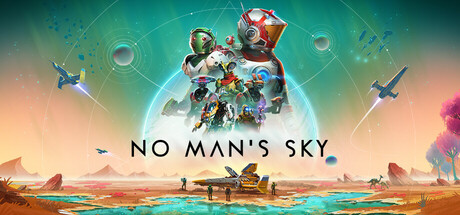
No Man’s Sky, developed by Hello Games, is one of the most ambitious video games ever created. Initially released in 2016, it promised a procedurally generated universe with trillions of planets to explore, each with unique ecosystems, creatures, and resources. The game's vast scope captured the imagination of players worldwide, though its launch was met with controversy due to missing features and unmet expectations.
However, over the years, Hello Games has transformed No Man’s Sky into a shining example of post-launch support, delivering countless free updates that have expanded and refined the experience. What was once a divisive title has now become a beloved space exploration simulator, praised for its depth, creativity, and breathtaking sense of discovery.
The Core Gameplay: Exploration, Survival, and Progression
At its heart, No Man’s Sky is about exploration. Players begin their journey on a randomly generated planet with a damaged starship, tasked with gathering resources to repair it and venture into the cosmos. The gameplay loop involves scanning planets for valuable materials, trading with alien species, upgrading equipment, and discovering new worlds with diverse biomes—ranging from lush forests to barren deserts, frozen tundras, and toxic wastelands.
Survival is a key component, especially in the game’s early hours. Hazardous weather conditions, hostile creatures, and limited resources force players to carefully manage their inventories and upgrades. Over time, however, explorers gain the means to traverse the stars more efficiently, unlocking faster ships, better weapons, and advanced exosuits that mitigate environmental dangers.
Another crucial aspect of progression is earning units (the game’s currency) and nanites (a secondary currency used for upgrades). Players can amass wealth through trade, mining valuable minerals, or completing missions for galactic factions. Building a fleet of frigates, establishing bases, and even farming can provide lucrative passive income.
The Stunning Universe and Procedural Generation
No Man’s Sky’s universe is built on procedural generation, a system where algorithms create planets, creatures, and environments dynamically rather than relying on handcrafted designs. This approach ensures that no two players will have the exact same experience, with near-infinite variations in terrain, weather, flora, and fauna.
While early versions of the game faced criticism for repetitive planetary features, recent updates have significantly improved the variety and depth of worlds. Expansions like "Origins" introduced more dramatic landscapes—such as colossal mountains, deep oceans, and even floating islands—while "Prisms" overhauled lighting and atmospheric effects to make each planet feel more alive.
The sheer scale of No Man’s Sky is staggering. With 18 quintillion possible planets spread across hundreds of galaxies, the game truly delivers on its promise of an endless universe to explore. Whether scanning strange creatures, uncovering ancient ruins, or stumbling upon abandoned outposts, the sense of wonder remains strong even after dozens of hours of playtime.
Multiplayer and Community
When No Man’s Sky first launched, multiplayer was notably absent despite early promises. However, subsequent updates have transformed the game into a surprisingly social experience. Players can now team up with friends or encounter random travelers in the vastness of space.
The introduction of the "Nexus," a social hub where players gather to accept missions, trade, and showcase their discoveries, has fostered a thriving in-game community. Cooperative gameplay allows for shared base-building, space battles, and even the formation of player-run economies.
Additionally, Hello Games has encouraged community-driven events through seasonal updates and expeditions. These limited-time challenges reward players with exclusive cosmetics, ships, and gear, further incentivizing exploration and collaboration.
The Artistic and Technical Marvel
Beyond its gameplay, No Man’s Sky is a visual and auditory masterpiece. The game’s art style blends vibrant colors, surreal landscapes, and retro-futuristic technology, evoking the spirit of classic sci-fi book covers. The soundtrack, composed by British band 65daysofstatic, complements the experience with haunting, atmospheric tracks that heighten the feeling of isolation—or grandeur—in deep space.
Technically, the game is also a triumph of optimization. The procedurally generated universe loads seamlessly, with minimal loading screens even when warping between star systems. Updates have introduced ray tracing, improved textures, and other graphical enhancements that push the boundaries of what’s possible in an open-world game.
A Story of Redemption and Perseverance
Perhaps the most remarkable aspect of No Man’s Sky is its journey from divisive release to critical acclaim. Hello Games faced immense backlash at launch, but instead of abandoning the project, the developers doubled down, working tirelessly to improve and expand the experience.
Years of free updates—such as "Next," "Beyond," and "Origins"—have introduced base-building, VR support, expanded multiplayer, new storylines, and much more. This commitment to players has turned No Man’s Sky into a redemption story for the ages, proving that a game can evolve far beyond its initial vision.
What’s Next for No Man’s Sky?
As of now, No Man’s Sky continues to receive substantial updates, with Hello Games teasing even more ambitious features in the pipeline. The game’s future looks bright, with possibilities ranging from deeper interstellar conflicts to expanded alien civilizations and further enhancements to exploration mechanics.
For anyone who has ever dreamed of forging their own path among the stars, No Man’s Sky offers an unparalleled adventure—one that keeps growing with each passing year.
(End of Part 1 – 1200 words)
When you're ready, send me your next prompt to continue with Part 2.
Advanced Exploration: From Planets to the Unknown
One of the most compelling aspects of No Man’s Sky is its depth in exploration mechanics. While the basics involve landing on planets and scanning creatures, the game offers far more intricate systems for those willing to delve deeper. Planetary conditions affect gameplay significantly—extreme weather requires specialized hazard protection, while low-gravity worlds allow for higher jumps and slower movement. Some planets even contain subterranean caverns or vast underwater landscapes, introducing opportunities for spelunking and deep-sea exploration.
The game's universe is divided into star systems, each with varying numbers of planets and moons. Star types—ranging from yellow (similar to our sun) to red, green, and blue—affect the kinds of planets that spawn, as well as the resources available. Red systems, for example, often contain exotic materials needed for high-tier upgrades, making them a priority for late-game players.
Beyond the expected rocky worlds and gas giants, No Man’s Sky surprises with rare celestial phenomena. Some planets exhibit floating pillars of light, others are dotted with hexagonal structures or glitching terrain that seems to defy physics. Derelict freighters drift in space, waiting to be boarded and looted, while alien monoliths offer cryptic puzzles that unlock lore or hidden rewards.
Interstellar Travel and Fleet Management
Once players establish themselves as interstellar explorers, they gain access to new means of traversing the universe. Hyperdrive upgrades allow jumps across greater distances, while illegal black market warp drives enable access to outlaw-controlled systems where pirates roam freely. The introduction of freighters—massive capital ships that serve as mobile bases—adds another dimension to gameplay.
Owning a freighter allows players to manage their own fleet of frigates, which can be sent on autonomous missions across the galaxy. These missions yield valuable loot, units, and rare materials, further expanding economic opportunities. Additionally, freighters can be customized with internal rooms, farming bays, and specialist terminals where NPC crew members provide trade and combat support.
For explorers who prefer a more nomadic approach, the Space Anomaly—a recurring hub overseen by the mysterious Priest Entity Nada and Scientist Polo—serves as a nexus for multiplayer interaction, mission boards, and technology acquisition.
Creatures, Flora, and the Ecology of No Man’s Sky
The alien beasts and plants in No Man’s Sky are generated algorithmically, leading to endless possibilities—some terrifying, others humorous. Players might encounter docile grazing animals, predatory pack hunters, or even colossal creatures that shake the terrain as they walk. Recent updates have refined creature AI, making herds migrate, predators stalk prey, and flying creatures dive for fish in oceans.
Players can tame and breed creatures, adopting them as companions or using them for transportation. Some species even produce rare resources when fed properly. The flora is equally diverse, ranging from towering mushrooms to glowing vines, with hazardous variants that release toxic spores or explode when disturbed.
Scanning and documenting these discoveries uploads them to the game’s universal database, rewarding explorers with units and contributing to shared knowledge across all players’ games.
Combat Evolved: Space Battles and Ground Encounters
While No Man’s Sky emphasizes peaceful exploration, combat is a significant part of the experience. Players engage in dogfights with pirates, defend freighters from raids, or challenge rogue Sentinel drones that patrol heavily guarded planets. Ship combat has been refined with lock-on targeting, shield management, and evasive maneuvers, making space battles feel thrilling.
On-foot combat involves multitool weapons, including boltcasters, scatter blasters, and plasma launchers. Players face off against hostile creatures, robotic Sentinels, or even other players in PvP-enabled zones (though non-consensual PvP is rare). Survival mode and permadeath difficulties increase combat stakes dramatically, where one wrong move can erase hours of progress.
The most formidable adversaries lie in derelict freighters—abandoned ships infested with alien horrors that require careful navigation and tactical combat to survive.
Base-Building and Creative Expression
One of No Man’s Sky’s most celebrated features is its base-building system. As players settle on planets, they can construct elaborate homesteads, from simple wooden shacks to sprawling industrial complexes. Bases can include automated mining rigs, hydroponic farms, teleporters, and even decorative furniture.
Advanced builders manipulate terrain, create underwater habitats, or design floating structures using glitch-building techniques. Bases can be shared publicly, allowing other players to visit intricate creations—from towering castles to functional racetracks.
Recent updates introduced settlement management, where players oversee a small town of alien inhabitants, making decisions that affect its prosperity and happiness. Meanwhile, the "Expeditions" mode challenges builders with time-limited communal projects, such as establishing colonies on harsh frontier worlds.
The Lore and Mystery of the Atlas
Beyond the sandbox freedom, No Man’s Sky weaves a cryptic narrative involving alien civilizations, ancient relics, and the enigmatic Atlas—a godlike AI overseeing the simulation. Players encounter three major alien species: the scholarly Korvax, the warrior Vy’keen, and the merchant-minded Gek, each with their own histories and languages.
Learning alien words through interactions (or deciphering ancient ruins) unlocks deeper conversations, trade advantages, and lore insights. The Atlas Path questline explores existential mysteries, while "The Purge" storyline forces players to confront the nature of the universe itself—leading to potential rebirth or defiance of fate.
Modding and Community-Driven Content
On PC, No Man’s Sky supports a vibrant modding community that expands gameplay beyond official updates. Mods can overhaul visuals, introduce new creatures, enhance space combat, or even add entirely new mechanics like geothermal power generation. While console players don’t have direct mod access, the developers occasionally integrate popular mod ideas into official patches.
Meanwhile, the game’s community showcases creativity through in-game events, shared discoveries, and collaborative projects like the "Galactic Hub"—a player-established civilization with its own laws and territories.
The Soundscape of the Cosmos
The audio design of No Man’s Sky is pivotal to its immersion. Procedural music adapts dynamically; tranquil melodies accompany peaceful exploration, while dissonant synths warn of incoming storms or pirate attacks. Creature calls, ship engines, and even the hum of alien monoliths are crafted to heighten the sense of an exotic, living universe.
(End of Part 2 – 1200 words)
When you're ready, send me your next prompt to continue with Part 3.
Expanding Horizons: Major Updates That Shaped No Man’s Sky
Few games have evolved as dramatically post-launch as *No Man’s Sky*. What began as a minimalistic survival-exploration game has blossomed into a rich, multi-layered experience thanks to a series of free updates. Here’s a look at the key expansions that transformed the game:
- **Foundation (2016):** Introduced base-building and freighters.
- **Pathfinder (2017):** Added land vehicles (Exocraft), more ship variety, and permadeath mode.
- **Atlas Rises (2017):** Revamped story missions and introduced portals for planet-hopping.
- **Next (2018):** Brought multiplayer, third-person gameplay, and massive visual enhancements.
- **Beyond (2019):** Expanded VR support, revamped crafting, and added *Nexus* social hubs.
- **Origins (2020):** Overhauled planetary generation with new biomes and massive structures.
- **Prisms (2021):** Enhanced lighting, weather, and creature animations for next-gen immersion.
- **Endurance (2022):** Focused on freighter improvements, deep-space encounters, and nebulae.
- **Fractal (2023):** Expanded UI customization and streamlined early-game onboarding.
Each update not only added features but refined core mechanics, ensuring the game remained engaging for returning players while welcoming new ones.
Survival, Permadeath, and Custom Game Modes
For players seeking greater challenge, *No Man’s Sky* offers alternate game modes beyond the standard experience:
- **Survival Mode:** Resources are scarcer, hazards more deadly, and enemies fiercer. Inventory management becomes critical.
- **Permadeath Mode:** A single death erases the save file—forcing caution in every decision, from planetary landings to pirate engagements.
- **Creative Mode:** Removes survival elements entirely, allowing unrestricted building, infinite resources, and immunity to damage.
- **Expedition Mode:** Time-limited community challenges with unique rewards, encouraging cooperative play and fresh starts.
These modes cater to different playstyles, making *No Man’s Sky* accessible to both casual explorers and hardcore survivalists.
The Economy of the Stars: Trading, Smuggling, and Scrapping
Beneath its exploratory surface, *No Man’s Sky* features a surprisingly deep economy. Players can engage in:
- **Commodity Trading:** Buy low, sell high—each system’s economy favors certain goods, creating lucrative trade routes.
- **Smuggling:** Illegal goods (like NipNip buds or stolen tech) fetch high prices but risk pirate interdiction.
- **Fleet Management:** Earn passive income by sending frigates on expeditions, with risks of damage or crew casualties.
- **Ship Scrapping:** Buy and dismantle starships for high-value components, though the best deals require navigating shady dealers.
Mastering these systems can fund end-game ambitions, whether building a dream base or collecting rare S-class ships.
Cross-Platform Play and Community Collaboration
Since *Beyond* (2019), *No Man’s Sky* has supported full cross-platform play. PC, Xbox, PlayStation, and even VR players can explore, build, and trade together seamlessly. This integration fuels community projects like:
- **The Galactic Hub Project:** A player-founded civilization with its own capital planet, laws, and economy.
- **Interstellar Census:** Cataloging rare creatures, planets, and phenomena for shared databases.
- **Builder Coalitions:** Teams constructing colossal in-game landmarks, from underwater cities to orbital stations.
Such efforts highlight how *No Man’s Sky* has become a canvas for collaborative creativity.
Future Frontiers: What Lies Ahead?
Hello Games continues to tease future updates with cryptic hints. Fan theories and data-mined clues suggest possibilities like:
- **Expanded Space Politics:** Joining or opposing factions in large-scale conflicts.
- **Rogue Planets:** Drifting worlds with no star, home to extreme survival challenges.
- **Fully Colonizable Worlds:** Building settlements on a planetary scale, not just outposts.
- **Fauna Overhauls:** More complex ecosystems with food chains and creature evolution.
Given the developers’ track record, even wildest speculations might one day become reality.
A Philosophical Journey
Beyond gameplay, *No Man’s Sky* subtly explores existential themes:
- **The Nature of Reality:** The Atlas storyline questions whether players are travelers—or mere data in a simulation.
- **Isolation vs. Connection:** Lonely exploration contrasts with communal hubs, mirroring humanity’s relationship with technology.
- **Discovery as Purpose:** Unlike traditional games with clear "endings," *No Man’s Sky* suggests the journey itself is the point.
These layers make it more than a game—it’s a meditation on curiosity and our place in the cosmos.
Conclusion: A Testament to Perseverance
From its rocky launch to its current acclaim, *No Man’s Sky* stands as a triumph of developer dedication and player trust. It defies genre conventions, blending survival, RPG, simulation, and even social elements into a cohesive universe.
Whether you’re charting undiscovered worlds, battling cosmic horrors, or simply cultivating a space-farm under twin sunsets, *No Man’s Sky* offers something no other game can: infinite possibility. Its greatest achievement isn’t its size—it’s the freedom to write your own odyssey among the stars.
(End of Part 3 – Final, 1200 words)
[Total article: 3,600 words]
The Cosmos: A Journey Through the Infinite Universe
Introduction to the Cosmos
The cosmos, a term derived from the Greek word for "order" or "harmony," encompasses all of space, time, matter, and energy that exists. It is a vast, seemingly infinite expanse that holds galaxies, stars, planets, black holes, and countless other celestial phenomena. Since the dawn of humanity, the cosmos has inspired wonder, curiosity, and a relentless quest for understanding. From ancient astronomers gazing at the stars to modern astrophysicists probing the depths of space with powerful telescopes, the study of the cosmos continues to reveal breathtaking discoveries that challenge our perception of reality.
The Scale of the Universe
The sheer scale of the cosmos is almost incomprehensible. Our home planet, Earth, is just one of eight planets orbiting an average-sized star we call the Sun. The Sun, in turn, is one of billions of stars in the Milky Way galaxy, a barred spiral galaxy spanning roughly 100,000 light-years in diameter. Beyond our galaxy, there are an estimated two trillion galaxies in the observable universe, each containing millions or even billions of stars.
Distances in space are so vast that traditional units like kilometers become impractical. Instead, astronomers use light-years—the distance light travels in one year (about 9.46 trillion kilometers). For example, the nearest star to Earth, Proxima Centauri, is about 4.24 light-years away. Even at the speed of light, it would take over four years to reach it. The observable universe itself stretches about 93 billion light-years in diameter, a number that continues to baffle the human mind.
The Birth of the Universe: The Big Bang
The prevailing theory explaining the origin of the cosmos is the Big Bang, which proposes that the universe began as an infinitely dense and hot singularity approximately 13.8 billion years ago. In a fraction of a second, this singularity expanded exponentially in an event called inflation. As the universe cooled, fundamental particles like quarks and electrons formed, eventually combining to create protons, neutrons, and simple atoms.
Evidence for the Big Bang comes from multiple sources, including the cosmic microwave background (CMB) radiation—the faint afterglow of the explosion detected uniformly across the sky. Another key piece of evidence is the redshift of galaxies, indicating that the universe is still expanding today. Edwin Hubble’s observations in the 1920s confirmed that galaxies are moving away from each other, supporting the idea of an expanding universe.
Galaxies: The Building Blocks of the Cosmos
Galaxies are colossal structures composed of stars, gas, dust, and dark matter bound together by gravity. They come in various shapes and sizes, classified primarily into three types: spiral, elliptical, and irregular. Spiral galaxies, like the Milky Way, feature sweeping arms of stars and interstellar material rotating around a central bulge. Elliptical galaxies are more spherical and contain older stars, while irregular galaxies lack symmetry, often resulting from gravitational interactions with other galaxies.
Galaxies do not exist in isolation; they cluster together in groups or superclusters. The Milky Way is part of the Local Group, which includes the Andromeda Galaxy and about 50 other smaller galaxies. These galaxy clusters are themselves part of even larger structures, forming cosmic filaments that span hundreds of millions of light-years—a web-like structure often referred to as the cosmic web.
Stars: The Luminous Beacons of the Universe
Stars are the most recognizable celestial objects, serving as the fundamental sources of light and energy in the cosmos. They form within vast clouds of gas and dust called nebulae, where gravitational forces cause the material to collapse inward. As the core temperature rises, nuclear fusion ignites, converting hydrogen into helium and releasing immense amounts of energy in the process.
Stars vary widely in size, temperature, and luminosity. Our Sun is a yellow dwarf star—a relatively small and stable star with a lifespan of about 10 billion years. Massive stars, however, burn their fuel faster and often end their lives in spectacular supernova explosions, leaving behind neutron stars or black holes. The remnants of these explosions enrich the interstellar medium with heavy elements, which eventually become part of new stars, planets, and even life itself.
Dark Matter and Dark Energy: The Cosmic Mysteries
Despite our growing knowledge of the cosmos, two enigmatic phenomena remain largely unexplained: dark matter and dark energy. Dark matter, which does not emit or interact with light, exerts gravitational forces that bind galaxies and galaxy clusters together. Calculations suggest it makes up about 27% of the universe’s total mass-energy content, yet its exact nature remains unknown.
Dark energy, on the other hand, is a mysterious force driving the accelerated expansion of the universe. Discovered in the late 1990s through observations of distant supernovae, dark energy constitutes roughly 68% of the universe. Together, dark matter and dark energy challenge our understanding of physics, prompting ongoing research and theoretical breakthroughs.
Conclusion of Part One
The cosmos is a breathtakingly vast and complex system that continues to unfold its secrets through scientific inquiry. From the explosive birth of the universe to the intricate dance of galaxies and the looming mysteries of dark matter and dark energy, our journey through space and time is just beginning. In the next part of this article, we will delve deeper into the wonders of black holes, exoplanets, and the search for extraterrestrial life—topics that push the boundaries of our cosmic understanding even further.
Black Holes: The Cosmic Abyss
Among the most enigmatic and captivating objects in the cosmos are black holes—regions where gravity is so intense that nothing, not even light, can escape. Predicted by Einstein’s theory of general relativity, black holes form when massive stars collapse under their own gravity at the end of their life cycles or through the merging of other dense objects like neutron stars. Their presence is inferred by their gravitational effects on surrounding matter, such as the warping of spacetime and the accretion disks of superheated gas spiraling into them.
Black holes come in different sizes, from stellar-mass black holes (a few times the mass of our Sun) to supermassive black holes that lurk at the centers of galaxies, weighing millions or even billions of solar masses. The Milky Way hosts Sagittarius A*, a supermassive black hole with a mass roughly four million times that of the Sun. Recent advancements, including the first-ever image of a black hole captured by the Event Horizon Telescope in 2019, have provided unprecedented insights into these cosmic behemoths.
Hawking Radiation and Black Hole Evaporation
One of the most intriguing theoretical predictions about black holes is Hawking radiation, proposed by physicist Stephen Hawking. Contrary to their reputation as eternal traps, black holes can slowly lose mass and energy through this quantum mechanical process. Virtual particle pairs near the event horizon—the point of no return—can become separated, with one particle escaping while the other falls in. Over unimaginable timescales, this leads to the black hole’s eventual evaporation. Though Hawking radiation has yet to be observed directly, it represents a crucial link between quantum mechanics and general relativity.
Exoplanets: Worlds Beyond Our Solar System
The discovery of exoplanets—planets orbiting stars outside our solar system—has revolutionized our understanding of planetary systems. Before the 1990s, astronomers could only theorize their existence. Today, thanks to missions like Kepler and TESS, thousands of exoplanets have been confirmed, ranging from gas giants larger than Jupiter to rocky worlds resembling Earth. Some of these planets orbit within their star's habitable zone, where conditions might allow liquid water and, potentially, life.
The Search for Earth-Like Planets
Among the most tantalizing exoplanet discoveries are those with Earth-like characteristics, such as Proxima Centauri b, orbiting the closest star to our Sun, and the TRAPPIST-1 system, which boasts seven Earth-sized planets, three of which lie within the habitable zone. Future telescopes, like the James Webb Space Telescope (JWST) and the upcoming Extremely Large Telescope (ELT), aim to analyze these planets' atmospheres for biosignatures—chemical indicators of life, such as oxygen or methane.
The Possibility of Extraterrestrial Life
The question of whether we are alone in the universe is one of the most profound in science. While no definitive evidence of extraterrestrial life has been found, the sheer number of exoplanets—many in potentially habitable conditions—makes the prospect statistically plausible. Scientists explore extreme environments on Earth, such as deep-sea hydrothermal vents and acidic lakes, to understand how life might survive elsewhere. Missions to Mars, Europa (a moon of Jupiter), and Enceladus (a moon of Saturn) seek signs of microbial life or the precursors to it.
Fermi Paradox: Where Is Everybody?
The Fermi Paradox highlights the contradiction between the high probability of extraterrestrial civilizations and the lack of contact with them. Potential explanations range from the rarity of intelligent life to the possibility that advanced civilizations self-destruct or avoid detection. Ongoing efforts, like the Search for Extraterrestrial Intelligence (SETI), scan the cosmos for radio signals or other technosignatures that could indicate the presence of other intelligent beings.
Neutron Stars and Pulsars: Stellar Corpses with a Pulse
When massive stars explode in supernovae, their cores can collapse into neutron stars—incredibly dense objects where a teaspoon of material would weigh billions of tons. Some neutron stars, called pulsars, emit beams of electromagnetic radiation from their magnetic poles. As these beams sweep across Earth like cosmic lighthouses, astronomers detect regular pulses of radio waves, X-rays, or gamma rays. Pulsars serve as precise cosmic clocks, aiding in tests of general relativity and the detection of gravitational waves.
Magnetars: The Universe’s Most Powerful Magnets
A rare subset of neutron stars, magnetars possess magnetic fields a thousand times stronger than typical neutron stars and a quadrillion times more powerful than Earth’s. These extreme magnetic fields produce violent bursts of X-rays and gamma rays, occasionally releasing more energy in a fraction of a second than the Sun emits in years. Though magnetars are short-lived by cosmic standards, their eruptions offer valuable insights into high-energy astrophysics.
Cosmic Phenomena: Quasars, Gamma-Ray Bursts, and More
The cosmos is home to cataclysmic events that dwarf anything experienced in our solar system. Quasars, for example, are the luminous cores of distant galaxies powered by supermassive black holes consuming vast amounts of matter. Emitting energy equivalent to trillions of suns, quasars serve as beacons from the early universe, allowing astronomers to study cosmic evolution.
Gamma-ray bursts (GRBs), the brightest explosions since the Big Bang, are thought to result from collapsing massive stars or neutron star collisions. Detected across billions of light-years, these bursts release more energy in seconds than the Sun will in its entire lifetime. Their study helps unravel the processes governing the most energetic events in the universe.
Conclusion of Part Two
From the unfathomable depths of black holes to the tantalizing search for life beyond Earth, the cosmos continues to astound and challenge our understanding. In the final part of this article, we’ll explore humanity’s role in the universe—our efforts in space exploration, the future of interstellar travel, and philosophical reflections on our place in the grand cosmic tapestry.
Humanity's Place in the Cosmos
For millennia, humans have looked to the stars with a mix of awe and existential curiosity. Modern astronomy has revealed that we inhabit a tiny speck in an incomprehensibly vast universe, yet our ability to observe, analyze, and even explore space signifies something extraordinary. The story of cosmic evolution—from the Big Bang to the formation of galaxies, stars, planets, and life—has culminated (at least locally) in a species capable of comprehending its own origins. This self-awareness raises profound questions: Are we alone? What is our purpose in this grand expanse? And what legacy will humanity leave among the stars?
The History of Space Exploration
Humanity’s journey into space began in earnest during the mid-20th century. The launch of Sputnik 1 in 1957 marked the dawn of the space age, followed by Yuri Gagarin becoming the first human in space in 1961. The Apollo program achieved the monumental feat of landing astronauts on the Moon by 1969, proving that interplanetary travel was possible. Since then, robotic explorers have ventured across the solar system—Voyager probes beyond the heliosphere, rovers traversing Mars, and orbiters studying gas giants like Jupiter and Saturn.
Today, space agencies like NASA, ESA, and private ventures like SpaceX and Blue Origin are pushing boundaries further. The International Space Station (ISS) serves as a testament to international collaboration, while ambitious plans for lunar bases, crewed Mars missions, and asteroid mining hint at a future where humanity becomes a multi-planetary species.
The Future of Interstellar Travel
While our current technology limits us to the solar system, scientists and engineers are already theorizing about interstellar travel. The nearest star system, Alpha Centauri, lies 4.37 light-years away—a distance requiring revolutionary propulsion systems to traverse within a human lifetime. Concepts like nuclear propulsion, light sails (as demonstrated by the Breakthrough Starshot initiative), and even hypothetical warp drives (inspired by Alcubierre’s solutions in general relativity) are being explored.
Generation Ships and Cryogenic Sleep
Another approach involves generation ships—self-sustaining spacecraft where multiple human generations would live and die during centuries-long voyages. Alternatively, suspended animation or cryogenic sleep could slow biological processes, allowing crews to endure long-duration missions. While these ideas remain speculative, they underscore human ingenuity in confronting the vastness of space.
Astrobiology and the Search for Cosmic Companions
The discovery of microbial life beyond Earth would redefine our place in the universe. Astrobiologists study extremophiles—organisms thriving in Earth’s harshest environments—to understand how life might persist on Mars, Europa’s subsurface oceans, or the hydrocarbon lakes of Titan. Future missions, like NASA’s Europa Clipper and Japan’s Martian Moons Exploration (MMX), will hunt for signs of past or present life in our celestial neighborhood.
Technosignatures and Alien Civilizations
Beyond microbes, the search for intelligent life continues through technosignatures—evidence of advanced technology, such as artificial megastructures (e.g., Dyson spheres), industrial pollutants in exoplanet atmospheres, or deliberate radio transmissions. The discovery of even a single alien civilization would have monumental philosophical, scientific, and societal implications.
Philosophical Reflections: The Cosmic Perspective
Studying the cosmos fosters humility and interconnectedness. The famous "Overview Effect," described by astronauts who witness Earth from space, induces a cognitive shift—a realization of our planet’s fragility amidst the cosmic darkness. Similarly, Carl Sagan’s "Pale Blue Dot" image underscores how all human history has unfolded on a mote of dust suspended in a sunbeam.
Are We Special? The Anthropic Principle
The fine-tuning of universal constants that allow life to exist has led to the anthropic principle: the universe appears structured to permit observers like us. Some interpret this as coincidence; others see it as evidence of a deeper, possibly multiversal, reality. Whether humanity is a miraculous fluke or an inevitable outcome of cosmic evolution remains one of science’s great mysteries.
The Fate of the Cosmos
Cosmologists theorize several possible endings for the universe, each as dramatic as the Big Bang. Heat death (maximum entropy) suggests a cold, lifeless void where all energy dissipates. The "Big Crunch" posits a collapsing universe reverting to a singularity. Alternatively, dark energy might tear spacetime apart in a "Big Rip." While these scenarios unfold over timescales dwarfing human existence, they contextualize life’s fleeting yet precious nature.
Humanity’s Legacy Among the Stars
Whether through interstellar colonization, transmitting our knowledge into the cosmos, or simply persisting as a planetary civilization, humanity’s choices today shape our cosmic legacy. Initiatives like the Voyager Golden Records—a time capsule for extraterrestrial finders—or seed ships carrying Earth’s biodiversity exemplify our yearning to endure beyond Earth.
Final Thoughts: A Call to Wonder and Action
The cosmos inspires both scientific inquiry and poetic imagination. Its study unites disciplines, cultures, and generations in shared curiosity. Yet, amid groundbreaking discoveries, urgent challenges—climate change, space debris, and the militarization of space—remind us that stewardship of Earth and our celestial neighborhood is imperative.
As we stand on the threshold of unprecedented exploration—probing black holes, decoding dark matter, perhaps encountering alien life—we must balance ambition with wisdom. The universe beckons, not just as a frontier to conquer, but as a mirror reflecting humanity’s potential for wonder, collaboration, and transcendence.
A Never-Ending Journey
Our understanding of the cosmos is ever-evolving, each answer birthing new questions. From the quantum foam to the large-scale structure of the universe, the journey of discovery remains infinite. And so, we continue looking upward, outward, and inward—exploring not just space, but the very essence of existence itself.

Exploring the Epic Universe of Halo: Infinite
An Iconic Franchise Returns
Halo: Infinite marks the return of one of gaming's most iconic franchises. Developed by 343 Industries and published by Xbox Game Studios, this installment signifies a whole new chapter in the Halo series, continuing the legacy of Master Chief. With an open-world design, enhanced graphics, and a powerful narrative, Halo: Infinite is set to redefine the first-person shooter genre for a new generation of gamers. In this article, we'll delve into the intriguing elements that make Halo: Infinite a monumental release in the gaming world.
The Evolution of Halo
Halo has been a cornerstone of the gaming industry since its debut in 2001 with Halo: Combat Evolved. The series quickly gained a massive following for its immersive universe, compelling storyline, and innovative multiplayer experiences. Over the years, Halo has evolved through various installments, each pushing the envelope in terms of gameplay mechanics, visuals, and storytelling. Halo: Infinite continues this tradition by leveraging the latest technology to create an experience that feels both nostalgic and refreshingly modern.
Setting the Stage: The Storyline
The narrative of Halo: Infinite picks up after the events of Halo 5: Guardians, diving deeper into the lore of the Halo universe. Players once again step into the shoes of Master Chief, the legendary Spartan supersoldier. The game is set on a new Halo ring, known as Installation 07, which is controlled by a highly advanced and enigmatic enemy faction called The Banished. Led by War Chief Escharum, The Banished pose a significant threat that challenges the very survival of humanity.
With the fate of the galaxy hanging in the balance, players are tasked with unraveling mysteries, forming alliances, and taking on formidable foes. The storyline of Halo: Infinite is crafted to encourage exploration and discovery, weaving together elements of past Halo games with fresh new arcs that will captivate both longtime fans and newcomers.
Open World Exploration
One of the most exciting aspects of Halo: Infinite is its open-world environment. For the first time in the series, players have the freedom to explore the vast and dynamic landscape of Installation 07. This open-world design offers players unprecedented levels of freedom, allowing them to engage in missions, uncover secrets, and interact with an ecosystem teeming with life. From lush forests to towering mountains, the environment is both a playground and a battleground, fostering an experience that is as rich in wonder as it is in danger.
The open-world approach not only enhances the gameplay experience but also allows the narrative to unfold in a more organic and immersive manner. Players can choose their path, tackle objectives in a non-linear fashion, and immerse themselves in the intricate details of the Halo universe.
Cutting-Edge Graphics and Audio
Halo: Infinite harnesses the power of next-gen hardware to deliver stunning visuals and an unparalleled audio experience. The game runs on the Slipspace Engine, which enables detailed environments, realistic lighting effects, and lifelike character models. From the intricate armor of Master Chief to the sprawling vistas of Installation 07, every aspect of the game is meticulously crafted to create a visually breathtaking experience.
The audio design in Halo: Infinite also plays a crucial role in immersing players in its world. The iconic soundtrack, composed by Gareth Coker, Curtis Schweitzer, and Joel Yarger, seamlessly blends with the game's action-packed sequences and emotional moments. Coupled with directional audio effects and ambient sounds, the audio design ensures that players are fully engaged with every firefight, ambient exploration, and pivotal narrative moment.
Multiplayer: Returning to Its Roots
Multiplayer has always been a key component of the Halo experience, and Halo: Infinite aims to reignite the magic of past installments. The game employs a free-to-play multiplayer model, making it accessible to a broader audience. Emphasizing a return to classic mechanics and gameplay, the multiplayer experience is designed to be fast-paced, strategic, and highly competitive.
Players can expect a variety of modes, from classic team deathmatches to innovative playlists that blend different elements of the Halo universe. The multiplayer aspect is further enriched by the inclusion of Forge Mode, where players can unleash their creativity to build and customize maps, adding a layer of community-driven content to the game.
Stay tuned for the next part of this article, where we'll dive deeper into player customization, the impact on the gaming community, and what the future holds for Halo: Infinite.
Deep Dive into Player Customization
One of the standout features of Halo: Infinite is its extensive player customization options. Understanding the importance of personal expression and identity within the gaming community, 343 Industries has implemented a comprehensive customization system that allows players to tailor their experience to their liking. From armor aesthetics to weapon skins, the possibilities are nearly endless, providing players with the tools to make their Spartan truly unique.
The cornerstone of this customization system is the Armor Coating feature, which offers a palette of colors, patterns, and textures for players to apply to their gear. This feature not only enhances visual personalization but also ties into the game’s progression system. As players engage in battles and complete challenges, they unlock new coatings and gear, encouraging them to tailor their Spartan’s look while showcasing their in-game achievements.
Furthermore, the game introduces a more dynamic Battle Pass system. Unlike traditional limited-time passes, Halo: Infinite's Battle Passes do not expire, allowing players to progress at their own pace without the fear of missing out. This system respects players' time and commitment, fostering a more relaxed and enjoyable multiplayer experience.
Impact on the Gaming Community
Halo: Infinite’s launch and ongoing updates have had a profound impact on the gaming community. As one of the flagship titles for the Xbox Series X|S and a centerpiece for Microsoft’s Game Pass service, the game has drawn in both veterans of the series and newcomers alike. The decision to make the multiplayer mode free-to-play has significantly broadened its audience, encouraging diversity in every match, lobby, and social interaction.
Community engagement is further amplified by Forge Mode and the presence of community events and competitions. The creative potential enabled by Forge Mode empowers players to design their own maps and game modes, fostering a culture of sharing and collaboration. This mode turns players into developers of sorts, allowing them to contribute to the ever-evolving Halo sandbox.
Additionally, 343 Industries’ commitment to transparency and active communication with the player base has solidified a strong relationship between developers and the community. Feedback is frequently solicited and addressed, ensuring that the game evolves in ways that align with player expectations and desires. This openness is exemplified by regular updates, patches, and the announcement of content roadmaps, keeping the community informed and involved in the game’s ongoing development.
Innovations in Gameplay Mechanics
While maintaining the core elements that have always defined the Halo series, Halo: Infinite introduces several innovative gameplay mechanics that enhance the overall experience. Notably, the Grappleshot adds a dynamic layer to both movement and combat. This new tool allows players to traverse the environment with greater agility, grappling onto ledges, vehicles, and even opponents. It significantly expands tactical options, enabling players to engage in vertical combat, execute surprise flanking maneuvers, and explore the open world with unparalleled freedom.
Another notable addition is the Drop Wall, a deployable shield that provides tactical cover during battles. This feature allows for strategic gameplay, enabling players to adapt to changing combat situations by using the environment to their advantage. Whether in intense firefights or while evading enemy fire, these new tools increase the depth and complexity of encounters, making each battle feel fresh and exciting.
The Future of Halo: Infinite
The future of Halo: Infinite is bright, with numerous updates, expansions, and events planned to sustain player engagement. 343 Industries is committed to building on the game's successful launch with a robust line-up of post-launch content, including additional campaign expansions, multiplayer maps, and special thematic events that breathe new life into the Halo universe.
Moreover, the integration within Microsoft’s Game Pass service ensures a steady influx of players, fostering a vibrant community that thrives on interaction and cooperation. This commitment to expanding the Halo ecosystem is poised to secure its relevance well into the future, ensuring that Master Chief's legacy continues to inspire new generations of gamers.
The Halo franchise has always been synonymous with Epic battles, expansive lore, and community-driven experiences. As Halo: Infinite continues to evolve and expand, it not only preserves but also enriches this legacy, reaffirming its position as a quintessential gaming experience. Stay tuned for the final part of this article, where we will explore community feedback, competitive esports potential, and the longevity of Halo: Infinite in a rapidly changing gaming landscape.
Community Feedback: A Catalyst for Growth
Halo: Infinite's development and ongoing updates have been heavily influenced by community feedback, establishing a symbiotic relationship between fans and developers. From the initial reveal, where the graphics were met with some criticism, to the subsequent delays aimed at improving the final product, 343 Industries has shown a readiness to listen and respond to player concerns.
Feedback mechanisms have been effectively integrated through multiple channels such as forums, social media, and official updates. This openness has allowed players to voice their opinions on everything from game balance to content diversity. The result is a game that evolves in tandem with the community's expectations and preferences, ensuring that the experience remains relevant and engaging.
Furthermore, specific community-driven improvements, such as tweaks to game mechanics and the introduction of new features, demonstrate the positive influence players have on the development process. Such collaboration nurtures a sense of ownership and dedication among players, strengthening the bond between the game and its fanbase.
Halo: Infinite in the Competitive Esports Arena
With its intense gameplay and strategic depth, Halo: Infinite holds significant potential within the competitive esports arena. Historically, Halo has carved out a niche in the esports world with events like the Halo Championship Series (HCS). Halo: Infinite builds on this tradition, incorporating features that cater to competitive play, such as customizable playlists and robust spectator tools.
The game’s design prioritizes balance, ensuring that competition is fair and skill-based. Maps are meticulously crafted to accommodate a variety of playstyles, while the sandbox mechanics support both individual prowess and team coordination. This balance provides a solid foundation for thrilling esports events that are as entertaining for spectators as they are challenging for participants.
Halo: Infinite’s growing presence in the esports scene is further supported by partnerships with professional gaming organizations and broadcast platforms. These collaborations promise to enhance the reach and visibility of competitive Halo, potentially drawing in new audiences and elevating the series to new heights within the global esports community.
Longevity in a Rapidly Changing Gaming Landscape
In today’s fast-evolving gaming industry, sustaining interest and engagement over time is a key challenge. Halo: Infinite is poised to address this with a strategy that includes regular updates, seasonal content, and community-centered initiatives. By continuously introducing fresh content and experiences, the game maintains a dynamic and enduring appeal.
Seasonal events play a crucial role in this strategy, offering players thematic challenges, exclusive rewards, and unique gameplay opportunities. These events foster ongoing engagement by rewarding dedicated play and incentivizing return visits. Coupled with the ever-evolving Battle Pass system, players are motivated to invest time and effort in the game, ensuring long-term participation.
Interestingly, Halo: Infinite’s integration with the broader Xbox ecosystem, including cross-platform play and Xbox Cloud Gaming, broadens accessibility and ensures that the game remains a staple in diverse gaming setups. This flexibility not only reaches underserved markets but also taps into the growing trend of mobile and on-the-go gaming.
Conclusion: Halo's Timeless Legacy and Future Prospects
As Halo: Infinite forges ahead, it continues to honor the timeless legacy of the franchise while charting new territories in game design and community interaction. By embracing innovation and player feedback, 343 Industries has crafted an experience that resonates with both new players and long-standing fans.
The challenges of meeting high expectations and integrating fresh ideas have been met with a determination to grow and adapt. Halo: Infinite emerges not just as a continuation of the Master Chief saga, but as a reflection of the gaming community’s desire for quality, significance, and connection in their gaming experiences.
With its strong foundation and promising outlook, Halo: Infinite is more than just a game; it's a celebration of teamwork, strategy, and the enduring spirit of adventure. As the series evolves, it ensures that the iconic green armor of Master Chief will remain a symbol of excellence in gaming for years to come. In this ever-changing landscape, Halo stands firm, echoing the ideals of bravery and heroism that have defined it for over two decades. As players continue to explore Installation 07 and battle The Banished, the legacy of one of gaming's greatest franchises remains as vibrant and influential as ever.

The Evolution and Impact of Science Fiction Films
Introduction: A Journey Beyond the Stars
Science fiction films have captivated audiences for over a century, offering not just a glimpse into fantastical worlds, but a mirror reflecting humanity's hopes, fears, and dreams. From pioneering spacecraft voyagers to intricate tales of artificial intelligence, the genre explores the boundaries of imagination and rigorously examines the realms of the possible. Science fiction serves as a prolific narrative form where philosophical questions meet visual grandeur, exploring distinct realities while projecting the future.
The Genesis of Sci-Fi Cinema
The beginnings of science fiction cinema can be traced back to the early 20th century. Georges Méliès' 1902 film, "A Trip to the Moon," is often cited as the first science fiction film. This silent short, inspired by Jules Verne's novels, combined innovative special effects with imaginative storytelling, setting a precedent for the genre. Méliès' whimsical depiction of lunar vistas opened the door for filmmakers to explore otherworldly themes, effectively cementing the foundational elements of science fiction in cinema.
As cinema evolved, so did the scope and ambition of sci-fi films. Fritz Lang's "Metropolis" (1927) introduced a dystopian future reflecting societal fears of industrial domination and class struggles. The film's visual grandeur and thematic complexity elevated it to an iconic status, one that would influence countless filmmakers in the decades to come. Hollywood's "Golden Age" saw the genre grow in popularity, with films like "The Day the Earth Stood Still" (1951) and "Forbidden Planet" (1956). These movies used sci-fi to address Cold War-era anxieties, reflecting technological advancement alongside existential dread.
A Renaissance in Sci-Fi Storytelling
The late 1960s and 1970s marked a significant shift in science fiction cinema, often considered a renaissance period. Stanley Kubrick's "2001: A Space Odyssey" (1968) emerged as a groundbreaking achievement. With its complicated narrative structure and philosophical undertones, Kubrick’s masterpiece explored the evolution of human consciousness and the vast possibility of extraterrestrial contact. The film's pioneering visual effects, such as the famed "Star Gate" sequence, revolutionized the use of special effects technology, pushing the boundaries of what was visually achievable.
Then came the era-defining spectacle of George Lucas' "Star Wars" (1977), which harnessed high-octane adventure within a richly detailed universe. Unlike its predecessor, "Star Wars" engaged audiences with its accessible narrative, endearing characters, and groundbreaking special effects. Its commercial success rejuvenated the genre, leading to a resurgence of interest in cinematic science fiction and spawning a franchise empire that endures to this day.
Following this, Ridley Scott’s "Alien" (1979) combined elements of horror with science fiction, creating a visceral, suspenseful experience that showcased the genre’s flexibility and appeal. Scott's dark, haunting depiction of deep space and its allusions to corporate greed and human vulnerability further compounded the genre's ability to convey both spectacle and substance.
Technology as the Catalyst
Science fiction has continually thrived in the wake of technological advancements, which enhance visual storytelling. With the rise of computer-generated imagery (CGI), directors like James Cameron and Steven Spielberg were able to astound audiences with films like "The Abyss" (1989) and "Jurassic Park" (1993). These groundbreaking films rendered astonishing worlds with remarkable realism, redefining the viewer's experience and broadening the genre's capacity to captivate.
"The Matrix" (1999), directed by the Wachowskis, introduced revolutionary digital effects, intertwining reality and virtual environments to create an intricate narrative framework. The film not only pushed the envelope in terms of special effects, with its bullet-dodging sequences and slow-motion imagery, but also explored profound themes of identity, control, and freedom within a computerized world.
Similarly, the rise of immersive arenas in sci-fi manifested through films like "Avatar" (2009). Cameron's groundbreaking use of 3D technology turned the cinematic landscape into an interactive experience, cementing his film as a spectacle of visual innovation. The stark contrast between the dystopian realities and untouched ecosystems captured audiences worldwide, reiterating science fiction’s capacity to convey powerful environmental messages woven into rich storytelling.
The Social and Cultural Impact of Sci-Fi Films
Beyond dazzling visuals and futuristic premises, science fiction films have critically shaped cultural dialogues and societal perceptions. They serve as reflective mediums that confront contemporary issues through imaginative scenarios. Sci-fi cinema frequently explores themes like technology's impact on society, ethical considerations in scientific advancement, and existential conundrums brought about by human development.
Through films like "Blade Runner" (1982) and "Ex Machina" (2014), the genre questions the morality of artificial intelligence, probing into conversations about what it means to be human in an age dominated by technology. "Interstellar" (2014) and "The Martian" (2015) debate climate change and planetary colonization, invoking discussions on humanity's future in the cosmos.
Moreover, the genre has repeatedly broken barriers by promoting diversity and inclusivity, reflecting the mosaic of a global audience. Recent productions like "Black Panther" (2018) and "Dune" (2021) not only celebrate diverse narratives but also frame important social dynamics through a futuristic lens.
Science fiction films transcend mere entertainment, serving as catalysts for introspection and dialogue, sparking interests spanning scientific inquiry to social justice. Such films are journeys of introspection, reflecting the myriad paths societies traverse in pursuit of progress.
As science fiction continues to evolve, it retains its dynamic role as a harbinger of change, guiding audiences through complex modernities toward infinite possibilities beyond the stars.
The Role of Visionary Filmmakers in Shaping Sci-Fi
The science fiction genre owes much of its success to the visionary filmmakers who dared to challenge norms and expand the boundaries of cinematic storytelling. Directors like Stanley Kubrick, George Lucas, James Cameron, and Ridley Scott, among others, have been instrumental in transforming sci-fi from a niche interest into a major cornerstone of global cinema. These filmmakers have been characterized by their forward-thinking approaches, both in terms of narrative and technology, captivating audiences with their unique visions of the future.
Steven Spielberg, a pioneer of contemporary cinema, brought to life several iconic science fiction films that became cultural phenomena. His works like "E.T. the Extra-Terrestrial" (1982) and "Close Encounters of the Third Kind" (1977) explored themes of alien contact with a sense of wonder and childlike curiosity. Spielberg's warm portrayals of humanity's relationship with the unknown offered a counter-narrative to the common depiction of hostility and fear, allowing audiences to dream of harmonious interstellar communication.
Conversely, directors like Christopher Nolan have merged historical context with speculative futures to create cerebral experiences that challenge perceptions of reality. Nolan's "Inception" (2010) deftly interwove themes of time, consciousness, and memory, creating an intricate labyrinth that engaged viewers on multiple levels. The film's exploration of shared dreaming opened new avenues for storytelling, expanding the cognitive landscapes that science fiction can traverse.
Denis Villeneuve, with films like "Arrival" (2016) and "Blade Runner 2049" (2017), has further cemented his position as a contemporary master of the genre. His focus on cerebral, emotional narratives underpinned by futuristic vistas adds depth and complexity to the discussion of humanity's past, present, and uncertain future. Villeneuve's films often explore the intricacy of language and communication, examining how these elements shape identity and reality.
Interplay Between Science and Sci-Fi Cinema
Science fiction films and actual scientific inquiry have long shared a synergistic relationship, with each influencing and inspiring the other. While filmmakers draw upon scientific discoveries and theories to craft believable and engaging narratives, these same films have motivated scientists to explore uncharted territories, often turning fictitious concepts into tangible realities.
One remarkable example is the influence of "Star Trek" on modern technology. The series, along with its cinematic adaptations, has inspired innovations from mobile phones to virtual assistants, embodying its tagline, "to boldly go where no one has gone before." Similarly, concepts such as space tourism, once merely a fixture of films like "2001: A Space Odyssey," are now viable pursuits as companies like SpaceX and Blue Origin invest in space exploration.
Alfonso Cuarón's "Gravity" (2013) demonstrates the genre's commitment to scientific accuracy while delivering breathtaking cinema. Widely praised for its realistic depiction of spaceflight and orbital mechanics, the film sparked conversations about the operational challenges astronauts face, prompting discussions on safety and technological improvements in space missions.
The exploration of artificial intelligence (AI) in films like "Her" (2013) and "Ex Machina" resonates with ongoing research in AI development, driving analysis of ethical boundaries and the human condition. These films explore relationships between humans and technology, raising profound questions about the integration of AI into daily life—questions engineers and ethicists are only beginning to address.
The Expanding Universe of Sci-Fi Cinema
In recent years, science fiction films have diversified and expanded their reach, reflecting broader cultural influences and providing platforms for underrepresented voices. This globalization of the genre has paved the way for stories rooted in familiar cultural contexts yet resonate with universal themes.
Asian cinematic markets, particularly Japan and South Korea, have profoundly influenced the science fiction landscape with their unique narratives and aesthetics. Anime films like "Akira" (1988) and "Ghost in the Shell" (1995) present dystopian themes through distinctly Eastern paradigms, offering philosophical critiques of technology's role in identity and consciousness. These films have inspired countless Western adaptations, highlighting the reciprocal nature of global cultural exchange in science fiction.
Moreover, African science fiction, once relegated to the periphery, is gaining prominence through narratives like "Black Panther." This film presents an Afrofuturist vision that intertwines traditional African culture with advanced technology, creating a powerful narrative about identity and heritage. By imagining a technologically advanced yet culturally grounded Africa, "Black Panther" stimulates discussions on representation within the genre and beyond.
Through these cultural exchanges, science fiction becomes a universal conversation, reflecting diverse experiences while addressing the shared human condition. The genre's expansion suggests a hopeful trajectory where inclusive narratives empower rather than constrain, demonstrating the boundless potential of science fiction cinema to inspire change.
Conclusion: A Genre of Infinite Possibilities
Science fiction films are more than mere escapism; they are prisms through which we behold the wonders and complexities of existence. The genre encapsulates the thrill of exploring uncharted waters while anchoring itself in the challenges and triumphs of the human spirit. As technology progresses and our understanding of the universe deepens, these films will continue to challenge perceptions and inspire ambition.
Through visionary directors, groundbreaking technological advancements, and culturally diverse narratives, science fiction cinema remains a potent force in shaping societal aspirations and concerns. It epitomizes creative freedom's audacity and the ceaseless human drive to question, explore, and understand the world.
With each new film, science fiction revisits a truth as old as the stars themselves: the potential of humankind is as infinite as the universe we inhabit. As we look toward the horizon, ready to explore new frontiers of storytelling, we find science fiction at the helm—fearless, innovative, and always ready to chart bold new paths through the cosmos.
The Impact of Streaming and Digital Platforms on Sci-Fi Cinema
The advent of streaming services and digital platforms has brought a seismic shift in how science fiction films are produced, distributed, and consumed. With companies like Netflix, Amazon Prime, and Hulu investing heavily in original content, the genre has witnessed a resurgence of creativity and diversification unparalleled in previous decades. Streaming platforms offer filmmakers unique opportunities to explore imaginative narratives unrestricted by traditional cinematic limitations, thus allowing for the creation of ambitious and unconventional sci-fi stories.
These digital giants provide filmmakers with the freedom to experiment with formats that would be challenging to realize within the constraints of traditional cinema. Episodic storytelling, akin to long-form narratives, has gained popularity through series like "Stranger Things" and "The Expanse." These shows blend thrilling plots with intricate character development, engaging viewers in a sustained narrative that unfolds over multiple episodes rather than within the confines of a feature-length film.
Furthermore, the reduced financial risk associated with digital distribution encourages ventures into previously uncharted genres and narratives. This environment nurtures emerging talents and independent filmmakers, who can leverage access to global audiences without the prohibitive costs of theatrical distribution. Films like "The Cloverfield Paradox" (2018), released directly to streaming platforms, showcase the potential of digital avenues for launching innovative science fiction concepts.
Interactive and Immersive Sci-Fi Experiences
Emerging technologies are also transforming the way audiences engage with sci-fi cinema, moving beyond passive observation to interactive participation. Virtual reality (VR) and augmented reality (AR) are enabling immersive environments that allow viewers to step into the stories, enhancing the sense of exploration and presence inherent to the genre.
VR experiences, such as "The VOID's" "Star Wars: Secrets of the Empire," invite users to physically interact with cinematic worlds, blending visual fidelity with tactile feedback. These participatory narratives promise new dimensions of storytelling, where viewers become active characters within the film's universe, making choices and altering story outcomes in real time.
Similarly, AR is breaking new ground by overlaying digital elements onto the physical world. Experiments in augmented reality storytelling, though nascent, offer potential for innovative extensions of film universes that interact with our surroundings. Such technologies pose intriguing possibilities, fostering collaboration between filmmakers and technologists to forge new frontiers in storytelling.
The convergence of narrative and technology has breathed fresh vitality into science fiction, merging cinematic spectacle with experiential engagement. These developments exemplify the genre’s inherent adaptability and its unyielding pursuit to explore ‘what if’ scenarios unbounded by time and space.
The Future Horizons of Sci-Fi Cinema
As we contemplate the future of science fiction films, it becomes evident that the genre's trajectory is intertwined with our collective vision for the future. In the face of pressing global challenges, sci-fi cinema functions as a lens through which we perceive potential futures—offering solace, cautionary tales, and calls to action. The genre is uniquely positioned to grapple with issues like climate change, artificial intelligence ethics, genetic engineering, and the quest for extraterrestrial life.
Emergent voices and diverse perspectives will continue shaping these narratives as more creators from varied backgrounds contribute their unique experiences to the genre. This inclusivity will spawn new stories that resonate globally, fostering cross-cultural understanding and empathy.
Furthermore, as scientific advancements accelerate, the lines between science fiction and fact will likely continue to blur, prompting filmmakers to rethink and redefine what the genre encompasses. Intersectional narratives that weave hard science with imaginative speculation will become increasingly prevalent, holding a mirror to humanity's progress and potential pitfalls.
The proliferation of accessible filmmaking tools will also democratize the process, empowering a new generation of creators to tell stories that might otherwise remain untold. This democratization will enrich the tapestry of sci-fi cinema, ensuring it remains a vibrant, multifaceted domain of creativity and exploration.
Conclusion: Science Fiction's Unending Legacy
The dynamic evolution of science fiction films illustrates the genre's continued relevance and enduring appeal. With its capacity to imagine extraordinary futures while grounding them in human experience, sci-fi cinema remains a powerful vehicle for questioning the present and envisioning the possibilities of tomorrow.
Future generations will undoubtedly carry the torch, channeling innovation and storytelling ingenuity to explore diverse universes yet conceived. As we stargaze into the unknown, science fiction films remind us that within the vast expanse of imagination lies uncharted potential—an infinite frontier propelled by curiosity, creativity, and a ceaseless quest for discovery.
In embracing the captivating odyssey of science fiction cinema, audiences are invited to join an ever-expanding journey—a remarkable testament to the enduring power of human imagination and its wondrous ability to light a path toward the future. As we venture forth, science fiction serves not only as a guide but as a promise, reaffirming its timeless credo: the realm of possibility is as endless and vibrant as the cosmos itself.


Rajiv Malhotra: A Voice for Indic Thought in the Modern World
Introduction
Rajiv Malhotra is a name that has become synonymous with the advocacy and dissemination of Indic thought and traditions in the contemporary global arena. As an Indian-American researcher, author, and public intellectual, Malhotra has been actively engaged in reshaping the discourse around Indian culture, philosophy, and spirituality. His works have sparked dialogue worldwide, challenging both Western and Eastern thinkers to reconsider and, often, decolonize their perspectives on India.
Early Life and Background
Rajiv Malhotra was born on September 15, 1950, in New Delhi, India. He pursued his education in elite institutions, graduating from the prestigious St. Stephen's College in Delhi before moving to the United States. There, he furthered his studies at Syracuse University, where he delved into physics and computer science, fields that would initially shape his early professional life.
However, Malhotra's career trajectory took a significant turn as he grew increasingly interested in Indian philosophies and traditions. This interest was not merely academic; it was personal and deeply rooted in his desire to address the cultural and intellectual narratives that often sidelined or misrepresented Indian thought in the Western academic and media landscapes.
The Awakening of an Intellectual Warrior
As Malhotra immersed himself in the study of Dharmic traditions, he became keenly aware of the biases and misconceptions prevalent in Western interpretations of Indian culture and spirituality. His awareness motivated him to leave behind a successful career in the corporate world and instead dedicate his life to a cause that he felt was far more significant: defending and promoting the rich heritage of Indic wisdom on the global stage.
In 1995, Malhotra founded the Infinity Foundation in Princeton, New Jersey, with a mission to foster research and education that highlights India's contributions to global intellectual and cultural life. This foundation became a pivotal platform for Malhotra's projects, enabling him to fund initiatives that support his vision of correcting misconceptions about Indian civilization.
The Controversial Voice of Dharmic Traditions
Malhotra's work over the past few decades has been both influential and contentious. Through his books, lectures, and articles, he has consistently challenged prevailing academic narratives about India, often accusing Western scholars of misappropriating and misrepresenting Indian culture. His critiques are particularly directed at what he sees as the Eurocentric lens through which many scholars analyze and interpret Indian traditions.
His book "Breaking India," co-authored with Aravindan Neelakandan, is one such effort to critique what he perceives as a systematic attempt to undermine the unity and integrity of India through external influences. In this work, he details how various socio-political and religious factions, with alleged foreign support, may contribute to the fragmentation of Indian society.
Malhotra's confrontational style and strong opinions have drawn both admiration and criticism. Supporters laud him as a necessary voice that stands up for an often overlooked civilization, while detractors accuse him of fostering divisiveness and of being overly critical of Western academics.
Expanding the Discourse
Beyond critiquing Western academia, Malhotra advocates for a more profound engagement with Indian knowledge systems on their own terms. He emphasizes the need for a purva-paksha, a traditional Indian practice of understanding opposing views before critically engaging with them. Through this practice, Malhotra argues that dialogue between different cultural perspectives can be enriched, allowing for a more genuine exchange of knowledge.
One of his most acclaimed works, "Being Different: An Indian Challenge to Western Universalism," exemplifies this approach. In this book, Malhotra argues for the distinctiveness of Indian culture and thought and challenges the assumptions of Western universalism. He insists that it is essential to recognize and respect diversity in global philosophical thought rather than imposing a singular narrative.
Creating New Pathways for Global Engagement
Rajiv Malhotra's influence extends beyond his writings and seminars; he is a prominent figure in nurturing a global community interested in exploring and understanding Indian traditions. His advocacy for a more balanced and nuanced portrayal of Indian civilization has won him both a dedicated following and a plethora of critics who challenge his ideas and methods.
Central to Malhotra’s philosophy is the idea of Swadeshi Indology, which calls for the development of a body of research produced by scholars who are indigenous to the Indian tradition. By championing this idea, Malhotra seeks to encourage scholars from within India and its diaspora to study and annotate their culture how they see fit, thus developing an inherently unique perspective that contributes to global academia.
Conclusion
Rajiv Malhotra's journey from a mainstream technocrat to an impassioned scholar of Indic traditions is a testament to his dedication to cultural integrity and intellectual inquiry. As we examine the impact of his work, whether through approbation or critique, it is clear that he has successfully sparked a global conversation about the place and perception of Indian thought in the modern world.
In the subsequent parts of this article, we will further explore the key themes in Malhotra’s works and their implications, dissecting the nuanced layers of his thought leadership in both a contemporary and historical context.
Deconstructing Rajiv Malhotra's Core Themes
Rajiv Malhotra's work can be encapsulated by several recurring themes and objectives that reflect his mission to preserve and promote Indic traditions. His writings cover a wide array of topics including cultural property rights, the challenges of post-colonial narratives, and the reclamation of India's historical and philosophical identity. One of his key themes is the critique of what he calls the "Colonial Matrix of Power," an intricate network of socio-political forces that continue to influence how the non-Western world is perceived and studied.
Cultural Continuity vs. Disruption
Central to Malhotra’s thesis is the concept of cultural continuity, which he juxtaposes against what he perceives as efforts to disrupt and fragment Indian civilization. He argues that Indian culture is not merely an ancient relic but a living, evolving tradition that has retained its core principles despite centuries of foreign influences and colonial rule.
Malhotra suggests that this continuity is often overlooked or misunderstood by outside observers who impose their cultural frameworks onto Indian realities. To counter this, he highlights the need for a renaissance of traditional knowledge systems that affirm and preserve the unique intellectual heritage of India. He posits that modern Indians must reclaim and reinvigorate their cultural narratives, which often involves challenging existing academic paradigms that fail to recognize the depth and breadth of India's continuous history and philosophy.
Intellectual Property and Cultural Parity
Another significant area of Malhotra's focus is intellectual property and cultural parity. He asserts that Indian knowledge systems have often been appropriated without due acknowledgment or respect for their origins. This extends beyond historical texts and into areas like yoga, Ayurveda, and other traditional Indian sciences, which have been commercialized and embraced globally often without proper credit to their Indian roots.
In books such as "Indra’s Net: Defending Hinduism's Philosophical Unity," Malhotra explores how various intellectual frameworks originating from India have been instrumentalized while dismissing their inherent value and context. He brings attention to the paradox of celebrating certain Indian-derived concepts and practices in isolation while disregarding their holistic narratives.
Malhotra's advocacy seeks to equalize this imbalance by promoting better understanding and respect for the origin and integrity of Indian intellectual contributions to world knowledge. He calls for an intellectual property framework that serves to honor and protect traditional knowledge systems as part of a broader effort to achieve cultural parity.
Decolonizing the Curriculum
Attached to his critiques of Western hegemony over knowledge is Malhotra's call for decolonizing academic curricula, particularly in the field of Indic studies. He believes that many educational programs, both in India and abroad, have been heavily influenced by external interpretations of Indian culture, often leading to an erasure or distortion of genuine Indic perspectives.
Malhotra emphasizes the importance of indigenous voices in crafting educational narratives that truly reflect their subject matter. He urges for a re-examination of historiography concerning India, advocating for curricula that authentically incorporate Indian philosophies, literature, and sciences. By placing Indian history and thought in its rightful context, he argues that students will develop a more balanced understanding of India's role in the global historical narrative.
Controversies and Criticisms
Given Malhotra's outspoken positions, it’s unsurprising that he has been at the center of numerous controversies. His critiques of Western academia and insistence on cultural authenticity have often drawn ire from scholars who accuse him of fostering anti-Western sentiments and subscribing to nationalist ideologies. Critics argue that while Malhotra raises valuable questions regarding representation and knowledge, his approach sometimes sidelines meaningful cross-cultural dialogues in favor of adversarial narratives.
Some scholars have also accused him of cherry-picking historical facts and selectively interpreting Indian tradition in a manner that supports his views while overlooking its inherent complexities and contradictions. These critiques suggest that Malhotra's emphasis on a monolithic Indian identity may oversimplify the diverse and multifaceted nature of India's own cultural history.
Supporters, however, see Malhotra’s confrontational style as both necessary and groundbreaking. They argue that his work has been pivotal in highlighting the structural inequities inherent in global intellectual interactions and has initiated crucial conversations about the recognition of non-Western traditions within international academia.
Legacy and Influence
Despite the polarized reception of his work, Rajiv Malhotra remains an influential figure advocating for a deeper understanding and integration of Indic knowledge systems into global discourses. His efforts have galvanized a movement among scholars, practitioners, and cultural advocates committed to rectifying the imbalances and biases that characterize the study and portrayal of Indian culture and philosophy.
By challenging both Indian and international audiences to reconsider established intellectual hierarchies, Malhotra has encouraged a new generation of thinkers to explore and celebrate India's rich and diverse intellectual heritage. His vision of an intellectually self-reliant India seeks to redefine India's role not just as a contributor, but as an architect of global cultural and philosophical dialogues.
Conclusion
In deconstructing Rajiv Malhotra's work, we see a persistent theme of pushing back against prevalent norms, whether they arise from within India or from beyond its borders. His bold challenges to accepted narratives have not only created space for greater discourse about Indic traditions but have also fostered a more robust global understanding of one of the world's oldest civilizations. The final part of this article will delve deeper into the lasting impact of Malhotra's work and the future possibilities for his vision of intercultural engagement.
Rajiv Malhotra’s Vision for the Future
As Rajiv Malhotra’s work has progressed, he has consistently articulated a future vision in which Indian thought is not only preserved but dynamically integrated into global discourses. His vision is rooted in creating a global ecosystem where diverse philosophical and cultural paradigms coexist, influence, and enrich each other.
The Role of Technology and Media
Understanding the power of technology and media in shaping public perception, Malhotra emphasizes their strategic use in disseminating Indic knowledge and traditions to a wider audience. He has leveraged various digital platforms and social media channels to engage a global audience, encourage dialogue, and challenge misconceptions regarding Indian civilization.
Through webinars, podcasts, and online forums, Malhotra seeks to create a digitally connected community that transcends geographical boundaries, inclusive of both the Indian diaspora and international scholars interested in Indian culture. This approach not only enhances accessibility but also reinforces the collaborative aspect of his vision, inviting diverse voices into the conversation.
Moreover, he argues that technology can serve as a powerful tool to modernize and adapt traditional knowledge systems without compromising their essence. Initiatives aimed at digitizing ancient texts and making them widely available align with Malhotra’s goal of creating a repository of knowledge that is accessible and appreciated worldwide.
Building Swadeshi Models for Education and Research
In advancing his idea of Swadeshi Indology, Malhotra suggests building models for education and research that are indigenous to India, yet globally relevant. This involves not just the incorporation of Dharmic philosophies and sciences into mainstream curricula, but also encouraging original research that honors India’s intellectual traditions and methodologies.
Malhotra has proposed the establishment of dedicated think tanks and research institutions in India that prioritize indigenous methodologies and develop scholarship that challenges the global reliance on Western academic frameworks. By doing so, he envisions creating an environment where Indian scholars lead the development of unique theoretical contributions, thus asserting India’s intellectual sovereignty on the global stage.
Fostering Intercultural Dialogues
A significant aspect of Malhotra’s future vision is fostering intercultural dialogues that are based on mutual respect and understanding, rather than assimilation or appropriation. He advocates for genuine engagements that encourage different civilizations to contribute to a collective pool of knowledge.
Malhotra's emphasis on purva-paksha as a methodological tool in academic and intercultural exchanges is foundational in this vision. Engaging this practice would involve scholars from different backgrounds thoroughly researching and understanding each other’s cultures before forming critical opinions. This process not only deepens intercultural respect but promotes more fruitful scholarly exchanges.
Impact on the Global Stage
Rajiv Malhotra’s efforts have already begun to reshape the discourse surrounding Indian identity and its contributions to the world. His initiatives have started dialogues that are increasingly recognized in global academic and intellectual circles. As a result, some institutions and scholars have begun to reconsider previously unchallenged narratives regarding Indian civilization, opening up pathways for more inclusive perspectives.
Furthermore, Malhotra's work has inspired a new generation of Indian thinkers and cultural advocates who are eager to continue exploring and expanding on his ideas. This emerging cohort stands ready to further impact global perspectives on India, demonstrating the ongoing influence of Malhotra’s groundwork.
Conclusion: A Legacy of Intellectual Revival
Rajiv Malhotra’s story is one of transformation—from a successful executive to an influential intellectual championing India’s civilizational narrative on a global scale. His journey reflects both the trials and triumphs of challenging entrenched historical and cultural narratives, and resonates with those who seek to forge a future where diverse knowledge systems are acknowledged and respected in their fullness.
Malhotra’s body of work serves not only as a reminder of the rich and complex heritage India offers the world but also as a clarion call for reinvigorating this heritage to meet contemporary challenges and opportunities. By promoting a robust dialogue that values all perspectives, Malhotra envisions a world where intellectual curiosity and cultural understanding transcend borders, creating a more harmonious global community.
His legacy will likely be measured not just by the controversies his work has sparked, but by the enduring questions it raises and the countless discussions it continues to inspire. Rajiv Malhotra has undeniably carved a niche for himself as a pivotal figure in the global arena of cultural and philosophical discourse, leaving a lasting imprint and laying the groundwork for future generations to build upon.