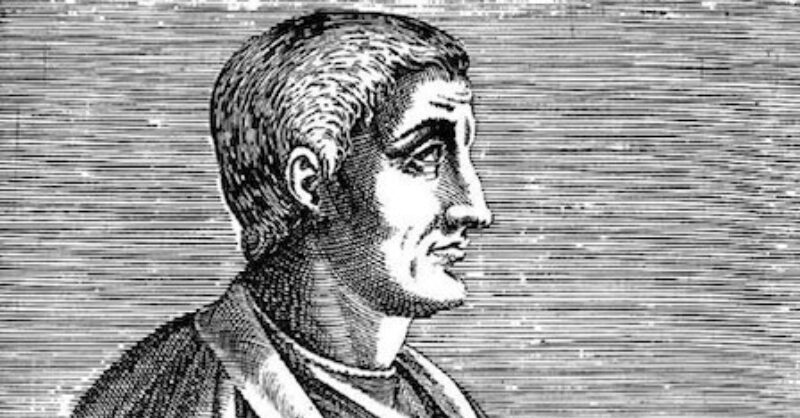
The Legacy of Horace: A Poet of the Ages
In the annals of literary history, few figures have been celebrated as thoroughly as Quintus Horatius Flaccus, known to the English-speaking world simply as Horace. Born on December 8, 65 BCE, in Venusia, a small town in southern Italy, Horace's journey from humble beginnings to becoming one of Rome's most revered poets is both inspiring and instructive. With a body of work that continues to influence Western literature, Horace has earned his place among the pantheon of classical authors.
Early Life and Education
Horace was the son of a freedman, a status that carried with it both the stigma of servitude and the benefit of newfound opportunities in Roman society. His father, recognizing his son's potential, invested heavily in his education. This foresight allowed Horace to travel to Rome for his early studies, and later to Athens, the heart of classical learning, where he immersed himself in philosophy and literature. Amid the backdrop of Roman political upheaval and civil war, Horace's formative years were marked by significant historical events that undoubtedly shaped his perspectives and literary voice.
The Poet's Debut: Satires and Epodes
Horace's initial forays into poetry were marked by his compositions of satirical works, known as "Satires," and "Epodes." Through these genres, Horace quickly established himself as a poet of wit and candor. His "Satires," drawing from the traditions of Lucilius, offered commentary on the societal and individual follies of his time, blending humor with sharp social critique. These early works were instrumental in securing Horace a patronage with Gaius Maecenas, a prominent ally of Augustus and a pivotal cultural benefactor, whose support provided Horace the stability to hone his craft.
Odes: The Mastery of Lyric Poetry
Despite the success of his "Satires" and "Epodes," it is in his "Odes" that Horace's literary genius truly shines. Comprising four books, the "Odes" represent a mastery of lyrical poetry that elegantly explores themes of love, friendship, philosophy, and the transience of life. Written in a variety of metrical forms, Horace's "Odes" have been celebrated for their technical precision and emotional depth. His ability to weave complex themes into a seemingly effortless structure speaks to Horace's deep understanding of poetic tradition and innovation.
The Art of Epistolary Verse
Further showcasing his versatility, Horace also delved into the realm of epistolary verse through his "Epistles." Addressed to friends and acquaintances, these poetic letters offer insights into Horace's worldview, philosophy of life, and relationships. Perhaps the most notable among these is the "Ars Poetica," a didactic poem that remains influential in discussions of literary criticism and theory. Through his "Epistles," Horace revealed himself not only as a keen observer of human nature but as a wise counselor, navigating the complexities of life with measured wisdom.
Horace's Enduring Influence
As Horace's works continued to circulate throughout the Roman Empire and beyond, their impact was profound and far-reaching. His poetry, with its balance of personal expression and universal themes, inspired a legion of Renaissance poets, including the likes of Ben Jonson and John Milton, who drew upon his techniques and themes in their own writing. The clarity and precision of his language set a standard for poetic excellence that has endured through the centuries, influencing the trajectory of Western literature in myriad ways.