The Evolution of Film Preservation Techniques
From the silent era to the current golden age of cinema, films have been a cornerstone of cultural expression and entertainment. However, as we enter the digital age, preserving these vital pieces of our cinematic heritage remains a monumental task. Film preservation techniques continue to evolve, blending traditional photochemical methods with cutting-edge digital and spectroscopic analysis. This article delves into the various strategies employed today to ensure the durability and accessibility of future cinematic treasures.
The Challenges Facing Film Preservation
Films, particularly those made before the prevalence of polyester base, are inherently fragile. Cellulose nitrate films, once widely used, are extremely flammable and susceptible to self-decomposition, releasing toxic gases and leaving behind a brittle residue. While cellulose acetate, which replaced nitrate, is considerably less flammable, it still suffers from "vinegar syndrome," a process that leads to severe shrinkage and warping. Polyester film emerged in the latter half of the twentieth century as a more stable alternative, promising longevity far beyond the lifespan of earlier celluloid materials.
However, these preservation challenges extend beyond the inherent fragility of the films themselves. With the rise of digital cinema, there is a pressing need to address the potential obsolescence of digital formats over time. Traditional film stocks are not subject to the same risks as older storage media that may become obsolete due to technological shifts or data corruption. This dual focus on both analog and digital preservation methods underscores the multifaceted nature of the preservation challenge.
Innovative Preservation Methods: Spectroscopy and Non-Invasive Analysis
Recent advancements in analytical chemistry have provided a powerful toolset for film preservation. Spectroscopic techniques, specifically mid-infrared (mid-IR), near-infrared (near-IR), and Raman spectroscopy, have proved invaluable in identifying film bases and assessing their degradation states. These non-invasive methods enable archivists to analyze cellulose nitrate, acetate, and polyester films directly within archives without causing damage.
Near-IR spectroscopy, for instance, has been instrumental in quantifying acetylation levels in acetate films, thus facilitating early detection of 'vinegar syndrome.' This diagnostic capability is essential in predicting and managing the deterioration of cellulose acetate, one of the more chemically unstable film types. Similarly, mid-IR and Raman spectroscopy offer detailed chemical profiles, allowing for comprehensive assessments of film composition and condition without the need for invasive sampling.
The application of these spectroscopic tools extends beyond identification and diagnosis. By providing precise, non-destructive analysis, these technologies enable timely intervention and conservation efforts. For example, knowing the extent of acetate degradation allows archivists to develop targeted preservation strategies, such as controlled storage conditions or chemical stabilizers. Such insights are crucial in prolonging the life span of valuable cinematic heritage.
Photochemical vs. Digital Preservation: A Balancing Act
The evolution of preservation techniques brings us to an interesting crossroads, where photochemical and digital methods coexist, each with its unique set of advantages and limitations. Photochemical restoration involves repairing and reprocessing original film elements, ensuring that the film retains its inherent materiality and aesthetic qualities. Techniques such as film duplication onto safer carriers and chemical stabilization are fundamental in maintaining these unique properties.
On the other hand, digital restoration offers unprecedented precision and flexibility. High-resolution scans and advanced image processing tools make it possible to remove scratches, stabilize colors, and correct other visual flaws without altering the original source material. However, digital formats are subject to rapid obsolescence and technological changes, necessitating regular migrations to maintain data integrity.
This dual approach highlights the importance of hybrid strategies, where traditional photochemical methods are complemented by robust digital backups. Polyester film serves as an exemplary medium in this context, with proper storage conditions capable of lasting over a century. By outputting digital restorations back onto polyester film, archivists can safeguard valuable content against the risks of digital decay while retaining the original film's authenticity.
Grants and Preservation Projects: Preserving Diverse Cinematic Heritage
The preservation of cinema's rich tapestry requires sustained effort and dedicated resources. Organizations such as the National Film Preservation Foundation (NFPF) and The Film Foundation play pivotal roles in supporting restoration and archival projects. In 2025, significant preservation initiatives included grants aimed at restoring experimental films, home movies, and vintage Hollywood productions. These efforts underscore the commitment to maintaining a diverse and comprehensive representation of cinematic history.
For example, the restoration of avant-garde works and early color processes not only enriches our historical understanding but also highlights the creativity and innovation of early filmmakers. Projects like these ensure that diverse voices and artistic visions are preserved for future generations. The NFPF and The Film Foundation’s annual grants serve as a testament to the enduring value of film heritage and the critical need for continued support.
Conclusion: Balancing Tradition and Innovation
As the fields of film preservation continue to evolve, the balance between traditional photochemical methods and modern analytical techniques becomes ever more nuanced. Advances in spectroscopic analysis provide robust tools for diagnosing and managing film degradation, while hybrid preservation strategies help mitigate the risks of digital obsolescence. Through the concerted efforts of archivists, researchers, and funding bodies, we can preserve the cinematic legacy for years to come.
From the celluloid relics of yesteryear to the digital assets of today, film preservation remains a dynamic and crucial endeavor. By embracing both traditional and innovative approaches, we ensure that the magic of cinema endures as a testament to human creativity and imagination.
Achieving Sustainable Preservation through Portable Spectroscopy
The adoption of portable near-infrared (near-IR) spectrometers has revolutionized the way archivists monitor and manage the condition of film materials in situ. These portable instruments offer a cost-effective and efficient solution, balancing the need for detailed, non-destructive analysis with practical constraints faced by archives. The ability to perform real-time analysis on-site reduces the risk of further damage during sample collection and accelerates decision-making processes for intervention measures.
Portable spectroscopy tools can quickly assess the quality of film bases, identify degradation patterns, and provide quantitative data on key parameters such as acetylation levels and cellulose decomposition rates. For instance, researchers from the University of Milan and Cineteca Nazionale in Rome have successfully implemented mobile spectroscopy units in numerous archival settings. This approach enables archivists to monitor multiple collections simultaneously, allowing for more comprehensive and proactive conservation planning.
The integration of these portable instruments further supports the development of predictive maintenance models. By tracking degradation rates and trends over time, archivists can implement targeted interventions before significant damage occurs. This not only extends the lifespan of film collections but also optimizes resource allocation by focusing efforts on the most at-risk materials.
Hybrid Strategies Ensuring Long-Term Accessibility
The decline in the number of operational analog film restoration laboratories underscores the importance of developing hybrid preservation strategies. The remaining three major labs in the United States, along with a few others worldwide, face increasing pressure to adapt to the changing technological landscape. Archivists are exploring ways to combine photochemical and digital methods to create redundancies and improve long-term accessibility.
Digital migrations often involve scanning and storing high-resolution film frames in digital formats. However, to protect against data loss and technological obsolescence, these digital files are frequently backed up onto more stable carriers, such as polyester film. Polyester film not only provides a long-lasting physical medium but also maintains the visual and tactile qualities of the original film. This strategy offers a hybrid solution that leverages the strengths of both photochemical and digital preservation practices.
Moreover, hybrid strategies can enhance public engagement and accessibility. Digitally restored films can be made available online, while physical prints remain a crucial source for high-quality exhibition and educational purposes. This dual approach ensures that films retain their integrity while also being accessible to a broader audience. The use of digital surrogates can facilitate research and education, supporting academic studies and public interest in film history.
Community and Grant Support Driving Innovation
The ongoing support from organizations such as the National Film Preservation Foundation (NFPF) and The Film Foundation is essential in driving innovation and sustaining preservation efforts. These grants not only fund the restoration and preservation of specific films but also support educational programs, training initiatives, and collaborative research projects. By providing financial assistance to a wide array of institutions and filmmakers, these foundations ensure that diverse cinematic heritage is preserved.
Collaborative efforts are particularly significant in addressing the preservation needs of niche and avant-garde filmmakers whose contributions might otherwise be overlooked. For example, grants from the NFPF and The Film Foundation have enabled the preservation of experimental films and early Hollywood promotional materials. These projects highlight the broader commitment to maintaining a comprehensive representation of film history, including underrepresented narratives and pioneering innovations.
In addition to financial support, these organizations often provide technical expertise and resources to help archives develop best practices for preservation. Workshops, seminars, and online resources facilitate knowledge sharing among professionals in the field, fostering a community-driven approach to preservation. This collaborative spirit is crucial in navigating the complex challenges of film conservation.
Educational Outreach and Accessible Resources
To support both professional and amateur enthusiasts in their preservation efforts, there has been a growing availability of educational outreach and accessible resources. Online tutorials, manuals, and glossaries have become essential tools for maintaining film preservation practices. Institutions such as New York University’s Moving Image Archiving and Preservation program offer specialized courses and training programs tailored to both novice and experienced archivists.
These resources cover everything from basic film handling techniques to advanced digital restoration methods. They provide clear, step-by-step guides and offer insights into the latest preservation technologies. The availability of such materials helps ensure that knowledge disseminated across the profession, reducing the potential for errors and promoting best practices.
Furthermore, user-friendly interfaces and accessible documentation make it easier for individuals to learn and apply preservation techniques. Whether through online courses, video tutorials, or written guides, these resources empower a wider audience to participate in the preservation of film heritage. This democratization of knowledge enhances the overall effectiveness of preservation efforts by building a more informed and engaged community of professionals and enthusiasts.
Looking Forward: A Comprehensive Approach
The future of film preservation lies in a multifaceted approach that combines traditional methods with cutting-edge technologies. The integration of spectroscopic analysis, hybrid preservation strategies, grants, and educational resources creates a robust framework for ensuring the long-term accessibility and preservation of cinematic heritage. As we move forward, the collaboration between archivists, researchers, and funding bodies will be crucial in overcoming the challenges posed by digital obsolescence and physical degradation.
The continued development of non-invasive analytical tools, such as portable spectroscopy, will play a vital role in providing real-time insights into the health of film collections. By leveraging these tools alongside hybrid preservation strategies, we can address the complex challenges of maintaining cinematic treasures for future generations. With sustained support and innovative solutions, the preservation of film history can thrive, ensuring that the magic and artistry of cinema endure.
Looking Forward: A Comprehensive Approach Continued
The challenges facing film preservation are complex but solvable with the right combination of traditional and innovative techniques. As technology continues to advance, the preservation of cinema must evolve alongside it. The integration of spectroscopic analysis, hybrid preservation strategies, and community support forms a robust framework that can withstand the pressures of obsolescence and degradation.
The transition to digital formats is inevitable in many aspects of filmmaking, but it does not negate the need for preserving the original analog materials. Polyester film remains a reliable medium with the potential to last well over a century, offering a durable backup for digital surrogates. By combining digital preservation with analog outputs, archivists can create a resilient system that maximizes the strengths of both methods.
Innovative techniques such as the use of portable spectroscopy are not only enhancing the accuracy of condition assessments but also empowering archivists to act proactively. Early detection of degradation allows for timely interventions, such as cold storage, controlled environments, and the application of chemical stabilizers. These proactive measures significantly reduce the risk of irreversible damage to valuable film assets.
The Role of Technology in Film Preservation
Technology plays a central role in modern film preservation. Advanced scanning and imaging technologies, coupled with machine learning algorithms, are improving the efficiency and accuracy of restoration processes. Machine learning, in particular, is being used to automate tasks such as noise reduction, color correction, and grain removal, which were previously time-consuming and labor-intensive. These technological advancements are not only streamlining the restoration process but also improving the quality of digital surrogate materials.
Moreover, cloud-based storage solutions are becoming increasingly popular in archiving large volumes of digital assets. While these solutions introduce new challenges, such as cybersecurity threats and data migration issues, they also offer unprecedented scalability and accessibility. Archives can store vast amounts of data securely and easily access it from anywhere in the world, breaking down geographical barriers to preservation.
Collaboration and Research Driving Progress
The success of film preservation initiatives relies heavily on collaboration and research. Collaborative networks like the Society for Motion Picture and Television Engineers (SMPTE) and the International Federation of Film Archives (FIAF) bring together experts from various disciplines to share knowledge, develop standards, and conduct joint research projects. These collaborations foster innovation and ensure that preservation practices remain up-to-date with the latest scientific and technological advancements.
Research endeavors such as those funded by the Academy of Motion Picture Arts and Sciences and other academic institutions are crucial in advancing the field. These projects investigate novel preservation methods, explore the long-term effects of different storage conditions, and study the chemical behavior of various film bases. By providing rigorous scientific validation for preservation techniques, these research efforts enhance our ability to protect and preserve cinema heritage accurately.
Educational Initiatives for Future Preservation Professionals
The education of a new generation of preservation professionals is paramount to the sustainability of film preservation. Programs such as the Moving Image Archiving and Preservation Master of Arts (MA) program at New York University (NYU) are at the forefront of this effort. These programs equip students with a comprehensive understanding of both traditional and modern preservation techniques, preparing them to tackle the evolving challenges in the field.
The curriculum typically includes courses on film chemistry, digital preservation, archival management, and hands-on workshops in film handling and restoration. Students gain practical experience through internships at major film studios, archives, and restoration facilities. These immersive experiences provide insights into the real-world applications of preservation techniques and prepare graduates to navigate the complex landscape of film conservation.
The Role of Community Engagement and Public Awareness
Beyond professional education, public engagement is critical in preserving cinematic heritage. Initiatives such as film festivals, workshops, and online campaigns raise awareness about the importance of film preservation and educate the public about how they can contribute to the cause. These events not only promote film culture but also foster a sense of community and shared responsibility for protecting our cultural legacy.
Engaged communities can provide valuable support through donations, volunteer work, and advocacy. Crowdfunding platforms, for example, can offer a way to mobilize public funds for specific preservation projects. Additionally, public schools and universities can incorporate film preservation into their curriculums, ensuring that future generations grow up with an appreciation for and understanding of cinema’s rich history.
Conclusion: Ensuring the Enduring Legacy of Cinema
The preservation of film history is a collective endeavor that requires the collaboration of archivists, researchers, filmmakers, educators, and the public. As technology continues to advance and film materials face new challenges, the principles of comprehensive, collaborative, and technologically informed preservation will remain at the heart of our efforts.
By embracing the full spectrum of preservation techniques—from analog film to digital surrogates, from spectroscopic analysis to hybrid strategies—we can ensure that the magic and artistry of cinema continue to inspire and captivate future generations. The future of film preservation is bright, and with continued dedication and innovation, we can protect this invaluable cultural heritage for generations to come.
The enduring legacy of cinema lies in the careful and conscientious preservation of its myriad forms and expressions. Through rigorous scientific inquiry, technological integration, community involvement, and educational outreach, we are poised to safeguard this rich and diverse cinematic tapestry for centuries to come.
Yves Chauvin: Nobel Laureate Who Revolutionized Chemistry
Yves Chauvin was a pioneering French chemist whose groundbreaking work on olefin metathesis earned him the 2005 Nobel Prize in Chemistry. His discoveries transformed organic synthesis, enabling greener and more efficient production of pharmaceuticals, polymers, and petrochemicals. This article explores his life, career, and the enduring impact of his contributions to science and industry.
Early Life and Education
Yves Chauvin was born on October 10, 1930, in Menen, Belgium. His family later moved to France, where he developed an early interest in chemistry. He pursued his higher education at the Lyon School of Chemistry, Physics, and Electronics, graduating in 1954.
After completing his studies, Chauvin began his career in research, focusing on catalysis and organic chemistry. His early work laid the foundation for his later breakthroughs in metathesis reactions, which would eventually earn him global recognition.
The Discovery of Olefin Metathesis
Understanding the Mechanism
In 1971, Yves Chauvin proposed a revolutionary mechanism for olefin metathesis, a chemical reaction where carbon-carbon double bonds are broken and reformed. This process, often described as a "dance of molecular partners," allows for the swapping of molecular groups in a highly controlled manner.
Chauvin's work demonstrated that metal carbene catalysts were key to facilitating these reactions. His insights provided a clear explanation for a phenomenon that had puzzled chemists for decades, paving the way for further advancements in the field.
Impact on Organic Synthesis
The discovery of the metathesis mechanism had a profound impact on organic synthesis. It enabled chemists to create complex molecules with greater precision and efficiency, reducing waste and energy consumption. This breakthrough was particularly significant for the production of pharmaceuticals, polymers, and petrochemicals.
Chauvin's work also contributed to the development of green chemistry, a field focused on minimizing the environmental impact of chemical processes. By enabling more efficient and sustainable synthesis methods, his discoveries helped reduce hazardous waste and improve industrial practices.
Career at the French Institute of Petroleum
Joining IFP and Early Research
In 1960, Yves Chauvin joined the French Institute of Petroleum (IFP), now known as IFP Energies Nouvelles. His early research at IFP focused on homogeneous catalysis, particularly the use of transition metals to facilitate chemical reactions.
Chauvin's work at IFP was characterized by a strong connection between fundamental research and industrial applications. His discoveries in catalysis had immediate practical implications, leading to the development of new processes for the petrochemical industry.
Development of Industrial Processes
During his tenure at IFP, Chauvin played a key role in developing several industrial processes that are still in use today. These include:
- Dimersol: A process that uses nickel catalysts to dimerize propene, producing isohexenes used as petrol additives. By 2005, there were 35 plants worldwide producing 3.5 million tonnes per year.
- Alphabutol: A process that uses titanium catalysts to dimerize ethene, producing 1-butene for linear low-density polyethylene. This process was operational in 20 plants by 2005, with production exceeding 400,000 tonnes per year.
- Difasol: An enhanced variant of Dimersol that uses ionic liquids as solvents, improving safety and efficiency. This process achieved commercial success in refining.
These processes not only improved the efficiency of petrochemical production but also contributed to sustainable development by reducing energy use and byproducts.
Recognition and Legacy
The Nobel Prize in Chemistry
In 2005, Yves Chauvin was awarded the Nobel Prize in Chemistry for his work on olefin metathesis. He shared the prize with Robert H. Grubbs and Richard R. Schrock, who further developed and applied his discoveries.
The Nobel Committee recognized Chauvin's contribution as fundamental to the advancement of organic synthesis. His work enabled the creation of more efficient and environmentally friendly chemical processes, aligning with the growing emphasis on green chemistry.
Election to the French Academy of Sciences
In the same year he received the Nobel Prize, Chauvin was elected to the French Academy of Sciences. This honor reflected his significant contributions to chemistry and his role in advancing scientific knowledge.
Chauvin's election to the Academy was a testament to his influence in the scientific community. His work continued to inspire researchers and industry professionals, driving innovation in catalysis and organic synthesis.
Conclusion of Part 1
Yves Chauvin's discoveries in olefin metathesis revolutionized the field of chemistry, enabling more efficient and sustainable industrial processes. His career at the French Institute of Petroleum showcased the power of bridging fundamental research with practical applications. In the next part of this article, we will delve deeper into his specific contributions to industrial processes and the broader impact of his work on modern chemistry.
Industrial Applications of Chauvin’s Metathesis Research
Yves Chauvin transformed theoretical chemistry into tangible industrial processes. His work at the French Institute of Petroleum (IFP) led to the creation of multiple catalytic systems that remain vital in petrochemical production. These innovations not only improved efficiency but also advanced sustainable chemistry by reducing waste and energy consumption.
Dimersol: A Game-Changer in Petrochemicals
The Dimersol process, developed under Chauvin’s leadership, uses nickel-based catalysts to convert propene into isohexenes. These compounds are essential as high-octane additives in gasoline. By 2005, the process was operational in 35 plants worldwide, producing an estimated 3.5 million tonnes annually. This innovation significantly enhanced fuel quality while minimizing environmental impact.
Dimersol’s success lies in its ability to operate under mild conditions, reducing the need for extreme temperatures or pressures. This efficiency translates into lower operational costs and a smaller carbon footprint, aligning with modern green chemistry principles.
Alphabutol: Enabling High-Performance Polymers
Another key contribution was the Alphabutol process, which employs titanium catalysts to dimerize ethene into 1-butene. This compound is a critical building block for linear low-density polyethylene (LLDPE), a versatile plastic used in packaging, automotive parts, and medical devices.
By 2005, 20 plants were using Alphabutol, with an annual production exceeding 400,000 tonnes. The process was projected to expand further, highlighting its growing importance in the global plastics industry. Chauvin’s work ensured that this polymerization method was both scalable and environmentally responsible.
Difasol: Innovating with Ionic Liquids
Chauvin also pioneered the use of ionic liquids in catalysis through the Difasol process. This method improved upon Dimersol by using nickel catalysts dissolved in ionic liquids, which allowed for 10 times smaller reaction volumes. The result was a safer, more compact, and energy-efficient system for petrochemical refining.
The adoption of ionic liquids marked a significant shift in industrial catalysis. These solvents are non-volatile and reusable, reducing hazardous waste and aligning with sustainable development goals. Difasol’s success demonstrated Chauvin’s ability to merge cutting-edge research with practical industrial needs.
Chauvin’s Influence on Green Chemistry
Yves Chauvin was a visionary in promoting green chemistry, an approach that minimizes the environmental impact of chemical processes. His work on olefin metathesis and catalytic systems provided the foundation for cleaner, more efficient industrial methods. These innovations continue to shape modern chemical manufacturing.
Reducing Hazardous Waste
Traditional chemical synthesis often generates significant waste, including toxic byproducts and solvent emissions. Chauvin’s catalytic processes, such as Dimersol and Alphabutol, drastically reduced these outputs. By using highly selective catalysts, his methods ensured that reactions produced fewer unwanted side products, lowering the environmental burden.
For example, the metathesis reaction allows for the precise assembly of complex molecules without excessive energy input. This precision reduces the need for harsh chemicals and solvents, further contributing to sustainable industrial practices.
Energy Efficiency in Chemical Processes
Energy consumption is a major concern in chemical manufacturing. Chauvin’s processes were designed to operate under mild conditions, reducing the need for high temperatures and pressures. This approach not only cuts energy costs but also decreases greenhouse gas emissions associated with industrial production.
The Difasol process, with its use of ionic liquids, exemplifies this efficiency. By enabling reactions in smaller volumes and at lower temperatures, it set a new standard for energy-efficient catalysis. These principles are now widely adopted in the development of next-generation chemical technologies.
Patents and Publications: A Legacy of Innovation
Throughout his career, Yves Chauvin was a prolific inventor and researcher. His contributions are documented in over 90 scientific publications and 130 patents, many of which remain foundational in industrial chemistry. These works reflect his deep understanding of catalysis and his commitment to advancing chemical science.
Key Patents and Their Impact
Chauvin’s patents cover a wide range of catalytic processes, from olefin metathesis to the use of ionic liquids in chemical reactions. Some of his most influential patents include:
- Dimersol Process (1970s): Revolutionized the production of high-octane fuel additives.
- Alphabutol Process (1980s): Enabled the efficient synthesis of 1-butene for polymer production.
- Difasol Process (1990s): Introduced ionic liquids to catalysis, improving safety and efficiency.
These patents not only secured Chauvin’s legacy but also provided the chemical industry with tools to enhance productivity while reducing environmental harm. His work continues to inspire new generations of chemists and engineers.
Scientific Publications and Collaborations
Chauvin’s research was widely published in prestigious journals, where he shared insights into catalysis, metathesis, and green chemistry. His collaborations with other leading scientists, including Robert H. Grubbs and Richard R. Schrock, further advanced the field of organic synthesis.
One of his most cited works involves the mechanism of olefin metathesis, which provided a theoretical framework for subsequent experimental breakthroughs. This publication remains a cornerstone in chemical education and research, demonstrating the enduring relevance of his contributions.
Global Recognition and Awards
Yves Chauvin received numerous accolades throughout his career, culminating in the 2005 Nobel Prize in Chemistry. This prestigious award recognized his role in developing the metathesis method, a tool that has become indispensable in modern chemistry.
The Nobel Prize and Its Significance
The Nobel Prize highlighted Chauvin’s foundational work on olefin metathesis, which enabled the creation of complex molecules with unprecedented efficiency. The prize was shared with Grubbs and Schrock, who built upon Chauvin’s theoretical insights to develop practical catalytic systems.
This recognition underscored the importance of fundamental research in driving industrial innovation. Chauvin’s ability to bridge theory and application set a precedent for how scientific discoveries can transform entire industries.
Other Notable Honors
In addition to the Nobel Prize, Chauvin was elected to the French Academy of Sciences in 2005, further cementing his status as a leader in chemical research. His election reflected the broad impact of his work on both academic and industrial chemistry.
Other honors included:
- Grand Prix de la Fondation de la Maison de la Chimie (1990): Recognized his contributions to catalysis.
- Chevalier de la Légion d’Honneur (2006): Awarded for his service to science and industry.
These awards highlight the global appreciation for Chauvin’s contributions, which continue to influence chemical research and industrial practices worldwide.
Conclusion of Part 2
Yves Chauvin left an indelible mark on chemistry through his pioneering work on olefin metathesis and catalytic processes. His innovations at the French Institute of Petroleum revolutionized industrial chemistry, making production more efficient and sustainable. In the final part of this article, we will explore his lasting legacy, the ongoing impact of his research, and how his principles continue to guide modern chemical advancements.
Legacy of Yves Chauvin
Yves Chauvin’s contributions to chemistry continue to shape modern science and industry. His pioneering work on olefin metathesis remains a cornerstone of organic synthesis, enabling precise molecular construction with minimal waste. Even after his passing in 2015, the processes he developed—such as Dimersol, Alphabutol, and Difasol—are still operational in refineries and chemical plants worldwide.
The metathesis method he proposed in 1971 has become integral to producing advanced plastics, pharmaceuticals, and fuel additives. By allowing chemists to rearrange carbon-carbon double bonds with unmatched precision, his discovery supports green chemistry principles, reducing energy use and byproducts. Industries continue to build on his insights, ensuring his legacy endures in both academic research and commercial applications.
Enduring Industrial Relevance
Chauvin’s catalytic processes remain vital to the petrochemical industry. For example:
- Dimersol continues to produce 3.5 million tonnes of isohexenes annually, used as high-octane fuel additives.
- Alphabutol supports the synthesis of linear low-density polyethylene (LLDPE), with global production exceeding 400,000 tonnes per year.
- Difasol’s use of ionic liquids has inspired safer, more efficient catalytic systems in refining.
These processes not only boost productivity but also align with sustainability goals by minimizing hazardous waste and energy consumption. Chauvin’s ability to bridge fundamental research and industrial application set a benchmark for modern chemical innovation.
Educational Impact and Mentorship
Beyond his scientific discoveries, Yves Chauvin influenced countless researchers through his publications and collaborations. His over 90 scientific papers and 130 patents serve as educational resources for students and professionals alike. By clearly explaining the mechanism of olefin metathesis, he empowered future chemists to explore new catalytic pathways.
Chauvin’s work at the French Institute of Petroleum (IFP) also emphasized practical training. He fostered a culture where theoretical insights were tested in real-world scenarios, preparing generations of scientists for careers in both academia and industry. His mentorship style encouraged interdisciplinary collaboration, a legacy evident in the global adoption of his methods.
Future of Metathesis and Sustainable Chemistry
The principles established by Yves Chauvin are guiding next-generation technologies in sustainable chemistry. Researchers are leveraging metathesis to develop novel materials, such as biodegradable polymers and targeted drug delivery systems. These applications promise to further reduce environmental impact while meeting global demand for high-performance chemicals.
Emerging Applications
Modern scientists are expanding metathesis into new domains, including:
- Pharmaceutical synthesis: Creating complex drug molecules with fewer steps and less waste.
- Bio-based materials: Designing plastics from renewable resources using metathesis-based processes.
- Catalysis in microreactors: Miniaturizing reactions for cleaner, faster industrial production.
Chauvin’s foundational work provides the framework for these advancements, demonstrating how green chemistry can drive both innovation and environmental stewardship.
Conclusion
Yves Chauvin transformed chemistry by turning theoretical insights into industrial revolutions. His 1971 proposal of the metal carbene mechanism for olefin metathesis earned him the 2005 Nobel Prize in Chemistry and reshaped organic synthesis. From the Dimersol process producing millions of tonnes of fuel additives to the Alphabutol method enabling life-saving polymers, his innovations continue to power global industries.
Chauvin’s legacy is a testament to the power of bridging science and application. By prioritizing efficiency and sustainability, he laid the groundwork for a cleaner, more resourceful chemical industry. As researchers worldwide build on his discoveries, Yves Chauvin remains a guiding light in the pursuit of green chemistry and innovative catalysis.
In a world increasingly focused on sustainability, Chauvin’s work serves as a blueprint for balancing industrial progress with environmental responsibility. His insights will continue to inspire chemists, engineers, and policymakers to create solutions that benefit both society and the planet.


The Finest Cinematic Openings: A Journey Through Time and Artistry
Introduction
From the silver screens of Hollywood to the independent cinemas around the world, cinema has captivated audiences with its ability to transport us into different realities. One of the most critical elements of any film is its opening sequence. It sets the tone, introduces the characters, and draws viewers into the narrative. In this article, we delve into some of the best cinematic openings, exploring their impact, creativity, and artistic merits.
The Evolution of Film Openings
The history of cinema is replete with innovative opening sequences that have left lasting impressions on audiences and filmmakers alike. Early films often used straightforward methods, such as establishing shots or introductions via titles. However, as filmmakers grew more daring and experimental, so did their openings. From the iconic opening scene of Alfred Hitchcock’s Sleuth, to Stanley Kubrick’s deliberate pacing in The Shining, each director has used unique techniques to hook viewers and prepare them for what lies ahead.
Classics That Set the Standard
Star Wars (1977)
"A long time ago..." is a phrase that, for generations, instantly transports you into a galaxy far, far away. Directed by George Lucas, A New Hope (the original title) introduced us to the saga through a series of breathtaking visuals and powerful themes. The opening crawl, set against a scrolling black screen, was a groundbreaking move at the time. It established the mythological scale of the story while also providing essential exposition, making it feel like a true epic.
The Godfather (1972)
Film pioneer Francis Ford Coppola’s The Godfather opened with what film historians consider one of the most iconic moments in cinematic history: the wedding scene. The stark contrast between the opulent celebration and the dark secrets brewing beneath serves as a perfect metaphor for the entire film. The opening sequence not only establishes the family dynamic but also plants the seeds of the intricate web of betrayal and loyalty that runs throughout the movie.
Artistic Innovations Pushing Boundaries
Memento (2000)
Noir aesthetics and a unique narrative approach characterized Christopher Nolan’s Memento. The opening sequence, which takes place in reverse chronological order, immediately challenges the viewer's expectations. It’s a brilliant exercise in visual storytelling, where every frame adds depth and complexity to the main character, Leonard Shelby. As he searches for his wife's killer, this unconventional storytelling method underscores the protagonist’s struggle with anterograde amnesia.
Pulp Fiction (1994)
Quentin Tarantino’s Pulp Fiction opened with two seemingly unrelated sequences that perfectly set up the non-linear narrative style of the film. The opening scene is a high-stakes card game, followed by a brutal fight outside a convenience store. These disjointed yet meticulously crafted scenes introduce key characters and themes that become crucial elements of the plot. The chaotic and stylized cinematography, enhanced by the energetic score, immerses viewers into the gritty world of the film.
Modern Marvels that Continue the Tradition
Hunger Games: Catching Fire (2013)
Syndey Pollack directed this thrilling installment of the Hunger Games series. The opening scene, featuring Katniss Everdeen’s initiation into the Hunger Games arena, captures the film’s intense atmosphere and stakes. The sequence mixes fast-paced action, striking visuals, and haunting emotional weight, effectively setting the tone for a high-octane survival drama. It seamlessly blends real-world politics with the futuristic setting, drawing viewers into a world where survival means everything.
Whiplash (2014)
Damian Chazelle’s Whiplash opened with a harrowing montage that introduces us to Andrew Neiman, a young jazz drummer determined to become a master performer. Shot in continuous, unbroken takes, the opening scene showcases the extreme physical exertion and mental strain required for such high-performing artists. The intensity builds as Andrew’s journey towards perfection becomes increasingly demanding and emotionally charged, preparing audiences for the raw performances and tense dynamics that follow.
Independent Ingenuity
Tangerine (2015)
Sean Baker’s Tangerine was a groundbreaking indie film that pushed the boundaries of traditional filmmaking. The opening sequence sets up the story through a series of fragmented scenes shot entirely in one day. Set on Los Angeles’ Venice Beach, the film explores themes of identity and acceptance through the experiences of two trans women. The use of handheld cameras and natural lighting creates a raw, authentic atmosphere that mirrors the characters’ journeys. This minimalist yet compelling approach highlights the power of intimate storytelling.
Rails (2013)
Rails, directed by Patrick Tobin, was a minimalist documentary that took a unique approach to its opening. Shot in one continuous take, the film follows a woman navigating a complex legal system after being wrongly accused of murder. The opening scene establishes the sense of confinement and isolation, mirroring the protagonist's internal struggle. The use of long, uninterrupted takes builds suspense and tension, highlighting the claustrophobic and overwhelming nature of the judicial process.
Conclusion
Cinematic openings hold immense power in setting the stage for a film's narrative. They can captivate, challenge, and even redefine the audience’s expectations. From the nostalgic grandeur of A New Hope's opening crawl to the experimental storytelling of Memento, these openings have become classics, marking significant points in film history. As cinema continues to evolve, so do its opening techniques, ensuring that each new generation finds its own unique ways to engage with and immerse viewers into a world crafted by visionary filmmakers.
Stay tuned for the next part of the article, where we'll explore more groundbreaking cinematic openings from contemporary films.
Contemporary Innovations: Breaking New Ground
Get Out (2017)
Filmmaker Jordan Peele’s debut feature, Get Out, made waves with its chilling and thought-provoking opening sequence. The film begins innocently enough with Chris Washington visiting his girlfriend’s family home. The opening scene is a masterclass in slow-building tension, using muted color palettes and long, static shots to create an eerie atmosphere. Chris’s initial discomfort gradually transforms into genuine horror as the camera reveals subtle clues about the sinister nature of the family and their intentions. Peele masterfully blends social commentary with suspense, drawing audiences into a nightmarish scenario that challenges societal norms.
Nomadland (2020)
Chloé Zhao’s Nomadland opens with an extensive and evocative sequence following Fern (Frances McDormand) as she travels from Las Vegas to the rural American landscape. Filmed extensively in locations across the Midwest, the opening portrays a desolate yet breathtakingly beautiful setting. The absence of dialogue allows the stunning cinematography and the vast expansiveness of the landscapes to speak for themselves. The sequence underscores the themes of resilience, loss, and the human spirit, setting the stage for a poignant exploration of modern America.
The Farewell (2019)
Lulu Wang’s The Farewell opens with a series of Chinese cultural traditions and rituals that foreshadow the central conflict of the film. The sequence begins with a dinner celebrating Grandma Liu’s birthday, where family members act as witnesses to her impending death. The stark contrast between these joyful celebrations and the family’s secret about Grandma’s terminal diagnosis serves as a poignant introduction to the film’s themes of cultural clash, family bonds, and the complexities of modern life. The opening sequence, infused with humor and heartfelt emotion, sets the scene for a deeply affecting narrative.
Nightcrawler (2014)
Gary Oldman’s debut as a director with Nightcrawler opens with an intense and unsettling sequence that introduces the protagonist, LA freelancer Rod Blume. The opening scene depicts Blume breaking into a woman’s apartment and beating her severely, creating an immediate sense of unease and foreshadowing the corrupt journalism he will soon participate in. The sequence is shot in close quarters, emphasizing the psychological and physical violence, establishing Blume’s character and the morally ambiguous world he inhabits.
Voyage of Time (2015)
Director Werner Herzog’s Voyage of Time
opens with an incredible time-lapse sequence showcasing the evolution of the universe from the Big Bang to the present day. The breathtaking visuals, narrated by actress Cate Blanchett, provide a mind-blowing glimpse into the vastness and complexity of creation. This opening sets the tone for a visually and philosophically rich journey through time, exploring humanity’s place in the cosmos. Herzog’s approach blends scientific fact with poetic imagery, inviting viewers to reflect on the universe’s infinite possibilities.
First Man (2018)
Damien Chazelle’s biographical film, First Man, opens with astronaut Neil Armstrong and his crewmates training under the weightlessness of a KC-135 airplane. The sequence immerses viewers in the rigor and danger of space travel, establishing the context of mission preparation. The use of a looping aircraft provides a disorienting and surreal experience, mirroring the astronauts’ sense of detachment from gravity and reality. This opening scene sets the stage for a deeply personal and historically significant narrative.
The Shape of Water (2017)
Guillermo del Toro’s magical realism masterpiece, The Shape of Water, opens with a hauntingly beautiful underwater sequence. Set in a top-secret government laboratory during the Cold War era, the scene introduces the main character, Elisa (Sally Hawkins), as she works in the lab. Del Toro’s meticulous attention to detail in the water scenes creates a dreamlike atmosphere that contrasts sharply with the oppressive and sterile environment. The opening sequence, filled with ethereal music and visual splendor, sets the tone for a poignant exploration of love and belonging.
The Power of Soundscapes and Music
Sound plays a crucial role in crafting unforgettable openings. Composers like John Williams (e.g., Jurassic Park and Inception) have composed themes that instantly transport listeners to specific worlds. In Jurassic Park, the ominous theme introduced by the T-Rex’s roar and the eerie sounds of the park create an unforgettable atmosphere. Similarly, Hans Zimmer and James Newton-Holt’s score in Inception uses complex and layered sound design to build suspense, guiding viewers through the film’s intricate plot.
The Prestige (2006)
Christopher Nolan’s The Prestige employs a mesmerizing sequence involving time-lapse photography of smoke and fire effects. The scene starts with a magician, Robert Angier (Hugh Jackman), performing a seemingly impossible feat with smoke, blending seamlessly into a narrative that delves into his obsession and rivalry with rival magician Alfred Borden (Christian Bale). The intricate camera work and the tension-building sequence establish the mysterious and thrilling essence of the film, setting the stage for a riveting exploration of magic and madness.
Noah (2014)
Alan Parker’s Noah opens with a beautifully crafted time-lapse sequence depicting the biblical tale of the Great Flood. The scene transitions from a peaceful, pastoral landscape to a chaotic, drowning world. The use of sweeping vistas and dramatic sound effects emphasizes the enormity of the story, preparing the audience for the epic scope of the film. The sequence serves as both an introduction to the setting and a thematic foundation for the narrative.
Blade Runner 2049 (2017)
VFx mastermind Denis Villeneuve’s Blade Runner 2049 opens with a breathtaking night sequence that sets the stage for a dystopian future. The opening takes viewers through the sprawling, foggy streets of Los Angeles, juxtaposing the city’s beauty with its decay. The sequence introduces the themes of technology, identity, and humanity, establishing a visually lush backdrop for the film’s intricate narrative. The haunting score and atmospheric cinematography create a sense of wonder and foreboding.
Spirit Animal (2011)
This experimental short film directed by Nick Dunning and Daniel Goldblatt opens with an immersive sequence that explores the life of a spirit animal. The scene unfolds from the perspective of a fox, capturing its movements, senses, and environment with meticulous detail. The use of stop-motion animation and a dreamlike quality set the tone for a poetic and surreal narrative. The opening sequence, blending natural and spiritual elements, offers a unique and thought-provoking glimpse into the film’s themes.
Final Thoughts on Cinematic Openings
The best cinematic openings share a common goal: to engage viewers and create an immediate connection with the story. From the iconic crawl of A New Hope to the haunting night sequence of Noah, each film opens with sequences that define the narrative arc and set the emotional landscape. Whether through visual storytelling, soundscapes, or unconventional techniques, these openings prove that a strong start is pivotal in captivating audiences and setting the tone for a memorable cinematic experience.
In the final part of this article, we’ll continue our exploration of innovative and impactful cinematic openings, delving deeper into how directors use unique methods to leave a lasting impression on viewers.
Unique Techniques and Memorable Sequences
Film directors have continually pushed the boundaries of conventional opening sequences to create unique and memorable moments that resonate with audiences. Some films incorporate innovative techniques such as extended pre-title sequences, non-linear storytelling, and interactive elements to draw viewers in from the very beginning. Here are a few examples that illustrate how directors use creative approaches to open their films:
The Lighthouse (2019)
Robert Eggers’ chilling mystery-thriller, The Lighthouse, opens with a lengthy, uncut shot that immerses the viewer in the isolated life of the lighthouse keeper, Thomas Wake (Willem Dafoe). The scene features a series of long, continuous takes, capturing the monotony and claustrophobia of Wake’s existence. The absence of dialogue and the natural, sometimes unsettling lighting create an almost hypnotic effect, foreshadowing the supernatural elements that will unfold. This unique approach sets the stage for a haunting and psychologically tense narrative.
In the Mood for Love (2000)
Congressman Wong Kar-wai’s In the Mood for Love opens with a poetic and melancholic sequence shot in black and white. The scene follows two neighbors, Chow Mo-Wan (Tony Leung Chiu-wai) and Su Li-zhou (Cecilia Cheung), as they meet and observe each other’s lives through their window blinds. The sequence is shot in a series of long takes, capturing the intricate details of their interactions. The understated acting, combined with Wong’s signature visual style, sets the tone for a film about unspoken desire and hidden emotions.
Black Swan (2010)
Director Darren Aronofsky’s Black Swan opens with two distinct yet interconnected sequences. The first sequence follows Nina Sayers (Natalie Portman) as she prepares for her role as the lead swan in a ballet performance. The second sequence focuses on a hallucinating Nina as she confronts her doppelgänger, the Black Swan. These contrasting scenes are shot in stark black and white, with minimal dialogue, creating a sense of duality and psychological tension. The opening sequences establish the themes of duality, obsession, and the pressures of perfection, setting the stage for a psychological horror film.
Lost in Translation (2003)
Writer-director Sofia Coppola’s Lost in Translation opens with a series of brief scenes that capture the loneliness of two strangers who find solace in each other’s company. The opening sequence features Sofia Coppola herself as Charlotte, a young woman visiting Tokyo with her husband Bill (Bill Murray). Bill is seen wandering in Tokyo’s bustling streets, capturing the city’s vibrant yet lonely atmosphere. The soft lighting and slow pacing emphasize the characters’ isolation, setting the scene for a deeply introspective romance.
Aquarius (2016)
Writer-director[Truncated] 1
Ari Aster’s Aquarius opens with a visually bold and unsettling sequence set in a dilapidated apartment building in Los Angeles. The scene follows an elderly activist, Marjorie (Jane Fonda), as she prepares for eviction due to the building’s redevelopment. The claustrophobic and oppressive setting, coupled with the harsh lighting and unsettling sounds, creates a profound sense of dread and anticipation for the film’s exploration of community, aging, and resistance.
The opening sequence serves not only to establish the setting but also to introduce the central character and themes. In Aquarius, it highlights the stark contrast between the character’s ideals and the forces of change, creating a powerful emotional anchor for the rest of the film.
Her (2013)
Director Spike Jonze’s Her opens with a simple yet profound sequence that captures the essence of the film’s protagonist, Theodore Twombly (Joaquin Phoenix), as he writes love letters to an imaginary girlfriend. The opening scene shows him typing away, surrounded by a digital sea of emails and messages. This sequence establishes Theodore’s solitary state and his longing for human connection, setting the stage for the film’s exploration of artificial intelligence and human relationships.
The Power of Interactivity and Immersion
Some films go beyond conventional opening techniques to engage viewers actively. Interactive opening sequences, whether through live-action sequences or pre-recorded videos, can create a unique connection with the audience. Examples include:
Tenet (2020)
Christopher Nolan’s latest blockbuster, Tenet, opens with a highly engaging and interactive sequence designed to be viewed in IMAX and 3D formats. The scene features a series of complex and fluid action sequences in quick succession, challenging the audience to keep up with the rapid editing and visual tricks. This innovative opening not only sets the stage for the film’s intricate plot but also immerses viewers in a hyper-realistic and kinetic narrative. The emphasis on visual spectacle and active engagement ensures that viewers are fully invested from the outset.
VR Experience Openings
New technologies like virtual reality (VR) have also transformed how films open. For instance, the VR film Carne y Arena by Alejandro González Iñárritu offers an immersive experience that allows viewers to step inside the lives of migrants crossing the U.S.-Mexico border. The VR sequence takes viewers on a harrowing journey, placing them directly in the heart of the action. This type of opening not only immerses viewers but also creates a powerful emotional connection, as they experience the reality of the characters’ journey firsthand.
Enduring Impact of Opening Sequences
The best cinematic openings leave a lasting impact, often establishing the directorial voice and the thematic foundations of a film. They set the tone, introduce characters, and create an immediate emotional resonance that engages viewers from the very first frame. Whether through visual storytelling, soundscapes, interactive elements, or unconventional techniques, these opening sequences showcase the power of cinema to transport, shock, and captivate audiences.
In conclusion, the art of creating an effective opening sequence remains a vital aspect of filmmaking. As technology and storytelling continue to evolve, filmmakers will undoubtedly continue to push boundaries, experimenting with new techniques to craft openings that resonate with viewers in unprecedented ways. The enduring legacy of these openings lies in their ability to captivate, intrigue, and forever entwine themselves in the fabric of cinema history.
Thank you for joining us on this journey through some of the best cinematic openings. We hope this article has inspired you to appreciate the nuanced artistry behind these powerful sequences and further explored the fascinating world of filmmaking.
Humza Arshad: The Rise of a British Comedy Sensation
Introduction
Humza Arshad is a name that has become synonymous with comedy, creativity, and cultural resonance in the UK. Known for his sharp wit, relatable humor, and groundbreaking digital content, Humza has carved out a unique space in the entertainment industry. From his early days creating viral sketches to becoming a mainstream star, his journey is one of perseverance, talent, and authenticity. This article delves into Humza Arshad's beginnings, his rise to fame, and why he has become such an influential figure in British comedy.
Early Life and Background
Born on August 1, 1985, in London, Humza Khalid Arshad grew up in a British-Pakistani household, a cultural background that would later play a significant role in shaping his comedic style. He often jokes about the challenges of navigating dual identities—balancing traditional family expectations with the liberties of Western life—a theme that resonates deeply with many second-generation immigrants in the UK.
Humza attended Elliott School in Putney, where his creative talents began to shine. However, it wasn’t until later that he discovered his passion for comedy. After completing his education, he worked various jobs, including in retail, while secretly harboring dreams of making people laugh for a living.
The Birth of "Badman"
Humza’s breakthrough came with the creation of his now-iconic character, Badman. In 2010, he started uploading short comedy sketches to YouTube, featuring Badman—a hilariously exaggerated parody of a streetwise, self-proclaimed "gangster" whose bravado often contrasted with his ineptitude. The character was an instant hit, with his catchphrases and over-the-top antics earning millions of views.
What made Badman special was its authentic British-Asian flavor. Humza infused the sketches with relatable cultural quirks, from dodgy uncles to overly dramatic family members, making them a hit within the South Asian community and beyond. The sketches didn’t just entertain; they provided a rare glimpse into the humorous side of multicultural Britain at a time when diverse voices were still underrepresented in mainstream media.
Breaking into the Mainstream
Humza’s success on YouTube quickly caught the attention of television producers. In 2011, he won the BBC Talent Comedy Search, which opened doors for him in traditional media. This led to appearances on shows like "Comedy Shuffle" and "Live at the Electric," where he showcased his comedic chops to a broader audience.
However, it was his own BBC Three series, "Diary of a Badman," that truly catapulted him into the spotlight. The show, blending scripted comedy with mockumentary elements, followed Humza (playing a fictionalized version of himself) as he navigated life, love, and family expectations. The series was praised for its fresh perspective and cheeky humor, solidifying Humza’s status as a rising star in British comedy.
Digital Influence and Social Media Stardom
While many comedians struggled to transition from YouTube to television, Humza mastered both. His digital presence remained strong, thanks to his consistent uploads and engagement with fans. Twitter and Instagram became platforms where he interacted with his audience, sharing personal anecdotes and hilarious takes on everyday life.
One of Humza’s biggest strengths is his ability to stay relevant. Whether reacting to viral trends, collaborating with other creators, or addressing current events with humor, he has maintained a strong connection with his audience. His sketches often tackle universal themes—family drama, relationships, and societal absurdities—but with a distinctly British-Asian twist that sets him apart.
Beyond Comedy: Acting and Writing
Humza’s talents extend beyond making people laugh. He has ventured into acting, appearing in films like "Hindi Medium" and TV series such as "Everyone Else Burns." His ability to switch between comedic and serious roles proves his versatility as a performer.
Moreover, Humza has explored writing, contributing scripts for television and digital projects. His storytelling often incorporates themes of identity, belonging, and generational clashes—topics he knows all too well from personal experience. By blending humor with heartfelt moments, he creates content that is both entertaining and thought-provoking.
Impact and Legacy
Humza Arshad’s influence goes beyond entertainment. As a British-Pakistani comedian, he has paved the way for other minority voices in the industry, proving that diverse stories deserve mainstream attention. His success has inspired countless young comedians from similar backgrounds to pursue their dreams fearlessly.
Moreover, Humza’s ability to bridge cultural gaps through humor has made him a beloved figure across different demographics. Whether mocking stereotypes or celebrating cultural idiosyncrasies, he does so with charm and intelligence, never resorting to cheap jokes at the expense of his heritage.
What’s Next for Humza Arshad?
With a career spanning over a decade, Humza shows no signs of slowing down. Fans eagerly await his next moves, whether in digital content, television, or even bigger film roles. One thing is certain: his unique voice and infectious energy will continue to shape British comedy for years to come.
Stay tuned for the next part of this article, where we’ll explore Humza’s most iconic sketches, collaborations, and the behind-the-scenes stories that make him such a fascinating personality in the world of comedy.
Humza Arshad’s Most Iconic Sketches and Collaborations
The Viral Success of Badman
Among Humza Arshad’s vast collection of comedy sketches, the "Badman" series stands out as his most defining work. What started as a humble YouTube idea grew into a cultural phenomenon, resonating with millions worldwide. Early sketches like *"Badman Rude Boy"* and *"Badman vs. The Parents"* showcased his knack for exaggerated humor while poking fun at British-Asian dynamics. Badman’s overconfident yet clueless antics—whether trying to flirt or asserting dominance in ridiculous situations—made him an instant favorite.
The genius of Badman lies in its relatability. Many second-gen immigrants saw fragments of their own lives in the sketches—strict parents, overzealous relatives, and the comedic struggle of balancing cultural traditions with modern Western life. Humza’s ability to find humor in these everyday experiences, without veering into mockery, earned him a loyal fanbase.
Standout Sketches That Defined His Career
While Badman remains his signature character, Humza has created numerous other memorable sketches. *"Driving Test with Mum"* went viral for its spot-on depiction of a South Asian mother’s backseat driving and relentless commentary. The exaggerated frustration of Humza’s character, paired with his mother’s dramatic reactions, struck a chord with viewers of all backgrounds.
Another fan favorite, *"The British-Pakistani Wedding"*, hilariously captured the chaos of South Asian weddings—from the overly enthusiastic uncles to the never-ending family photos. These sketches weren’t just funny; they were nostalgia-infused love letters to the quirks of multicultural families.
Collaborations with Other Creators
Humza’s success also stems from his collaborative spirit. He has worked with fellow comedians and digital creators, amplifying his reach and diversifying his content. A notable example is his partnership with Ali Shahalom, with whom he created the *"Desi Boyz"* sketch series. Their chemistry and playful banter added another dimension to his comedic style, proving that Humza thrives in collaborative settings.
He also teamed up with BBC Asian Network for radio sketches, and mainstream stars like Romesh Ranganathan and Sanjeev Bhaskar have praised his work. These collaborations helped bridge the gap between digital and traditional media, reinforcing Humza’s versatility.
The Evolution of His Comedy Style
Over the years, Humza’s humor has matured alongside his audience. While his early work relied on exaggerated characters and slapstick humor, recent projects show a more nuanced approach. His sketches now often incorporate satirical takes on societal issues, such as cultural stereotypes and generational conflicts. Yet, they remain just as entertaining, a testament to his growth as a writer and performer.
His storytelling has also expanded—sketches like *"Brown Jobs"* humorously address career expectations in South Asian households, while *"Ramadan Problems"* hilariously highlights the struggles of fasting during the holy month. The way he balances humor with cultural insight sets him apart from other comedians.
Behind the Scenes: The Making of a Sketch Star
Creating viral content isn’t easy, and Humza’s journey has had its challenges. Early on, he juggled odd jobs while filming sketches in his free time. His low-budget productions relied on friends and family as cast members, giving them an authentic charm. Despite limited resources, his creativity and persistence paid off—his YouTube channel now boasts millions of subscribers.
In interviews, Humza has spoken about the importance of staying true to oneself. Unlike some comedians who cater exclusively to mainstream tastes, he prioritizes authenticity, ensuring his content reflects real experiences. This dedication to genuine storytelling is a key reason his fanbase remains so dedicated.
The Cultural Impact of His Work
Beyond laughs, Humza’s comedy has had a profound impact on representation in media. At a time when British-Asian voices were scarce in comedy, his success opened doors for others. Shows like *"Diary of a Badman"* proved that stories from immigrant communities could resonate widely, paving the way for more diverse narratives in entertainment.
Young British Asians, in particular, have cited Humza as an inspiration. His ability to navigate dual identities—embracing both his heritage and his British upbringing—offers reassurance to those grappling with similar experiences. By showcasing these stories with humor and heart, he’s helped normalize diverse perspectives in mainstream media.
From Digital Star to Mainstay
Humza’s transition from YouTube sensation to established entertainer is a blueprint for digital creators. While many internet stars struggle to sustain relevance, he has successfully expanded into television, film, and even theater. His adaptability—whether acting in Bollywood films or writing for British TV—demonstrates his refusal to be boxed into one medium.
His live performances, including stand-up tours and panel show appearances, further showcase his versatility. Fans who grew up watching his sketches now flock to see him perform in person, a testament to his enduring appeal.
Looking Ahead: Expanding His Creative Horizons
As Humza continues to evolve, audiences eagerly anticipate what he’ll tackle next. Whether it’s directing, producing, or venturing into new genres, his career trajectory suggests even bigger accomplishments on the horizon. One thing is certain: his unique brand of comedy—rooted in cultural pride and universal humor—will remain at the core of everything he does.
Stay tuned for the final part of this article, where we’ll explore Humza’s advocacy, personal life, and the lasting legacy he’s building in the world of entertainment.
Humza Arshad Beyond Comedy: Advocacy, Personal Triumphs, and Lasting Legacy
The Power of Humor in Challenging Stereotypes
While Humza Arshad is best known for his comedic genius, his work carries a deeper significance in challenging stereotypes and fostering cross-cultural understanding. Rather than shying away from difficult topics, he uses humor as a tool to address misconceptions about British-Asian communities. Sketches like *"Terrorist Training Day"*—a satirical take on media paranoia—highlight how laughter can disarm prejudice while making pointed social commentary.
His approach contrasts with many mainstream depictions of South Asians, which often rely on reductive clichés. By presenting multidimensional characters—whether the lovably flawed Badman or the exasperated immigrant son—he humanizes experiences that are rarely portrayed with nuance in media. This subtle activism embedded in his comedy has earned him praise from advocacy groups and cultural commentators alike.
Giving Back: Humza’s Social Initiatives
Beyond entertainment, Humza actively supports causes close to his heart—particularly youth empowerment and mental health awareness. Having grown up in a community where these topics were often stigmatized, he collaborates with organizations like Mind and The Prince’s Trust to share his own struggles openly. In interviews, he recalls battling anxiety during his early career, a revelation that resonated deeply with young fans facing similar pressures.
He also mentors aspiring comedians through workshops, emphasizing the importance of authenticity in creative fields. During the pandemic, he shifted focus to digital fundraisers, using his platform to support struggling families—a reflection of the communal values ingrained in his upbringing.
Personal Life: The Man Behind the Laughter
Despite his public persona, Humza guards his private life carefully. What he does share—often in heartfelt social media posts—reveals a man deeply rooted in family. His bond with his parents, whom he credits as inadvertent comedy inspirations, remains central to his identity. The cultural tightrope he walks (like dodging arranged marriage setups, a recurring sketch theme) mirrors realities faced by many of his fans.
In 2019, Humza married hairstylist Sasha Hamid in an intimate Nikah ceremony, later sharing joyous wedding glimpses with followers. His relationship offers another layer of relatability—documenting everything from playful marital spats to navigating intercultural traditions as a couple.
Overcoming Adversity: Career Challenges
Humza’s path wasn’t without hurdles. Early rejections from TV networks dismissed his brand of humor as “too niche,” while some critics accused him of perpetuating stereotypes—a charge he rebuts by stressing contextual satire. The pivot from YouTube to mainstream media required reinvention; where some digital stars falter, he adapted by honing his acting and writing skills.
A lesser-known struggle was legal backlash from early parody songs (like *"Rude Boy"*), which led to copyright strikes. These experiences shaped his business acumen—today, he oversees production more meticulously, balancing creative freedom with professional safeguards.
The Business of Being Badman: Entrepreneurship
Recognizing the fleeting nature of internet fame, Humza diversified his ventures. He launched a merchandise line featuring Badman-themed apparel, tapping into his fanbase’s loyalty. Additionally, he co-founded Rice & Chips Productions, a creative hub supporting underrepresented talent—an extension of his belief in paying opportunities forward.
His foray into podcasting (*"The Humza Arshad Show"*) further expanded his brand, offering long-form discussions on culture, career journeys, and societal issues. These entrepreneurial strides showcase his vision beyond viral content.
Awards and Recognition
Humza’s influence hasn’t gone unnoticed. He’s bagged multiple accolades, including the 2015 Asian Media Award for Best Online Comedy and a coveted place on The Guardian’s *“Top 10 British Asian Trailblazers”* list. Perhaps more meaningful are grassroots honors—like presentations from community groups praising his positive representation.
Institutions now invite him to speak on digital media’s evolving landscape, cementing his status as both entertainer and thought leader.
The Global Reach of British-Asian Comedy
Remarkably, Humza’s appeal transcends borders. His sketches amass millions of views from India to the Middle East to North America—proof that diasporic humor has universal threads. Collaborations with international creators (like Canada’s JusReign) highlight shared generational experiences across cultures.
This global reception underscores a shift: audiences crave stories beyond Western-centric narratives, and voices like Humza’s fill that gap while proving comedy’s power as a connective force.
The Legacy Continues: Inspiring a New Generation
Today, Humza’s impact is evident in the wave of British-Asian creators citing him as inspiration—from Mobeen Azhar’s gritty dramas to Guzzy Bear’s animated satire. Schools even use his sketches in diversity workshops, illustrating how art can spark dialogue.
His blueprint—using humor to dismantle barriers without diluting cultural specificity—has redefined what success looks like for minority entertainers.
Final Thoughts: Why Humza Arshad Matters
In a media landscape still grappling with representation, Humza Arshad stands as testament to the power of authenticity. Through wit and resilience, he turned niche observations into mainstream acclaim, all while staying rooted in community. Whether as Badman, an actor, or an advocate, his journey embodies the possibilities when talent meets cultural pride.
As he often quips: *“I didn’t break stereotypes—I just showed there’s more to us than curry and call centers.”* That irreverent yet insightful approach will ensure his legacy lasts far beyond the laughs.
What’s Next for Fans?
With rumored TV projects and international collaborations in the works, Humza’s next chapter promises to be his most ambitious yet. Whatever comes, one guarantee holds: it’ll be delivered with the signature charm that made him a legend in British comedy—and far beyond.




Pierre-Simon Laplace: The Architect of Determinism
Introduction: The Polymath of the Enlightenment
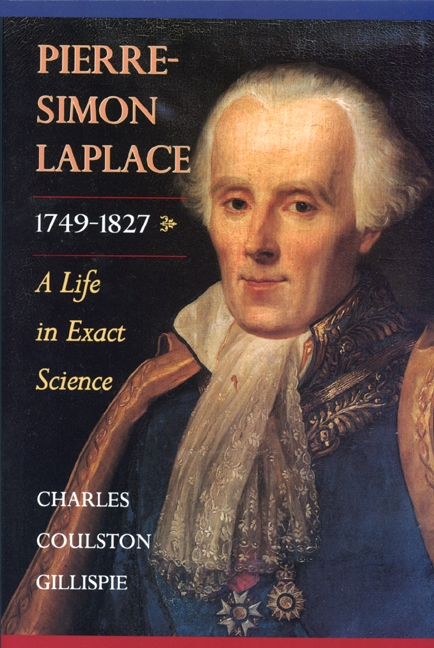
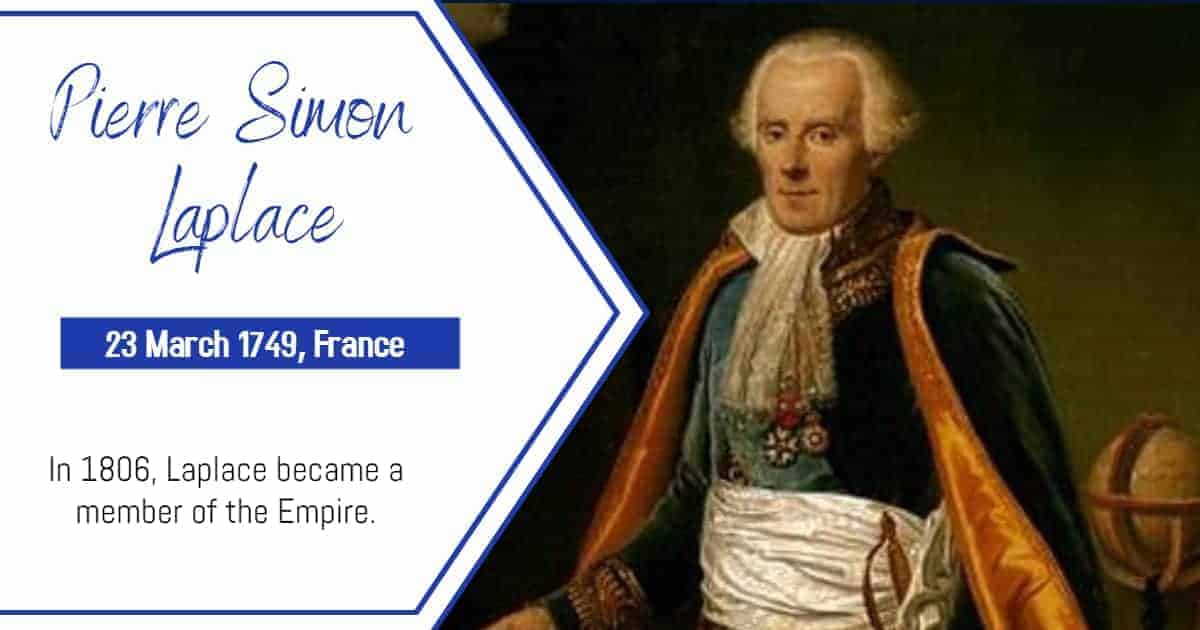
Pierre-Simon Laplace (1749–1827) was a French mathematician, astronomer, and physicist whose contributions laid the groundwork for modern celestial mechanics, probability theory, and mathematical physics. Often referred to as the "French Newton," Laplace's work bridged the gap between classical and modern science, influencing generations of thinkers in fields ranging from astronomy to statistics. His deterministic view of the universe—famously encapsulated in the idea of a cosmic calculator who could predict the future with perfect accuracy—remains one of the most provocative concepts in the history of science.
Early Life and Education
Born on March 23, 1749, in Beaumont-en-Auge, Normandy, Laplace came from humble beginnings. His father was a farmer and cider merchant, but Laplace's intellectual talents were evident from an early age. Thanks to the support of wealthy neighbors who recognized his potential, he was able to attend the Benedictine College in Caen, where he initially studied theology. However, his fascination with mathematics soon took precedence.
By the time he left for Paris in 1768, Laplace had already begun developing his mathematical prowess. He sought out Jean le Rond d'Alembert, a leading figure of the French Enlightenment, who was initially unimpressed with the young man. Undeterred, Laplace penned a memorandum on the principles of mechanics, which finally convinced d'Alembert to take him under his wing. This mentorship proved pivotal, opening doors to academic and scientific circles.
Contributions to Celestial Mechanics
Laplace's most enduring legacy lies in his work on celestial mechanics—the application of Newtonian physics to the motions of celestial bodies. His magnum opus, *Traité de Mécanique Céleste* (1799–1825), a five-volume work, synthesized and expanded upon the gravitational theories of Isaac Newton and the mathematical advances of Leonhard Euler and Joseph-Louis Lagrange.
One of his key achievements was his resolution of the long-standing problem of planetary perturbations. Newton had posited that the gravitational interactions between planets would eventually destabilize the solar system, possibly leading to its collapse. Laplace, however, demonstrated that these perturbations were in fact periodic and self-correcting, ensuring the system’s long-term stability. This conclusion reassured scientists and philosophers that the cosmos was not governed by chaos but by predictable, deterministic laws.
The Nebular Hypothesis
In addition to his mathematical work, Laplace proposed the *nebular hypothesis*, a theory explaining the formation of the solar system. He suggested that the Sun and planets originated from a rotating nebula (a cloud of gas and dust) that gradually cooled and condensed under gravity. Although later modified, this hypothesis laid the foundation for modern theories of planetary formation and remains a cornerstone of astrophysics.
Probability Theory and the Birth of Statistics
While Laplace is best known for his work in astronomy, his contributions to probability theory were equally groundbreaking. His *Théorie Analytique des Probabilités* (1812) formalized the mathematical framework of probability, introducing concepts such as generating functions, Bayesian inference, and the Central Limit Theorem.
Laplace approached probability from a philosophical standpoint, seeing it as a tool for managing uncertainty in both science and everyday decision-making. His work had profound implications for fields as diverse as actuarial science, error analysis in astronomy, and even social statistics.
The Laplace Transform
Among his mathematical innovations, the *Laplace transform* stands out as a critical tool in engineering and physics. This integral transform simplifies the analysis of linear differential equations, making it indispensable in control theory, signal processing, and quantum mechanics. Its applications extend from electrical circuits to fluid dynamics, demonstrating Laplace’s far-reaching impact.
Laplace’s Demon and Determinism
Perhaps Laplace’s most famous intellectual contribution was his articulation of *scientific determinism*. In *A Philosophical Essay on Probabilities* (1814), he imagined an all-knowing intellect—later dubbed "Laplace’s Demon"—that, if given the precise location and momentum of every particle in the universe, could calculate the entire past and future with absolute certainty.
This idea both fascinated and unsettled contemporaries. While it underscored the power of Newtonian mechanics, it also raised existential questions about free will and the limits of human knowledge. Modern chaos theory and quantum mechanics have since challenged Laplace’s rigid determinism, but his vision remains a cornerstone in debates about causality and predictability.
Political Survival and Later Years
Laplace’s career unfolded against the tumultuous backdrop of the French Revolution, the rise of Napoleon, and the Bourbon Restoration. Remarkably, he navigated these political upheavals with shrewd adaptability. He served briefly as Napoleon’s Minister of the Interior (though he was quickly replaced for being too theoretical) and was later ennobled as the Marquis de Laplace under Louis XVIII.
Despite these political engagements, Laplace remained deeply committed to science, mentoring future luminaries like Siméon Denis Poisson. He died in Paris on March 5, 1827, leaving behind a legacy that shaped the trajectory of modern science.
Conclusion (Part 1)
The first part of this exploration into Pierre-Simon Laplace’s life and work has highlighted his foundational contributions to celestial mechanics, probability theory, and mathematical physics. From his humble origins to his rise as a scientific titan of the Enlightenment, Laplace’s insights reshaped humanity’s understanding of the cosmos and the mathematical tools we use to describe it.
In the next section, we will delve deeper into Laplace’s influence on modern science, his philosophical impact, and the controversies surrounding his deterministic worldview.
Laplace’s Influence on Modern Science
Pierre-Simon Laplace’s work transcended his lifetime, permeating multiple branches of science and mathematics. His theories on celestial mechanics became the bedrock for later astronomers like Urbain Le Verrier, who used Laplace’s equations to predict the existence of Neptune. Meanwhile, his probabilistic methods laid the groundwork for statistical mechanics, a field later developed by luminaries such as Ludwig Boltzmann and Josiah Willard Gibbs.
One of the most striking examples of Laplace’s enduring influence is in astrophysics, where his nebular hypothesis evolved into modern accretion disk models, explaining not just the formation of the solar system but also the birth of galaxies. His mathematical rigor inspired physicists like James Clerk Maxwell, who applied similar analytical methods to electromagnetism, culminating in Maxwell’s equations—the foundation of classical electrodynamics.
The Laplace Operator in Physics
Laplace’s name is immortalized in the *Laplace operator* (or Laplacian), symbolized as ∇². This differential operator, central to fields like electromagnetism, fluid dynamics, and quantum mechanics, measures the divergence of a gradient in a scalar field. For example, in Schrödinger’s equation—the cornerstone of quantum mechanics—the Laplacian helps encode the wave function’s spatial curvature. Without this tool, much of modern theoretical physics would lack its mathematical precision.
The Philosophical Legacy of Determinism
Laplace’s deterministic worldview sparked debates that endure to this day. His vision of a clockwork universe, governed by exact laws without randomness, resonated with Enlightenment ideals of rationality and order. Yet, it also clashed with emerging ideas about human agency. Philosophers like Immanuel Kant and later existentialists wrestled with the tension between Laplace’s mechanical universe and the subjective experience of free will.
In the 20th century, quantum mechanics delivered a seismic blow to Laplacean determinism. Werner Heisenberg’s uncertainty principle demonstrated that at subatomic scales, precise measurement of complementary variables (like position and momentum) is fundamentally impossible—directly contradicting Laplace’s all-knowing "demon." Nevertheless, Laplace’s framework remains vital in classical physics, where deterministic models still dominate systems from planetary orbits to climate science.
Criticism and Reinterpretations
Laplace’s determinism faced criticism even among his contemporaries. Philosopher Henri Bergson argued that time’s irreducible flow defied mechanistic reduction, while mathematicians like Henri Poincaré later showed that deterministic systems (like the three-body problem in gravity) could exhibit chaotic, unpredictable behavior—a precursor to chaos theory. Today, scientists acknowledge that while Laplace’s deterministic ideal applies to many macroscopic systems, complexity and quantum randomness introduce limits to predictability.
Laplace and the Birth of Thermodynamics
Though less celebrated, Laplace’s contributions to thermodynamics were pivotal. Collaborating with chemist Antoine Lavoisier, he designed an ice calorimeter to measure heat exchange in chemical reactions. Their experiments supported the theory that heat was a form of energy—not a fluid-like "caloric," as once believed—paving the way for the first law of thermodynamics.
Simultaneously, Laplace’s probabilistic thinking foreshadowed the second law of thermodynamics. Ludwig Boltzmann’s statistical interpretation of entropy—the idea that disorder tends to increase—echoed Laplace’s earlier insights about the role of probability in physical laws. Thus, though Laplace never formulated thermodynamics himself, his methods influenced its mathematical underpinnings.
The Laplace-Adjusted Probability
Named in his honor, *Laplace’s rule of succession* is a Bayesian method for estimating probabilities from limited data. For example, if a coin lands heads-up three times in three flips, a naive estimate might assign a 100% probability to heads. Laplace’s rule, however, tempers extreme conclusions by adding pseudo-observations, yielding a more cautious estimate. This principle remains foundational in machine learning, where algorithms handle sparse data using Bayesian priors—a direct descendant of Laplace’s formalism.
Political and Social Engagement
Beyond science, Laplace played a surprising role in France’s educational and political reforms. As a member of the Bureau des Longitudes, he standardized the metric system during the Revolution, advocating for decimal-based units that simplified scientific communication. Later, under Napoleon, he helped reorganize the École Polytechnique, ensuring advanced mathematical training for engineers and military officers—many of whom applied Laplace’s theories in ballistics and navigation.
His political flexibility, however, invited criticism. Laplace’s willingness to serve successive regimes—revolutionary, imperial, and monarchist—led some to accuse him of opportunism. Yet others argued that his pragmatism safeguarded French science during turbulent times, preserving institutions until stability returned.
The Laplace-Bayes Connection
Though Thomas Bayes’ theorem predated Laplace, it was Laplace who recognized its generality and power. His refinement of Bayesian inference—treating probabilities as degrees of rationality rather than frequencies—revolutionized fields from medicine (diagnostic testing) to cryptography. Today, Bayesian networks underpin algorithms in spam filters, genomic sequencing, and even artificial intelligence.
Legacy in Mathematics
Laplace’s mathematical innovations extended beyond transforms and operators. His work on special functions, like Legendre polynomials and Bessel functions, became essential tools in solving differential equations. He also advanced techniques for approximating integrals, later refined into what we now call *asymptotic analysis*.
Perhaps most influential was his approach to perturbation theory, which allowed scientists to approximate solutions for nearly unsolvable problems—such as the Moon’s irregular orbit. This method remains indispensable in fields ranging from quantum field theory to aerospace engineering.
Conclusion (Part 2)
This second installment has explored Laplace’s far-reaching impact, from the Laplacian’s role in physics to his philosophical clashes with indeterminism. His fingerprints linger in thermodynamics, machine learning, and even the metric system—proof that his genius bridged theory and practicality.
In the final section, we’ll examine Laplace’s lesser-known works, his influence on 19th-century thought, and how modern science reconciles—or rejects—his deterministic vision. From statistical mechanics to AI, the legacy of Laplace’s "demon" continues to provoke and inspire.
Laplace’s Lesser-Known Works and Final Years
While Pierre-Simon Laplace is celebrated for his monumental theories on celestial mechanics and probability, several of his lesser-known contributions reveal the astonishing breadth of his intellect. Among these was his work on capillary action, where he derived the laws governing the rise and fall of liquids in narrow tubes—a phenomenon crucial to understanding plant physiology and modern microfluidics. He also developed theories on the speed of sound, correcting Newton’s earlier underestimation by accounting for adiabatic processes in air, laying groundwork later expanded by Laplace’s contemporary, Siméon Denis Poisson.
In his later years, Laplace turned his attention to the nascent field of geodesy, refining methods for measuring Earth’s shape. His corrections to the length of the meridian arc—used in defining the meter—demonstrated his commitment to precision in both science and practical measurements. These efforts cemented his reputation not just as a theorist, but as a scholar deeply engaged in the empirical refinement of natural knowledge.
The Final Synthesis: Exposition du Système du Monde
Published in 1796, Exposition du Système du Monde was Laplace’s masterful attempt to explain complex astronomical concepts to a broader audience. Unlike his mathematically dense Mécanique Céleste, this work was written in clear prose, illustrating everything from planetary motion to tides without equations. Here, Laplace famously presented his nebular hypothesis not as dogma, but as a "probable scenario," showcasing his nuanced understanding of scientific epistemology. The book’s success—running through multiple editions—revealed his skill as both a scientist and communicator, influencing educators and popularizers of science for generations.
Laplace and the 19th-Century Scientific Landscape
Laplace’s death in 1827 did not mark the end of his influence. On the contrary, his deterministic framework became a battleground for 19th-century thinkers grappling with the limits of science. The French positivist Auguste Comte, for instance, embraced Laplace’s emphasis on empirical laws but rejected the “demon” as metaphysical speculation. Meanwhile, thermodynamicists like Sadi Carnot relied implicitly on Laplace’s insights about energy even as they moved decisively beyond a strictly Newtonian worldview.
In mathematics, Laplace’s methods were refined by the likes of Carl Friedrich Gauss and Bernhard Riemann, whose differential geometry extended Laplacian analysis to curved spaces—later proving essential for Einstein’s general relativity. Even as new paradigms emerged, Laplace’s conservative insistence on mathematical rigor became a gold standard, preventing premature speculation in fields like electromagnetism and kinetic theory.
A Controversial Legacy: The Laplace Priority Disputes
Historical scholarship has since revealed that Laplace was not always generous in crediting predecessors. His belated acknowledgment of Lagrange’s contributions to potential theory, or his muted recognition of Bayes’ earlier probabilistic work, sparked debates about intellectual honesty. Yet contemporaries like Poisson noted that Laplace’s syntheses often transcended incremental advances, transforming raw mathematical tools into universal principles—a distinction that may excuse some of his territorial tendencies.
Modern Reassessments of Laplacean Determinism
The 20th century’s dual revolution—quantum uncertainty and chaos theory—seemed to bury Laplace’s clockwork universe. However, modern science offers a more nuanced verdict. While quantum mechanics introduced fundamental randomness, phenomena such as superconductivity and Bose-Einstein condensates exhibit near-perfect determinism at macroscopic scales. Similarly, chaos theory, which shows how small perturbations can unpredictably amplify, operates within deterministic equations—echoing Laplace’s view that complexity, not divine intervention, explained apparent irregularities in nature.
In computer science, Laplace’s vision finds unexpected resonance. Machine learning algorithms, particularly neural networks, operate as “black-box” predictors—approximating Laplace’s demon by forecasting outcomes from vast datasets without explicit mechanistic understanding. Meanwhile, climate models rely on probabilistic Laplacian approaches to weigh uncertainties in long-term projections.
The Laplace Renaissance in Complex Systems
Recent interdisciplinary sciences—network theory, systems biology, and econophysics—have rehabilitated aspects of Laplace’s thinking. For example, protein-folding simulations use deterministic molecular dynamics (a Laplacian technique) despite quantum-scale randomness, because statistical averaging restores predictability. Likewise, precision cosmology’s ability to retroactively model the Big Bang with stunning accuracy would have delighted Laplace, proving his dictum that enough data can render even cosmic history computationally tractable.
Education and Mentorship: Laplace’s Human Legacy
Beyond equations, Laplace shaped science through his students. His mentorship of Poisson—whose distribution laws are foundational in statistics—helped consolidate probability as a rigorous discipline. Other protégés, like Jean-Baptiste Biot, advanced optics and polarimetry, while Dominique François Arago became a pivotal figure in both physics and liberal politics.
Laplace’s pedagogical ethos emphasized clarity over ornamentation. His insistence that “probability is common sense reduced to calculation” underscored his belief that profound truths required lucid exposition—a principle now enshrined in scientific writing standards. Ironically, his own Mécanique Céleste was notorious for omitting detailed proofs (leading to the quip that it “offered hints to the student and apologies to the philosophers”), but this very terseness challenged successors to fill gaps rigorously.
Civic Science and the Laplace Model
Laplace’s career also offers lessons in the civic role of scientists. His navigation of revolutionary politics—trimming sails without abandoning core principles—prefigured the delicate balance modern researchers strike between funding imperatives and intellectual independence. His advocacy for state-supported scientific institutions, like the Paris Observatory, demonstrated early recognition that “big science” required sustained investment—a model now universal from CERN to NASA.
Conclusion: The Enduring Colossus
From nebular hypotheses to neural networks, Pierre-Simon Laplace’s legacy is a tapestry of audacious theorizing and meticulous calculation. His deterministic universe may have fractured under modernity’s microscope, but his mathematical tools and philosophical frameworks remain startlingly relevant. In an age drowning in data yet starved for predictive coherence, Laplace’s union of probability and determinism offers a compass—not as dogma, but as heuristic inspiration.
The tale of Laplace’s demon, then, is not one of obsolescence, but of metamorphosis. Where Laplace envisaged a single intellect calculating all, we now deploy distributed supercomputers and probabilistic algorithms to approximate that vision within human limits. This humbling pivot—from certainty to calibrated confidence—may be his truest gift to posterity: not omniscience, but the methodology to navigate an uncertain cosmos with rigor and imagination.
As we refine exoplanet discoveries using his perturbation methods or optimize AI with Bayesian-Laplacian hybrids, we do more than honor history—we reaffirm that the finest science, like Laplace’s, dares to yoke the calculable to the ineffable, ever probing the boundary between the inevitable and the unknown.