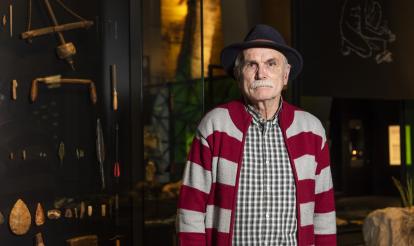
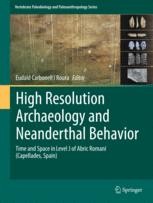
Eudald Carbonell: Unraveling the Mysteries of Human Evolution
Introduction to a Pioneering Archaeologist
Eudald Carbonell is one of the most influential figures in contemporary archaeology and anthropology. Born on February 17, 1953, in Ribes de Freser, Catalonia, Spain, Carbonell has dedicated his life to the study of human evolution, prehistoric technology, and the origins of human cognition. His groundbreaking work at the Atapuerca archaeological site in northern Spain has reshaped our understanding of early human history in Europe.
A professor of Prehistory at the Rovira i Virgili University in Tarragona and co-director of the Atapuerca research project, Carbonell has become synonymous with cutting-edge archaeological methodology and revolutionary theories about human development. His interdisciplinary approach combines archaeology, paleoanthropology, geology, and cutting-edge scientific techniques to reconstruct our ancestral past.
Early Life and Academic Formation
Carbonell's fascination with human origins began at an early age. Growing up in the mountainous regions of Catalonia, he developed a deep appreciation for landscapes shaped by geological time. He studied at the University of Barcelona, where he earned degrees in both Geology and Prehistory - an unusual combination that would later define his holistic approach to archaeological research.
His doctoral thesis, completed in 1982 at the University of Paris (Pierre and Marie Curie Campus), focused on the technological evolution of early humans, particularly the transition from Oldowan to Acheulean tool cultures. This work established Carbonell as an emerging authority on prehistoric technology and its implications for cognitive development.
Carbonell's international education continued with postdoctoral studies at various institutions including the University of California, Berkeley, where he was exposed to new approaches in evolutionary anthropology. These formative experiences shaped his belief in archaeological research as a global scientific endeavor requiring collaboration across borders and disciplines.
The Atapuerca Revolution
Carbonell's most significant contributions began when he joined the Atapuerca project in the 1980s. The Sierra de Atapuerca, a small limestone hill near Burgos in northern Spain, had been recognized as an important prehistoric site since the late 19th century, but it was Carbonell and his colleagues who transformed it into one of the most important paleoanthropological sites in the world.
As co-director of the Atapuerca research team, Carbonell helped develop rigorous excavation methodologies that revolutionized the field. The site's Gran Dolina cave yielded groundbreaking discoveries, including the fossils of Homo antecessor in 1994 - a possible common ancestor of Neanderthals and modern humans dating back approximately 800,000 years.
Under Carbonell's leadership, Atapuerca became a treasure trove of prehistoric evidence, providing:
- The oldest known hominin remains in Western Europe
- Evidence of controlled fire use dating back 400,000 years
- Extraordinary samples of early hominin behavior and social structure
- Critical insights into human cannibalism and mortuary practices
Theoretical Contributions and Scientific Philosophy
Beyond his field discoveries, Carbonell has developed influential theories about human evolution. His "Social Dysfunction Theory" proposes that technological, biological, and social evolution are deeply interconnected. He argues that technological advances create social asymmetries which in turn drive further biological and cultural evolution - a perspective that challenges traditional models of linear progress.
Carbonell also introduced the concept of "techno-economies" to describe how hominin groups organized their technological knowledge and material production. His work emphasizes that tool production wasn't merely about survival, but represented early forms of accumulated knowledge and social transmission - the foundations of human culture.
A key aspect of Carbonell's philosophy is his emphasis on what he calls "conscious evolution" - the idea that humanity has reached a point where we must actively guide our own evolutionary development through ethical scientific progress. This concept features prominently in his later work on technological evolution and human futures.
Methodological Innovations
Carbonell's approach to archaeology is distinguished by his innovative methodologies:
- Three-dimensional recording systems: He developed advanced techniques for documenting finds in situ with millimeter precision.
- Microstratigraphic analysis: Applying geological methods to study the finest layers of archaeological deposits.
- Experimental archaeology: Reconstructing prehistoric technologies to understand manufacturing processes and cognitive requirements.
- Interdisciplinary integration: Combining geology, physics, chemistry, and biology to extract maximum information from archaeological evidence.
Perhaps most importantly, Carbonell instilled a culture of meticulous documentation and long-term data preservation at Atapuerca, ensuring that future generations of researchers will be able to benefit from and re-examine the team's findings.
Impact and Recognition
The scientific community has recognized Carbonell's contributions through numerous awards and honors, including:
- Prince of Asturias Award for Scientific and Technical Research (1997)
- National Prize for Archaeology and Paleontology (2000)
- Honorary Doctorate from the University of Bordeaux (2015)
- Member of the French Legion of Honor (2011)
Beyond academic circles, Carbonell has worked tirelessly to communicate science to the public. He has authored numerous popular science books, participated in documentary films, and given countless lectures to make archaeological discoveries accessible to broader audiences. His ability to connect prehistoric research with contemporary human concerns has made him one of Spain's most visible scientists.
Expanding the Horizons of Human Evolution Research
Building upon his groundbreaking work at At the Atapuerca site, Carbonell has extended his research to other significant archaeological locations across Europe and Africa. His comparative studies have helped establish connections between different hominin populations and their technological developments. This broader perspective has allowed him to develop more comprehensive theories about the spread of early humans across continents and the environmental factors that influenced their migration patterns.
One of Carbonell's most ambitious projects involves tracing the technological evolution of early humans from Africa to Europe. His research suggests that the development of stone tools followed a complex pattern of innovation, adaptation, and sometimes regression, rather than a simple linear progression. This work has challenged traditional views of human technological advancement and opened new avenues for understanding how early humans adapted to different environments.
Pioneering Digital Archaeology
In recent years, Carbonell has embraced digital technologies to enhance archaeological research. His team has developed sophisticated 3D modeling techniques to reconstruct archaeological sites and artifacts with unprecedented accuracy. These digital reconstructions allow researchers to analyze finds from multiple angles and share them with colleagues worldwide without physical access to the original materials.
The application of artificial intelligence in archaeological analysis has become another area of Carbonell's focus. Machine learning algorithms are being used to identify patterns in stone tool production that might escape human observation. This innovative approach has already yielded new insights into the cognitive abilities of early humans and the transmission of technological knowledge between generations.
Climate and Human Evolution
Carbonell's research has increasingly focused on the relationship between climate change and human evolution. His studies demonstrate how shifting environmental conditions influenced the migration patterns, technological adaptations, and even biological evolution of early humans. By analyzing sediment layers and fossil records, his team has reconstructed paleoclimatic conditions at various stages of human prehistory.
This research has particular relevance today as humanity faces unprecedented climate challenges. Carbonell argues that understanding how our ancestors adapted to environmental changes can provide valuable lessons for contemporary society. His work in this area has contributed to the emerging field of evolutionary climatology, which examines the long-term relationship between Earth's climate and biological evolution.
Educational Initiatives and Public Engagement
Beyond his research, Carbonell has dedicated significant effort to education and public outreach. He established the Atapuerca Foundation, which organizes educational programs, exhibitions, and conferences to bring archaeological discoveries to the general public. The foundation's work has helped make Atapuerca one of Spain's most visited archaeological sites and a UNESCO World Heritage Site.
Carbonell has also developed innovative educational programs that bring archaeology into schools. His "Young Archaeologists" initiative introduces children to scientific methods through hands-on experiences with archaeological techniques. These programs aim to inspire the next generation of researchers while fostering public appreciation for cultural heritage.
Collaborative International Research
Recognizing that human evolution is a global phenomenon, Carbonell has built extensive international collaborations. His research network includes scientists from Africa, Asia, and the Americas, working together to piece together the complex puzzle of human origins. These collaborations have led to comparative studies of tool technologies across continents and new insights into the timing of human migrations.
One particularly fruitful collaboration involves researchers in Georgia, where the discovery of 1.8 million-year-old hominin fossils has provided crucial evidence about early human dispersal from Africa. Carbonell's team has worked closely with Georgian archaeologists to compare technological developments between the two regions, revealing surprising similarities in early tool-making traditions.
Controversies and Scientific Debates
Carbonell's work has not been without controversy. His interpretations of certain finds at Atapuerca have sparked debates within the scientific community. Some colleagues have questioned his conclusions about the cognitive abilities of Homo antecessor and the timing of human arrival in Europe. These debates, however, have stimulated productive discussions that have advanced the field as a whole.
One particularly contentious issue involves Carbonell's interpretation of certain bone modifications as evidence of ritualistic behavior among early humans. While some researchers see these as signs of symbolic thought, others argue they could result from more mundane activities. These ongoing debates demonstrate the dynamic nature of paleoanthropology and the importance of rigorous scientific discourse.
Future Directions in Human Evolution Research
Looking ahead, Carbonell is focusing on several promising research directions. One involves applying genomic analysis to archaeological remains to better understand the relationships between different hominin groups. Advances in DNA extraction techniques now allow scientists to retrieve genetic material from increasingly ancient fossils, opening new possibilities for tracing human ancestry.
Another emerging area of interest is the study of ancient proteins preserved in bones and teeth. These biomolecules can provide information about diet, disease, and even behavior that complements what can be learned from bones and artifacts alone. Carbonell's team is at the forefront of developing methods to extract and analyze these fragile biological traces.
Carbonell is also exploring the potential of virtual reality to recreate prehistoric environments and behaviors. These immersive simulations could help researchers test hypotheses about how early humans interacted with their surroundings and with each other. Such technologies may revolutionize how we study and teach human prehistory.
Legacy and Continuing Influence
As Carbonell's career enters its later stages, his influence on archaeology and anthropology continues to grow. The methods he developed at Atapuerca have become standard practice at archaeological sites worldwide. His students and collaborators now lead important research projects across the globe, extending his intellectual legacy.
Perhaps most significantly, Carbonell has changed how we think about human evolution. His work has demonstrated that our ancestors were not primitive beings struggling for survival, but creative problem-solvers who developed sophisticated technologies and social structures. This more nuanced view of human prehistory has profound implications for how we understand our place in nature and our relationship with technology today.
Carbonell's career stands as a testament to the power of interdisciplinary research and long-term commitment to scientific inquiry. His work reminds us that understanding our deep past is essential for navigating the challenges of the present and future. As he continues to push the boundaries of archaeological science, the field eagerly anticipates what new discoveries and insights will emerge from his ongoing investigations.
The Intersection of Archaeology and Digital Technologies
In the final decades of his career, Carbonell has embraced the digital revolution in archaeology with exceptional vision. The Atapuerca Digital Project, initiated under his guidance, represents one of the world's most comprehensive efforts to integrate virtual technologies with archaeological research. This initiative combines photogrammetry, 3D laser scanning, and augmented reality to create interactive models of excavation sites that preserve every detail for future study while allowing remote access for researchers globally.
Carbonell's team has developed pioneering protocols for "digital preservation" of archaeological contexts, ensuring that even after artifacts are removed from their original resting places, their precise spatial relationships remain documented. This approach has proven particularly valuable for complex palimpsests - archaeological layers where multiple occupations overlap - allowing researchers to virtually reconstruct temporal sequences that would otherwise be impossible to visualize.
Reconstructing Prehistoric Minds
Carbonell's most intellectually ambitious work explores the evolution of human cognition through material culture. His Cognitive Archaeology Laboratory employs experimental approaches to recreate ancient technologies, tracing the mental processes required at each production stage. By training modern humans to manufacture stone tools using prehistoric techniques, Carbonell's team has gained unprecedented insights into:
- The neural demands of different tool-making traditions
- The learning curves associated with various technologies
- The social transmission requirements for complex techniques
- The cognitive thresholds marking major evolutionary transitions
This work bridges archaeology and neuroscience, suggesting specific links between technological complexity and brain development. Carbonell hypothesizes that certain tool forms could only emerge after particular cognitive capacities evolved, providing a material record of our ancestors' developing minds.
The Social Archaeology of Early Humans
Moving beyond traditional lithic analyses, Carbonell has pioneered "Social Archaeology" approaches that extract information about group dynamics from material remains. His studies of discard patterns, spatial organization of living spaces, and tool repair behaviors have revealed surprising sophistication in early human social structures. Findings from Atapuerca suggest that by 500,000 years ago, hominins exhibited:
- Division of labor by skill level
- Intergenerational knowledge transfer
- Territorial behaviors
- Complex foraging strategies requiring coordination
These insights fundamentally change our perception of pre-Homo sapiens societies, showing social complexity emerged much earlier than previously assumed.
Fire and Humanization
Carbonell's investigations into controlled fire use at Atapuerca have produced some of the most compelling evidence for early pyrotechnology in Europe. His team's microstratigraphic analyses of combustion features demonstrate recurrent fire use dating back at least 400,000 years. Detailed studies of these ancient hearths reveal:
- Multiple fire-making techniques
- Specialized use of different wood types
- Spatial organization around hearths
- Possible ritual uses of fire
This work positions fire as a crucial "humanization technology" that fundamentally transformed our ancestors' biology, social organization, and cognitive development - a theme Carbonell explores in his popular science writings.
Confronting the Anthropocene
In recent years, Carbonell has applied his evolutionary perspective to contemporary global challenges. His concept of "conscious evolution" argues that humanity must now guide its own development through ethical technology choices. He sees parallels between past evolutionary crossroads and current dilemmas regarding artificial intelligence, genetic engineering, and environmental management.
Carbonell warns that without deliberate stewardship, human cultural evolution could lead to "technological speciation" - a divergence between enhanced and unenhanced humans that could fragment our species. His proposals for mitigating this risk include:
- Universal access to enhancement technologies
- Global cooperation on evolutionary ethics
- Integration of paleoanthropological wisdom into policymaking
- Development of "evolutionary education" programs
The Atapuerca Museum System
Carbonell's vision for public archaeology materialized in the Museum of Human Evolution in Burgos, which serves as the hub of an extensive network of research and educational facilities. This innovative museum integrates original fossils with immersive exhibits showing evolutionary processes in action. Key features include:
- Working laboratories visible to visitors
- Interactive evolutionary timelines
- Reconstructed paleoenvironments
- Real-time connections to ongoing excavations
The museum complex has become a model for science communication, attracting over 300,000 visitors annually while maintaining rigorous research standards.
Carbonell's Evolutionary Humanism
Philosophically, Carbonell advocates for an "evolutionary humanism" that recognizes our species' deep history while embracing responsibility for our future development. His writings emphasize that understanding our origins is essential for making wise choices about humanity's trajectory. Key tenets include:
- Technology as an extension of biological evolution
- Collective intelligence as our species' defining trait
- Interdependence as the lesson of human prehistory
- Scientific knowledge as the foundation for ethical progress
This perspective informs Carbonell's critiques of creationism, anti-scientific movements, and short-term political thinking that ignores evolutionary realities.
Final Reflections on a Transformative Career
As we survey Carbonell's extraordinary contributions, several key themes emerge. First, his work demonstrates that material culture - stone tools, fire residues, butchery marks - can reveal surprisingly nuanced aspects of prehistoric cognition and society. Second, his career shows the power of sustained, systematic investigation; Atapuerca's revelations came through decades of meticulous work rather than single dramatic discoveries.
Finally, Carbonell exemplifies the "complete scientist" - equally committed to rigorous excavation, theoretical innovation, technological advancement, and public communication. His ability to connect specialized research with broad human concerns makes his work relevant far beyond academic circles.
Looking forward, Carbonell's interdisciplinary approaches and long-term perspective offer valuable models for addressing contemporary challenges. As humanity faces climate change, technological disruption, and social transformation, understanding our deep history - as Carbonell has helped reveal it - may provide essential guidance for navigating an uncertain future.