Ptolemy I Soter: The Rise of a Macedonian Pharaoh
In the pages of history, few figures have successfully transitioned from the chaos of conquest to the consolidation of a grand dynasty. Ptolemy I Soter, a key player in the epochal upheaval following Alexander the Great's reign, not only wove his name into the annals of history but also established the groundwork for a dynasty that endured for nearly three centuries. This Macedonian general, turned self-proclaimed king, deftly navigated the turbulent waters of post-Alexandrian society, establishing a legacy that has resonated through millennia.
The Early Years and Rise to Power
Born circa 367 BCE, Ptolemy's early life unfolded amid the pinnacle of Macedonian ambition. He was a close companion of Alexander the Great, nurtured in the traditions of classical Hellenistic education and military prowess. Ptolemy’s roots were steeped in nobility, with some accounts suggesting he may have had familial links to Alexander himself, possibly through his mother Arsinoe, hinting at a complex web of dynastic allegiances.
As a trusted general and confidante of Alexander, Ptolemy's prowess was evident in various military campaigns. From the searing sands of Egypt to the mountains of India, Ptolemy's loyalty to Alexander never waned. Upon Alexander's untimely death in 323 BCE, the sprawling empire was left in a precarious balance, with satraps and generals vying for control over fragments of the vast dominion.
The Satrap of Egypt: Initiating Rule
In the chaotic partitioning of Alexander's empire, Ptolemy was appointed satrap of Egypt, a strategically significant and wealthy province. His governance commenced amid a maelstrom of political maneuvering and alliance-building, necessitating astute judgment and strategic foresight. Ptolemy seized his opportunity with decisive actions, notably securing Alexander's body, a revered symbol of legitimate rule, and bringing it to Memphis—this act alone solidified his authority in the eyes of both the Macedonians and the Egyptians.
Ptolemy's tenure as satrap soon witnessed the intricacies of regional power dynamics. He recognized the immense potential afforded by Egyptian resources, particularly the fertile lands of the Nile. Ptolemy embarked on substantial infrastructure projects aiming to rejuvenate agriculture, restore stability, and invigorate economic prosperity. Such initiatives were pivotal not only in securing domestic peace but also in establishing Egypt as a pivotal force capable of independent assertion in the Hellenistic world.
From Satrap to King: The Birth of the Ptolemaic Kingdom
Ptolemy’s astute administrative skills combined with military might gradually steered him from a satrap's modest authority towards the regal ambition of a kingdom. By 305 BCE, Ptolemy declared himself Pharaoh, marking the inception of the Ptolemaic Kingdom. This bold move echoed a meticulous blend of Macedonian and Egyptian traditions, aligning strategically with native customs to secure local support. The adoption of pharaonic iconography, rituals, and temple sponsorships underscored Ptolemy’s adept management of cultural integration, making him a ruler not just by force, but by acceptance as well.
The newly minted Pharaoh effectively centralized his power, maneuvering deftly amid the engagements and alliances that ensued as other Diadochi (successor) rulers rose and fell across the fragmented empire. Ptolemy's strategic insight was evident in consolidating control over essential territories bordering Egypt, including Cyprus and parts of modern-day Libya, thereby buttressing his nascent kingdom against potential threats.
The establishment of Ptolemaic rule also heralded a golden age of cultural flourishing and scientific advancement under Ptolemy I’s patronage. Alexandria, the kingdom's pulsating heart, burgeoned into a formidable center of learning and cross-cultural dynamism, home to scholars, poets, and philosophers whose works would resonate long beyond Greece's borders. Through the patronage of the storied Library of Alexandria, Ptolemy laid the intellectual foundation for an enduring legacy of knowledge and inquiry.
In conclusion, Ptolemy I Soter's rise from a Macedonian general to the sovereign of Egypt echoes the transformational turbulence of his era: a testament to the interplay of ambition, cultural adaptation, and dynastic vision. As the founder of a lasting dynasty in Egypt, Ptolemy’s legacy is interwoven with the very fabric of ancient and subsequent cultures, rendering him a monumental figure in both Egyptian and Hellenistic history.
The Consolidation of Power and Cultural Patronage
Once Ptolemy I Soter secured his position as Pharaoh, he embarked on the significant task of consolidating his rule, both domestically and on the broader Hellenistic stage. His reign wasn't merely about asserting dominance through military conquest or political stratagems; it was also characterized by an intellectual and cultural renaissance that left an indelible mark on the ancient world.
Ptolemy's leadership was marked by a conscious effort to harmonize Greek and Egyptian cultures. He skillfully incorporated Egyptian religious customs into his court, taking on traditional titles such as "Soter," meaning "Savior," which resonated deeply with his subjects. By blending Greek and Egyptian traditions, Ptolemy fostered a sense of unity in a culturally diverse population. This syncretic approach was instrumental in crafting an enduring identity for his nascent empire, one that survived long after his tenure.
The Architectural and Scientific Landmarks of Ptolemy's Egypt
Under Ptolemy's reign, Alexandria rose to become a beacon of architectural splendor and intellectual achievement. The city itself was a masterstroke of urban planning, featuring Halicarnassian architect Dinocrates' vision that conveyed both grandeur and cultural sophistication. The construction of the Pharos of Alexandria, one of the Seven Wonders of the Ancient World, was initiated in his time and became a symbol of maritime prowess and engineering excellence.
More than just grand edifices, the heart of Alexandria pulsed with vibrant intellectual life. At its core was the Library of Alexandria, arguably the most ambitious and significant repository of knowledge in the ancient world. Ptolemy’s vision for this institution was grandiose—not just as a collection of texts but as a hub of intellectual exchange. Scholars, mathematicians, poets, and scientists flocked to Alexandria, drawn by the promise of patronage and the city’s cosmopolitan allure.
Ptolemy, himself a man of learning, encouraged these intellectuals by championing the translation of important texts and the development of diverse fields of study. The Ptolemaic era birthed advancements in astronomy, mathematics, and medicine. Notably, Ptolemy's patronage extended to individuals such as Euclid, whose "Elements" laid the groundwork for modern geometric theory, and Eratosthenes, who remarkably calculated the circumference of the Earth with surprising accuracy.
Navigating the Perils of the Diadochi Wars
Even as he fostered cultural and scientific achievements, Ptolemy Soter was deeply embroiled in the Diadochi Wars, the series of conflicts among Alexander’s former generals over control of the empire. His military acumen was frequently tested as alliances shifted and conflicts erupted across the Mediterranean basin. The strategic necessity of maintaining a strong military presence was evident in his careful selection of capable generals and the fortification of Egypt's borders.
Ptolemy's political and military strategy was characterized by careful diplomacy and selective engagement in warfare. This mastery of statecraft allowed him to extend influence while avoiding the pitfall of overextension that plagued many of his contemporaries. His diplomatic maneuvers often involved strategic marriages and alliances that fortified his position within the complex power structure of the post-Alexandrian world.
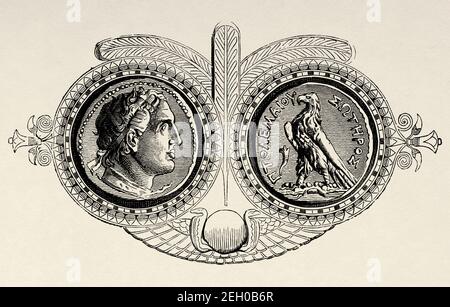
Ptolemy’s success in these endeavors did not only rest on military might but also on his acute understanding of propaganda and legitimacy. By commissioning art and coinage that depicted him favorably, often in the company of Alexander the Great, he bolstered his image both at home and abroad. Such portrayals reinforced his narrative as a rightful successor to Alexander’s legacy, aligning himself as a champion of Greek culture within his Egyptian dominion.
The Legacy of Ptolemy I Soter
Ptolemy I Soter’s reign set the foundations for a dynasty that would last until the Roman annexation of Egypt in 30 BCE. His strategies of cultural integration and political resilience laid the groundwork for a period of prosperity and unity within the diverse geographic and ethnic landscape of ancient Egypt. The Ptolemaic Kingdom transformed Egypt into a powerful and influential state, exerting a profound influence throughout the Hellenistic world.
Yet, his legacy is not without its complexities. While Ptolemy adeptly fostered a golden era of cultural and scientific achievement, the Ptolemaic dynasty faced challenges of lineage disputes and succession crises. These troubles often stemmed from the complex web of familial alliances and intermarriages that were both tools of political strategy and sources of internal strife. Nevertheless, the durability of the dynasty, initiated by Ptolemy, speaks to the solid base of power and culture he effectively instituted.
In contemplating the legacy of Ptolemy I Soter, historians find a compelling narrative of a ruler who balanced martial prowess with visionary leadership. The synthesis of Greek and Egyptian elements under his rule not only stabilized his kingdom but also enriched both cultures, creating a unique symbiosis that continued to evolve long after his death. As a general-turned-king, Ptolemy's life's work was a testament to the transformative potential of visionary leadership in an era of unprecedented change.
The Challenges of Succession and Dynasty
While Ptolemy I Soter's reign laid a robust foundation for Egypt's Hellenistic age, the challenge of securing his dynasty's future loomed large. As with many ruling families, the issue of succession was fraught with peril and potential for internecine conflict. To ensure a smooth transition, Ptolemy engaged in meticulous planning to ensure the continuity of his lineage and the kingdom’s stability.
In an astute political maneuver, Ptolemy abdicated in 285 BCE in favor of his son, Ptolemy II Philadelphus, thereby pre-empting the often uncontrollable chaos that followed a ruler's death. Ptolemy I’s decision to relinquish power while still alive was a calculated risk, reflective of his sophisticated understanding of governance and legacy. This action mitigated potential struggles over succession, allowing for a relatively peaceful transition of power and setting a precedent for future rulers.
Ptolemy II's ascension to the throne was accompanied by the continuation of his father's policies. His reign further strengthened the cultural and economic infrastructure established by Ptolemy I, maintaining Egypt's status as a beacon of Hellenistic brilliance. Despite occasional familial discord, the Ptolemaic dynasty sustained through the strategic marriages and alliances designed to fortify its dominion across the volatile Mediterranean landscape.
Ptolemy’s Influence on Religion and Integration
Religiously, Ptolemy I Soter's reign marked a significant integration of Greek and Egyptian pantheons. Recognizing the importance of religious unity in a multicultural society, Ptolemy promoted the worship of the syncretic deity Serapis, blending elements of Greek and Egyptian religious beliefs. Serapis became a unifying figure, worshipped across Egypt and by Hellenistic diasporas, effectively bridging cultural divides.
This religious fusion was both a pragmatic political strategy and a genuine reflection of Ptolemy's vision of a cohesive society. The Serapeum, a temple dedicated to Serapis, became a focal point of worship and theological study, further cementing Alexandria’s status as a spiritual as well as intellectual epicenter. The coexistence of Egyptian deities with Greek gods under Ptolemaic rule exemplified a model of cultural integration that preempted the complexities of global multiculturalism centuries later.
Furthermore, Ptolemy's encouragement of coexistence fostered not just peace, but a vibrant cultural tapestry that manifested in the arts and sciences. The Ptolemaic approach to governance not only fortified their power but emboldened Egyptian identity within the global dialogue fostered by Hellenistic culture—a dialogue that fed into the rich historical and cultural legacies witnessed today.
The Enduring Legacy of Ptolemy I Soter
Ptolemy I Soter's legacy is intricately woven into the narrative of both Hellenistic and ancient Egyptian history. His transformation of Egypt into a pivotal Hellenistic state set a precedent not only for subsequent rulers of Egypt but for the concept of governance through cultural symbiosis. Under his guidance, Egypt became a center of intellectual magnificence and economic prosperity.
The dynasty’s endurance—culminating nearly three centuries with Cleopatra VII’s famous rule before succumbing to Roman annexation—speaks volumes of the groundwork Ptolemy laid. The Ptolemaic dynasty’s prominence in history owes much to its ability to blend Greek innovation and Egyptian tradition, yielding a unique cultural and political entity that has fascinated scholars and historians through the ages.
Historians frequently cite Ptolemy I’s pragmatic leadership style, strategic marriages, and cultural policies as cornerstones of his successful reign. These elements contributed not only to his family's hold on power but also to the shaping of a dynamic society enriched by cultural cross-fertilization. His success outlined a blueprint of governance that embraced diversity, a concept increasingly relevant in today’s multifaceted global landscape.
Ptolemy I's impact reaches beyond his political achievements to an enduring symbolic legacy caught between myth and history. As both a savior and a founder, his efforts remind us of the potential of visionary leadership to craft societies that balance the chaos of innovation with the stability of tradition—a balancing act as relevant today as it was nearly two and a half millennia ago.
In reflecting on Ptolemy I Soter's life and legacy, we observe the timeless influence of a leader who harnessed the lessons of the past to forge a new path for the future. His mastery in the art of governance was not merely in wielding power but in understanding the profound impact of culture as a unifying force. As history turns its gaze to newer epochs, the story of Ptolemy I Soter remains a testament to the enduring power of visionary rule in shaping the cultural, intellectual, and political landscapes of civilization.


Ptolemy III Euergetes: The Philhellene Pharaoh of Egypt
The sands of time have all but buried the echoes of ancient Egypt, yet every so often a figure emerges whose actions reverberate through history, leaving an indelible mark on human civilization. Ptolemy III Euergetes, the third ruler of Egypt's Ptolemaic Dynasty, was one such figure. His reign, from 246 to 222 BCE, stands as one of the most prosperous and influential periods in the ancient world, marked by military conquests, cultural patronage, and economic prosperity.
Ascension to the Throne
Ptolemy III was born around 284 BCE to Ptolemy II Philadelphus and Arsinoe I. As the grandson of Ptolemy I Soter, a trusted general of Alexander the Great and the founder of the Ptolemaic Dynasty, his lineage was venerable and steeped in the illustrious traditions of both Macedonian heritage and Egyptian rulership. Upon the death of his father, Ptolemy II, in 246 BCE, Ptolemy III ascended the throne and swiftly set about asserting his dominion across the Mediterranean world.
His early years as pharaoh were marked by solidifying alliances and enhancing Egypt's international stature. A key alliance was secured through his marriage to Berenice II, daughter of Magas of Cyrene, thereby uniting two powerful realms and quelling potential rivalries. This alliance also brought Cyrenaica, a coastal region of modern-day Libya, under Egyptian influence, thereby expanding Ptolemy III's domain and securing a critical foothold in North Africa.
The Third Syrian War (246–241 BCE)
Ptolemy III's reign is perhaps best remembered for the Third Syrian War, also known as the Laodicean War, a conflict that underscored his military acumen and strategic prowess. Upon his accession, rumors swirled of turmoil within the Seleucid Empire, Egypt's great rival to the east. Antiochus II, the Seleucid King and brother-in-law to Ptolemy III's sister, Berenice Syra, had died. His death sparked a succession crisis, with Antiochus's two wives, Berenice and Laodice, each vying for their sons' claim to the throne.
Ptolemy III embarked on a military campaign to support his sister Berenice's claim and ensure Egyptian dominance in the region. His forces swept through Syria and into Babylonia, capturing vast territories and winning decisive victories that solidified Egypt's influence. The campaign, however, was marred by personal tragedy; Berenice and her son were murdered in Antioch, preventing a complete Ptolemaic hegemony over the Seleucid realm. Despite this, Ptolemy III's successes were substantial, expanding Egypt's influence as far as the Tigris and laying the groundwork for future stability and prosperity.
Cultural Patronage and Economic Prosperity
Ptolemy III's reign was marked by an invigorated cultural and scientific pursuit that enriched Egypt and left a lasting legacy on the intellectual landscape of the ancient world. He was a staunch supporter of the Mouseion of Alexandria, a research and learning institution that housed the famed Library of Alexandria. As a patron of the arts and sciences, Ptolemy III attracted scholars, poets, and artists from across the Hellenistic world, fostering an ethos of cultural synthesis that was emblematic of the period.
The economic prosperity during his reign was palpable. The wealth generated from new conquests, combined with a concerted investment in agriculture, infrastructure, and trade routes, energized Egypt's economy. Ptolemy III implemented policies to enhance agricultural productivity, employing irrigation projects that maximized the fertile Nile Valley's potential and reviving trade networks that extended into Africa, Asia, and the Mediterranean Basin. This economic vibrancy not only buttressed the kingdom's prosperity but also supported his ambitions for cultural and scientific advancement.
Ptolemy III's Legacy
Ptolemy III Euergetes, whose name translates to "Benefactor," was the epitome of a Hellenistic ruler—a charismatic blend of warrior and patron, conqueror and philosopher-king. His reign was characterized by expansionary zeal balanced with a profound commitment to the arts and sciences. Through a combination of military success, economic astuteness, and cultural patronage, he reinforced Egypt’s position as a beacon of Hellenistic civilization. Though his life was cut short in 222 BCE, the aftershocks of his reforms and policies rippled through time, impacting the ancient world in ways that resonate even today.
As we conclude this first segment of our exploration into the life and legacy of Ptolemy III, we set the stage for further inquiry into his multifaceted rule. In the following sections, we will delve deeper into his familial alliances, ongoing foreign policy endeavors, and the domestic reforms that underpinned his revolutionary reign.
A Familial Power Web: Alliances and Rivalries
One of the cornerstones of Ptolemy III Euergetes's reign was his adeptness at navigating the intricate web of familial alliances and rivalries that characterized the Hellenistic world. These alliances were crucial for maintaining power and expanding influence across territories, often determining the outcomes of political and military endeavors.
Ptolemy III’s marriage to Berenice II was not only a unification of two potent dynasties, but also a strategic consolidation of power that served as a bulwark against adversaries. Berenice was no passive consort; she was an influential figure who wielded considerable sway, both in political matters and in sponsoring cultural activities. Their union was emblematic of the era’s power marriages that sought to combine resources, lands, and political strength to create formidable ruling blocs.
The family dynamics took dramatic turns with the involvement of Ptolemy III’s sister, Berenice Syra, in the contentious succession of the Seleucid throne. This familial connection ignited the flames of the Third Syrian War, illustrating the dual-edged nature of kin alliances—capable of both bolstering power and sparking conflict. Ptolemy III’s intervention in favor of his sister demonstrated a deft balancing act between family loyalty and political strategy, though it equally highlighted the potential volatility of such entanglements.
Diplomatic Maneuvering in the Hellenistic World
While Ptolemy III's military campaigns extended Egypt's borders and assertively projected its power, his diplomatic endeavors played an equally crucial role in maintaining the kingdom’s robust position in the Hellenistic world. He skillfully navigated relationships with the other major Hellenistic states, including Macedonia, the Seleucid Empire, and several city-states across Greece and Asia Minor.
Ptolemy III's foreign policy was marked by a mix of assertive action and cautious diplomacy. Recognizing the strategic importance of sea power, he bolstered Egypt's naval capabilities to protect maritime trade routes and ensure Egypt's influence in the Eastern Mediterranean. His efforts were rewarded with control over key ports and islands, thus securing economic avenues vital for Egypt's prosperity.
Moreover, Ptolemy III astutely engaged in diplomatic marriages and alliances. His foreign policies were not solely aimed at territorial expansion but also at creating a network of alliances that could counterbalance the power of his rivals. This approach allowed him to maintain Egypt's independence from the formidable Seleucid and Macedonian forces, often positioning Egypt as a peacemaker and arbiter in broader geopolitical disputes.
Domestic Reforms: A New Vision for Egypt
On the home front, Ptolemy III was a visionary leader who implemented numerous reforms to strengthen Egypt's domestic framework and enhance the livelihoods of its people. Under his rule, Egypt's administration was characterized by increased efficiency and centralization, which helped streamline governance in one of the ancient world's most powerful states.
Ptolemy III was known for prioritizing agricultural advancements, crucial for a nation so heavily reliant on the fertility of its lands. His reforms supported irrigation systems and agricultural experimentation that maximized the Nile’s bounties, thereby safeguarding food supplies against the perils of droughts or floods. These initiatives not only fortified Egypt's food security but also provided surpluses that could be traded with neighboring regions, enhancing Egypt's wealth.
Additionally, Ptolemy III invested in public infrastructure, including the construction of temples and other civic projects that reinforced the cultural and religious integration of Greek and Egyptian traditions. This investment in monumental architecture served dual purposes: it symbolized the pharaoh's divine mandate and cemented his prestige and legacy, while simultaneously improving the urban landscape to the benefit of the populace.
The legal and administrative changes under his reign fostered a more cohesive society where trade flourished. His policies encouraged the integration of Egyptian and Greek customs, creating a hybrid culture that was inclusive yet distinct. Such reforms made Egypt not only a land of wealth but also a hub of intellectual and cultural exchange, drawing scholars and traders alike from distant lands.
The Impact on Hellenistic Culture and Beyond
The influence of Ptolemy III Euergetes transcended his military victories and domestic policies. During his reign, Egypt became a crucible for Hellenistic culture, a melting pot where Greek and Egyptian beliefs, practices, and innovations intermingled. This era of cultural synthesis fostered a unique identity that influenced subsequent generations and left a lasting legacy on the broader Mediterranean and Near Eastern regions.
His support of the arts, sciences, and philosophy was instrumental in sustaining Alexandria as the intellectual epicenter of the ancient world. The enlightenments nurtured during Ptolemy III's reign charted new courses in astronomy, mathematics, and philosophy, many of which would later inform the Roman and Byzantine scholars and beyond into the Islamic Golden Age and our modern comprehension of the ancient world.
As we advance in examining the tenure of Ptolemy III Euergetes, it becomes evident that his impact extended well beyond conventional kingship. In the next part of this article, we will delve more deeply into the long-term consequences of his policies, scrutinize notable figures influenced by his reign, and explore the spiritual and religious transformations that he shepherded during his leadership in ancient Egypt.
Religious Syncretism and Spiritual Evolution
Ptolemy III Euergetes’s reign was remarkable not only for political and cultural advancements but also for encouraging a unique religious syncretism. The Ptolemaic dynasty was notable for its fusion of Greek and Egyptian religious practices, which allowed for integration between the Macedonian rulers and their Egyptian subjects. Ptolemy III's policies embodied this ethos, fostering spiritual harmony by synthesizing the pantheons and rituals of two influential civilizations.
A notable aspect of Ptolemy III's religious approach was his active role in temple construction and renovation, particularly notable in sanctuaries dedicated to gods venerated by both cultures, such as the temple of Horus at Edfu. In honoring Egyptian deities, Ptolemy III reaffirmed his role as a legitimate pharaoh in the eyes of native subjects, an act crucial for maintaining stability and loyalty within his realm.
His patronage extended to integrating Greek practices, exemplified by the spread of the cult of Serapis, a deity combining aspects of Osiris and Apis with Hellenistic traditions. This syncretic religion appealed to both Greeks and Egyptians, which facilitated a shared cultural identity and reduced potential for religious discord. Ptolemy III’s contributions laid lasting foundations for a spiritual synthesis that would evolve throughout the Hellenistic period.
Intellectual Flourishing in Alexandria
Under Ptolemy III, Alexandria solidified its position as a beacon of knowledge and philosophical exploration. The Great Library of Alexandria, a marvel of the ancient world, flourished with royal patronage, drawing the brightest minds of the time. The library was not merely a repository of texts but an active research institution that fostered groundbreaking innovations and cross-cultural exchanges.
Prominent scholars and mathematicians, such as Archimedes and Eratosthenes, were linked to the intellectual circles of Alexandria during or after Ptolemy III's reign. Eratosthenes, who would become the chief librarian of Alexandria, made remarkable strides in geography and astronomy, famously calculating the Earth's circumference with remarkable accuracy. Such intellectual endeavors underscored the city's status as a hub of learning, fueled by Ptolemy III's commitment to scholarly advancements.
The promotion of learning also extended to the development of a scientific temper and critical inquiry, which permeated Mediterranean society and laid groundwork for future intellectual achievements. By nurturing academic institutions and promoting the free exchange of ideas, Ptolemy III ensured that his reign left a lasting intellectual legacy that would inspire generations to follow.
Enduring Legacy and Historical Evaluation
Ptolemy III Euergetes, a paragon of Hellenistic leadership, has been cast by historians as a ruler whose reign encapsulated the zenith of the Ptolemaic dynasty’s power and cultural impact. His contributions went far beyond territorial expansions, establishing frameworks that spurred economic growth, cultural prosperity, and religious unity across a diverse empire.
Despite the glory of his reign, the subsequent years saw challenges that gradually eroded the foundations he set. Subsequent Ptolemaic rulers, facing both internal unrest and external pressures, struggled to maintain the same degree of prestige. Nevertheless, the systems that Ptolemy III put into place continued to influence governance, culture, and religion even amid subsequent political vicissitudes.
The evaluation of Ptolemy III’s legacy offers essential insights into the dynamics of ruling a multicultural empire. His ability to blend conquest with cultural patronage, grounded in religious and intellectual synergy, highlights a balance between strength and wisdom that is rare in historical analysis. His reign remains a testament to the potential of inclusive governance and the enduring power of cultural and intellectual dialogue.
The reverberations of his leadership stretch beyond the scope of time, knitting an intricate tapestry of human achievement where the fusion of ideas and identities created something remarkable and enduring. Thus, the story of Ptolemy III Euergetes is far more than a chapter of ancient rule; it is a narrative that offers timeless lessons in diplomacy, governance, and the shared journey of human civilization through the ages.


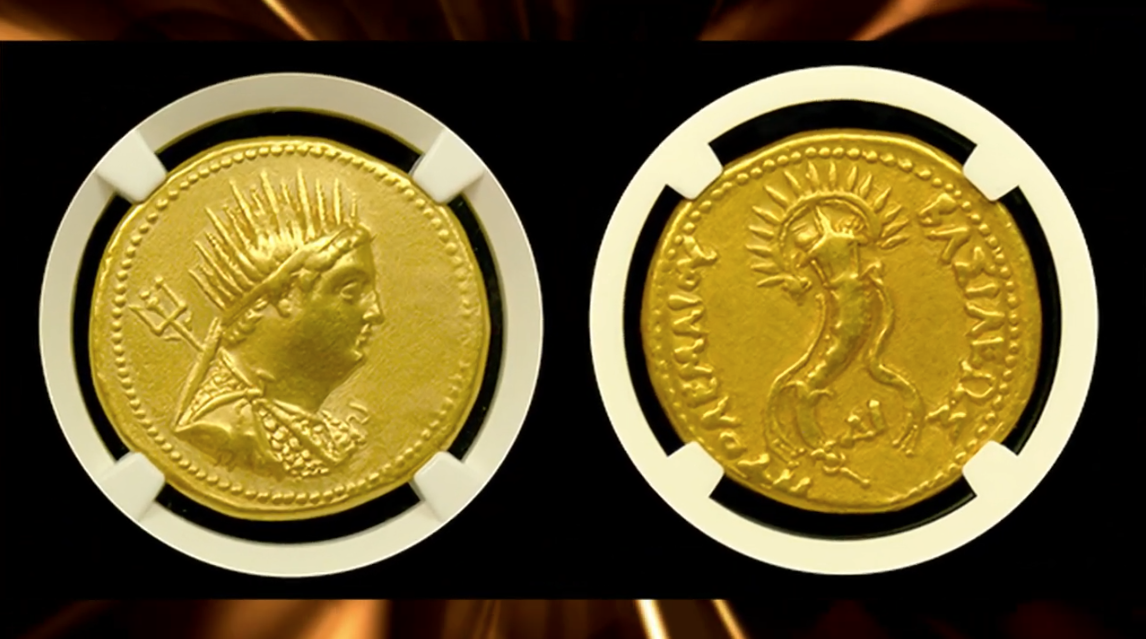
Ptolemy IV Philopator: The Reign of a Controversial Egyptian Pharaoh
Ptolemy IV Philopator: The Reign of a Controversial Egyptian Pharaoh
Ptolemy IV Philopator, who ruled Egypt from 221 to 204 BCE, marks one of the most contentious and complex periods in the history of the Ptolemaic Dynasty. His reign is characterized by both internal decadence and external challenges that underlined the weaknesses within the Ptolemaic Kingdom—a state powerful in breadth yet fractious in its internal machinations.
The Early Life and Ascension to the Throne
Born in 244 BCE in Alexandria, Ptolemy IV was the son of Ptolemy III Euergetes and Berenice II. His early life in the Egyptian court was shaped by the tides of royal intrigue and the complex web of familial relations that defined the Hellenistic period. When Ptolemy IV ascended to the throne following the death of his father, he inherited a powerful empire that stretched from Libya to the far reaches of Cyprus and parts of the Aegean Sea.
However, the transition of power was not entirely smooth. The ascendancy of Ptolemy IV was marred by a series of court conspiracies, most notably the murder of his mother, Berenice II, an act reportedly orchestrated by his powerful advisor, Sosibius. This tumult set a tone for Ptolemy’s reign, highlighting the challenges of maintaining loyalty among court officials and influence over regional governors.
The Battle of Raphia: Conflict with Antiochus III
One of the critical events during the reign of Ptolemy IV was the Battle of Raphia in 217 BCE, where his forces clashed with the armies of Antiochus III of the Seleucid Empire. This battle was not just a fight over territories in Coele-Syria but also a broader contest of dominance between two major Hellenistic powers.
Under the leadership of his generals, including the trusted Sosibius, Ptolemy’s army, significantly composed of native Egyptian soldiers, faced off against a well-equipped Seleucid force. The battle showcased Ptolemy’s ability to rally and train a formidable army, despite his often-debated leadership qualities. In the end, Ptolemaic forces emerged victorious, securing Egypt's control over the contested territories and temporarily bolstering Ptolemy's reign.
Domestic Administration and Controversies
Ptolemy IV’s reign was marked by several domestic policies that focused on religion and culture, yet his administration often faced criticism for neglect and corruption. He is credited with constructing and sponsoring numerous religious monuments and temples, including the renowned Temple of Horus at Edfu, which stands as a testament to the grand architectural endeavors of the period.
However, his pursuits were not without criticism. Ptolemy IV’s administration became infamous for luxurious indulgence and political negligence. Historical accounts by ancient chroniclers, though sometimes colored by bias, portray him more preoccupied with the pleasures of the court than the rigors of governance. This lapse opened the doors to corruption and weakened centralized control over the expansive Ptolemaic territories.
The Decline of Royal Authority
As Ptolemy IV's reign progressed, the amplification of internal dissent and the rising influence of his court advisors led to a steady decline in royal authority. Social unrest, largely fueled by economic difficulties and increased burdens on native Egyptians—despite their contributions during crises like the Battle of Raphia—further strained relations between the ruling Greeks and native Egyptian populations.
The latter years of his rule were overshadowed by increasing domestic unrest, aggravated by Ptolemy’s failure to address growing socio-economic disparities within his kingdom. This period sowed seeds of rebellion, which would continue to ferment and ultimately weaken the governance of his successor, Ptolemy V Epiphanes.
While attempts were made to maintain facade stability, including efforts to engage with Egyptian religious traditions more directly, the societal divisions stoked by years of administrative mismanagement could not be easily reconciled.
The Role of Sosibius and Agathocles
The political sphere of Ptolemy IV's court was dominated by influential figures like Sosibius and Agathocles, whose manipulations greatly impacted the trajectory of his reign. Sosibius, in particular, was instrumental in securing Ptolemy's ascendancy by orchestrating the elimination of any perceived threats, a move that consolidated his power behind the throne.
Agathocles, equally ambitious and wily, connived his way into the royal family's trust, earning high-ranking positions within the government. Together, their governance style was characterized by intrigue and a focus on self-aggrandizement over the kingdom's welfare. Their influence was pervasive; they employed cunning tactics, often resorting to political purges and opaque dealings to maintain their sway over the king and the broader kingdom.
This reliance on powerful advisors was a double-edged sword. While it allowed Ptolemy IV to navigate initial challenges, it also put him at the mercy of their ambitions, often at the expense of competent governance. The deep-seated reliance on these advisors weakened the traditional executive control emanating from the Pharaoh, leading to decentralized power that often spiraled into chaos.
Cultural Contributions and Greek Influence
Under Ptolemy IV's rule, the cultural landscape of Egypt was richly infused with Greek traditions, reflecting the broader Hellenistic influence that was prevalent across the territories. Alexandria, the Ptolemaic capital, became a beacon of Hellenic culture, drawing scholars, artists, and philosophers from across the Mediterranean world.
The famed Library of Alexandria continued its tradition of scholarship, acting as a central repository of human knowledge and an anchor for cultural achievements. Despite his apparent detachment from the day-to-day governance, Ptolemy IV showed a keen interest in the arts and sciences. This patronage allowed for the flourishing of literature, poetry, and scientific inquiry, ensuring that Alexandria remained the intellectual heart of the Hellenistic world.
However, this cultural zenith also highlighted the disparities within Egyptian society. The emphasis on Greek forms and functions often overshadowed native Egyptian traditions, causing subtle tensions which would later manifest in more pronounced societal divides. The hybridization of cultures, while beneficial to art and philosophy, inadvertently sowed seeds of identity conflicts among the native populace.
Religious Policy and Legacy
Ptolemy IV's reign was also marked by his initiatives in the religious domain, which sought to consolidate his rule and earn the favor of the Egyptian populace. His dedication to constructing temples and monuments exemplified a strategy to appease the native Egyptian deities, an endeavor underpinned by political pragmatism.
He promoted the integration of Greek and Egyptian religions, a move designed to bridge the cultural gaps between the ruling elite and the indigenous people. This syncretic approach found its embodiment in the worship of Serapis, a deity unifying Hellenistic and native Egyptian religious elements, and promoted in both iconography and cult practices.
Despite these efforts, Ptolemy IV's religious policies were perceived as attempts to legitimate his rule rather than genuine spiritual commitment, leaving his legacy in this sphere contested and complex.
The Death and Succession of Ptolemy IV
The end of Ptolemy IV's reign came with both personal and political turmoil. His health and the quality of his rule declined, contributing to increasing destabilization within Egypt. His death in 204 BCE opened a power vacuum that his advisors, Sosibius and Agathocles, sought to fill by orchestrating the ascension of his infant son, Ptolemy V Epiphanes.
The transition of power was fraught with intrigue and chaos. Agathocles' regency for the young Ptolemy V was marked by unrest and uprisings, a testament to the simmering discontent leftover from his predecessor's rule. Notably, the events that transpired immediately after Ptolemy IV's death showcased the brittle nature of dynastic successions clouded by ambition and treachery.
Ptolemy IV’s Enduring Impact
In historical retrospection, Ptolemy IV Philopator’s reign is frequently viewed through a prism of decline, one that charts the gradual erosion of centralized authority that would continue to affect his successors. Despite his contributions to culture and religion, his era is often overshadowed by reports of opulence and political neglect, characteristics that are extensively recorded by historians such as Polybius and others.
Yet, the defining legacy of his reign stretches beyond individual assessment, serving as a reflection of broader socio-political dynamics during the Hellenistic period. It underscores the challenges of balancing diverse cultural traditions, the perils of administrative complacency, and the fragile nature of power sustained by delegation.
Ptolemy IV Philopator’s time as Egyptian pharaoh stands as a complex tapestry interwoven with elements of cultural brilliance and political frailty—an era of opportune triumphs and eventual destabilizations that charted the course for subsequent rulers in navigating an increasingly fragmented Ptolemaic realm.


Cairo: A Historical and Cultural Odyssey
Nestled along the banks of the timeless Nile River, Cairo stands as a beacon of history and modernity, a city where ancient treasures and contemporary life converge seamlessly. Home to inspirational landscapes, iconic architecture, and a tapestry of cultures, Cairo is much more than Egypt's sprawling capital—it is a living museum, offering a gateway into a world of forgotten pharaohs and perpetual reinvention.
The Birthplace of Civilization
The roots of Cairo stretch back thousands of years, evolving from the conquest-driven settlement of Fustat established in 641 AD by Arab conqueror ‘Amr ibn al-‘As, to the thriving metropolis it is today. The city's significance grew as Fatimid Caliphate made it their capital in 969 AD, naming it "Al-Qāhirah," which means "The Victorious." Over the centuries, Cairo burgeoned into a vital crossroad of Eastern and Western influences, where cultural and commercial exchanges moulded its very essence.
Architectural Marvels
Cairo's skyline is an enchanting juxtaposition of the grandeur of past empires and the burgeoning heights of modernity. Dominating the horizon are the iconic Pyramids of Giza, timeless legacies of the Old Kingdom Pharaohs and a testament to human ingenuity. Nearby, the Great Sphinx remains an enigmatic sentinel, enduring through millennia with its lion's body and human head.
In the heart of the city, medieval treasures such as the Citadel of Saladin and the Al-Azhar Mosque beckon history enthusiasts to walk through time. The Citadel, built in 1176, offers panoramic views of Cairo's sprawling urban landscape, while Al-Azhar, founded in 970 AD, stands as a beacon of Islamic learning, representing a bridge of knowledge connecting the past to the present.
A Cultural Tapestry
Cairo is very much a city where the strands of diverse cultures intertwine into a vibrant and complex tapestry. This diversity is reflected in its population, which is an eclectic mix of ethnicities and religions living side by side, contributing to Cairo's charisma and its rich cultural landscape.
Visitors can lose themselves within the bustling alleys of Khan El Khalili, Cairo's historic bazaar, once a major spice and silk road stop. Today, it offers a sensory overload of sights, sounds, and smells; a treasure trove of handcrafted goods, from elaborate brassware to colorful scarabs, atmospheric alleyways teaming with haggling traders and inquisitive tourists alike.
The Pulse of Modern Cairo
While its ancient history defines Cairo's identity, its modern heart pulses with life and dynamism. The city’s streets thrum with the rhythm of honking cars and lively street vendors. Contemporary Cairo is an eclectic mix of skyscrapers and traditional markets, where modern conveniences meet time-honored customs.
The Egyptian Museum, housing a vast tapestry of history, is set to pass the baton to the Grand Egyptian Museum in Giza, anticipated to be the world's largest archaeological museum. This ambitious project epitomizes Cairo's simultaneous reverence for its past and its gaze firmly fixed on the future.