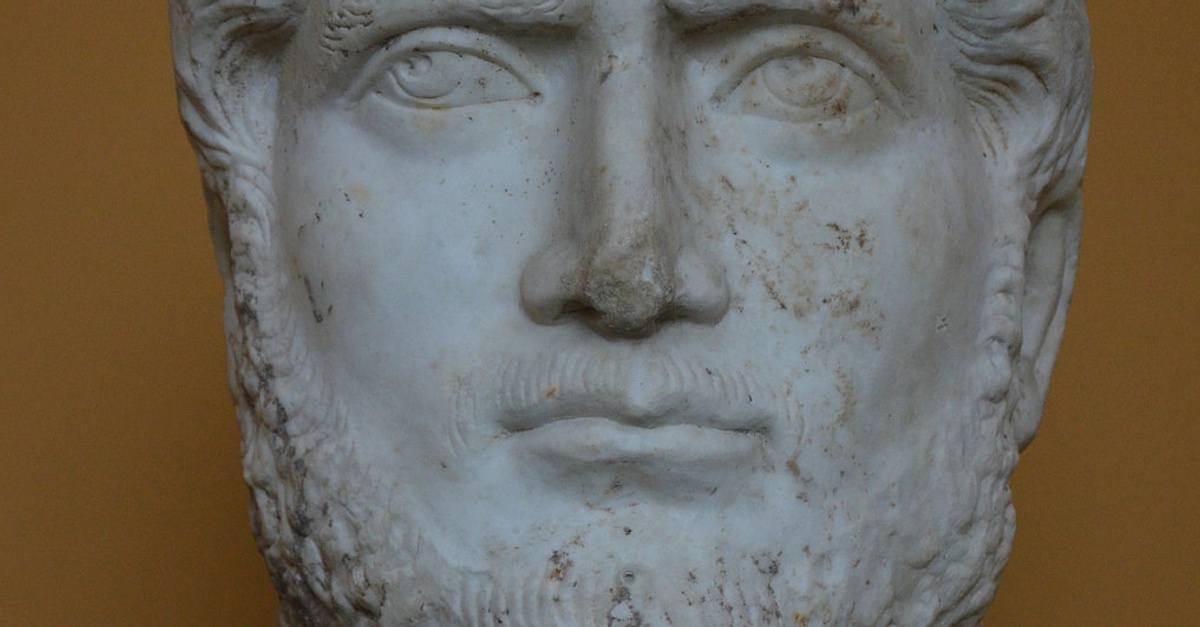
Constantine the Great: The Visionary Emperor Who Shaped History
Introduction: The Rise of a Legendary Leader
Constantine the Great, born Flavius Valerius Constantinus, stands as one of the most influential figures in world history. His reign marked a pivotal turning point for the Roman Empire, setting the stage for the rise of Christianity and the transformation of European civilization. Born in Naissus (modern-day Niš, Serbia) around AD 272, Constantine emerged from the turbulent period known as the Crisis of the Third Century to become the sole ruler of the Roman Empire.
This first part of our exploration will examine Constantine's early life, his path to power, and the military campaigns that established his dominance. We'll also explore the famous vision that changed the course of religious history and examine his political reforms that reshaped the empire's administration.
Early Life and the Tetrarchy System
Constantine was born to Constantius Chlorus, a Roman officer who would later become one of the four rulers in Diocletian's Tetrarchy system, and Helena, a woman of humble origins who would later be venerated as Saint Helena. Growing up in the imperial court, Constantine received a thorough education in Latin, Greek, and military strategy. His early years were spent in the eastern part of the empire, where he witnessed firsthand the workings of Diocletian's government.
The Tetrarchy system, established by Diocletian in 293, divided imperial power among four rulers: two senior Augusti and two junior Caesares. This system aimed to provide better governance for the vast empire and ensure smooth succession. Constantine's father Constantius became one of the Caesars, ruling the western provinces of Gaul and Britain.
Constantine's Path to Power
When Constantius died in 306 while campaigning in Britain, the army immediately proclaimed Constantine as Augustus. This act violated the Tetrarchy's succession rules, leading to years of conflict among rival claimants. Constantine initially accepted the lesser title of Caesar to maintain peace but gradually consolidated his power through military victories and political alliances.
One of Constantine's most significant early achievements was his campaign against the Franks in 306-307, where he demonstrated his military prowess. He then strengthened his position by marrying Fausta, daughter of the senior Augustus Maximian, in 307. This marriage alliance connected him to the imperial family and provided legitimacy to his rule.
The Battle of the Milvian Bridge and the Christian Vision
The turning point in Constantine's career came in 312 at the Battle of the Milvian Bridge against his rival Maxentius. According to Christian sources, Constantine had a vision before the battle where he saw a cross in the sky with the words "In hoc signo vinces" ("In this sign, you shall conquer"). He ordered his soldiers to paint the Chi-Rho symbol (☧) on their shields and emerged victorious against overwhelming odds.
This victory made Constantine the sole ruler of the Western Roman Empire and marked the beginning of his support for Christianity. While the exact nature of his conversion remains debated among historians, the Edict of Milan in 313, which he issued jointly with Licinius, granted religious tolerance throughout the empire and ended the persecution of Christians.
Consolidation of Power and Administrative Reforms
After defeating Licinius in 324, Constantine became the sole ruler of the entire Roman Empire. He immediately set about implementing significant reforms that would transform the empire's structure:
- He established a new capital at Byzantium, which he renamed Constantinople (modern-day Istanbul)
- He reorganized the military, creating mobile field armies and separating military and civilian administration
- He reformed the currency with the introduction of the gold solidus
- He restructured provincial administration, increasing the number of provinces and creating the diocesan system
These reforms strengthened the empire's governance and laid the foundation for what would later become the Byzantine Empire.
Constantine and Christianity
Constantine's relationship with Christianity was complex and evolved throughout his reign. While he never made Christianity the official state religion, he gave it significant privileges and actively supported the Church. He:
- Funded the construction of important churches, including the original St. Peter's Basilica in Rome
- Exempted clergy from taxation and civic duties
- Intervened in theological disputes, convening the First Council of Nicaea in 325
- Promoted Christians to high offices in his administration
At the same time, Constantine maintained some traditional Roman religious practices and was only baptized on his deathbed, a common practice at the time among those who feared post-baptismal sin.
Legacy of the First Christian Emperor
By the time of his death in 337, Constantine had transformed the Roman Empire in fundamental ways. His reign marked the transition from classical antiquity to the medieval period and set the stage for the Byzantine Empire. The city he founded, Constantinople, would remain a center of power for over a thousand years.
Constantine's support for Christianity had profound consequences for European history, making the religion a dominant force in Western civilization. His political and military reforms helped stabilize the empire during a period of crisis, though some historians argue they also contributed to the eventual division between East and West.
This concludes our first part on Constantine the Great. In the next section, we will explore in greater depth his religious policies, the founding of Constantinople, and his complex personal life and family relationships that would shape the empire's future after his death.
The Religious Transformation: Constantine's Christian Policies
Constantine's approach to Christianity was neither immediate nor absolute. His policies represented a gradual shift that balanced imperial tradition with the growing influence of the Christian faith. Following the Edict of Milan in 313, Constantine implemented measures that deeply altered the religious landscape of the empire:
- He returned confiscated Christian property seized during previous persecutions
- Granted tax exemptions and financial support to Christian clergy
- Gave bishops judicial authority within their communities
- Established Sunday as an official day of rest in 321
- Banned certain pagan practices while maintaining the title of Pontifex Maximus
This calculated approach allowed Christianity to flourish while preventing immediate upheaval of traditional Roman religion. Constantine's personal faith remains complex—he continued to use ambiguous religious language in official documents and maintained elements of solar monotheism (Sol Invictus) in his imagery.
The First Council of Nicaea (325 AD)
Constantine's most significant religious intervention came with the Arian controversy regarding the nature of Christ. To settle the dispute, he convened the First Ecumenical Council at Nicaea:
- Brought together approximately 300 bishops from across the empire
- Personally inaugurated the council, though not baptized himself
- Resulted in the Nicene Creed establishing orthodox doctrine
- Created a precedent for imperial involvement in church affairs
The council demonstrated Constantine's desire for religious unity as a stabilizing force and established the framework for Christian orthodoxy that would endure for centuries.
The New Rome: Founding of Constantinople
In 324, Constantine began his most ambitious project—the transformation of the ancient Greek city Byzantium into a new imperial capital. Officially dedicated on May 11, 330, Constantinople was designed as:
- A strategically located capital at the crossroads of Europe and Asia
- A Christian alternative to pagan Rome with churches instead of temples
- A fortress city with expanded walls and natural defenses
- A center of culture and learning with imported artworks and scholars
Urban Planning and Symbolism
Constantine's architects employed sophisticated urban design to create a city that would rival and eventually surpass Rome:
- Laid out the city on seven hills like Rome, with fourteen districts
- Created the monumental Mese, a colonnaded main street
- Erected the Milion as the symbolic center of the empire's road network
- Constructed the Great Palace complex as the imperial residence
The city's Christian character was emphasized through prominent churches and the absence of pagan temples, though some traditional civic structures were maintained for practical purposes.
Military Reforms and Frontier Defense
Recognizing the empire's security challenges, Constantine reshaped Rome's military structure:
| Reform | Description | Impact |
|---|---|---|
| Field Armies | Created mobile strike forces (comitatenses) | Allowed rapid response to border threats |
| Border Forces | Strengthened limitanei frontier troops | Provided static defense of imperial borders |
| New Units | Introduced cavalry-heavy formations | Countered growing threat from mounted enemies |
These reforms maintained imperial security but also had long-term consequences, including increased military spending and greater separation between civilian and military authority.
Constantine's Family Dynamics
The imperial household was both Constantine's greatest strength and his tragic weakness. His marriage to Fausta produced five children who would play crucial roles in his succession plans. However, multiple family crises marked his reign:
The Crisis of 326
This pivotal year saw the execution of Constantine's eldest son Crispus and shortly after, his wife Fausta under mysterious circumstances:
- Crispus had been a successful general and heir apparent
- Ancient sources suggest Fausta may have falsely accused Crispus
- The scandal necessitated rewriting Constantine's succession plans
- Three surviving sons (Constantine II, Constantius II, Constans) became new heirs
The Imperial Succession
Constantine developed an ambitious plan to divide power while maintaining dynastic unity:
- Appointed his sons as Caesars during his lifetime
- Created a network of cousins to administer provinces
- Established Constantinople as neutral territory under Senate control
- This complex system quickly collapsed after his death in 337
Legal and Social Reforms
Constantine's legal enactments reflected both traditional Roman values and Christian influence:
| Area | Reform | Significance |
|---|---|---|
| Slavery | Restricted separation of slave families | Reflected Christian ethics |
| Marriage | Strict penalties for adultery | Moral legislation |
| Crime | Crucifixion abolished | Symbolic Christian reform |
| Wills | Recognized validity of Christian wills | Legal status for Christian practice |
While these reforms improved conditions for some, Constantine also enacted harsh penalties, including branding and amputation, for certain offenses.
Preparing for the Next Part
In this second part, we've examined Constantine's complex religious policies, the monumental founding of Constantinople, critical military reforms, and fascinating family dynamics. As we conclude this section, we've laid the groundwork for understanding how Constantine's reign fundamentally transformed the Roman world.
Our third and final installment will explore Constantine's final years, his baptism and death, the immediate aftermath of his reign, and the lasting impact of his rule on Western civilization. We'll examine how his successors managed—or failed to maintain—his vision and how modern historians assess his complex legacy.
The Final Years and Legacy of Constantine the Great
The Road to Baptism and Death
In his later years, Constantine prepared for what he believed would be his most important transition - the passage from earthly power to eternal salvation. Following contemporary Christian practice that feared post-baptismal sin, he postponed his baptism until he fell seriously ill near the end of his life. This final act occurred in 337 at the suburban villa of Ancyrona near Nicomedia when:
- He was baptized by the Arian bishop Eusebius of Nicomedia
- Chose to be clothed in white baptismal robes rather than his imperial purple
- Reportedly refused to wear his imperial insignia afterward
- Died shortly thereafter on May 22, 337, at approximately age 65
The Imperial Succession and Family Conflict
Constantine's carefully planned succession quickly unraveled after his death. The empire became embroiled in a bloody transition period that revealed the fragility of his dynastic vision:
| Successor | Territory | Fate |
|---|---|---|
| Constantine II | Gaul, Britain, Spain | Killed in 340 invading Constans' territory |
| Constantius II | Eastern provinces | Became sole emperor by 353 |
| Constans | Italy, Africa | Assassinated in 350 |
The power struggle extended to Constantine's extended family, with most male relatives murdered within months of his death in a purge likely ordered by Constantius II. This tragic outcome contrasted sharply with Constantine's hopes for dynastic continuity.
The Milvian Bridge Legacy: Christianity's Imperial Future
Constantine's support for Christianity set in motion changes that would far outlive his empire:
- The Christian church gained legal status and eventually became the state religion under Theodosius I
- Ecclesiastical structures mirrored imperial administration
- Christian theology became intertwined with Roman imperial ideology
- The bishop of Rome (the Pope) gained increasing political authority
The Donation of Constantine Controversy
Centuries after his death, an eighth-century document called the "Donation of Constantine" purported to record Constantine giving temporal power over Rome and the western empire to Pope Sylvester I. While proved a medieval forgery in the 15th century, it:
- Influenced papal claims to political authority throughout the Middle Ages
- Became a key document in church-state conflicts
- Demonstrated Constantine's lasting symbolic importance to the Catholic Church
Constantinople: The Enduring City
Constantine's "New Rome" outlasted the Western Roman Empire by nearly a thousand years, becoming:
- The capital of the Byzantine Empire until 1453
- A bulwark against eastern invasions of Europe
- The center of Orthodox Christianity
- A cosmopolitan hub of commerce, culture, and learning
Even after its fall to the Ottomans, the city (renamed Istanbul) remained a major world capital, maintaining elements of Constantine's urban design into modern times.
Military and Administrative Aftermath
Constantine's reforms established patterns that defined later Byzantine governance:
| Reform | Long-term Impact |
|---|---|
| Separate military commands | Became standard in medieval European states |
| Mobile field armies | Precursor to later Byzantine tagmata forces |
| Gold solidus currency | Remained stable for 700 years |
| Regional prefectures | Influenced medieval administrative divisions |
Historical Assessment and Modern Views
Historians continue to debate Constantine's legacy:
The Christian Hero Narrative
Traditional Christian historiography views Constantine as:
- The emperor who ended persecution
- A divinely inspired leader
- The founder of Christian Europe
The Pragmatic Politician Interpretation
Modern secular scholarship often emphasizes:
- His manipulation of religion for political unity
- The continuities with earlier imperial systems
- His military and administrative skills
The Ambiguous Legacy
Most contemporary historians recognize:
- Both genuine faith and political calculation in his policies
- His central role in Europe's Christianization
- The unintended consequences of his reforms
Constantine in Art and Culture
The first Christian emperor became an enduring cultural symbol:
Medieval Depictions
- Featured in Byzantine mosaics and manuscripts
- Central to Crusader ideology
- Subject of medieval romance literature
Renaissance and Baroque Art
- The Vision of Constantine became popular subject
- Depicted in Raphael's "The Baptism of Constantine"
- Sculptures in major European churches
Modern Representations
- Appears in films and television series
- Subject of historical novels
- Inspiration for Christian political movements
Conclusion: The Architect of a New World
Constantine the Great stands as one of history's pivotal figures whose decisions fundamentally altered the course of Western civilization. By combining Roman imperial tradition with Christian faith, military prowess with administrative genius, and dynastic ambition with strategic vision, he created a synthesis that would endure for centuries. Though his immediate successors failed to maintain his vision perfectly, the foundations he laid—the Christian Roman Empire, the city of Constantinople, and new models of governance—shaped medieval Europe and influence our world today.
From the Roman persecutions to the edicts of tolerance, from the old Rome to the new, from pagan empire to Christian state, Constantine presided over one of history's great transitions. His life reminds us that individual leaders can indeed change the world, though often in ways more complex than they could foresee. Whether viewed as saint, opportunist, or simply as one of Rome's greatest emperors, Constantine's impact on religion, politics, and culture remains undeniable more than sixteen centuries after his death.
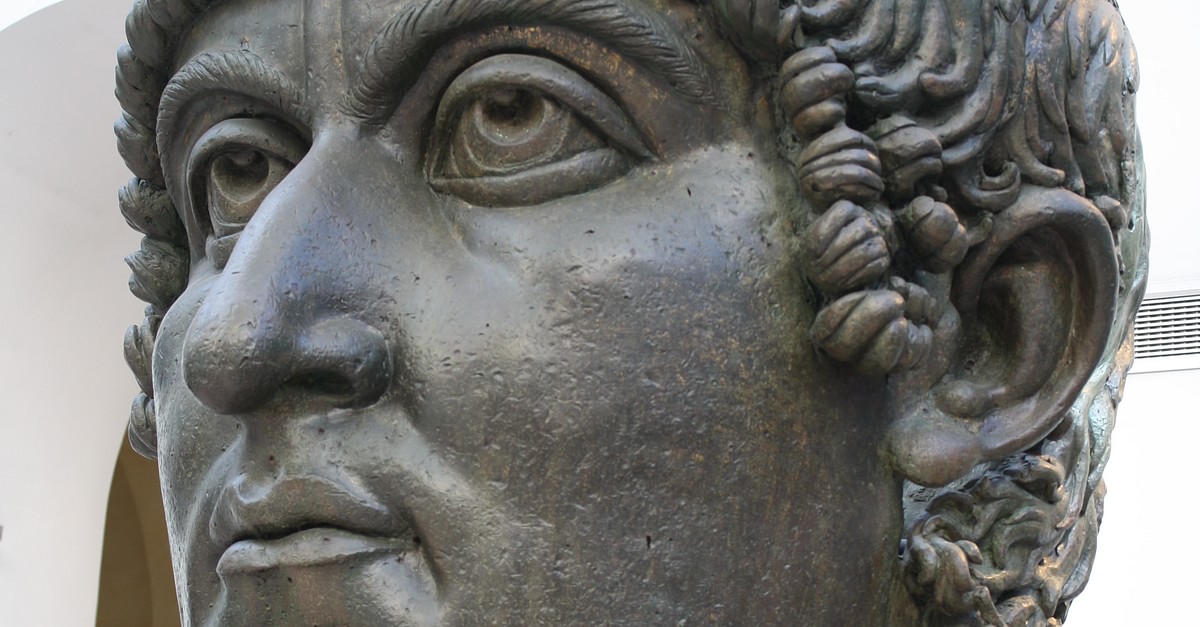


Gallienus: Rethinking the Reign of a Burdened Roman Emperor
Introduction
In the vast landscape of Roman history, punctuated by the grandeur of Caesar and Augustus, there lies a tapestry of emperors whose contributions and struggles are often overshadowed by the more triumphant narratives. One such emperor is Gallienus, whose reign from 253 to 268 AD was marked by relentless challenges and a relentless pursuit of stabilization for an empire fraying at its edges. Frequently dismissed as ineffective due to his inability to completely fend off external threats and internal dissent, a closer examination of his tenure reveals a reflective transformation that planted foundational changes for future leaders.
A Time of Crisis
Gallienus ascended to power during a period dubbed by historians as the Crisis of the Third Century, a sociopolitical and economic turmoil profoundly jerking the Roman Empire. This era was characterized by successive military invasions, rampant internal rebellion, fiscal collapse, and the rotation of numerous emperors who rose and fell amid the chaos. Gallienus's tenure as co-emperor with his father, Valerian, and later as the sole ruler after his father was captured by the Persians in 260 AD, added layers of complexity to his rulership.
Upon becoming the singular authority of Rome, Gallienus was greeted not by stability, but by an empire teetering dangerously on the brink of disintegration. The northern territories faced continual threats from the Germanic tribes, while the eastern front sagged under the pressure of Persian incursions. Furthermore, the Roman Balkans simmered with unrest, and burgeoning separatist movements in Gaul and the East demanded immediate and adept leadership. Yet, even amid such tumult, Gallienus set out to redefine his realm with a focus that transcended mere survival.
Military Reforms and Innovations
One of Gallienus's most significant contributions to the Roman Empire was his insightful reassessment and reforms of the military structure. Acknowledging the frailty of Rome's traditional legions when confronting swift-moving invaders, Gallienus implemented a cavalry-oriented military strategy. He stationed mobile horsemen at strategic locations, enabling rapid deployment to repel invasions more effectively. This strategic shift not only enhanced the empire’s defensive capabilities but also influenced future military exercises and paved the way for the eventual prominence of the cavalry during the Late Roman Empire.
Moreover, Gallienus recognized the futility of the divided command system prevalent during his time. He embarked on transforming the military hierarchy, appointing trusted generals as supreme commanders of significant frontiers. This step towards centralization improved coordination and accountability, marking a landmark shift in military governance.
Cultural and Administrative Reforms
Beyond the military arena, Gallienus's reign marked an era of quiet cultural flourishing, propagated not from grandiose architectural ventures, but from a subtler emphasis on arts and intellectual pursuits. His preference for philosophy, culture, and the arts, coupled with policies that somewhat eased tensions between traditional pagan practices and burgeoning Christian movements, painted him as a ruler favoring cultural cohesion over civil strife.
Administratively, Gallienus took concrete steps to tackle the empire’s economic instability. His tenure saw an emphasis on consolidating power in Rome, cutting through the multiplicity of regional authorities that often worked at odds with the central governance. Through these measures, he aimed to reinvigorate trade and strengthen the economy, although his efforts were frequently thwarted by persistent inflation and monetary devaluation that were rife during his time.
A Legacy of Misunderstood Efforts
Despite these proactive measures, contemporary and subsequent historical narratives often criticized Gallienus’s reign, highlighting his failures rather than his resilience amidst adversity. The criticism hinges predominantly on his inability to prevent the fragmentation of the Roman Empire into three parts—the Gallic Empire in the West, the Palmyrene Empire in the East, and the core Roman territories. However, such judgments overlook the overwhelming scope of challenges that Gallienus inherited, and the transformational groundwork laid during his rule that bore fruit in the longer term.
In reassessing Gallienus’s legacy, it becomes apparent that his adaptations and frameworks created an administrative and military paradigm crucial for the empire’s resilience in subsequent centuries. While his era lacked the monumental peace of Augustus or the victorious legions of Trajan, the Gallienus epoch served as a crucible, refining and tempering Rome’s capabilities to endure through the looming Dark Ages.
In conclusion, Gallienus's rule, often overshadowed by the more extravagant legacies of other Roman emperors, merits a nuanced exploration. His resilience during the precipice of collapse and his strategic adaptions showcase a reign far richer in accomplishments than traditionally acknowledged. As historians continue to delve into the smudged pages of antiquity, Gallienus stands as a testament to the complexities of leadership amid turmoil, unveiling a story more of perseverance and reform than of mere desperation.
As we continue exploring his intricate legacy in the subsequent sections, we delve deeper into the nuanced political maneuvers and cultural shifts that underscored an era teetering on the edge of historical oblivion.
Facing External Threats
Reacting to the multitude of external threats, Gallienus's strategy wasn't solely focused on offense. Instead, he sought to create fortified defenses that would serve as deterrents against the ambitious encroachment of foreign powers. The focus was not merely about creating immediate military victories but rather ensuring a continuity of territorial resilience despite fluctuating military tides. His emphasis on fortifying positions at critical frontier posts signified a pragmatic shift in Roman military doctrine, prioritizing sustainable security over expansive conquest.
In the embattled northern regions, the Germanic tribes posed relentless threats. Gallienus's decision to deploy the cavalry at these frontier positions facilitated a more nimble defense strategy. The innovative use of mounted troops against the quick-moving raiders enabled a plug in the metaphorical leaks on the empire's boundaries. This adaptation not only minimized incursions but created a strategic template that would be employed by leaders in epochs beyond his reign.
His military acumen extended to the Eastern front as well. Recognizing the ever-present Persian threat, Gallienus implemented measures to bolster security along the Roman-Persian border. However, the formidable Persian Emperor Shapur I, who had already captured Gallienus's father, remained an intimidating foe whose advances required both fortitude and diplomatic skill to counteract effectively. Though his campaigns in the East didn't culminate in decisive Roman victories, Gallienus's endeavors prevented further significant territorial losses—a feat commendable given the odds stacked against him.
Internal Rebellions and Usurpers
Internally, Gallienus contended with a slew of rebellions and emerging usurpers, which fragmented the imperial cohesion he desperately sought to establish. The epoch of his reign was marred by challenges from territories that were progressively slipping beyond Rome's grasp. Amid these internal fissures, Gallienus was forced to employ strategic suppression coupled with concessions to maintain a semblance of control over the sprawling Roman expanse.
The rise of the Gallic Empire, spearheaded by the rebellious Postumus in the Western Roman territories, remains one of the defining crises of Gallienus's rule. The establishment of this breakaway empire highlighted intrinsic weaknesses within the Roman state structure but also underscored Gallienus's pragmatic adaptability. Although he couldn't completely dismantle the Gallic script of insurrection, the measures he undertook managed to contain its spread and influence, thus retaining pivotal portions of his empire.
Simultaneously, Gallienus faced the Palmyrene ascension in the East, led by the formidable Queen Zenobia. This splintering further exemplified the centrifugal forces rife in his reign, yet Gallienus chose not to direct full-scale engagements against this eastern polity. Instead, his strategy entailed selective alliances and localized diplomatic engagements aimed at neutralizing wider alliances that could spark further empire fracturing.
Cultivating a Legacy Through Reform
Despite the plethora of external and internal threats, Gallienus's reign is also marked by a series of deft reforms. Understanding the need for a more stable and adaptable system of governance, he ventured into and supported crucial policy reforms that sought to modernize the empire's institutional apparatus.
Foremost among these was Gallienus’s edict that barred senators from commanding military units, a reform that not only professionalized the Roman military by entrusting command to career soldiers but also curbed the political ambitions of the senatorial class. This action reduced instances of coup attempts and unauthorized power seizures by senators eager to exploit military might for personal gain.
Moreover, Gallienus established the short-lived but impactful ‘podium’ council of senior officials who served as an administrative cord binding various facets of the empire’s governance. The collective expertise of war-seasoned veterans and bureaucratic minds aimed to formulate strategies mitigating the multifaceted crises facing Rome.
The Cultural Flourish of an Embattled Age
Notably, Gallienus's epoch witnessed an unexpected flourish in the cultural domain when little would seem poised to bloom in the shadow of uncertainty. Patronizing the arts and philosophy garnered him an enduringly nuanced legacy. His court became a Bildungsroman—a meeting place for intellectuals, painters, and think-makers who, despite an era of turmoil, created a ripple of cultural proliferation.
One could argue that Gallienus's support of cultural pursuits during a period of crisis established a template for viewing art not merely as a reflection of civilizational strength but as a refuge and reminder of Rome’s enduring spirit. The valuation of philosophical, artistic, and scientific endeavors under Gallienus's patronage served as an intangible yet indelible balm against the fragmentation that loomed larger than ever before.
The Renaissance of ideas, fostered by his allegiance to intellectual currents, signified a preservation of the Roman intellectual lineage amidst external chaos. In allowing talented figures across the cultural spectrum a voice, Gallienus forged an allegorical shield that protected Rome's cosmopolitan ethos despite external and internal onslaughts.
Gallienus's rule indeed traverses the landscape of Roman history as a complex narrative driven by reform, resilience, and cultural patronage. His strategies in response to external threats and internal challenges, coupled with efforts in cultural and administrative strides, provided a unique legacy rooted in the nuanced understanding that leadership is often as much about immediate victories as it is about setting long-term trajectories for future resilience. In unraveling the remaining chronicles of his reign, we confront more than a mere blip on a timeline, but the colorful heraldry of a man who sought to mold Rome from the clutches of its darkest crises.
The Economic Quandary
Despite seeding essential reforms, Gallienus's reign persisted under the heavy cloud of economic instability, a critical element that both defined and destabilized his administration. Attempts to mend the failing economy encountered hurdles at every turn. Decimated by years of warfare, plundered provinces yielded reduced revenues, escalating the economic downturn further.
Aware of these challenges, Gallienus sought to reinvigorate commerce and stabilize the depleted treasury, particularly through fiscal reforms designed to undermine inflation and the rampant depreciation of the currency. These efforts were far from universally successful; however, his initiative to standardize coinage and uphold fiscal policies laid groundwork that future emperors would inevitably build upon. Yet, Gallienus found himself contending against forces greater than fiscal policy alone could amend—it was often the remnants of war and loss that dictated the Roman economy anew.
Beyond the corridors of imperial courts and senate assemblies, efforts in agrarian reforms also punctuated Gallienus’s economic initiatives. A Rome compromised by external warfare and internal dissent required agrarian settlements to remain robust and productive; thus, taxes were reevaluated, and tenant farmers offered incentives to cultivate lands productively.
The Christian Controversy
Amid Gallienus's multifaceted endeavors to stabilize an unraveling empire was his approach toward burgeoning Christianity, a topic of both socio-political and historical intrigue. His reign managed to navigate the complexities surrounding this growing religious movement with unorthodox prudence.
Gallienus is often credited with halting systemic persecutions of Christians, marking a turn from prior imperial edicts. The Gallienist policy of relative tolerance reflected a stark contrast to earlier, harsh measures. Whether through pragmatism or political astuteness, his decision facilitated a transitional period where Christians could coexist with Rome's traditional paganistic leanings without facing the severe crackdowns previously witnessed.
This shift allowed Christianity to permeate Roman society more deeply, enabling a future where it would eventually become the empire's predominant faith. Through a lens both contemporary and retrospective, Gallienus's decisions laid an incorporeal foundation that transformed the religious landscape of Rome, revealing a legacy entrenched as much in spirituality as in statecraft.
Gallienus’s Final Years and Assassination
Notwithstanding his extensive kaleidoscope of reforms and adaptions, the fate of Gallienus was sealed not by a decisive battle or significant territorial loss, but rather the perennial bane of Roman emperors—conspiracy and assassination. Emperor Gallienus's ultimate downfall came in 268 AD, on the outskirts of Milan, as he sought once again to quell another rebellion. Betrayed by those he trusted within his own military ranks, Gallienus fell to a conspiratorial murder, orchestrated amid the very ranks he had fought hard to mold and professionalize.
His assassination spotlights the persistent and perilous nature of Roman politics. In an empire where allegiances shifted with the winds and power came branded with constant precariousness, Gallienus's end reflected once more the treacherous matrix of the imperial seat.
Reevaluating Gallienus’s Legacy
Yet, even as his era concluded with blood and betrayal, the legacy of Gallienus invites reevaluation. Too long has his reign been dismissed as a mere perpetuation of the chaos of the Crisis of the Third Century, when in fact it embodied a significant degree of resilience and farsighted reform. His military restructuring, elevating the cavalry's role, was a tactical testament to his adaptability amidst perpetual pressure.
In the broader scope of cultural and religious evolution, Gallienus presided over transformative trends—even if unwittingly—that prepared the stage for Rome’s eventual transition toward Christianity. His informal rapprochement with a burgeoning religious community eased the pervasive tensions of prior persecutions.
Moreover, his economic policies, though limited in their immediate effect, curated an insightful understanding of structural necessities, foreshadowing approaches that later emperors would adopt more completely. His willingness to adapt held within it the seeds of future Roman stability—a stability that remained ephemeral in Gallienus’s own time, yet planted amidst the turbulence of his reign.
In reassessing Gallienus’s story, we are reminded that history seldom awards due credit to those who operate without immediate, conspicuous success. While his reign lacks the dramatic triumphs to etch him into the annals of eminence, his determination in the face of insurmountable odds paints him as more than the vestige of a declining empire. Instead, Gallienus should be viewed as a pivotal figure whose intrepid adaptability and silent reforms left an indelible impression on the course of Roman history.
In conclusion, Gallienus's reign endures not merely as a chapter in Rome's tumultuous third century but as a narrative abounding with pragmatic foresight and chameleonic leadership amidst adversity. As time continues its unyielding march, it is imperative that history does justice to the nuanced legacy he crafted amid the thunderous chorus of age-old challenges that characterize his era.