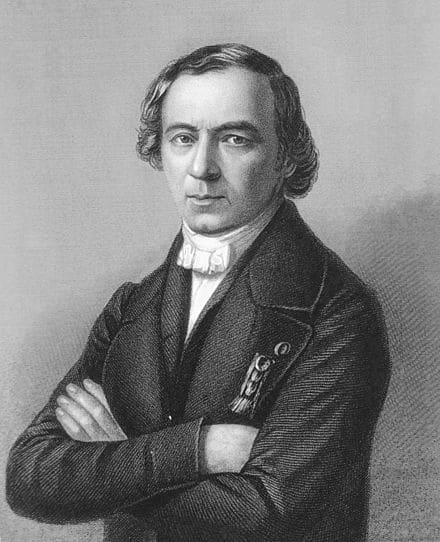
Jean-Baptiste Dumas: A Pioneering Chemist
In the annals of scientific history, few individuals have made such versatile and impactful contributions as Jean-Baptiste Dumas. Born on July 14, 1800, in the charming town of Alès, France, Dumas emerged as a formidable figure in the field of chemistry during the 19th century. His journey in science was marked by a multitude of groundbreaking discoveries and unparalleled advancements in chemical analysis, which continue to resonate in the scientific community even today. As we delve into his life's work, we learn how one man's curiosity and tenacity laid the groundwork for modern chemistry.
A Humble Beginning
Dumas's entry into the scientific realm was quite serendipitous. Initially, he pursued studies in medicine, which was a promising field at the time. However, his innate curiosity led him to explore the intricacies of chemical reactions and the potential they held for human advancement. This marked the beginning of Dumas's illustrious career in chemistry. At the age of 20, he moved to Geneva, where he worked under the tutelage of renowned chemist Aimé Argand. It was during this period that Dumas honed his skills, which would later enable him to revolutionize chemical experimentation.
The Law of Substitution and Beyond
One of Dumas's most significant contributions to chemistry was his development of the Law of Substitution. In the early 19th century, the understanding of organic chemistry was rudimentary at best. Dumas, through a series of meticulous experiments, discovered that particular atoms within a compound could be replaced by other atoms without altering the fundamental structure of the compound. This insight was pivotal in the evolution of organic chemistry and opened the doors to the development of synthetic compounds. Today, this principle underpins much of the work in synthetic organic chemistry, highlighting Dumas's lasting impact on the field.
The Concept of Atomic Weight
Jean-Baptiste Dumas was not just confined to the realm of organic chemistry. His work on atomic weight determination paved the way for more accurate and reliable chemical analyses. At a time when there was much debate over what constituted an atom and how it could be measured, Dumas introduced a method for determining atomic weight that involved the use of vapor density. This method was revolutionary and provided a more comprehensive understanding of atomic structures, helping chemists categorize and understand elements better. As modern chemistry develops, Dumas's contribution remains foundational in understanding atomic and molecular weight.
A Lifelong Legacy
Throughout his career, Dumas held several prestigious academic positions, including a professorship at the Sorbonne University, where he inspired future generations of scientists. Beyond teaching, his influence extended to industrial chemistry. His expertise was frequently sought in the development of practical applications for chemical compounds, addressing real-world problems and enhancing the quality of life during the Industrial Revolution. As an educator and advisor, Dumas was instrumental in advancing the scientific and industrial capabilities of France.
Dumas's influence wasn’t confined to his scientific contributions alone; he also took an active role in public life, serving as an advisor to government bodies and contributing to policy decisions that affected scientific research and education. His presence in scientific, academic, and political spheres demonstrated the wide-ranging impact of his work, extending beyond laboratories and into societal structures. Dumas’s commitment to research and his ability to bridge the gap between theory and practice set a standard for scientists to emulate.