Praxiteles: The Revolutionary Sculptor of Ancient Greece
Introduction: The Master of Marble and Human Form
Praxiteles, one of the most celebrated sculptors of ancient Greece, redefined classical art with his innovative approach to the human form. Active during the 4th century BCE, his work marked a departure from the rigid idealism of earlier Greek sculpture, introducing a softer, more naturalistic style that emphasized grace, emotion, and sensuality. Praxiteles’ mastery of marble and bronze transformed the way gods, goddesses, and mortals were depicted, leaving an indelible mark on Western art history.
This article explores the life, artistry, and enduring legacy of Praxiteles, focusing on his most famous works, the techniques that set him apart, and his influence on subsequent generations of artists.
The Life and Times of Praxiteles
Little is known about Praxiteles’ personal life, a common challenge when studying ancient artists. Historical records suggest he was born around 395 BCE, possibly in Athens, into a family of sculptors. His father, Cephisodotus the Elder, was also a renowned artist, indicating that Praxiteles may have learned his craft through a traditional apprenticeship within his family.
The 4th century BCE was a period of transition in Greek art and society. The city-states were recovering from the Peloponnesian War, and there was a growing interest in individualism and emotional expression, themes that Praxiteles would later embody in his sculptures. Unlike the heroic and austere figures of the High Classical period, Praxiteles’ work embraced a more intimate and humanized approach, making his art relatable to the people of his time.
Revolutionizing Greek Sculpture: Style and Technique
Praxiteles’ style is characterized by several key innovations that distinguished him from his predecessors:
1. Naturalism and Sensuality
While earlier Greek sculptors focused on idealized, flawless representations of the human form, Praxiteles introduced a sense of realism and vulnerability. His figures seemed to breathe and move, with delicate curves and lifelike flesh. One of his most groundbreaking contributions was his depiction of the human body in relaxed, natural poses, often with a subtle “S-curve” stance known as contrapposto.
2. The Use of Marble
Praxiteles was a master of marble, a material that allowed him to achieve unprecedented levels of detail and softness in his sculptures. While bronze was still widely used during his time, he preferred marble for its ability to capture the play of light and shadow, enhancing the lifelike quality of his figures. His skill in carving flowing drapery and delicate facial expressions set new standards for sculptural craftsmanship.
3. Emotional Expression
Breaking away from the stoic expressions of earlier Greek statues, Praxiteles infused his works with emotion. His figures often conveyed a sense of introspection, tenderness, or even melancholy, making them more relatable to viewers. This focus on inner life was revolutionary in a tradition that had previously prioritized grandeur and detachment.
Famous Works of Praxiteles
Although many of Praxiteles’ original sculptures have been lost to time, Roman copies and written accounts provide insight into his most celebrated creations. Below are some of his most influential works:
1. The Aphrodite of Knidos
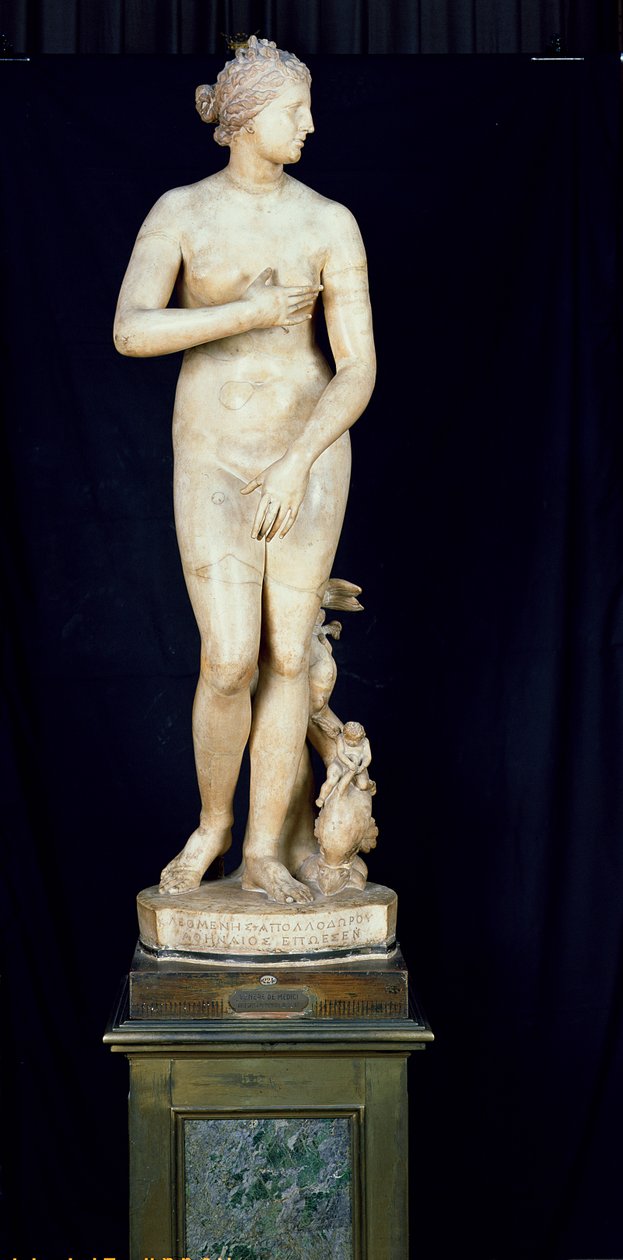
Perhaps his most famous work, the *Aphrodite of Knidos*, was the first large-scale Greek sculpture to depict a fully nude goddess. This daring representation shocked and fascinated audiences, as it broke conventions by showing Aphrodite in a vulnerable, humanized state. The sculpture was renowned for its beauty and sensuality, reportedly inspiring admiration and even infatuation among viewers.
2. Hermes and the Infant Dionysus
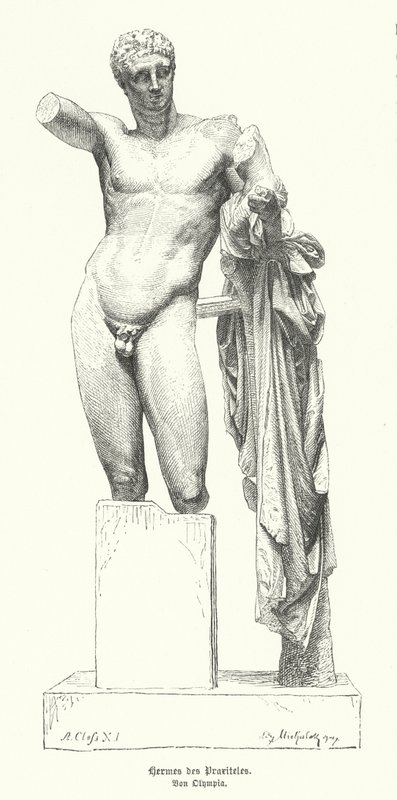
This marble statue, discovered in the ruins of the Temple of Hera at Olympia in 1877, is one of the few surviving works possibly attributed to Praxiteles. It depicts Hermes holding the infant Dionysus in a playful, affectionate pose. The intricate detailing of Hermes’ musculature and the delicate treatment of the infant’s form exemplify Praxiteles’ mastery.
3. Apollo Sauroktonos
The *Apollo Sauroktonos* (Apollo the Lizard-Slayer) is another notable work, showcasing Praxiteles’ ability to capture movement and youthfulness. The statue depicts the god Apollo leaning against a tree, preparing to strike a lizard with an arrow. The relaxed pose and playful theme were a departure from the typical heroic depictions of gods.
Praxiteles’ Legacy and Influence
Praxiteles’ innovations did not go unnoticed. His emphasis on naturalism and emotion influenced generations of Hellenistic sculptors and later Roman artists. Even Renaissance masters such as Michelangelo studied his techniques, particularly his ability to make marble appear soft and animate.
Despite the loss of many originals, Roman copies ensured that Praxiteles’ style endured, allowing modern audiences to appreciate his contributions. His work remains a cornerstone of classical art, celebrated for its humanity, elegance, and timeless beauty.
(To be continued in Part 2, where we will delve deeper into the historical context of Praxiteles' work, controversies surrounding his sculptures, and their impact on modern art.)
The Historical Context of Praxiteles’ Work
To fully understand Praxiteles' contributions to ancient Greek art, it is essential to examine the cultural and political landscape of his time. The 4th century BCE was a period of profound transformation in Greece, marked by shifting artistic tastes and the rise of new philosophical ideas.
1. The Aftermath of the Peloponnesian War
The devastating Peloponnesian War (431–404 BCE) had left Athens weakened, both economically and politically. The loss of the conflict to Sparta created an atmosphere of introspection, influencing art to shift from overtly heroic depictions to more nuanced, personal expressions. Praxiteles' sculptures, with their emphasis on grace and subtle emotion, resonated with a society seeking solace and beauty in times of upheaval.
2. The Rise of Individualism in Art
Prior to the 4th century BCE, Greek sculpture was dominated by idealized representations meant to embody universal virtues—strength, wisdom, and divine perfection. However, the increasing influence of philosophers like Plato and Aristotle encouraged a deeper exploration of individual character and human vulnerability. Praxiteles embodied this shift by sculpting gods and mortals with relatable emotions, flaws, and sensuality, bridging the gap between the divine and the human.
3. The Evolving Role of Religion and Beauty
Religion in ancient Greece was intertwined with daily life, yet the perception of gods and goddesses was evolving. No longer distant and austere, deities were increasingly seen as approachable and even flawed—much like humans. Praxiteles' *Aphrodite of Knidos*, with its unabashed celebration of the female nude, reflected this changing relationship between worship and artistic representation. Beauty was no longer just an abstract ideal; it became something personal, tactile, and emotional.
Controversies and Scandals Surrounding Praxiteles’ Work
Despite his acclaim, Praxiteles’ sculptures were not without controversy. His bold innovations often shocked his contemporaries and sparked debates about propriety and artistic freedom.
1. The Nudity of the Aphrodite of Knidos
The *Aphrodite of Knidos* was revolutionary not just for its technical brilliance but also for its unprecedented portrayal of a goddess in the nude. Before Praxiteles, female figures were typically depicted clothed, with male nudes dominating Greek sculpture. According to ancient sources, Aphrodite’s exposed form was so lifelike and alluring that it reportedly caused scandal and public fascination in equal measure. Some accounts even claim that a young man became so obsessed with the statue that he attempted to defile it—a story that underscores its powerful impact.
2. The Enigmatic Identity of Models
Another point of intrigue is whether Praxiteles used real-life models for his divine figures. Some historians speculate that the famous courtesan Phryne, who was also his lover, posed for the *Aphrodite of Knidos*. While there is no definitive proof, the idea further emphasizes how Praxiteles blurred the lines between sacred and profane, immortal and mortal.
3. The Debate Over Roman Copies
Many of Praxiteles’ original sculptures have been lost, and most surviving examples are Roman copies. This raises questions about how faithfully these reproductions captured his original style. Some scholars argue that Roman artists may have idealized or altered aspects of his work to suit their tastes, making it difficult to assess Praxiteles’ true techniques with absolute certainty.
Praxiteles and the Hellenistic Evolution of Art
Praxiteles’ influence extended well beyond his lifetime, serving as a bridge between the Classical and Hellenistic periods of Greek art. His emphasis on realism, emotion, and dynamic poses paved the way for later sculptors to explore even more expressive and dramatic compositions.
1. The Impact on Hellenistic Masters
Artists like Lysippos and Scopas took inspiration from Praxiteles’ naturalism but pushed it further into theatricality and exaggerated movement. The famous *Laocoön and His Sons*, a masterpiece of Hellenistic sculpture, owes much to Praxiteles’ ability to convey pain and tension through the human form.
2. The Spread of His Influence Across the Mediterranean
As Greek culture spread during the Hellenistic era, so did Praxiteles’ artistic legacy. His works were admired and replicated across the Mediterranean, from Alexandria to Rome, ensuring that his style remained influential for centuries. Even in distant regions, local sculptors adapted his techniques, blending them with their own traditions.
Rediscovery and Modern Interpretations
The rediscovery of Praxiteles’ works during the Renaissance reignited interest in his artistry, with later artists drawing from his innovations to shape Western art traditions.
1. The Renaissance Revival
Italian Renaissance sculptors, including Michelangelo, closely studied surviving Roman copies of Praxiteles’ works. The *Aphrodite of Knidos* became a touchstone for portrayals of female beauty, influencing iconic pieces like Botticelli’s *The Birth of Venus*. Michelangelo’s *David*, while more muscular, still reflects Praxiteles’ mastery of the human form in marble.
2. Modern Archaeology and Scholarly Debates
Excavations in the 19th and 20th centuries uncovered several potential Praxitelean works, such as the *Hermes and the Infant Dionysus*. However, debates persist over their authenticity. Advanced techniques like 3D scanning and material analysis now allow historians to study these sculptures in unprecedented detail, offering new insights into his workshop practices.
3. Praxiteles in Contemporary Art Discourse
Even today, Praxiteles remains a subject of fascination in art history. His ability to balance realism with idealism continues to inspire discussions about the role of beauty in art. Some modern artists reinterpret his works through a contemporary lens, examining themes of gender, power, and representation that were already subtly present in his sculptures.
(To be continued in Part 3, where we will explore the technical challenges Praxiteles faced, his lesser-known works, and his enduring cultural significance in the modern era.)
The Technical Mastery Behind Praxiteles’ Sculptures
Praxiteles’ genius lay not only in his artistic vision but also in his unparalleled technical skill. His ability to manipulate marble and bronze with such delicacy set him apart from his contemporaries and established techniques that would be studied for millennia.
1. The Challenge of Marble
Working with marble required extraordinary precision. Unlike bronze, which allowed for casting and corrections, marble was unforgiving—every strike of the chisel was permanent. Praxiteles mastered the art of undercutting, creating depth and lightness in details like cascading hair or clinging drapery. His ability to make stone appear weightless, as seen in the flowing robes of his *Aphrodite* statues, demonstrated his unrivaled control over the medium.
2. Innovations in Bronze
Though fewer of his bronze works survive, ancient historians praised them for their dynamic energy. Bronze allowed Praxiteles to experiment with more complex poses, such as figures in mid-motion—something marble often couldn’t support structurally. His bronzes likely employed the hollow-casting technique, reducing material use while maintaining durability.
3. Tools and Workshop Practices
Archaeological evidence suggests Praxiteles’ workshop used drills, rasps, and abrasives to achieve smooth surfaces. His team may have employed pointing techniques (transferring measurements from a model), ensuring consistency in reproductions—a practice later adopted by Roman copyists. Interestingly, traces of pigment on some replicas indicate his sculptures were originally painted, adding lifelike hues to the stone.
Lesser-Known Works and Attributed Pieces
Beyond his famous masterpieces, Praxiteles created numerous sculptures that, while less documented, reveal the breadth of his talent. Many exist today only in fragments or secondhand accounts.
1. The Resting Satyr
This youthful, languid figure—leaning on a tree trunk with a playful expression—exemplifies Praxiteles’ skill in blending relaxation with latent energy. Multiple Roman copies exist, though the original’s location remains unknown.
2. Eros of Thespiae
A celebrated bronze statue housed in Thespiae, it was said to rival the beauty of the *Aphrodite of Knidos*. Ancient writers described Eros’s face as “bewitching,” capturing the god of love in a moment of tender contemplation.
3. The Artemis of Antikyra
A rare depiction of the virgin huntress in a softened, almost introspective pose—far from the rigid Artemis statues of earlier periods. Some scholars debate its attribution, but the delicate drapery work suggests Praxiteles’ influence.
The Mysterious Disappearance of Originals
The scarcity of Praxiteles’ authenticated originals raises enduring questions.
1. Lost to Time and Conflict
Many works likely perished in earthquakes, fires, or the destruction of pagan temples during Christianity’s rise. The *Aphrodite of Knidos* was reportedly moved to Constantinople but vanished after riots in the 5th century CE.
2. The Role of Roman Collectors
Roman elites prized Greek originals, often transporting them to Italy. Over centuries, improperly stored bronzes oxidized into oblivion, while marbles were repurposed as building material.
3. Forgery and Misattribution
The Praxitelean “brand” was so prestigious that later artists falsely credited works to him. Modern spectroscopy helps identify authentic pieces, such as verifying marble from Paros, his preferred quarry.
Sensuality vs. Sacredness: A Cultural Paradox
Praxiteles’ sensual depictions of gods sparked debates about piety versus artistry that still resonate today.
1. Divine Humanity
By showing deities in vulnerable states—Aphrodite bathing, Dionysus as a child—he humanized the divine. Conservative critics accused him of diminishing reverence, while others saw profundity in making gods relatable.
2. The Female Gaze in Ancient Art
The *Aphrodite of Knidos* was groundbreaking not just for its nudity but for its presumed audience: women. Some theories suggest the sculpture’s placement allowed ritual viewing by priestesses, subverting male-dominated artistic narratives.
3. Modern Parallels
Contemporary debates over artistic freedom versus cultural sensitivity mirror ancient tensions around Praxiteles’ work. His legacy reminds us that art’s power lies in its ability to provoke and comfort simultaneously.
Praxiteles in Popular Culture and Scholarship
From museums to movies, echoes of Praxiteles endure.
1. Museum Exhibitions
Recent exhibits, like the Louvre’s *Praxiteles Revisited*, use augmented reality to reconstruct lost works, allowing viewers to “see” originals through Roman copies.
2. Literary References
Novels like *The Sand-Reckoner* fictionalize his rivalry with Phidias, while poets from Ovid to Rilke have drawn inspiration from his sculptures’ emotional depth.
3. Digital Archaeology
Projects like the *Digital Sculpture Project* use laser scans to analyze tool marks, revealing how Praxitelean techniques influenced Roman workshops.
Conclusion: The Eternal Chisel
Praxiteles’ art transcended his era because it spoke to universal truths—the beauty of imperfection, the sacred in the everyday. His fusion of technical mastery and emotional honesty created a bridge between human and divine that still captivates. In museums worldwide, even as Roman copies, his works whisper secrets of marble and meaning, reminding us that true artistry is timeless. Whether through the provocative gaze of the *Aphrodite* or the playful mischief of *Hermes*, his legacy endures: not in stone alone, but in the endless dialogue between artist and observer across the ages.

The Enduring Legacy of Praxiteles: Master Sculptor of Classical Greece
Introduction to Praxiteles
In the pantheon of ancient Greek art and culture, few names resonate with the same enduring acclaim as Praxiteles. A towering figure in the history of sculpture, Praxiteles is renowned for his groundbreaking contributions to art during the Classical period of Greece. Born circa 400 BCE in Athens, Praxiteles came from a family deeply entrenched in the artistic traditions of the time. Little is known about his early life, but historical records and the works attributed to him paint a vivid picture of an artist who revolutionized his craft.
Praxiteles lived during a transformative era for Greek art. The Classical period was marked by a shift towards naturalism, as artists began to strive for greater realism and expressive depth in their depictions of the human form. Praxiteles, with his innovative techniques and eye for detail, became a pivotal figure in this movement. His works not only exemplified the artistic ideals of his time but also laid the foundations for future generations of sculptors.
Breaking the Mold: Innovative Techniques
Praxiteles is perhaps best known for his innovative sculptural techniques, which set him apart from his contemporaries. He was a master of capturing the human body in a relaxed, naturalistic pose—a style that deviated significantly from the more rigid and formal figures of earlier periods. One of his most famous innovations was the use of contrapposto. This technique involves positioning a figure so that its weight is shifted onto one leg, giving the body a sense of movement and balance. This approach not only added a sense of life and dynamism to his sculptures but also raised the bar for realism in art.
In addition to contrapposto, Praxiteles is credited with perfecting the rendering of flesh and skin in marble. His sculptures are distinguished by their smooth, almost lifelike quality, which he achieved through meticulous attention to detail and keen understanding of human anatomy. This was combined with a subtle interplay of light and shadow that brought his figures to life, creating a sense of softness and warmth that had not been seen before in marble sculptures.
Notable Works and Influence
Among the most celebrated works attributed to Praxiteles is the “Aphrodite of Knidos,” a sculpture that redefined the depiction of divinity in art. Created around 350 BCE, this groundbreaking work is widely considered one of the first full-scale sculptures to portray the female nude in a natural, respectful, and reverent manner. The “Aphrodite of Knidos” was revolutionary not only for its subject matter but also for the way it integrated grace and poise into a depiction of divine beauty. The piece became a sensation, drawing visitors from far and wide to the Temple of Aphrodite at Knidos where it was displayed.
The impact of the “Aphrodite of Knidos” was profound, influencing countless artists and leading to numerous copies throughout antiquity. Unfortunately, the original sculpture is lost to history, but its legacy endures through written descriptions and later Roman copies that give us a glimpse of its original splendor.
Another noteworthy sculpture by Praxiteles is the “Hermes and the Infant Dionysus,” discovered at the site of the Temple of Hera in Olympia. Although debates continue regarding its authenticity, many historians and scholars attribute the piece to Praxiteles due to its characteristic style. The sculpture beautifully exemplifies Praxiteles’ penchant for capturing intimacy and tender emotion, depicting Hermes holding the infant god Dionysus in a gentle, almost playful manner.
While these works are among the most famous, Praxiteles was also credited with creating other vibrant depictions of gods, heroes, and mortals, each imbued with his characteristic realism and expressiveness. His oeuvre, although fragmentary due to the passage of time, offers a tantalizing glimpse into the artistic heights of the Classical era.
The Cultural Impact of Praxiteles
Praxiteles’ influence extended far beyond his immediate artistic circle. His approach to sculptural form laid the groundwork for Hellenistic and Roman art, with his emphasis on naturalism and emotional depth leaving an indelible mark on Western art traditions. For centuries, his works were considered exemplars of artistic excellence, inspiring generations of artists who sought to emulate their balance, grace, and expression.
Despite the absence of many of his original works, Praxiteles remains a towering figure in art history whose legacy continues to captivate and inspire art lovers and historians alike. Through his innovative techniques and visionary artistry, he not only captured the human body but also conveyed the subtleties and complexities of human emotion, setting a standard that extends into modern-day artistic endeavors.
In the following sections, we will delve deeper into the world of Praxiteles, exploring his cultural context, the significance of his artistic achievements, and his enduring legacy in the broader narrative of art history. Stay tuned as we continue to unravel the story of this legendary figure and the timeless beauty he brought into existence.
Praxitlean Influence in the Context of Greek Art
The art of Praxiteles did not emerge in isolation but was a significant part of the larger tapestry of Greek art and culture during the Classical period. This era, roughly spanning 480 to 323 BCE, was characterized by immense intellectual and artistic growth, driven by a burgeoning spirit of inquiry and a commitment to exploring the human experience. In this fertile environment, the contributions of Praxiteles were nothing short of transformative.
Greek art prior to Praxiteles had already begun to evolve from the rigid, formulaic representations of the Archaic period towards more dynamic and realistic portrayals. However, it was Praxiteles who pushed these innovations further, setting a new benchmark with his dramatic style and dedication to realism. His work epitomized the Classical ideals of beauty, harmony, and balance, both in his depictions of the divine and in the portrayal of everyday life.
The Confluence of Art and Society
The social and philosophical environment of Athens during Praxiteles' time directly influenced his work and the reception it received. This was a period when philosophy, science, and art were increasingly intertwined, as evidenced by figures like Socrates and Plato, whose ideas about beauty, form, and the ideal often intersected with artistic expression. Praxiteles, working in this intellectually charged environment, managed to translate philosophical ideas of balance and proportion into marble and bronze.
His ability to capture the multifaceted aspects of divinity and humanity speaks to a broader cultural shift towards individualism and a nuanced understanding of the divine. The gods and heroes, prime subjects for his sculptures, were depicted with tenderness, empathy, and a distinctly human touch, bridging the divine with the mortal world. This artistic portrayal resonated deeply with contemporary audiences, reflecting their changing relationship with the gods.
Liberation of the Human Form
One of the profound aspects of Praxiteles’ work was his emphasis on human anatomy and the pursuit of idealized beauty, which continued to be a major theme in art long after his time. His depiction of the nude form, especially in the case of the "Aphrodite of Knidos," radically shifted perceptions and opened new possibilities for artistic expression. Unlike prior representations, Praxiteles’ nudes exuded a natural poise and elegance, which allowed for a more authentic representation of the human experience.
The "Aphrodite of Knidos," in particular, became a cultural benchmark, heralding a new era in the aesthetic appreciation of the female form and redefining the boundaries of artistic expression. Its significance during antiquity can be gauged by the number of Roman copies in existence today, a testament to its long-lasting impact. This sculpture not only established a precedent for future works but also signified a broader acceptance and appreciation of female beauty in art.
Praxiteles and the Evolution of Sculpture
While Praxiteles was at the forefront of sculptural innovation, his work did not exist in a vacuum. His contemporaries and successors often drew inspiration from his approach, adapting and expanding upon his techniques. The sculptors of the Hellenistic period, for instance, took Praxiteles’ trailblazing work with the human form and heightened its dramatic intensity, exploring more emotive and dynamic compositions.
The introduction of pathos—emotional resonance—into sculptural art became more pronounced, taking cues from the understated expressiveness that Praxiteles had mastered. This evolution can be directly linked to Praxiteles’ influence as he had already demonstrated how to imbue marble figures with nuance and subtlety, traits that resonated deeply in later works.
The allure of Praxiteles' sculptures also paved the way for Roman artists who absorbed and imitated Greek styles. Roman art, known for its eclectic nature, readily adopted Praxiteles' themes and techniques, propagating them throughout the vast Roman Empire. This cultural transmission ensured that Praxiteles' legacy continued to shape artistic conventions long after the fall of ancient Greece.
Enduring Impact and Rediscovery
The fall of the Classical world saw many of its treasures lost to time, either through destruction or simply falling out of favor in a changing world. However, the Renaissance period, with its renewed interest in classical antiquity, triggered a rediscovery of Greek art that included Praxiteles’ enduring legacy. Artists such as Michelangelo and Leonardo da Vinci, who championed realism and the human form, found inspiration in his work, mirroring his commitment to balance and harmony.
In modern times, the legacy of Praxiteles continues to be studied, celebrated, and admired. Art historians and archaeologists persist in their efforts to reconstruct lost works, piecing together the fragments that remain and using descriptions from ancient texts to understand his full impact. The continued fascination with his work speaks to the timeless quality of his art and the profound way he captured the beauty of the human spirit in stone.
As we unravel the intricate layers of Praxiteles’ contributions, we recognize the genius of an artist who transcended his own time. His work—whether seen through the surviving copies, described in historical records, or admired through modern interpretation—has left an indelible mark on the world of art, pulling past and present into an evolving dialogue of beauty and form. In the next segment, we will delve even further into the specific artistic techniques employed by Praxiteles and examine how his influences permeate the fabric of contemporary artistic practices.
The Genius of Praxiteles: Artistic Techniques and Craftsmanship
To fully appreciate the genius of Praxiteles, one must delve into the specifics of his artistic methods and craftsmanship. Praxiteles' mastery was rooted in his ability to blend profound technical skill with an innovative spirit, a combination that allowed him to create works of extraordinary beauty and emotional depth. An exploration into the techniques he employed not only illuminates his creative process but also provides insight into his enduring influence on the art world.
One of the cornerstones of Praxiteles' artistic technique was his meticulous approach to marble carving. Unlike many of his contemporaries who favored the more durable bronze, Praxiteles often chose marble, a material requiring a delicate touch and precise technique due to its relative fragility. His command over marble carving was evident in the details—finely sculpted features such as the gentle curve of a cheek, the subtle tension of a muscle, or the intricate drapery of fabric. These details showcased an unparalleled understanding of both material and form, an understanding that allowed his sculptures to transcend the static limitations of the medium.
Realism and Emotion: Hallmarks of Praxiteles' Art
A defining characteristic of Praxiteles’ sculptures is their overwhelming sense of realism and emotional expression. This was achieved through a combination of technical prowess and an acute observation of the human experience. He rendered the human body with an anatomical precision that conveyed not just physical form but also inner life. His figures possessed an emotional resonance, achieved through carefully crafted expressions and postures that communicated individuality and personality.
The emotional depth of Praxiteles' work is perhaps best exemplified in the "Hermes and the Infant Dionysus." The sculpture captures a moment of tender interaction between the two figures, with Hermes displaying a playful yet protective demeanor towards the infant god Dionysus. This ability to encapsulate complex emotional narratives within a static medium was a testament to Praxiteles' skill and innovation, setting a high benchmark for future artists to strive towards.
The Praxitelean Legacy in Modern Art
While much of Praxiteles’ original work has been lost to time, his legacy continues to reverberate through the corridors of modern art. Contemporary artists and sculptors often look to Praxiteles' blending of realism, emotional intricacy, and technical skill as benchmarks for their own creations. His pioneering work in creating lifelike marble sculptures influenced countless generations, setting foundational principles that persist in academic and artistic circles today.
The modern sculpture movement, with its roots deeply entrenched in the pursuit of realism and emotion, often echoes Praxiteles’ artistic ethos. Artists such as Auguste Rodin, famed for his expressive forms and dynamic realism, drew inspiration from the classical ideals embodied by Praxiteles and his contemporaries. This ongoing dialogue between ancient and modern art underscores the profound influence of Praxiteles, whose work transcends cultural and temporal boundaries.
Praxiteles in the Public Eye: Art History and Popular Discourse
In recent years, exhibitions and academic studies focusing on Praxiteles and his role in Classical art have surged, reflecting growing public and scholarly interest. Museums around the world have begun to pivot their attention to Greek art, highlighting the significant contributions of artists like Praxiteles. Through exhibitions, reconstructions, and virtual renderings, modern audiences are offered glimpses into the ancient past, thus preserving Praxiteles’ legacy for future generations.
Art historians are particularly keen on examining the detailed nuances of Praxiteles’ style, aiming to understand more about his methods and the broader cultural context he worked within. The study of surviving replicas and descriptions of lost originals continues to offer tantalizing hints about the lost masterpieces of this Greek genius.
Furthermore, as technology advances, new methods such as digital reconstructions and 3D printing enable a more nuanced appreciation of Praxiteles’ work. Such innovations not only preserve the past but also inspire ongoing reinterpretations, giving life to the artist’s vision in new and exciting ways.
Conclusion: The Timeless Artistry of Praxiteles
Praxiteles stands as an immortal icon in the world of art, a sculptor whose vision and technique bridged the tactile and the ethereal, the earthly and the divine. His works, whether they have survived in original form or spirit, continue to captivate the imagination and inspire awe. Through his profound understanding of the human form and his ability to imbue stone with lifelike emotion, Praxiteles elevated sculpture to a new plane of artistic achievement.
His influence spans centuries, impacting everything from the techniques employed by Renaissance masters to the conceptual frameworks of modern artists. Through archaeological rediscoveries and scholarly interpretations, the essence of Praxiteles’ artistry remains vibrant, continually enriching the global art narrative. In celebrating his life and work, we not only pay tribute to a master sculptor but also acknowledge the timeless pursuit of beauty and truth that lies at the heart of human creativity.
As we conclude this exploration of Praxiteles’ legacy, it becomes apparent that his contributions are far more than historical footnotes; they form a continuum that connects the ancient with the contemporary, reminding us of art’s power to transcend time and culture.


