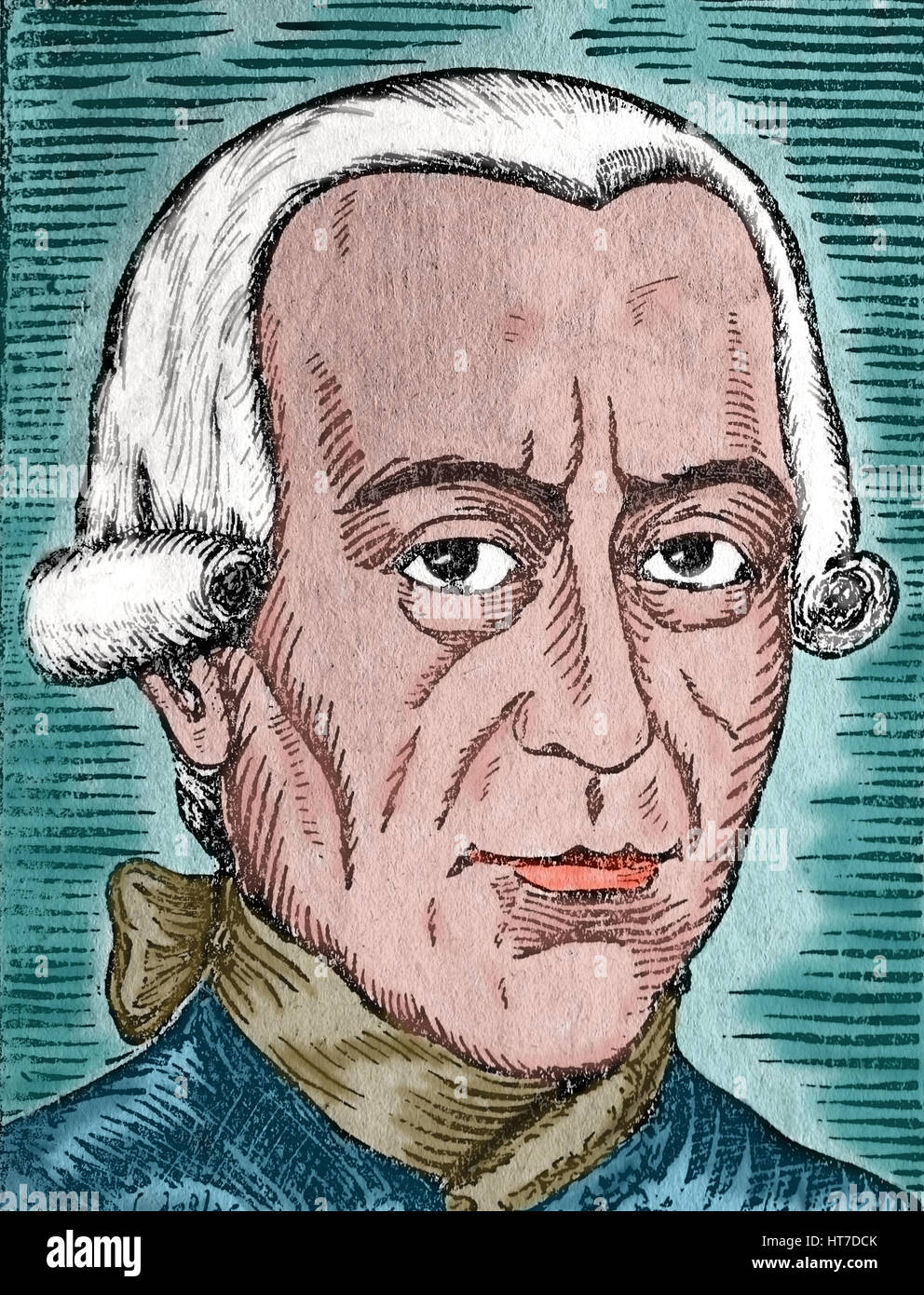
Exploring the Life and Contributions of Antonio de Ulloa
Introduction
Antonio de Ulloa y Espinosa de la Cerda, born on April 17, 1674, in Guadalix de La Sierra, Spain, was a prominent figure in the field of science during the Enlightenment era. His contributions extended across multiple disciplines, including geodesy, chemistry, and meteorology. Ulloa's life was marked by significant achievements, and his legacy continues to influence scientific thought.
The Early Years and Education
Antonio de Ulloa came from a family with military and administrative backgrounds. His father, Pedro de Ulloa y Vela, served as governor of Santo Domingo in the Spanish West Indies. This environment influenced Ulloa's early intellectual curiosity and predisposed him towards a career in service to his nation.
Ulloa's formal education began in Madrid, where he was deeply influenced by the scientific environment of the time. He attended the Royal and Pontifical University of Madrid, where he studied philosophy and medicine. It was during this period that he developed an interest in natural sciences, which would become his lifelong passion.
The Royal Navy and Expeditions
Recognizing Ulloa's potential, the Spanish Crown offered him opportunities to serve both the military and science. In 1709, at the age of 35, he joined the Royal Navy to assist in the expedition against England during the War of the Spanish Succession. This experience provided him with practical skills in exploration and navigation.
After the war, Ulloa was appointed to lead an important expedition to South America in the late 1730s. His mission was to study the coastal regions of Argentina, Chile, and western Peru. Equipped with the latest scientific instruments, including surveying tools and clocks, Ulloa embarked on what would be a groundbreaking scientific voyage.
Scientific Ventures in South America
Upon arrival, Ulloa engaged in extensive mapping and surveying of the coastline. These efforts were crucial not only for cartography but also for understanding the geographical features of the region. One of his most notable achievements during this period was the determination of the shape of the Earth. Working closely with fellow scientists such as Charles Marie de La Condamine, Ulloa conducted observations at different latitudes along the coast.
The results of their work eventually supported the hypothesis that the Earth is slightly flattened at the poles—a concept known as oblateness. This project, often referred to as the Spanish-Swedish Geodetic Mission, utilized advanced trigonometric methods and precise astronomical measurements. The data collected by Ulloa played a vital role in Pierre-Simon Laplace’s theory of gravity and the shape of the Earth.
Chemistry and Natural Philosophy
Apart from his work in geodesy, Ulloa made significant contributions to the field of chemistry. In 1735, he returned to Spain where he became interested in the process of distillation and the composition of minerals. Ulloa's writings on these topics introduced new techniques and ideas to the European scientific community.
One of his most famous works, the book "El mineral del Potosí," published in 1748, detailed his observations and experiments related to the metallurgy of silver. This publication helped establish a better understanding of the chemical composition of minerals and facilitated industrial applications. Ulloa's research into the properties of arsenic, particularly its use in glassmaking and textiles, also garnered attention within the scientific community.
Literary Works and Legacy
Beyond his technical scientific works, Ulloa was also a prolific writer. His book "Viaje alrededor del mundo" (Travels to the Regions of the West Indies), published in four volumes between 1747 and 1748, provided a comprehensive record of his journeys and observations. This literary endeavor not only chronicled his scientific experiences but also offered insight into the cultural and social aspects of the regions he visited.
The impact of Ulloa's writings can still be felt today. His descriptions of the landscapes, people, and flora and fauna of South America offer valuable historical context and contribute to our understanding of colonial history and environmental studies. Furthermore, his scientific method and rigorous observation techniques laid foundational principles for modern geodesy and chemistry.
Impact and Recognition
Ulloa received numerous accolades and distinctions for his contributions. In recognition of his work in geodesy and his role in the scientific mission to South America, he was elected to the Royal Society in London in 1741. His membership in prestigious academies, including the Académie Royale des Sciences and the Royal Academy of Sciences of Madrid, highlighted the international respect he commanded.
Beyond his professional achievements, Ulloa also served in various governmental and diplomatic roles. His appointment as the governor of Louisiana in 1742 showcased his adaptability and leadership skills. Despite this position, however, he faced challenges and eventually returned to Spain, where he continued his scientific pursuits.
His legacy endures through a multitude of honors, including a crater named after him on the Moon. Today, historians and scientists continue to appreciate Ulloa's pioneering work, recognizing his significant contributions to the advancement of knowledge during a pivotal period in the history of science.
In conclusion, Antonio de Ulloa's life and work spanned several critical areas of scientific inquiry, leaving a lasting impact on the fields of geodesy, chemistry, and natural philosophy. As we reflect on his journey, we underscore the value of interdisciplinary collaboration and dedication to expanding human understanding of our world.
Scientific Achievements and Collaboration
Antonio de Ulloa's scientific career flourished further during his return to Spain. Collaborating with other notable scientists, he continued to push the boundaries of knowledge. One of his most significant scientific collaborations was with Charles Marie de La Condamine, who had traveled to the Amazon Basin as part of a similar mission to measure the Earth's equatorial radius. Together, they shared their data and insights, contributing to the understanding of the shape of the Earth and the properties of materials.
Ulloa's expertise in geodesy led him to contribute to the development of map-making techniques. He worked extensively on refining the methods used for accurate cartography, which were crucial for naval navigation and colonial expansion. His methods involved the use of triangulation, a technique where distances are calculated through the measurement of angles, significantly improving the accuracy of maps.
His contributions to the field of chemistry also gained widespread recognition. Ulloa's detailed observations and experiments laid the groundwork for future research. He wrote extensively on the properties of various minerals and the processes involved in their formation. For instance, his work on the purification and use of arsenic in glassmaking was particularly innovative. This not only improved the quality of glass but also paved the way for advancements in glass chemistry.
Publications and Influence
Ulloa's publications were instrumental in disseminating knowledge and sparking interest in scientific inquiries. Apart from "El mineral del Potosí," he authored many other books and treatises that discussed his findings and theories. His writings not only documented his travels and adventures but also presented a holistic perspective on the natural world.
"Viaje alrededor del mundo" remains one of his most celebrated works. It was a multi-volume account of his expeditions and explorations, complete with detailed descriptions and illustrations. This book provided valuable information to scholars and researchers, helping them to understand the geographical, cultural, and ecological contexts of the regions he visited.
Diplomatic and Political Roles
Beyond his scientific endeavors, Ulloa held several positions in the Spanish government. He was appointed as a judge in the Supreme Council of War and subsequently became the governor of Louisiana in 1742, a post he briefly occupied before facing significant difficulties. His tenure was marred by conflicts with the French, leading to his eventual downfall and return to Spain.
In Spain, he became a member of the Royal Academy of Sciences and the Royal Society, reflecting his standing in the scientific community.
Economic and Industrial Impact
Ulloa's work extended beyond pure science into practical applications that had tangible impacts on society. His investigations into the metallurgy of silver from the mines of Potosí, Bolivia, contributed to the economic prosperity of Spain. The techniques he described in "El mineral del Potosí" helped improve the efficiency and profitability of silver mining operations.
In addition to his scientific and political roles, Ulloa was also involved in establishing industries. He advocated for the establishment of factories in South America, promoting the growth of industries such as glass and metal working. These initiatives not only contributed to the local economy but also enhanced Spain's global trade prospects.
Cultural Legacy
Ulloa's legacy extends beyond his individual accomplishments. His travels and writings provided insights into the daily lives, cultures, and landscapes of the regions he explored. These contributions offer historians a window into the colonial era and the interactions between Europeans and indigenous populations.
Moreover, his emphasis on empirical observation and precise measurement set a precedent for modern scientific methodology. His approach to gathering data and documenting observations influenced subsequent generations of researchers.
The Lunar Crater
A crater on the Moon, named "Crater Ulloa," honors Ulloa's contributions to science. Discovered and named in 1967 by radar imaging, this crater serves as a visible testament to his enduring impact on astronomy and geography.
This recognition reflects Ulloa's wide-ranging impact across multiple disciplines, from the rigors of scientific research to the broader canvas of colonial administration. His comprehensive observations and meticulous documentation not only advanced his own field of study but also left a lasting imprint on the way scientific knowledge is gathered and disseminated.
Award and Honors
In recognition of his groundbreaking work, Antonio de Ulloa was awarded numerous honors during his lifetime and posthumously. He received medals and commendations from various scientific institutions, solidifying his reputation as one of the foremost scientists of his time.
His contributions were acknowledged not just by his peers but also by future generations of scientists. Many of the concepts and techniques he pioneered continue to underpin modern geodesy, chemistry, and cartography.
Conclusion
In summary, Antonio de Ulloa's life and work exemplify the multifaceted nature of Enlightenment-era scientific inquiry. His contributions to geodesy, chemistry, and natural philosophy, coupled with his practical applications in colonial administration and industry, demonstrate the breadth of his scientific legacy.
Through his writings, collaborative efforts, and pioneering methodologies, he left an indelible mark on the scientific community. His enduring impact on fields ranging from cartography to metallurgy underscores the far-reaching significance of his work.
As we celebrate Antonio de Ulloa's life, we recognize not only his technical innovations but also his role in shaping the intellectual landscape of Europe and South America during the eighteenth century. His legacy continues to inspire scientists and researchers worldwide, serving as a beacon for the pursuit of knowledge and exploration.
Antonio de Ulloa's work extended his influence well beyond the scientific and academic spheres. His travels, discoveries, and writings have left a profound legacy that continues to resonate in various disciplines. His methodologies and observations continue to be studied, as do his explorations of colonial territories, which provide valuable insights into the historical context of his time.
The Historical Context and Colonization
Understanding the broader historical context of Antonio de Ulloa's life and work is crucial to appreciating his contributions fully. The Spanish Empire, during the reign of King Philip V, was actively engaged in expanding its colonial territories and maintaining control over vast regions. Ultramar, or overseas colonies, were considered vital for economic and strategic reasons.
Ulloa's voyages and expeditions were part of this broader colonial project. His work in measuring the Earth's circumference and determining ocean currents provided valuable information for naval navigation and trade routes. This was particularly important given the importance of the Americas in Spanish global ambitions.
His role as the governor of Louisiana was also reflective of this colonial drive. While his tenure was marked by conflicts with the French, his efforts to promote industry and improve governance demonstrate his commitment to integrating these regions into the Spanish Empire. However, the complexities of colonial administration, especially in the face of internal and external pressures, often hampered his efforts.
Impact on Modern Science and Research
One of Ulloa's most enduring legacies is his contribution to modern geodesy and cartography. His pioneering work on the shape of the Earth laid the foundation for future geodetic surveys. The data he collected, particularly the measurements of gravitational anomalies, were crucial for developing more accurate models of Earth's gravitational field. These models are fundamental to contemporary geodesy and navigation systems.
In the field of chemistry, Ulloa's detailed observations of mineral properties and processes continue to inform modern chemical analyses and metallurgy. His descriptions of the metallurgical processes in the Potosí mines, for example, remain relevant today, providing insights into historical industrial practices that have shaped modern mining techniques.
Influence on Future Scientists and Explorers
Ulloa's meticulous records and observational techniques inspired future generations of scientists. His detailed accounts of geological formations, climate patterns, and plant species in South America provided a rich source of data for later explorers and researchers. Scholars continue to reference his works when studying colonial history and environmental changes in the regions he explored.
Moreover, his collaborative spirit and willingness to share knowledge influenced the scientific community's approach to international cooperation. Ulloa's work on geodesy brought together scientists from different countries, fostering a culture of collaboration and mutual exchange of ideas.
Legacy in Contemporary Science
While much of Ulloa's original work is now outdated, the principles and methodologies he established continue to be relevant today. Modern geodecicians refer to his work when validating new surveying techniques, while chemists use his methodologies for refining analytical protocols. Institutions like the Royal Society and the Royal Academy of Sciences continue to recognize and honor the contributions of figures like Ulloa, ensuring his legacy is kept alive.
Furthermore, his use of advanced instruments and rigorous testing methods set a standard for scientific inquiry that remains essential in contemporary science. The precision and accuracy he demanded in his measurements form the bedrock of modern scientific practice.
Conclusion
In conclusion, Antonio de Ulloa's life and work represent a rich tapestry of scientific, administrative, and cultural achievements. From his groundbreaking geodetic surveys and meticulous chemical observations to his influential explorations and diplomatic roles, Ulloa's legacy continues to inspire and inform modern science and scholarship.
His dedication to empirical research and collaborative effort set a high standard for future scientists. As we explore and understand our world, Ulloa's work reminds us of the importance of rigorous observation, precise measurement, and the pursuit of knowledge across diverse disciplines.
By honoring his contributions, we reaffirm the enduring value of interdisciplinary scientific inquiry and the lasting impact of pioneering researchers like Antonio de Ulloa.