Drusus the Elder: The Prominent Pontifex and Consul of Ancient Rome
The Background and Early Life
Drusus the Elder, known as Nero Claudius Drusus (c. 38 BC – AD 9), was a prominent political figure in the Roman Empire during the reigns of Augustus Caesar and his grandsons. Born into the Julio-Claudian dynasty, he emerged as a key member of the imperial family and played significant roles within both the military and political spheres of Rome. His contributions to both the Roman army and government earned him considerable respect and influence among the populace.
Drusus was the son of Tiberius Claudius Nero and Antonia Minor, making him a great-nephew to Julius Caesar via his mother’s side. This lineage provided him with a strong connection to the ruling family, though it also meant navigating the treacherous internal politics of ancient Rome. Little is known about his early life, but historical records indicate that he was well-educated and trained from a young age in the traditional Roman ways that valued military prowess and civic duties.
Drusus began his military career under his father’s command at an unusually young age, serving as a quaestor at the age of nineteen. His talent for leadership and military strategy were evident early on, leading to rapid promotions. By the time he was twenty-six, he had been appointed legate to Germania Superior, overseeing military operations against the Chatti tribe.
Military Achievements and Campaigns
Drusus’ most renowned campaigns took place in Germania. From AD 7 to 9, he spearheaded multiple expeditions across modern-day Germany. These campaigns were aimed at expanding Roman territory and gaining control over new territories. During this period, Drusus achieved numerous victories and successfully subdued several tribes, including the Cotini, Tencteri, Bructeri, Usipetes, and Batavi.
One of his notable successes came in the invasion of Teutoburg Forest, where he defeated the Suebi, a confederation of tribal groups that had proven difficult for previous Roman commanders. Although he did not personally participate due to ill-health, the campaign demonstrated his strategic acumen and the confidence the Roman Senate placed in him. Another significant victory was against the Cherusci, a powerful Germanic tribe, furthering Rome's claims over the region.
Drusus was celebrated for these accomplishments, and many triumphal arches were erected in his honor in Italy and Rome. He was granted the title "Germanicus Maximus," marking his exceptional leadership and military achievements in Germania. These successes not only boosted Roman territorial expansion but also solidified Drusus’ reputation as one of the finest military leaders of his era.
Political Influence and Family Dynamics
Beyond his military exploits, Drusus played a vital role in Roman politics. As a member of the imperium, he had significant influence when the Senate was considering matters of state. His close ties to the ruling family, particularly his relationship with Augustus' sons, gave him a unique vantage point in the complex political landscape of Rome.
Drusus supported Augustus’ policies and often took on diplomatic missions for the emperor. One such mission involved negotiating with King Archelaus of Cappadocia after his revolt against Roman rule. This action strengthened Drusus’ status within the imperial circle and further enhanced his standing as a trusted advisor.
His political allies included key figures like Tiberius, his future stepson, with whom he shared a close bond despite their contrasting personalities. Together, they worked on various reform projects and maintained the stability of the Roman Empire through a coalition of military might and effective governance.
However, Drusus’ political influence was not without its challenges. There were instances where his ambitions and those of Augustus may have conflicted, leading to tension in their relationships. Despite these occasional disagreements, Drusus remained a valuable asset to the ruling class and contributed significantly to the maintenance of peace and order during his lifetime.
Legacy and Aftermath
Following his death in AD 9 due to a fall from his horse, which some sources suggest may have been intentionally precipitated by poisoning, Drusus left behind a mixed legacy. His military campaigns and strategic acumen were remembered fondly, contributing to Rome’s territorial growth and stability. However, the political intrigue surrounding his death and the subsequent machinations within the imperial court overshadowed his contributions.
Despite the controversies, Drusus’ impact on Roman military history remains significant. His influence can be seen in the subsequent legions formed and the strategies implemented by later Roman generals. His name continues to feature in the annals of Roman history, symbolizing Roman might and glory.
In conclusion, Drusus the Elder was a pivotal figure in Roman history, whose military prowess and political savvy contributed to the empire's consolidation and expansion. His life and achievements provide a fascinating glimpse into the world of ancient Roman politics and warfare.
The Family Legacy and Impact on Imperial Succession
Drusus’ untimely death in AD 9 left a profound legacy in the Julio-Claudian family. Augustus adopted Germanicus, his son by Drusus’ sister Livilla, as his own grandson and heir-designate. Germanicus carried forward much of Drusus’ qualities and ambitions, leading to a continuation of Roman military dominance. However, the early death of Drusus also introduced elements of strife and uncertainty into the imperial succession, as his surviving son, also named Drusus (Drusus the Younger), was born posthumously and became a key figure in the later tumultuous history of the Julio-Claudian dynasty.
In the immediate aftermath of Drusus’ death, there was a shift in political dynamics. Tiberius, who had always held a strained relationship with Drusus, saw an opportunity to assert himself more prominently. The political landscape of Rome became increasingly unstable as Tiberius, driven partly by jealousy and perhaps a desire for total power, sought to undermine Germanicus and his position within the imperial family.
The deaths of Drusus and his wife, Antonia the Younger, who died shortly after giving birth to her son, created a power vacuum that Tiberius exploited. This loss was particularly significant as it removed a potential rival to Tiberius’ own ambitions for the throne. The young Drusus the Younger, born just months after his father's death, was initially cared for by Livia, Augustus’ wife, but eventually fell under the suspicious care of Sejanus, Tiberius’ favored praetorian prefect, who sought to manipulate the young prince for political gain.
Despite the family tensions, the legacy of Drusus the Elder continued through his descendants. His daughter Livilla married Marcius Junius Silanus, enhancing her status and ensuring her family connections remained strong. Though she later divorced Silanus and married Publius Silius, this move did little to ease the political turmoil between Tiberius and Germanicus.
The Political Intrigue and Later Controversies
The period following Drusus’ death was marked by increasing political intrigue and suspicion within the imperial court. Tiberius, having ascended to the throne, faced mounting criticism from supporters of Germanicus and his faction. This tension culminated in the famous conspiracy of Germanicus, which centered around charges of treason against Tiberius. While the evidence against Germanicus was largely conjecture, Tiberius orchestrated his fall, leading to the execution of Germanicus and his wife Agrippina the Elder.
Drusus the Younger, now under Sejanus’ influence, seemed to be positioned as a potential successor, albeit a tool rather than an equal partner in decision-making. Sejanus, in particular, sought to undermine any potential rivals, including the remaining members of the imperial family. This included plotting against Tiberius’ own daughter, Julia Livia, and attempting to marry Drusus to her daughter, Livilla the Younger.
The rise of Sejanus and his growing influence over Tiberius brought further instability to the government. Sejanus, who had become increasingly powerful, ultimately led to his downfall after plotting against the emperor. His execution in AD 31 marked the end of his reign and allowed Tiberius to regain control. However, the political atmosphere remained tense, with suspicions of betrayal and manipulation still prevalent.
The later years of Tiberius were characterized by the purging of political enemies and the marginalization of potential heirs. While the Julio-Claudian line continued through the younger generations, each transition brought new political challenges and suspicions. The memory of Drusus the Elder lingered, serving both as a symbol of past military glories and a cautionary tale against internal political machinations.
The Enduring Legacy of Drusus the Elder
Despite the tumultuous political environment and the eventual decline of the Julio-Claudian dynasty, the legacy of Drusus the Elder endured. His military conquests in Germania set the stage for ongoing campaigns and the expansion of Roman territories in the north. Moreover, his status as a beloved and respected figure ensured that his name and accomplishments continued to be celebrated long after his death.
The writings of ancient historians, including Tacitus and Suetonius, preserved accounts of Drusus’ military exploits and political influence, providing invaluable insights into his role in shaping Roman history. Additionally, statues and monuments dedicated to him throughout Rome served as physical reminders of his significance, contributing to his lasting legacy.
Furthermore, his family connections and the interwoven dynastic links ensured that his influence extended beyond his immediate descendants. The survival of his lineage, albeit fractured and beset with political struggles, meant that his contributions to Roman governance and military expansion remained relevant well into the Flavian and later periods.
Drusus the Elder stands as a figure of immense importance in understanding the complexities of Roman imperial politics. His military prowess, political acumen, and enduring impact on Roman territorial expansion leave an indelible mark on the annals of history, continuing to captivate scholars and historians alike.
In summary, Drusus the Elder was more than just a military leader; he was a central figure in the Julio-Claudian dynasty, shaping Roman history through his strategic leadership and political alliances. His legacy, though marked by political intrigue and familial strife, remains a critical aspect of understanding the development and decline of the Roman Empire.
The final years of the Julio-Claudian dynasty, marked by political intrigue and instability, saw the rise and fall of influential members, many of whom had roots tracing back to Drusus the Elder. His influence extended beyond his immediate descendants, leaving a lasting impact on Roman governance and military strategy. The decline of the dynasty, starting with the death of Caligula in AD 41 and the subsequent reign of Claudius, further underscored the enduring relevance of Drusus' contributions.
Claudius, the stepson of Germanicus and step-grandson of Drusus the Elder, ascended to the throne after navigating the treacherous waters of Roman politics. Claudius, while not directly a soldier like his predecessors, drew on the legacy of Drusus and Germanicus to strengthen his own rule. His reign brought a period of relative stability, but also marked a shift in the direction of the empire, as Claudius focused more on internal administration and foreign diplomacy.
The death of Caligula, who was known for his erratic and often cruel behavior, opened the door for Claudius' succession. Claudius, although initially marginalized due to his apparent intellectual limitations, was seen as a stabilizing force. He continued the expansion of the Roman Empire, often citing the military successes of his predecessors as justification for further territorial acquisitions. This focus on expansion was evident in his efforts to conquer Britain, a campaign that was directly influenced by the precedent set by Drusus the Elder and Germanicus.
Claudius' reign saw a return to a more traditional Roman style governance, with a renewed emphasis on legislative and administrative reforms. His policies aimed at addressing the social and economic disparities that had become pronounced during the earlier reigns of Augustus and Caligula. Claudius' efforts to improve the legal and judicial systems, as well as his patronage of public works, such as the construction of the Aqua Claudia aqueduct, reflect the continuing impact of the legacy of Drusus the Elder and his military accomplishments.
However, the decline of the Julio-Claudian dynasty was not just a result of individual failings but also the broader socio-political and economic changes that were occurring within the empire. The increasing complexity of governance and the growing economic strain began to challenge the stability of the dynasty. Claudius' death in AD 54 led to the ascension of Nero, who quickly became notorious for his tyrannical rule and his eventual fall from power.
The fall of Nero completed the decline of the Julio-Claudian dynasty, marking the end of an era that began with the establishment of Augustus as the first Roman emperor. Nero's reign, characterized by extravagance and oppression, saw the disintegration of the political and social structures that had been built by his ancestors, including Drusus the Elder. The chaos that followed the fall of the dynasty highlighted the lasting impact of Drusus' contributions to Roman military and political power.
Despite the fall of the Julio-Claudian dynasty, the influence of Drusus the Elder continued to be felt in the subsequent histories of the Roman Empire. His military campaigns and political acumen set the stage for future Roman leaders, influencing the strategies and policies of emperors like Trajan and Augustus himself. The legacy of Drusus the Elder is particularly evident in the continued celebration of Roman victories in Germania and the expansion of the empire's territory.
The historian Tacitus, in his works such as "Annales" and "Agricola," provided detailed accounts of the military campaigns and political maneuvers of Drusus the Elder. Tacitus' works not only preserved the memory of Drusus but also served as a source of inspiration for future scholars and military leaders. The ongoing historical scholarship on Drusus the Elder continues to be a rich field of study, offering new insights into the dynamics of power, governance, and military strategy in the Roman world.
In conclusion, Drusus the Elder was not just a military leader but a central figure in the complex and often tumultuous history of the Roman Empire. His contributions to military conquest, political stability, and the development of Roman governance continued to influence the empire long after his death. The enduring legacy of Drusus the Elder is a testament to the enduring impact of individual leaders on the course of history, and his story remains a vital part of the historical narrative of ancient Rome.


Naevius Sutorius Macro: The Rise and Fall of a Roman Prefect
The annals of history are replete with figures whose lives are a testament to both the virtue and vice of human ambition. One such figure is Naevius Sutorius Macro, a man whose influence at the heart of Roman power was both pivotal and perishable. His story is one of ascension to power, adept maneuvering within the vicious political landscape of ancient Rome, and eventually, a swift fall from grace.
The Early Life and Career of Macro
Little is known about Macro's early life—a common predicament for those born outside the ranks of the Roman elite. Born into a family of equestrian status, Macro had the potential but not necessarily the path smoothed by noble pedigree. His early years would have involved the typical pursuits expected of someone within his class, focusing on education, training in the art of military tactics, and mastering the intricacies of Roman politics.
Macro's entrance into public life came through service within the Praetorian Guard, an institution initially established to serve as the personal bodyguards of Roman emperors. This role undoubtedly provided him with insight into the machinations of power at Rome's epicenter, as success within the guard was often dependent as much on understanding political currents as on martial prowess.
Ascension to Power
Macro’s major break into the higher echelons of power came around 31 AD, at a time of grave uncertainty within the Roman Empire. The reign of Emperor Tiberius was marred by increasing paranoia and autocracy. Lucius Aelius Sejanus, then-prefect of the Praetorian Guard and a man of considerable influence, had fallen from favor, accused of treason and ultimately executed. This left a vacuum in one of the most crucial positions within the Roman state, which Macro adroitly filled.
As the new Praetorian Prefect, Macro found himself at the confluence of military might and political intrigue, granting him a substantial degree of power. His adeptness in managing the emperor's whims and wielding influence bolstered his standing among the Roman elite. Unlike Sejanus, Macro understood the necessity of remaining in the emperor's shadow rather than seeking power outright, a strategy that initially served him well.
The Tiberian Transition
Macro's tenure coincided with the latter years of Emperor Tiberius’ reign. Tiberius, having retreated to the island of Capri, had become increasingly disengaged from direct rule. This left Macro with the delicate task of bridging communications between the emperor and the Senate, a role that allowed him to both safeguard and subtly shape imperial policy.
His political acumen was again demonstrated during the transition of power following Tiberius' death in 37 AD. Macro played a pivotal role in facilitating a smooth succession to the youthful Gaius Caesar Germanicus, more popularly known as Caligula. Supporting Caligula over other possible contenders suggested Macro's anticipation of the winds of change, and indeed, he was instrumental in securing Caligula's place on the throne.
Under Caligula's Regency
Initially, Macro enjoyed a favored status within Caligula's court. Here, he demonstrated an understanding of the emperor's personality, managing court matters with tact and discretion. However, the capricious nature of Caligula's rule soon rendered Macro's position precarious. The new emperor's increasingly erratic behavior made it difficult for even the most seasoned politicos to navigate court dynamics safely.
Macro’s influence began to wane as Caligula’s paranoia and ruthlessness grew. Recognizing the potential threat posed by such a capable and once-powerful advisor, Caligula dismissed Macro from his post. The dismissal marked the onset of Macro's dramatic fall, reflecting the volatile and perilous landscape of Roman political life where the fortunes of even the mightiest could shift at a moment’s notice.
In spite of the precariousness of his position, Macro served a crucial role during one of the most turbulent times in Roman imperial history. His actions helped shape the course of succession during a highly delicate transition. Yet, despite his initial acumen and influence, Macro would soon find the broader historical forces within the empire to be uncontrollable, leading to personal risk and eventual demise.
The next segment of Macro’s story will explore the consequences of his fall from favor and the enduring legacy of his complex relationship with imperial power. Stay tuned for the continuation of this captivating historical narrative.
The Decline of Naevius Sutorius Macro
As is often the case in the corridors of power, the same qualities that elevated Macro to a position of influence eventually led to his downfall. Caligula, who was once a beneficiary of Macro's political acumen, began to perceive his former protector as a potential threat. The ease with which Caligula's transition to power was facilitated served as a double-edged sword for Macro. What should have been a boon turned into suspicion in the emperor's eyes—a demonstration of Macro’s capability and ambition that could just as easily be directed elsewhere.
Soon after assuming power, Caligula's behavior became increasingly erratic. His initial acts as emperor were characterized by generosity and clemency, but this goodwill quickly deteriorated. Historical accounts depict Caligula as indulging in tyrannical excesses, acting on whims with no regard for precedent or tradition.
Intrigues and Suspicions
In this charged environment, Macro found himself vulnerable. Despite his attempts to remain a loyal advisor, Caligula's capricious nature and growing paranoia proved disastrous. Macro's rise to power, predicated on his ability to read and respond to the demands of those above him, became his Achilles' heel. He could not have anticipated the sudden transformation from ally to adversary in Caligula’s mind.
Fueling the emperor's anxiety were whispers and insinuations at court. Every success Macro had achieved was recast as potential evidence of treachery, and his association with the previous regime further exacerbated suspicions. The fallacy of court life is that loyalty often becomes indistinguishable from scheming, as Macro learned to his peril.
Caligula's Calculated Disfavor
The emperor orchestrated Macro's removal in a manner befitting his penchant for dramatics. It began with a demotion where Macro was stripped of his prefecture, a public signal of his diminishing favor. Shortly thereafter, Macro was ensnared in scandal. Caligula accused him of conspiring against the throne, of abetting in schemes of sedition against the divine emperor—a charge that reflected Caligula's need to exhibit power while excising any perceived threat.
Unlike some predecessors who met such charges with violence or flight, Macro faced the accusations with surprising composure, perhaps mindful that the construction of these suspicions was as fragile as the emperor's mental state. However, his fate was sealed not by evidence but by Caligula's decree. The emperor, desiring complete control over those in his inner circle, saw no room for a man whose influence had once run so deep.
The Fall: A Swift and Final Act
With court rumors stoking fires of doubt, Macro’s position became untenable. Under immense pressure and recognizing his untenable position, Macro accepted his fate pragmatically—an acceptance that his story had reached its inevitable dissolution in the violent churn of Roman politics.
Accounts of Macro's end vary, hinting at the difficulties in piecing together the web of truths and fabrications typical of ancient historical narrative. Tacitus and Suetonius, two of Rome’s foremost historians, each lend a different lens to Macro's demise. The specifics of his death are shrouded in mystery; some sources suggest he was forced to end his own life, a final act of subjugation that speaks volumes to the absolute hold Caligula—and the imperial apparatus—had over its servants.
This brought to a close the meteoric rise and fall of Naevius Sutorius Macro. His life as a Roman prefect highlights the perennial struggle between power and peril. Within a few brief years, Macro had navigated the peaks of success and the depths of ruin, with little but experience and memories to mark his journey upon the global stage of history.
Legacy and Lessons
The story of Naevius Sutorius Macro is a classic tale of ambition, power, and downfall within the intricate tapestry of Roman politics. His legacy is not one of durable achievement or grand reform, but rather as a reflection of the innate volatility at the heart of imperial administration. The constant presence of intrigue, ambition, and mortal danger were defining characteristics of life at Rome's political zenith, where to rise was to court risk, and to fall was nearly inevitable.
Macro's life serves as a reminder of the complex personalities and fraught political landscapes that have shaped human history. While his contributions may not have permanently altered the course of Roman governance, his story provides insights into the broader dynamics and intrigues of the Roman Empire at a time of significant transformation.
In our next segment, we will delve deeper into the implications of Macro’s career for the Roman Imperial system and examine how his personal journey mirrored broader dynamics of power and influence that continued to shape the empire long after his death. Stay tuned as we explore the ever-turning wheels of history and the lessons that can be derived from Macro’s conflicted legacy.
The Broader Implications of Macro's Career
While Naevius Sutorius Macro may have disappeared from the political scene with striking rapidity, his career continues to offer poignant lessons about the nature of power within the Roman Empire. His rise and fall were not isolated incidents but reflective of broader systemic dynamics characterized by intrigue, betrayal, and the relentless pursuit of influence.
A Lens into the Roman Imperial System
Macro’s tenure as Praetorian Prefect offers a compelling lens through which to examine the administrative and political structures of the Roman Empire. The power concentrated within the Praetorian Guard, which Macro wielded adeptly, exemplified the militaristic undercurrents that frequently shaped political destinies. The position itself was a fulcrum upon which the balance of power could tilt. Prefects held significant sway over the emperor’s safety, making them indispensable allies or dangerous enemies—a dichotomy prominently showcased by Macro’s career.
The guard's influence in succession politics, especially during the uncertain transitions of emperors, highlighted Rome's dependency on military endorsement. Macro’s actions in securing Caligula’s ascension underscored the guard's indirect hand in steering imperial legitimacy, demonstrating that the emperor’s divine symbolism was sometimes no match for the earthly power of military backing.
The Cost of Political Intrigue
The demise of Macro's career also underscores the perilous cost of existing in a world rife with political intrigue, where the delicate balance between ambition and survival was a constant, oppressive presence. Macro’s success depended not only on his acumen but also on navigating the emperor's ever-shifting moods and the mercurial allegiances of the Roman elite. His experience exemplifies the perennial truth that in realms where power is absolute, trust is a rare and often lethal commodity.
Furthermore, the culture of suspicion that defined Caligula’s court serves as an important historical lesson on the dangers inherent in centralized autocracy. The fragility of an individual’s success, as evidenced by Macro’s fall, sheds light on the broader vulnerabilities of a political system that eschewed institutional continuity in favor of personal loyalty and the emperor’s goodwill.
Macro's Legacy in Context
Macro’s legacy is reflective of a pivotal period in the Roman Empire—a crossroads where the currents of republican tradition met the tide of authoritarian imperial governance. Here's a figure whose own ambitions and cunning allowed him to stride confidently through the annals of history, yet who was ultimately undone by the very system he navigated so adeptly.
Despite his personal aspirations and transient successes, Macro’s most enduring impact lies in the way he epitomizes the intricate power play of Roman politics—a world where alliances were fragile, and the line between power and vulnerability was often razor-thin. In navigating this world, Macro highlighted the perennial challenges faced by those who seek to harmonize ambition with the ever-volatile nature of imperial favor.
Lessons for the Future
Looking back at the life of Naevius Sutorius Macro, we find a narrative rife with lessons still relevant to contemporary discussions of power and governance. The risks he encountered and the ultimate futility of personal agency in a system dominated by imperial caprice underscore the timeless nature of political caution.
As both an architect and victim of Roman political dynamics, Macro’s life serves as both a cautionary tale and an insightful historical reflection. His story encourages modern readers to consider the value of institutional reform over personal ambition and highlights the intricate, oftentimes perilous dance involved in positions of high power, where perception and trust can alter the course of history itself.
By situating Macro within the broader narrative of Roman history, we gain a deeper understanding of the factors that shaped one of the world’s greatest empires and continue to inform discussions on leadership and political legacy. Ultimately, the complex dance of power embodied in Macro’s career resonates through the ages, serving as a testament to the enduring nature of ambition and the trials it entails.
In closing, the study of Naevius Sutorius Macro's life not only enriches our understanding of a transformative epoch in Roman history but also offers timeless insights into the human condition and the intricacies of wielding—and surviving—great power.


Praetorian Prefect Burrus: Guardian of Imperial Stability
The intricate tapestry of Ancient Rome's history is woven with figures whose influence, though often shadowed by emperors and military campaigns, played critical roles in shaping the empire's fate. One such indispensable figure is Sextus Afranius Burrus, a man whose steadfast dedication and astute political acumen positioned him at the heart of Roman power during a pivotal era. As the Praetorian Prefect, Burrus walked a fine line between loyalty to the emperor and the pursuit of peace and prosperity for Rome.
Early Life and Rise to Power
Little is known about the early years of Sextus Afranius Burrus, but what can be pieced together from historical texts suggests a journey marked by ambition, intelligence, and a strategic ascent through the Roman military ranks. Born to a family of equestrian status, Burrus's initial steps on the path to prominence were likely shaped by a combination of personal abilities and strong social connections — a vital combination for success in the Roman hierarchy.
Under the reign of Emperor Claudius, the political climate of Rome was one of transformation, where positions of power fluctuated with the whims of the emperor and the machinations of those around him. It was within this dynamic environment that Burrus found his niche. His military prowess and reputation as a loyal servant to the state did not go unnoticed. Gaining the trust of Claudius, Burrus was appointed as Praetorian Prefect, assuming command of the Praetorian Guard, the elite unit tasked with the protection of the emperor.
Role of the Praetorian Prefect
The position of Praetorian Prefect was one laden with both responsibility and peril. Commanding the Praetorian Guard entailed ensuring the emperor's safety, but it also placed Burrus amid the complex web of Roman politics. The guard was known for its influence, often serving as the kingmaker in the succession struggles that punctuated Roman imperial history.
Burrus's appointment marked a turning point in the structure and function of the Praetorian Guard. He implemented reforms that enhanced discipline and loyalty within the ranks, transforming the unit into a more cohesive and effective force. Burrus recognized that stability within the Guard was synonymous with stability within the empire. His leadership style was characterized by fairness and discipline, fostering a sense of loyalty among his men, an achievement that would prove essential during the tumultuous times ahead.
Burrus and the Reign of Nero
Burrus's tenure as Praetorian Prefect coincided with the rise of Nero, one of Rome's most enigmatic emperors. The transition from Claudius to Nero in 54 AD was carefully orchestrated, with Burrus playing a pivotal role. Alongside Nero’s influential advisor Seneca, Burrus acted as a stabilizing force, guiding the young emperor through the early years of his reign.
This partnership between Burrus, Seneca, and Nero was one of mutual benefit. While Nero provided the imperial legitimacy, Burrus ensured the emperor's safety and stability, and Seneca offered intellectual and rhetorical guidance. Together, they sought to moderate Nero's excesses and navigate the political complexities of the Roman court.
Burrus's influence extended beyond military matters; he was integral in shaping policy, often acting as a mediator between the emperor and the Senate. His cautious approach and emphasis on balance ensured that Nero's initial years were relatively successful, fostering a period of relative peace and prosperity within the empire.
Challenges and Political Intrigue
Despite the initial harmony, Burrus's role was not without its challenges. The Roman court was a hotbed of intrigue, where alliances shifted as quickly as the tide. Burrus's relationship with Nero became increasingly strained as the emperor's behavior grew more erratic and unpredictable. The young emperor's fascination with the arts and his penchant for lavish extravagance often clashed with the prudent governance advocated by Burrus and Seneca.
Rumors of plots and conspiracies were rife, and Burrus found himself navigating a treacherous landscape where loyalty was as tenuous as a sparrow's flight. His position required constant vigilance, balancing the demands of the emperor with the expectations of Rome’s political elite.
Still, Burrus remained a staunch advocate for moderation and peace. His diplomatic skills were put to the test as he strove to maintain Nero's favor while protecting the interests of Rome. Despite his dedication, the pressures of court life were unrelenting, testing the limits of his influence and patience.
The Influence of Burrus: Balancing Power
Sextus Afranius Burrus was more than a mere guardian of the emperor; he became a pivotal figure in shaping imperial policy, eclipsing the traditional role of a military leader to become a key statesman in Nero's court. His influence was evident in his efforts to moderate Nero's less conventional impulses and instill a sense of responsibility towards governance. This delicate balancing act required not just military acumen but also political finesse and an adept understanding of human nature.
Burrus's approach to maintaining influence in Nero's court was largely defined by his alliance with the philosopher and statesman Seneca. Together, they formed a formidable partnership that sought to ensure the security and prosperity of the Roman Empire. Burrus often acted as an intermediary between Nero and various factions within Rome, using his influence to advocate for decisions that aligned with stability and the broader interests of the Empire. His efforts to maintain harmony were largely successful, at least during the early years of Nero's reign, contributing to what is often termed the quinquennium Neronis, or "five good years," a period marked by competent administration and relative peace.
Burrus’s Reforms and Administrative Strategies
Burrus understood that the longevity of any ruler depended significantly on the satisfaction and contentment of his guards and subjects. To this end, he implemented several reforms within the Praetorian Guard, aimed at increasing both efficiency and loyalty. He sought to instill a code of conduct that emphasized duty, honor, and loyalty to the emperor but also a sense of obligation to Rome itself. These changes not only fortified Nero's reign but also improved the overall image of the Guard, moving it away from a mercenary organization to one perceived as a protective force for the Roman people.
On a broader administrative scale, Burrus encouraged policies that favored economic stability and legal reforms. The emphasis was placed on protecting the legal rights of Roman citizens and ensuring fair trials, which reinforced the stability of the judicial system. While his companion Seneca focused on rhetoric and philosophy, shaping the cultural and moral aspects of Nero’s administration, Burrus remained grounded in the practicalities of governance, addressing issues such as the management of public finances, the military, and law enforcement.
Burrus's tenure contributed significantly to a period of unprecedented order and prosperity, and his strategic foresight in both military and civic matters helped mitigate some of the internal pressures that could have destabilized Nero's reign prematurely.
The Tides of Change: Burrus’s Declining Influence
As Nero matured, so too did his desire to assert his independence from the constraints of his advisors. This drive coincided with changes in Nero's circle, as new favorites and influences began to wedge themselves into positions of power, gradually eroding Burrus's and Seneca’s control over imperial policy. The growing influence of figures like Poppaea Sabina and the increasing presence of Nero’s more unsavory contemporaries in court affairs made Burrus’s position increasingly challenging.
Burrus was caught in a high-stakes political game, where success and survival depended on his ability to maintain Nero's trust amid shifting allegiances and growing paranoia. The young emperor's disdain for accountability, paired with an inflated ego, made it increasingly difficult for Burrus to influence Nero's decisions. Burrus's warnings about the consequences of unchecked extravagance and neglect of governance were often overshadowed by Nero’s artistic pursuits and indulgences.
The Last Years and Legacy of Burrus
Burrus’s staunch dedication to Rome and his unwillingness to indulge Nero's excesses ultimately led to his declining influence. Accounts vary, but Burrus's death in 62 AD under mysterious circumstances marks a turning point in Roman history. Some suggest that his demise was due to natural causes, while others speculate possible foul play linked to court intrigues. The removal of such a stabilizing figure had profound implications for Nero's reign, laying bare the unchecked ambitions and excesses of the young emperor.
Burrus's legacy, however, is not solely defined by his fall. He is remembered as a competent and virtuous administrator whose leadership during his tenure as Praetorian Prefect played a crucial role in maintaining the relative stability and prosperity of the Roman Empire during a time when internal and external pressures could have led to disaster. His tenure is a testament to the importance of strong, balanced leadership in preserving the future and stability of an empire.
As a guardian of imperial stability, Burrus's contributions served as a bulwark against the turbulent forces at play in the Roman court. His life and work remind us of the complex web of influence and politics that defines historical governance, underscoring the roles of characters who are not always in the spotlight but whose impact is deeply felt throughout history.
The Aftermath of Burrus's Death: Unraveling Order
The death of Sextus Afranius Burrus in 62 AD marked a critical juncture in Nero's reign, sending ripples through the complex political landscape of Rome. As one of Nero’s most trusted advisors, Burrus's absence left a void that was difficult to fill. His demise heralded the end of a period of relatively stable governance and ushered in a time rife with intrigue and disorder. The protective mantle that Burrus had helped weave around Nero and the broader realm began to disintegrate, revealing the emperor's vulnerabilities to manipulation and unchecked ambition.
In the wake of Burrus's death, the political balance within the Roman court shifted dramatically. Nero increasingly relied on advisors who lacked the statesmanship and dedication of their predecessors, such as Tigellinus and Anicetus. These men were more inclined to indulge Nero’s whims and extravagances, exacerbating the decline in responsible governance that Burrus had worked tirelessly to stave off. The loss of Burrus’s moderating influence opened the door to the deterioration of the principled administration he had helped cultivate, contributing to the growing detachment of Nero from the Roman Senate and populace.
Nero’s Descent and the Loss of Control
Without the stabilizing presence of Burrus and the subsequent resignation of Seneca, Nero's court became increasingly dominated by sycophants who fueled his egotistical tendencies. Freed from the constraints of his former advisors’ prudence, Nero indulged in his passions with abandon, focusing on artistic endeavors and extravagant architectural projects, which placed significant strain on the empire's resources. This pattern of governance alienated many senatorial elites and fostered widespread disillusionment among the Roman public.
The ensuing years were marked by increasing social and political unrest, with Nero’s administration struggling to address the needs and concerns of Rome’s citizens. The emperor's inability to manage these challenges effectively was compounded by a series of events that underscored his diminishing control over the empire, such as the Great Fire of Rome in 64 AD. While Nero's initial response to the disaster was commendable, rumors of his involvement in starting the fire and subsequent lavish reconstruction projects did little to restore public trust or quell growing dissent.
The Impact on Rome and Beyond
Burrus's legacy extended beyond his influence on Nero’s rule, significantly shaping the Roman Empire’s military and administrative strategies. His reforms within the Praetorian Guard had strengthened an institution crucial for the stability of any Roman emperor's regime, setting a precedent for future prefects who inherited the role. Additionally, Burrus’s insistence on discipline and loyalty served as a model for military conduct, which remained influential even after his death.
However, the long-term effects of his absence were profound and immediate. With unchecked corruption and increasing unrest, the unity of the empire began to fray. The decline in responsible governance after Burrus and Seneca’s departure contributed to the unrest that characterized the year of the four emperors, a period of civil war and rapid succession that followed Nero’s eventual downfall in 68 AD. This era of instability highlighted the consequences of abandoning the balanced and prudent leadership that Burrus had championed.
The reverberations of Burrus's influence are evident in subsequent efforts by Roman leaders to rebuild and stabilize the empire. His emphasis on the integration of military and political cohesion would shape future administrative policies, serving as a guiding principle for emperors striving to restore order. Thus, despite the turmoil that followed his departure, Burrus's model of pragmatic leadership left an indelible imprint on the governance of Rome, offering valuable lessons in the art of balancing power and responsibility.
Remembering Burrus: A Complex Legacy
Sextus Afranius Burrus occupies a unique place in Roman history. Though often overshadowed by the flamboyance and notoriety of the emperor he served, Burrus’s contributions as Praetorian Prefect remain significant. He exemplified the critical role of advisors in shaping the trajectory of an emperor's reign, demonstrating the necessity of strong, principled leadership in navigating the complexities of Roman politics.
Burrus’s life and career underscore the enduring importance of integrity and dedication to the state, attributes that are often relegated to the background of historical narratives dominated by more sensational figures. In protecting the nascent empire during its transitions and ensuring a period of relative stability, Burrus set a standard for future leaders within the Roman military and administrative circles.
In remembering Burrus, we are reminded of the intricate dance of influence that defines the lives of those who operate behind the throne. His legacy not only highlights the power dynamics of ancient Rome but also offers a timeless lesson in the exertion of influence through wisdom, balance, and a commitment to the common good. The story of Burrus thus serves as a testament to the enduring impact of steadfast and capable leadership, reminding us of the individuals who labor in service of broader ideals with humility and an unwavering sense of duty.



Seneca the Younger: A Life of Stoicism, Politics, and Philosophy
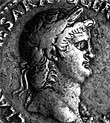
Seneca the Younger, also known as Lucius Annaeus Seneca, was a Roman philosopher, statesman, and playwright whose influence has traversed the annals of Western thought. Born in Corduba (present-day Córdoba, Spain) around 4 BCE, Seneca became one of the most significant figures in Stoicism—a school of philosophy that emphasizes reason, self-control, and fortitude as a means to achieve a tranquil life—while simultaneously navigating the hazardous waters of Roman imperial politics.
The Early Life and Education of Seneca
Seneca was born into a prominent family renowned for their wealth and intellectual prowess. His father, Seneca the Elder, was a famed scholar and writer on rhetoric. From an early age, Seneca was steeped in an environment that cultivated a deep appreciation for literature and philosophy. The family relocated to Rome during Seneca’s youth, providing him with ample opportunity to study under the city’s foremost teachers.
His education was rigorous and comprehensive, emphasizing rhetoric, grammar, and the prevailing philosophical doctrines of the time. Stoicism resonated deeply with Seneca, and he became a committed adherent, aligning himself with the teachings of distinguished Stoics like Cleanthes and Chrysippus. These formative years forged the philosophical outlook that would underpin his influential writings and enable him to effectively counsel the political elite of his era.
Seneca's Political Ascent
Seneca’s career in politics began in the Roman Senate, where his eloquence and intellect swiftly garnered attention. However, his political trajectory was fraught with challenges and intrigue. Seneca’s association with influential figures such as Gaius Julius Vipsanius Agrippa and his growing prominence did not go unnoticed, and he soon entered the crosshairs of the imperial elite.
In 41 CE, under Emperor Caligula, Seneca narrowly escaped execution—a testament to the volatile and precarious nature of Roman political life. His fortunes waned once more in 41 CE, when he was accused of having an affair with Julia Livilla, the sister of Emperor Claudius. The allegations resulted in Seneca’s banishment to the island of Corsica, a period marked by both isolation and introspection.
During his eight-year exile, Seneca composed numerous essays and philosophical treatises, further developing his Stoic ideas. His writings addressed various themes, including the impermanence of life, the nature of happiness, and the virtues of equanimity in the face of adversity. Works like "Consolation to Helvia" and "Consolation to Polybius" illustrate his ability to synthesize personal experience with universal philosophical principles, providing guidance to those who sought solace during turbulent times.
Return to Imperial Favor
Seneca’s fortunes took a decisive turn with the ascension of Emperor Nero in 54 CE. Thanks to the intervention of Agrippina the Younger, Nero’s ambitious mother, Seneca was recalled to Rome and appointed as one of Nero’s principal advisors. This role placed Seneca at the epicenter of Roman power, albeit within a notoriously capricious regime.
As an advisor, Seneca wielded considerable influence over Nero’s initial policies, advocating for clemency, restraint, and the promotion of public welfare. Along with Sextus Afranius Burrus, the Praetorian Prefect, Seneca worked diligently to temper Nero's excesses and guide the youthful emperor toward a more enlightened rule. During this “quinquennium Neronis,” the first five years of Nero’s reign, Rome experienced a semblance of stability and prosperity—a testament to Seneca’s statesmanship and philosophical grounding.
While serving Nero, Seneca continued to write prolifically, producing works that remain staples of Stoic philosophy. His "Epistulae Morales ad Lucilium" (Moral Letters to Lucilius) is especially renowned, encapsulating a series of essays that explore vital aspects of Stoic ethics and practical wisdom. Through these letters, Seneca outlines a Stoic path to achieving a life infused with virtue, grounded reason, and inner peace, distancing oneself from the tumult of external circumstances.
The Decline and Fall
Despite his initial success, Seneca’s influence waned as Nero matured and became more erratic and despotic. The inherent instability of being a favored advisor in a capricious court increasingly jeopardized Seneca’s position. Personal enmities and rivalries surfaced, and despite his attempts to retire from public life, Seneca remained ensnared in imperial intrigues.
The denouement of Seneca's political career came in 65 CE when his involvement in the Pisonian Conspiracy—a plot to assassinate Nero—was alleged. Whether Seneca was genuinely complicit remains a matter of historical debate, but the consequences were stark: faced with execution, he was compelled to commit suicide. True to his Stoic beliefs, Seneca met his end with composed dignity, leaving behind a legacy that would echo through the intellectual currents of Western civilization.
In conclusion, Seneca the Younger's life encapsulates the complex interplay of philosophy and politics in ancient Rome. His literary corpus continues to inspire and provoke thought, while his personal story is a poignant testament to both the potential and perils of intellectual engagement within the realm of power. As Seneca once wrote, "True happiness is to enjoy the present, without anxious dependence upon the future." His unwavering Stoicism remains a profound guide to navigating the vicissitudes of human existence.
The Philosophical Works and Legacy of Seneca
Seneca the Younger's contributions to Stoic philosophy are both enduring and multifaceted, cementing his status as one of antiquity's most profound thinkers. His philosophical works, composed during periods of both political favor and personal adversity, offer timeless insights into the human condition. They explore the dimensions of resilience, the pursuit of virtue, and the necessity of reasoned judgment in an often chaotic world.
A distinctive feature of Seneca’s writing is his ability to blend practical guidance with philosophical discourse. In "De Brevitate Vitae" ("On the Shortness of Life"), Seneca emphasizes the fleeting nature of human existence—a central tenet of Stoic thought. Rather than mourning the swift passage of time, he advocates for the mindful and purposeful engagement with life’s pursuits. Seneca encourages readers to focus on what genuinely matters, suggesting that the majority of our anxieties stem from misplaced priorities and an overemphasis on external validation.
Another pivotal work, "De Tranquillitate Animi" ("On the Tranquility of the Mind"), delves into achieving mental serenity amidst life's inevitable challenges. Seneca posits that true peace of mind arises from aligning one's desires with reason and consciously limiting the pursuit of external pleasures. By internalizing Stoic principles, individuals can cultivate a state of tranquility impervious to the fluctuations of fortune, enabling them to weather personal and societal vicissitudes without succumbing to distress.
Seneca's Views on Ethics and Morality
Seneca's writings are not merely philosophical abstractions; they serve as ethical guideposts applicable to everyday life. His work "De Ira" ("On Anger") dissects the destructive power of anger, a theme particularly relevant in the turbulent environment of Roman politics. Seneca perceives anger as a temporary madness that can cloud judgment, damage relationships, and provoke irrational actions. By advocating for control over one’s emotions, Seneca aligns with Stoic ideals that prioritize rationality and emotional resilience.
Central to Seneca’s ethical viewpoint is the notion of living in accordance with nature and reason. He emphasizes moral integrity and the development of personal virtue as prerequisites for true happiness. Seneca argues that external circumstances, such as wealth, power, or social status, are indifferent, neither inherently good nor bad. Instead, the pursuit of virtue—not the pursuit of pleasure or avoidance of pain—is the primary path to a fulfilling and meaningful life.
His extensive correspondence with Lucilius, captured in the "Epistulae Morales ad Lucilium," further illustrates Seneca’s ethical doctrines. Through these letters, he addresses subjects ranging from friendship and self-improvement to the nature of death and the acceptance of fate. Seneca’s conversational tone and accessible insights make these letters enduring resources for anyone seeking philosophical counsel in their personal journey.
Tragedy and Theatre: Seneca’s Literary Contributions
Seneca's influence extends beyond philosophy into the realm of literature, particularly through his contributions as a playwright. His surviving tragedies, which include works like "Phaedra," "Thyestes," and "Medea," are among the few examples of Roman dramatic literature that have endured through the centuries. These tragedies are characterized by their philosophical profundity, psychological insight, and exploration of human passions and conflicts.
Seneca’s tragedies delve into themes of revenge, power, and the destructive effects of uncontrolled emotions. The characters within his plays often grapple with moral dilemmas and existential questions, reflecting the Stoic belief in the importance of inner strength and ethical clarity. His portrayal of intense psychological drama not only entertained Roman audiences but also engaged them in contemplating Stoic values.
While Seneca’s tragic works are written in a stylistic and rhetorical manner consistent with the Roman tradition, they are also known for influencing later European literature, particularly during the Renaissance. The emotional intensity and moral complexities presented in his tragedies provided a template for subsequent playwrights, including William Shakespeare, who drew inspiration from Senecan themes and structures.
Enduring Influence and Modern Relevance
Seneca’s philosophical and literary contributions have transcended the confines of ancient Rome, resonating across diverse epochs and intellectual movements. His detailed examination of human nature and insights into ethical conduct continue to inform contemporary discourse on philosophy and psychology. The Stoic emphasis on self-governance, endurance, and the acceptance of life’s uncertainties is particularly relevant in today’s fast-paced and often unpredictable world.
Modern practitioners of Stoicism draw heavily from Seneca’s works, advocating for his teachings as a framework for achieving personal resilience and emotional balance. His focus on mindfulness, self-reflection, and rational decision-making is echoed in modern self-help and cognitive behavioral practices. Seneca’s emphasis on ethical living as a pathway to fulfillment and his articulation of universal human concerns ensure that his writings remain pertinent across cultures and generations.
Seneca’s life story also serves as a cautionary tale about the dangers of political ambition and the balance between public service and personal integrity. His tumultuous experiences underscore the complexity of navigating power dynamics while striving to remain true to one's principles. Despite the passage of millennia, Seneca’s reflections continue to offer guidance to individuals seeking wisdom amidst the chaos of modern life, affirming his timeless claim: "As is a tale, so is life: not how long it is, but how good it is, is what matters."
Seneca's Views on Wealth and Materialism
A notable aspect of Seneca’s teachings is his perspective on wealth and material possessions. As a wealthy Roman and advisor to emperors, Seneca was acutely aware of the potentially corrosive effects of affluence on the soul. Despite his personal wealth, he maintained a philosophical stance that valued simplicity and modesty over luxury and ostentation.
In "De Vita Beata" ("On the Happy Life"), Seneca challenges the prevailing notion that wealth equates to happiness. He argues that the pursuit of material possessions often leads to an insatiable cycle of desire and dissatisfaction. True happiness, according to Seneca, arises from inner virtues and the cultivation of wisdom, not from the accumulation of riches. He posits that a life governed by simplicity and contentment with what one has is far superior to one driven by ceaseless ambition for more.
Seneca’s own life presents a paradox in this regard. He amassed substantial wealth during his political career, yet he consistently advocated for the Stoic ideal of equanimity in the face of material gain or loss. This duality provides fertile ground for scholars and philosophers, who grapple with the complexities of Seneca’s personal adherence to the Stoic doctrines he espoused.
Seneca's Thoughts on Time and Mortality
Seneca’s reflections on time and mortality reveal profound insights about the temporality of life and the importance of living meaningfully. In "De Brevitate Vitae" ("On the Shortness of Life"), he underscores the urgency of embracing the present, admonishing those who squander their time on trivial pursuits. To Seneca, time is our most precious resource, and its conscious management is crucial to leading a purposeful existence.
His letters and essays invite readers to face mortality with courage and acceptance. Unlike many of his contemporaries, Seneca does not view death as a tragedy to be feared but rather as a natural and inevitable transition. In "Ad Lucilium Epistulae Morales," he advises that by contemplating death and accepting its certainty, one can liberate oneself from the anxiety that often accompanies the unknown.
Seneca’s meditations on mortality encourage living with intention and mindfulness, urging individuals to prioritize personal growth, ethical behavior, and relationships over transient pleasures. Such perspectives resonate deeply in a modern context, where the timeless question of how to live meaningfully persists amidst the distractions of contemporary life.
Modern Stoicism and Seneca's Influence
The resurgence of interest in Stoicism in the 21st century highlights the enduring relevance of Seneca’s teachings. Modern proponents of Stoicism draw upon his writings to navigate the complexities of personal and professional life. Seneca’s practical wisdom, especially regarding emotional resilience, has found a contemporary audience among those seeking clarity in a world often marked by uncertainty and change.
The minimalist lifestyle movement, which emphasizes decluttering both physical and mental spaces, echoes Seneca’s advocacy for simplicity and focus on intrinsic rather than extrinsic rewards. His insights on wellness—balancing aspirations with contentment—continue to inform self-help literature and mindfulness practices.
Moreover, Seneca’s approach to ethics—prioritizing integrity, duty, and a commitment to the greater good—finds resonance in modern discussions of leadership and corporate responsibility. As businesses and leaders strive to operate with conscience and accountability, the Stoic virtues Seneca championed serve as a foundational blueprint for ethical decision-making and sustainable success.
Seneca’s emphasis on the examined life, as articulated through his philosophical proclamations and literary flair, demonstrates an unending appeal. His philosophical corpus remains a beacon for those seeking guidance on how to live with wisdom, dignity, and purpose in an ever-evolving world.
Conclusion: The Timeless Legacy of Seneca the Younger
Seneca the Younger stands as a monumental figure whose life, philosophy, and literary accomplishments reverberate through history. His blend of Stoic philosophy with practical insights offers invaluable guidance across the diverse spheres of ethical living, personal development, and intellectual inquiry. Through the probing depth of his essays, tragedies, and letters, Seneca provides a roadmap for navigating the challenges of human existence, from the mundane to the monumental.
In examining Seneca's legacy, one encounters the timeless universality of his teachings. His advocacy for reason, virtue, and emotional fortitude speaks across eras, providing crucial wisdom for coping with adversity while fostering personal and communal harmony. As the world continues to confront its own vicissitudes, the philosophical foundations laid down by Seneca the Younger will persist as a guiding light for generations seeking a life of meaning and purpose. His profound observation aptly encapsulates the essence of his approach: "Begin at once to live, and count each separate day as a separate life." Through such enduring insights, Seneca's voice remains vital and compelling, echoing down the corridors of time with principles that transcend the circumstances of his own life.



The Legacy of Emperor Vespasian: Architect of Stability in Ancient Rome
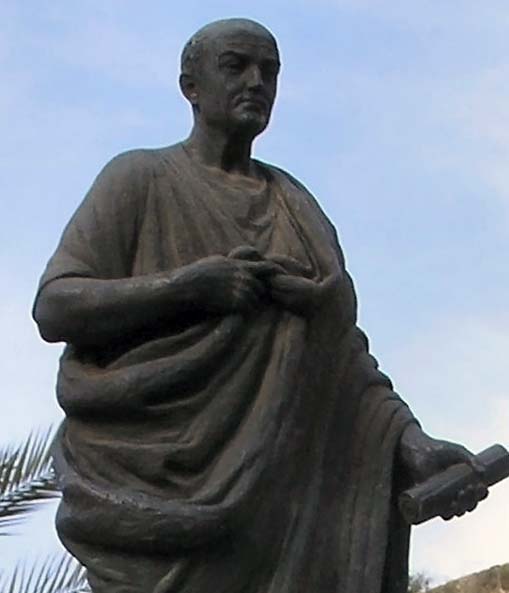
Vespasian: a name that resonates with the echoes of ancient Rome, synonymous with stability and reconstruction. Ascending to the imperial throne during one of Rome's most turbulent epochs, Vespasian’s rule marked the beginning of the Flavian dynasty and a period of resurrection for the empire. From humble beginnings to emperor, his substantial contributions to Roman governance, infrastructure, and military prowess established a legacy that would endure long after his reign. This article delves into the remarkable life and achievements of Vespasian, a figure often overshadowed by the more flamboyant emperors of his time but no less critical to the annals of Roman history.
The Rise of Vespasian: From Humble Origins to the Emperor’s Seat
Born in a humble manor in the village of Falacrinae near Rieti in 9 AD, Titus Flavius Vespasianus, later known as Vespasian, defied the odds set by his modest origins to rise to the pinnacle of Roman political power. His family belonged to the equestrian order – the middle-ranking social class in Roman society. His father, Titus Flavius Sabinus, supplied tax collection services for the government and his mother, Vespasia Polla, came from a family of some local esteem. The modest social standing of his family stood in stark contrast to the imperial lineage, but this did not deter Vespasian from prosperity.
Vespasian’s climb through the cursus honorum, the sequence of public offices held by aspiring politicians in ancient Rome, was marked by diligence and military prowess. His early career was not immediately distinguished — he was noted more for his tenacity and reliability than brilliance. However, his service in the military was both valuable and dynamic, eventually earning him a legateship in Lower Germany under Emperor Caligula, and crucial recognition during his quaestorship in Crete and Cyrene.
Military Campaigns and Political Standing
Vespasian truly rose to prominence through his military achievements. His skills and leadership were particularly highlighted during the Roman invasion of Britain in 43 AD under Emperor Claudius. Commanding the Second Legion Augusta, Vespasian achieved significant victories which expanded Roman influence in the region. His exploits in Britain solidified his reputation as a competent military leader, known for decisiveness and bravery on and off the battlefield. These impressive conquests earned him accolades including the victory ornaments and membership in the distinguished priestly college of the flamines, elevating his standing in Roman society.
His political influence was further bolstered when Nero appointed him as a governor of Africa, a relatively quiet posting that demonstrated his ability in administrative roles while honing his statesmanship. Yet, it was in 66 AD when Vespasian gained monumental recognition by being tasked with quelling the Jewish uprising in Judea. The protracted and challenging conflict saw Vespasian adopting a methodical approach, reflecting his military acumen and strategic patience, until he was called to address more pivotal matters concerning the Roman Empire itself.
The Year of the Four Emperors
A dramatic confluence of fortune and political savvy saw Vespasian rise to power amidst the chaos of what is known as the Year of the Four Emperors in 69 AD. Following the death of Emperor Nero, the Roman Empire was plunged into a tumultuous period of civil war and instability. With Galba, Otho, and Vitellius failing to provide consistent leadership, Rome’s political apparatus seemed to teeter on the brink of collapse.
During this period, Vespasian was no mere bystander. Leveraging his proven military leadership and the loyalty of his legions stationed in Judea, coupled with strategic alliances forged in the Eastern provinces, Vespasian positioned himself as the unifying figure the empire desperately needed. The support from crucial allies such as Gaius Licinius Mucianus, the governor of Syria, tipped the balance in his favor, leading to his declaration as emperor by the legions on July 1, 69 AD.
The Founding of the Flavian Dynasty
Vespasian’s accession to the throne was confirmed following the decisive Battle of Bedriacum, marking the end of Vitellius’s reign. Once firmly established, Vespasian promptly embarked on a mission to restore stability and order to an empire fragmented by political chaos and civil unrest. His primary focus lay in reconstructing Rome's political architecture and rejuvenating the strained imperial finances, laying a robust foundation that would sustain the subsequent Flavian dynasty.
Central to his administrative reforms was the creation of a more equitable tax system that alleviated the burden on provinces while simultaneously replenishing the imperial treasury. To bolster efficiency within the empire’s administration, Vespasian recruited competent and experienced personnel from outside the patrician class, thus promoting meritocracy over aristocratic privilege. These pragmatic reforms played a pivotal role in restoring a sense of normalcy and confidence within the empire, ensuring that his legacy would be defined by sustained stability and governance.
This transformation under Vespasian was not merely reactive but a proactive strategy that emphasized a coherent and meticulous approach to governance, something his successors would inherit and build upon. With these strategic foundations, Vespasian left an indelible mark on the Roman world, albeit his reign was often overshadowed by the subsequent emperors. His was a reign defined by the quiet yet resolute reaffirmation of Roman dignity and order.
Architectural Ambitions: The Colosseum and Beyond
One of Vespasian’s most enduring legacies was his ambitious building program which not only transformed the architectural landscape of Rome but also served as a testament to the prosperity and resilience of his reign. Perhaps the most iconic of his projects was the Flavian Amphitheatre, more commonly known today as the Colosseum. This monumental structure, which began construction around 70-72 AD, exemplifies Vespasian’s vision of a reinvigorated Rome. It was designed to provide a public venue for entertainment, reinforcing imperial grandeur and, importantly, serving as a tool for garnering popular support.
Built on the site of the artificial lake from Nero’s extravagant Domus Aurea, the Colosseum symbolized a return of land to the people — a visible demonstration of the new emperor’s commitment to serving public interests over extravagant personal indulgence. The Colosseum could seat tens of thousands of spectators, and it hosted gladiatorial contests, animal hunts, and public spectacles. Its sheer scale and engineering marvel are noted as a triumph of Roman architecture and construction techniques.
Beyond the Colosseum, Vespasian initiated other significant projects, including the restoration of the Temple of Peace and the Temple of Claudius. He revitalized Rome's infrastructure, repairing roads and aqueducts ravaged by neglect during the civil wars. By investing in these practical and monumental efforts, Vespasian effectively reinforced the image of a stable and thriving empire under his stewardship.
The Administrative and Economic Reforms
Vespasian's architectural achievements were parallel to his substantial reforms in administration and economy, which laid the groundwork for sustained growth and stability within the empire. Recognizing the depleted state of Roman finances exacerbated by Nero’s reckless spending, Vespasian’s economic policies were rooted in pragmatism and fiscal responsibility.
He enforced stringent tax reforms that sought to balance the need for revenue without overburdening the provinces. This included reintroducing old taxes and creating new ones, including the infamous “urine tax” on public lavatories, on urine, which was recycled for its ammonia content in the tanning and laundering industries. Such measures, while sometimes unpopular, were necessary for replenishing the imperial coffers and ensuring the empire's financial health.
Key to his administrative reforms was the professionalization of the bureaucracy. Vespasian enhanced meritocratic practices, drawing talents from different social strata to ensure an effective and loyal administrative body. He sought to streamline governance, reducing corruption and inefficiency that had plagued previous administrations. Such reforms not only reinstated economic stability but also established a legacy of capable governance that lasted beyond his rule.
A Military Legacy: Strengthening the Roman Army
Vespasian’s military reforms were as pivotal as his efforts in administration and architecture. Understanding the crucial role of a proficient and motivated military, Vespasian undertook several initiatives to bolster Rome's military might. This included reorganizing the legions with a focus on discipline and capability, thus ensuring the military was an efficient extension of central governance, capable of protecting and expanding the empire’s territories.
He shrewdly integrated veterans into new colonies, often in strategic frontier regions, which served dual purposes: securing the Roman frontiers and spreading Roman influence by establishing these veterans as the nuclei of new Romanizing communities. This policy not only rewarded soldiers for their service but also helped in consolidating Roman authority in recently subdued territories, maintaining peace and stability across the empire.
Moreover, Vespasian fortified the eastern fringes of the empire, stabilizing Roman control over the critical provinces of Judea, Syria, and Egypt. His military campaigns and policies ensured that the empire’s borders were well-protected, and internal threats were swiftly managed, resulting in a period of relative peace known as the Pax Romana.
Vespasian’s Relationship with the Senate and His Succession Plan
Despite his rise through military strength, Vespasian knew the importance of a delicate balance with the Roman Senate. Unlike previous emperors who often clashed with senatorial authority, Vespasian adopted a more conciliatory approach. He reinstated and respected traditional senatorial privileges, maintaining this body as an integral part of the administration. His reign was marked by a pragmatic collaboration with the Senate, ensuring a smoother governance framework and greater political stability across the empire.
In devising a succession plan, Vespasian solidified the future of the Flavian line. He appointed his son Titus as his successor, a move that consolidated a familial dynasty and ensured continuity after his demise. In fact, the institution of a clear succession line marked a pivotal shift, addressing Rome’s historical issue of uncertain leadership transition post an emperor's demise.
The promotion of his sons, Titus and Domitian, into significant positions was strategic, preparing them for seamless governance post-Vespasian. This decision was rooted in foresight and calculated governance, ensuring that the consolidation of the empire’s stability, carefully nurtured under his leadership, endured into the future.
Vespasian’s legacy, marked by his comprehensive reforms and achievements in various spheres, carved out a significant chapter in Roman history. His reign might lack the drama of his predecessors and successors, but his prudent, pragmatic, and visionary leadership left an indelible mark on the Roman Empire, providing stability that was desperately needed during his time.
Vespasian’s Cultural Impact and Personal Character
In addition to his architectural, military, and administrative reforms, Vespasian’s reign was marked by significant cultural contributions that fostered a renaissance of Roman art and literature. His promotion of public works and cultural endeavors demonstrated not only his commitment to improving the quality of life for Roman citizens but also his understanding of culture as a vital political tool. Encouraging artistic expression and intellectual pursuits, Vespasian sought to align the image of the Flavian dynasty with enlightenment, prosperity, and cultural sophistication.
Vespasian patronized numerous artists, poets, and historians, ensuring that their works provided an interpretation of his reign that emphasized stability and order. Notable figures included the historian Josephus, who became an important chronicler of the Jewish War and of Vespasian’s deeds. Such patronage helped to shape a narrative that maintained public morale and reminded the populace of the emperor’s successful campaigns and contributions to Roman grandeur.
On a personal level, Vespasian was known for his practical and frugal nature, often going against the excesses of his predecessors like Nero and Caligula. Historical accounts portray him as pragmatic and down-to-earth, with a straightforward sense of humor that endeared him to many. Tacitus, a prominent Roman historian, described Vespasian as industrious and wise, capable of balancing the often tumultuous demands of ruling a vast empire.
The Final Years and Transition of Power
Vespasian's administrative foresight extended to the final years of his reign, ensuring a seamless transition of power that had often eluded previous Roman emperors. Having ascended at a time of great instability, he understood the necessity of securing the longevity of his dynasty through clear succession plans. Vespasian’s decision to elevate his son, Titus, to the status of co-emperor was a strategic move to fortify the Flavian line and maintain continuity in governance.
Titus had gained both military and administrative experience, notably in the Judean campaign and as a prefect of the Praetorian Guard. These positions imbued him with the practical skills required for leadership and allowed him to gain popularity among Rome’s elite and common citizens. As Vespasian moved into the later years of his reign, the careful grooming of Titus ensured that Rome was prepared for a smooth handover.
In 79 AD, after almost a decade in power, Vespasian succumbed to illness. His passing marked the end of an era of pragmatic and effective governance. On his deathbed, Vespasian is reported to have wryly remarked, "I think I am becoming a god,” a jest on the deification of emperors after their death, highlighting his characteristic humor and self-awareness.
The Enduring Legacy of Vespasian
The legacy of Vespasian is one of formidable achievements and profound impact, leaving an indelible mark on the Roman Empire. Through his economic reconstruction and comprehensive reforms, he established a prototype of governance that valued fiscal responsibility, efficiency, and military strength. His restoration of Rome’s infrastructure and iconic construction projects, most notably the Colosseum, left a visible testament to his time as emperor and continued to serve the people for centuries beyond.
Vespasian's nuanced understanding of power dynamics within the empire allowed him to fortify Roman social and political structures, facilitating a prosperous environment that benefited future generations. His reign is characterized by a return to Roman ideals of collective empowerment, elevating the profile of Rome's middle strata and embracing a pragmatic approach to governance that eschewed the tyranny of unchecked personal aggrandizement.
While his successors, particularly his elder son Titus, were able to capitalize on the stable foundation laid by Vespasian, his legacy extends beyond political stability and infrastructure. The revitalization of culture and intellectualism under his rule nurtured a period of roman peace and progress, which historians recognize as setting the stage for the ascents of his successors in the Flavian dynasty.
In summation, Vespasian’s legacy is one of regeneration and pragmatic governance. As a figure who rose from relatively modest beginnings to captivate one of history's greatest empires, his influence resonates through the majesty of Rome’s monumental architecture and the enduring effectiveness of his reforms. Vespasian successfully navigated a divided epoch, presenting Rome with the resolve and vision necessary to flourish anew, reaffirming the empire's resilience and grandeur for posterity.