The Power of Color in Film: A Visual Language of Emotion and Meaning
Introduction
Color is one of the most potent tools in a filmmaker's arsenal, capable of conveying emotion, enhancing storytelling, and immersing audiences in a cinematic experience. From the vibrant saturation of Technicolor musicals to the muted palettes of dystopian thrillers, color shapes our perception of a film's world and its characters. This article explores the fascinating role of color in cinema, examining how filmmakers use it to evoke emotions, signify themes, and craft unforgettable visual narratives.
The Psychology of Color in Film
Before diving into specific films and techniques, it's essential to understand the psychological impact of color. Filmmakers leverage color theory—the study of how hues influence human perception—to create subliminal emotional responses in audiences. Warm colors like red, orange, and yellow often evoke passion, energy, or danger, while cool tones such as blue and green suggest calm, isolation, or melancholy. Neutral colors like gray and beige can convey realism or bleakness, depending on context.
For example, red frequently symbolizes love, violence, or urgency—think of the infamous red coat in Schindler’s List or the recurring red motifs in Nicolas Winding Refn’s Drive. Blue, on the other hand, often appears in films exploring loneliness or detachment, such as the melancholic palette of Eternal Sunshine of the Spotless Mind. Understanding these associations allows filmmakers to manipulate mood without overt exposition.
Historical Evolution of Color in Cinema
The use of color in film has evolved dramatically since the early days of cinema. The first movies were shot in black and white, but filmmakers quickly experimented with color techniques like hand-tinting individual frames. The introduction of Technicolor in the 1930s revolutionized the industry, bringing vibrant, saturated hues to classics like The Wizard of Oz and Gone with the Wind.
As technology advanced, color became more than just an aesthetic choice—it became a narrative device. Directors like Alfred Hitchcock used color symbolically; Vertigo employs green to signify obsession and the uncanny. Later, pioneers like Stanley Kubrick (The Shining, 2001: A Space Odyssey) and Wes Anderson (The Grand Budapest Hotel, Moonrise Kingdom) developed distinctive color palettes that became integral to their storytelling styles.
Color Grading: Crafting the Perfect Palette
Modern filmmakers use color grading—a post-production process—to refine the visual tone of their films. This technique adjusts hues, contrast, and saturation to create a cohesive look. Directors collaborate with cinematographers and colorists to establish a palette that supports the film’s themes. For instance, The Matrix uses a green tint to evoke its digital simulation, while Mad Max: Fury Road employs high-contrast oranges and blues to heighten its post-apocalyptic intensity.
Color grading can also differentiate timelines or realities within a film. In Her, the warm, soft tones of Theodore’s world contrast with the cooler, sterile environments of his AI companion, reinforcing emotional distance. Similarly, O Brother, Where Art Thou? was one of the first films to use digital color correction extensively, giving its Depression-era setting a sepia, almost mythic quality.
Symbolic Use of Color in Iconic Films
Many filmmakers use color symbolically to reinforce themes or character arcs. In The Sixth Sense, M. Night Shyamalan employs red to signify moments when the supernatural intrudes on reality. Pedro Almodóvar’s films, like All About My Mother and Volver, burst with bold reds and pinks, reflecting passion and femininity.
Another standout example is Amélie, where Jean-Pierre Jeunet saturates the screen with greens and reds, creating a whimsical, storybook atmosphere that mirrors the protagonist’s imaginative outlook. Conversely, dystopian films like Blade Runner 2049 rely on desaturated blues and yellows to evoke a sense of decay and isolation.
Color and Genre Conventions
Different genres often adhere to specific color conventions. Horror films, for instance, leverage stark contrasts—deep shadows and splashes of red—to unsettle viewers. Romantic comedies favor bright, cheerful palettes, while film noirs traditionally use high-contrast black and white to emphasize moral ambiguity.
However, some filmmakers subvert these expectations for dramatic effect. Joker employs a grim, sickly palette that clashes with its comic-book origins, reinforcing the protagonist’s descent into madness. Meanwhile, zombie movies like Warm Bodies incorporate warmer tones to inject humor and humanity into an otherwise bleak genre.
Conclusion of Part One
Color in film is far more than a decorative element—it is a storytelling powerhouse. Whether through psychological associations, historical trends, or symbolic intent, filmmakers harness color to deepen emotional resonance and narrative impact. In the next section, we’ll explore how directors develop unique color philosophies, analyze case studies from landmark films, and examine the intersection of color with production design and costume choices.
Color as a Directorial Signature: Auteur Theory in Hues
Great filmmakers often develop recognizable color palettes that become as distinctive as their storytelling styles. Wes Anderson’s films, for example, are immediately identifiable for their pastel hues, symmetric compositions, and meticulous production design. In The Grand Budapest Hotel, pinks, purples, and teals create a storybook aesthetic that enhances the film’s playful yet melancholy tone. Similarly, Anderson’s Moonrise Kingdom uses warm yellows and greens to evoke the nostalgic simplicity of childhood summers. His approach demonstrates how color can function as a narrative voice—whimsical, precise, and deeply intentional.
Another auteur known for his chromatic storytelling is Guillermo del Toro. His films, such as Pan’s Labyrinth and The Shape of Water, contrast warm and cool tones to distinguish between reality and fantasy. The earthy browns and grays of the real world clash with the rich blues and golds of mythical realms, reinforcing the tension between brutality and enchantment. Del Toro’s deliberate color choices immerse viewers in his gothic fairy tales while underscoring underlying themes of hope and monstrosity.
Case Study: David Fincher’s Meticulous Darkness
David Fincher’s films, like Fight Club, Se7en, and The Social Network, are defined by their desaturated, high-contrast palettes. Shadows dominate, punctuated by strategic splashes of color—often greens and yellows—that amplify tension. In Zodiac, muted tones mirror the procedural grind of an unsolved case, while Gone Girl employs cold blues and grays to reflect marital alienation. Fincher’s restrained use of color creates a sense of unease, making his films feel as though they exist just outside reality.
Cultural and Symbolic Nuances in Global Cinema
Color symbolism isn’t universal—cultural context plays a crucial role in interpretation. In Western cinema, white often signifies purity or innocence, while in many East Asian films, it represents mourning and death (as seen in Hirokazu Kore-eda’s Shoplifters). Similarly, red is auspicious in Chinese culture (evident in Zhang Yimou’s Hero), whereas in Western thrillers, it’s frequently tied to danger or desire.
Films like Bong Joon-ho’s Parasite expertly weave cultural color codes into their narratives. The wealthy Park family’s home is bathed in sterile whites and beiges, symbolizing their detachment from the grimy, green-tinged world of the impoverished Kim family. This visual dichotomy reinforces the film’s commentary on class inequality without a single line of dialogue.
The Role of Production Design and Costume Color
Color in film isn’t limited to lighting or grading—it’s a collaborative effort involving production designers and costume departments. In Black Swan, Darren Aronofsky uses costumes to mirror Nina’s psychological unraveling: her initial pale pinks and whites give way to ominous blacks as she embraces her darker persona. Similarly, in The Godfather, Vittorio Storaro’s lighting and the somber wardrobe choices (deep blacks, browns, and golds) visually underscore the Corleone family’s power and moral decay.
Period films like Marie Antoinette (Sofia Coppola) or Barry Lyndon (Kubrick) rely on historically accurate palettes to ground their stories. Yet even within these constraints, directors manipulate color for emotional effect. Kubrick’s use of candlelit scenes in Barry Lyndon creates a painterly elegance, while Coppola’s anachronistic pops of neon in Marie Antoinette subtly connect 18th-century excess to modern celebrity culture.
Technological Innovations and Color’s Future
Advancements in digital filmmaking have expanded color’s expressive potential. High Dynamic Range (HDR) imaging allows for richer, more nuanced gradients, as seen in films like Avatar: The Way of Water, where underwater sequences teem with vibrant coral hues and bioluminescent details. Meanwhile, animation studios like Pixar (Soul, Luca) and Studio Ghibli (Spirited Away) push boundaries with stylized palettes that defy realism.
Virtual production, popularized by LED wall technology in shows like The Mandalorian, also impacts color storytelling. Real-time rendering enables directors to adjust lighting and tones on set, streamlining the creative process. As AI-driven color grading tools emerge, filmmakers may soon experiment with dynamic palettes that adapt to audience biometrics—potentially altering hues based on viewers’ emotional responses.
Color’s Role in Branding a Franchise
Major franchises often adopt signature color schemes to establish visual continuity. The Harry Potter series progresses from warm, honeyed tones in early films to darker, cooler hues as the story grows more ominous. Marvel’s Guardians of the Galaxy leans into bold neons to mirror its retro sci-fi aesthetic, while The Batman (2022) drowns Gotham in noirish blacks and bloody reds. These choices aren’t arbitrary—they cement a franchise’s identity and guide audience expectations.
Color Mistakes and Missteps
Not all color choices succeed. Over-reliance on teal-and-orange grading (common in 2000s blockbusters) can render films visually homogenized. Poorly balanced saturation may distract rather than immerse, as seen in early digital films like Spider-Man 2, where greens and purples clash unnaturally. Even legendary directors misfire: Steven Soderbergh’s Traffic uses color-coded storylines (blue for cold bureaucracy, yellow for gritty drug trade), but some critics argued it oversimplified complex narratives.
Another pitfall is cultural insensitivity—using color symbolism that clashes with a film’s setting. A Western director might unintentionally misrepresent a non-Western story by applying unfamiliar color associations, weakening authenticity.
Conclusion of Part Two
From auteur signatures to technological breakthroughs, color remains a dynamic and evolving language in cinema. The interplay between cultural context, production design, and emerging tools ensures that filmmakers will continue to innovate with every shade. In the final section, we’ll explore how audiences perceive color subconsciously, analyze experimental films that challenge norms, and predict future trends in chromatic storytelling.
The Subconscious Impact of Color: How Movies Manipulate Our Emotions
Filmmakers don’t just use color to create beautiful images—they wield it as a psychological tool that operates beneath conscious awareness. Research in neurocinematics (the study of how films affect the brain) reveals that color triggers immediate emotional and physiological responses. For example, anxious spectators of horror films exhibit heightened stress when exposed to stark red lighting, while soothing blue hues in dramas like Brooklyn lower heart rates, fostering calm. Directors exploit these primal reactions to guide audiences through invisible emotional currents.
Experimental films push this further by isolating color as a narrative force. Derek Jarman’s Blue (1993)—a monochromatic screen accompanied by poetic voice-over—forces viewers to project meaning onto the unyielding azure, mirroring the director’s struggle with AIDS-induced blindness. Similarly, Gaspar Noé’s Enter the Void bathes Tokyo in hypnotic neons, using pulsating reds and purples to emulate the disorientation of a dying mind. These extremes prove color alone can carry a story when stripped of conventional plot.
Synesthesia and Cross-Sensory Color Experiences
Some films simulate synesthesia, blending color with other senses to evoke unified perceptions. Disney’s Fantasia (1940) visualized music as swirling chromatic abstractions, while The Wizard of Oz’s transition from sepia to Technicolor famously paired color with auditory grandeur (“Somewhere Over the Rainbow”). Modern films like Climax (Noé, 2018) intensify this effect: as characters descend into LSD-fueled chaos, the palette shifts from warm yellows to violent crimson, mirroring the screeching soundtrack. Such techniques immerse audiences in characters’ subjective realities.
Breaking the Rules: Films That Defy Color Conventions
Innovative directors deliberately subvert color norms to unsettle or provoke. Joel and Ethan Coen’s Inside Llewyn Davis drains nearly all saturation, its bleak grays and browns reflecting the protagonist’s creative stagnation. Conversely, Yorgos Lanthimos’s The Lobster employs flat, unnatural lighting—almost like a corporate training video—to heighten its absurdist dystopia. These choices reject warmth or vibrancy not from technical limitation, but as narrative statements.
Even genre expectations get overturned. Horror films traditionally rely on darkness, but Ari Aster’s Midsommar unfolds in glaring daylight, its blinding whites and floral pastels making violence feel paradoxically more jarring. Meanwhile, Mad Max: Fury Road replaces expected post-apocalyptic grime with a fiery orange spectacle, turning desolation into a hyper-saturated myth.
The Resurrection of Black-and-White in Modern Cinema
While color dominates, monochrome persists as a deliberate artistic choice. Recent films like Roma (Cuarón, 2018) and The Artist (Hazanavicius, 2011) use black-and-white to evoke nostalgia or heighten intimacy. Others weaponize it: Sin City’s comic-book aesthetic isolates key elements in color (a red dress, yellow villain) against inky shadows, directing attention with surgical precision. Even projects shot in color, like Logan (2017), release monochrome cuts to strip the story to its raw essence.
Color in the Algorithm Age: Streaming’s Influence
Streaming platforms now reshape color trends through data-driven mandates. Studies reveal viewers engage longer with high-contrast thumbnails, prompting Netflix to oversaturate promotional art (notice how Stranger Things posters amplify reds and blues). Algorithmic color grading tools, like those used by Amazon Prime, adjust scenes based on engagement metrics—potentially warming a romantic moment if audiences skip cold-toned sequences. This raises ethical questions: Should storytelling bow to metrics, or does data-driven color flatten creativity?
Additionally, platform-specific compression can distort intended palettes. Filmmakers like Christopher Nolan have criticized streaming services for “crushing” subtle gradients in films like Tenet, where precise hues signal time inversion. As cinema shifts to digital consumption, preserving directorial vision becomes a technical battleground.
The Future: Bioluminescent Screens and Personalized Palettes
Emerging technologies promise radical evolutions in cinematic color. OLED screens with infinite contrast ratios allow true blacks and fluorescents unseen in traditional projection. Labs are developing screens that mimic bioluminescence—imagine a horror film where monstrous greens literally glow in the dark. Meanwhile, VR filmmakers experiment with “environmental color,” where headset wearers physically move through shifting hues that adapt to their gaze.
Perhaps most intriguing is the potential for AI-customized viewing experiences. Imagine software that adjusts a film’s palette in real-time based on a viewer’s biometrics: deepening blues during calm scenes for relaxation, or intensifying reds during action for adrenaline. While this challenges the idea of a “director’s intent,” it opens doors to personalized emotional immersion.
Color Accessibility and Inclusive Storytelling
As color’s role grows, so does the need for accessibility. An estimated 300 million people worldwide have color vision deficiency (CVD). Forward-thinking filmmakers now collaborate with CVD consultants to ensure palettes remain distinguishable (e.g., avoiding red-green conflicts in key scenes). Animation studios like Pixar lead this charge—Loop (2020), a short film by Erica Milsom, was designed explicitly for neurodivergent and CVD audiences, using texture and contrast alongside color.
Final Frames: Color as Cinematic Legacy
From the hand-painted frames of A Trip to the Moon (1902) to the quantum-dot displays of today, color’s journey in film mirrors technological and cultural revolutions. Yet its core purpose endures: to bypass logic and resonate directly with our senses. Whether through Michael Mann’s digital nightscapes or Greta Gerwig’s candy-colored Barbie, color remains cinema’s silent collaborator—shaping stories in ways words cannot.
As audiences, we may not always notice its work, but we feel it. The icy dread of The Revenant’s blues, the euphoric pinks of Everything Everywhere All at Once’s multiverses—these choices linger in memory long after plots fade. In the end, great color doesn’t just decorate a film; it becomes part of its soul.
A Call to Action for Aspiring Filmmakers
For those crafting visual stories: wield color with intention. Study the masters, experiment boldly, and remember every hue whispers to the subconscious. The next chromatic revolution won’t come from technology alone, but from creators who understand that color, at its best, isn’t seen—it’s felt.



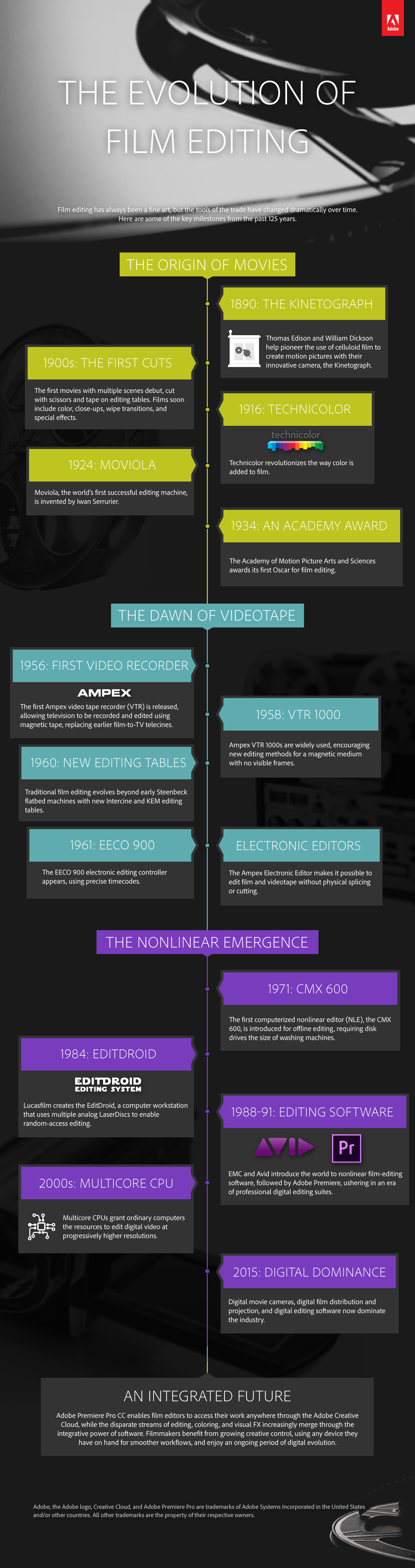
The Evolution of Film Editing: From Scissors to Software
The art of film editing has evolved dramatically since the inception of cinema. It is through this evolution that filmmakers have been able to manipulate time, enhance storytelling, and evoke emotions that transcend simple moving images. Film editing is more than just cutting and pasting; it is the invisible hand that shapes the narrative, determining the rhythm and pace of the story while seamlessly piecing together scenes to create a coherent whole. This exploration into the evolution of film editing will delve into the various stages of its development, from the tactile, manual processes to the sophisticated digital techniques employed today.
The Silent Era: Pioneering the Craft
In the early years of cinema, film editing was not initially considered a distinct craft separate from photography. The concept of storytelling through film was nascent, and filmmakers were still discovering how to best utilize the medium. Early films were typically shot in a single take with no cuts, reminiscent of a stage play. It wasn't until the discovery of editing as a narrative tool in the late 19th and early 20th centuries that filmmakers began to recognize its potential to manipulate time and space.
The pioneering works of filmmakers like Edwin S. Porter and D.W. Griffith played an instrumental role in shaping the future of film editing. Porter's 1903 landmark film "The Great Train Robbery" showcased early examples of cross-cutting, where two sequences of action are interwoven to suggest concurrent events. D.W. Griffith further developed editing techniques by refining Porter's discoveries, introducing innovative concepts such as the close-up and the use of parallel editing to build suspense and emotion in films like "The Birth of a Nation" (1915).
The Golden Age: The Refinement of Editing Techniques
As film entered its Golden Age in the 1930s and 1940s, editing techniques were refined, giving birth to the classical Hollywood style that prioritized continuity and seamless storytelling. Editors became integral to the filmmaking process, collaborating closely with directors to craft narratives that flowed naturally and engaged audiences. This period marked the formalization of film grammar, where techniques like the match cut, dissolves, and fades became standardized.
Innovative editors such as Margaret Booth, one of the first women to make a significant impact in the field, began to emerge during this time. Collaborating extensively with major studios, Booth's work helped establish editing as an indispensable creative and technical asset to filmmaking. The industry's shift towards synchronized sound in the late 1920s further transformed editing, demanding new skills to integrate dialogue and sound effects cohesively with visual cuts.
The New Wave: Breaking Conventions
The 1950s and 1960s bore witness to a revolution in film editing as filmmakers around the world began challenging established norms to develop new forms of cinematic expression. The French New Wave, led by luminaries like Jean-Luc Godard and François Truffaut, rejected traditional editing conventions, favoring jump cuts and non-linear narratives that conveyed realism and spontaneity. This period emphasized the editor's role as a storyteller, bringing experimental techniques and narrative structures to the fore.
One of the most innovative editors from this era was French editor and filmmaker Agnès Varda. Her work alongside her contemporaries not only dismantled conventional editing by introducing disjointed editing patterns and breaking the fourth wall, but also proved influential across the cinematic landscape, inspiring new generations of filmmakers worldwide.
The Digital Revolution: A New Era of Possibilities
The advent of digital technology in the late 20th and early 21st centuries marked a seismic shift in film editing, ushering in an era of unprecedented possibilities and accessibility. Computer-based editing systems such as the Avid Media Composer introduced non-linear editing, a technique that permits editors to access any frame within a digital clip instantly, revolutionizing how films were assembled.
Digital editing democratized the filmmaking process, allowing independent filmmakers and studios alike to experiment with complex narrative structures and groundbreaking visual effects without the prohibitive costs of traditional methods. Moreover, the rise of digital editing has presented editors with powerful new tools to manipulate sound and image in innovative ways, expanding storytelling capabilities beyond the constraints of celluloid film.
As film editing continues to evolve, the craft remains integral to the creative process, as the invisible yet crucial link that connects art and audience. The journey of editing serves as a testament to the boundless potential of cinema, reflecting the inexorable quest for new methods of captivating storytelling that push the boundaries of imagination and technology.
The Rise of Digital Non-Linear Editing Systems
As the film industry transitioned into the 1990s, the introduction of digital non-linear editing systems (NLE) profoundly redefined the landscape of film editing. The ability to rearrange scenes and sequences with remarkable ease enabled editors and filmmakers to experiment more freely, facilitating a surge in creativity and innovation.
Prior to digital NLE, editors were bound by the painstaking physical task of cutting and splicing celluloid strips. Each cut was meticulously planned and executed, as errors were not only time-consuming to correct but also risked damaging the original footage. The digital revolution erased these barriers, offering editors unprecedented flexibility and efficiency. Digital formats eliminated the limitations of film stock, providing extensive editing possibilities that would have been inconceivable in the analog era.
Popularized by groundbreaking films such as "Forrest Gump" (1994) and "The Matrix" (1999), digital editing allowed editors to integrate complex visual effects seamlessly into the narrative, elevating storytelling to new heights. The implementation of CGI and green-screen technology, coupled with digital effects, enabled filmmakers to craft immersive, awe-inspiring worlds that captivated audiences.
Editing Software: Empowering a New Generation
The proliferation of editing software such as Final Cut Pro and Adobe Premiere Pro further democratized the craft, empowering a new generation of filmmakers with the tools to create professional-quality films from their laptops. Suddenly, amateur filmmakers and indie creators had the means to produce and edit content that rivaled Hollywood productions in quality. The accessibility of these tools ignited a burgeoning DIY film movement, giving rise to a diversity of voices and perspectives within the industry.
Advanced features of these editing systems, like multi-camera editing, advanced color grading, and sophisticated sound design options, provided editors with the ability to manipulate every facet of their work with precision. This expanded toolkit shattered the conventional boundaries of storytelling, allowing for unique explorations into narrative structures, tempo, and aesthetic styles.
Today's editing software integrates artificial intelligence (AI) to automate tedious processes, such as sorting clips and suggesting cuts, allowing editors more time to focus on creative decision-making. AI-assisted editing tools continue to evolve, fostering greater efficiency and opening the door for novel editing techniques that were previously unimaginable.
The Art of Sound: Enhancing the Cinematic Experience
As film editing evolved, so too did the art of sound design, becoming an indispensable element of modern filmmaking. While early cinema was silent, the advent of synced sound in the late 1920s proved transformative, necessitating new approaches to editing and sound mixing. Beyond mere dialogue synchronization, sound became an integral storytelling component, influencing emotional tone and accentuating dramatic moments.
Contemporary filmmakers and editors use sound to elevate the cinematic experience, employing techniques like diegetic and non-diegetic sound to blur the lines between reality and fiction. Layering ambient soundscapes, carefully placed sound effects, and a thoughtfully composed score enhances the narrative and guides audience reactions.
Advancements in sound editing software have given rise to intricate sound design, where editors craft rich auditory environments that are just as impactful as the visuals. This sophisticated manipulation of sound layers amplifies the film's emotional resonance, immersing audiences fully into the world depicted on screen.
The Role of the Editor: A Collaborative Vision
Throughout its evolution, the role of the editor has remained steadfast as a collaborative partner in the filmmaking process. While technology has dramatically changed the tools editors employ, their creative input remains crucial in executing a director's vision. A skilled editor can shape performances, dictate the film's pace, and even salvage potentially incoherent narratives.
Editors often work closely with directors, cinematographers, and sound designers, forming a symbiotic relationship that harmonizes the film's artistic elements. Some directors, such as Martin Scorsese and Quentin Tarantino, collaborate regularly with specific editors, forging dynamic partnerships that have become integral to their filmmaking process. For instance, Scorsese's collaboration with Thelma Schoonmaker exemplifies a creative synergy that has yielded some of the most iconic films in cinema history.
Future Trends: Expanding Boundaries
As technology advances, so too does the potential for innovation in film editing. Virtual reality (VR) and augmented reality (AR) present new frontiers for storytelling, challenging traditional narrative structures and engaging audiences in immersive, interactive experiences. Editors will play a pivotal role in shaping these nascent forms of media, integrating spatial editing techniques that allow audiences to explore stories from multiple perspectives.
Blockchain technology may also influence the future of film editing by ensuring secure, transparent collaborations between creators worldwide. Decentralized editing platforms could facilitate seamless teamwork across borders, fostering diversity and creativity in global filmmaking.
The future of film editing is boundless, driven by the inexorable push for new technologies and fresh storytelling approaches. As film continues to evolve, editors will remain indispensable architects of narrative, marrying the infinite possibilities of technology with the timeless art of storytelling. With each technological leap, editors will redefine the parameters of cinema, weaving a new tapestry of visual wonder and emotional depth for audiences to explore and cherish.
Interactive Storytelling: Engaging Audiences in New Ways
The rapid development of technology has provided filmmakers with novel opportunities to engage audiences through interactive storytelling. This emerging form of narrative invites viewers to become active participants, influencing the story's progression and outcomes. In this evolving landscape, editors are tasked with orchestrating a seamless convergence of choice and narrative, crafting experiences that balance agency with cohesive storytelling.
The rise of video game technology has been instrumental in shaping this interactive space, drawing on cinematic techniques to forge deeper emotional connections with players. Projects like "Bandersnatch," an interactive film by Charlie Brooker, showcase the potential of branching narratives, where audience choices dictate the plot's direction. Editing within these frameworks requires an intricate understanding of nonlinear storylines, ensuring that each choice branches into a coherent and engaging pathway.
Interactive storytelling challenges editors to consider multiple narrative outcomes simultaneously, necessitating a unique skill set and a creative vision. As technology advances, editors will play an increasingly crucial role in pioneering these innovative storytelling methods that blur the line between viewer and participant, creating narratives that are immersive, memorable, and personal.
Preserving the Past: Archiving and Restoring Film
As the film industry embraces the digital age, attention has increasingly turned to preserving the rich cinematic history that has shaped contemporary storytelling. The archive and restoration of film are critical components of editing, ensuring that classic films endure for future generations to appreciate and study.
Film restoration presents unique challenges and opportunities for editors and archivists alike. Many classic films exist in fragile states due to deteriorating celluloid or outdated formats. The process of digitizing and restoring these works involves painstaking attention to detail, employing digital editing techniques to repair damage and enhance image quality while remaining faithful to the original vision.
Technological advancements such as AI-driven restoration tools have revolutionized this process, enabling editors to predict and correct degradation while restoring color and sharpness to faded images. The renewed vibrancy of restored films allows audiences to experience these cultural touchstones as they were intended, ensuring their continued relevance and appreciation.
Furthermore, film archiving efforts are essential for maintaining the accessibility of cinematic heritage, facilitating research and education. As this endeavor progresses, film editing remains central to bridging the gap between the past and the future, preserving the legacies of filmmakers and ensuring their stories continue to resonate with new audiences.
The Editor’s Toolkit: Crafting Emotion and Suspense
The core of film editing extends beyond technology; it lies in the editor's ability to wield the tools at their disposal to evoke emotion and build suspense. Modern editors prioritize storytelling as a visceral experience, employing techniques to create tension, rhythm, and pacing that align with the film's narrative arc.
Establishing tone through editing involves a keen understanding of timing, where the duration and placement of each cut dictate the film’s mood and flow. For instance, rapid cuts can heighten excitement and urgency, while extended takes may cultivate a sense of unease or introspection. Editors also utilize techniques like montage, juxtaposing disparate images to elicit complex emotions and convey thematic juxtapositions.
Emotional resonance is further enhanced through music and sound design, incorporating motifs and crescendos that underscore key moments. By manipulating the auditory landscape, editors can guide the audience's emotional journey, ensuring that every narrative beat is felt deeply and authentically.
Suspense, a staple of many cinematic genres, is crafted meticulously through editing. Building suspense involves a strategic balance of revealing and withholding information, generating anticipation and keeping audiences on the edge of their seats. Mastery of these elements transforms a sequence of visual and auditory components into a compelling narrative symphony, maintaining viewers' engagement and investment.
The Human Element: Editors as Storytellers
Despite technological advancements, the essence of film editing hinges on the human element, where editors act as paramount storytellers contributing significantly to the creative vision. The process of editing is an art form—an intuitive dance that reflects the editor’s sensibility, creativity, and perspective.
Editors shape narrative by selecting what audiences see and in what order, crafting a sequence of events that aligns with the film's thematic intentions. Their decisions influence not only pace and structure but also how characters are perceived and how stories unfold, leaving an indelible imprint on the film's impact.
Collaboration remains a cornerstone of the editor's role. By harmonizing their vision with that of directors, writers, and cinematographers, editors transform disparate footage into cohesive stories that captivate and resonate. This synergy enriches cinematic storytelling, ensuring that each film communicates its intended message with clarity and depth.
The Endless Evolution
The evolution of film editing is far from complete; it is a perpetual journey of innovation driven by emerging technology and the limitless potential of human creativity. From the mechanical editing of the early cinema era to the sophisticated digital platforms revolutionizing contemporary filmmaking, editing continues to redefine its boundaries and possibilities.
Looking forward, editors stand at the forefront of cinematic exploration, harnessing new tools and methodologies to explore the multifaceted spectrum of human experiences through film. By continually adapting to technological advances and embracing challenges with an inventive spirit, editors will persist in shaping the stories that inform, inspire, and transform audiences around the world.
As the curtain rises on the future of film editing, the craft will undoubtedly continue to evolve, celebrating the enduring human desire to share stories in ways that surprise, challenge, and delight. In so doing, it will remain a pivotal force in the ever-expanding world of cinema, preserving the magic of storytelling for generations to come.


Understanding the Art of Cinematic Color Theory
Color is a powerful tool in filmmaking, yet it often goes unnoticed by the average viewer. This silent language articulates emotion, illustrates character arcs, and enhances narrative depth without uttering a single line. In recent years, the concept of color theory within cinema has received substantial attention from filmmakers, critics, and cinephiles alike, as they recognize its potential to transform storytelling. This article delves into the fascinating world of cinematic color theory, examining how filmmakers leverage it to elevate the art of film.
The Foundation of Cinematic Color Theory
Cinematic color theory draws upon the principles found in traditional art practices, applying them to the moving image to enhance storytelling. At its core, color theory revolves around the use of color schemes and palettes that evoke specific emotional responses or connotations within a film's narrative context. Through these choices, filmmakers can reinforce themes, develop characters, and create a visual language that resonates with audiences.
Colors are typically organized using a color wheel, which displays the relationships between different hues. Primary colors are red, blue, and yellow. Secondary colors, created by mixing primary colors, are green, orange, and purple. Tertiary colors are variations formed through further mixing. Filmmakers utilize these relationships to craft harmonious, contrasting, or complementary color palettes that effectively communicate the intended mood or message.
Color Psychology in Film
The psychological impact of color is profound, influencing our perceptions and emotions, often subconsciously, as we view a film. For instance, warm colors like red, orange, and yellow are often associated with energy, warmth, and passion. Reds, in particular, might convey danger, love, or intensity, depending on the context.
Conversely, cool colors such as blue, green, and purple can evoke feelings of calm, sadness, or introspection. Blue is often used to symbolize tranquility, but it can also represent coldness or depression. Filmmakers tap into this psychological aspect of color to guide audience emotions effectively and subtly, enhancing the narrative without overt exposition.
Notable Examples in Film
Throughout cinema history, many filmmakers have demonstrated masterful use of color to enrich their storytelling. Wes Anderson is renowned for his meticulously crafted palettes that often rely on pastel hues, lending a whimsical yet poignant air to his films. In contrast, director Wong Kar-wai employs vibrant and saturated colors to amplify the emotional intensity of his films, such as "In the Mood for Love," which uses reds and deep hues to evoke longing and desire.
Perhaps one of the most iconic uses of color in film is found in Steven Spielberg's "Schindler's List." The predominantly black and white film features a poignant splash of color in the form of a little girl’s red coat. This striking choice symbolizes innocence amidst the horrors of the Holocaust and emphasizes the tragedy on a deeply emotional level.
The Role of Color Palettes
Color palettes are strategic selections of colors that define the visual tone and atmosphere of a film. Monochromatic palettes limit hues to varying tones of a single color, often employed to suggest unity or emphasize a specific theme. For example, the film "Her" uses a mostly pink and red palette, underscoring themes of love and isolation.
Analogous palettes use colors that sit next to each other on the color wheel, such as blues and greens, or reds and oranges, creating a harmonious and cohesive look. These palettes can suggest natural beauty or serenity, as seen in Terence Malick’s "The Tree of Life."
Complementary palettes use colors from opposite ends of the color wheel, such as blue and orange, to create vibrant contrast and draw attention. This approach is particularly popular in modern blockbusters, like "Mad Max: Fury Road," where the stark contrast between fiery landscapes and cool night scenes heightens the film’s dramatic tension.
Crafting Atmosphere and Tone
Color is often employed by filmmakers to establish the atmosphere and tone of a scene. The use of desaturated colors can evoke a sense of bleakness or historical authenticity, a technique effectively used in "The Road" to convey a post-apocalyptic world devoid of vibrancy and hope. In science fiction, neon colors are frequently utilized to suggest futurism and otherworldliness, as seen in Ridley Scott’s "Blade Runner" and its sequel "Blade Runner 2049."
By manipulating color saturation, brightness, and contrast, filmmakers sculpt the visual identity of their films, aligning them with the intended emotional impact. Bright, highly saturated colors can infuse scenes with vitality and excitement, as exemplified by the explosive energy of Baz Luhrmann’s "Moulin Rouge!" Conversely, reserved, muted tones may invite reflection or foreshadow tragedy, demonstrated in the restrained palette of "Manchester by the Sea."
Conclusion
Cinematic color theory is a vital component of film language, empowering filmmakers to imbue their stories with emotional depth and subtext through careful color choices. As audiences become more attuned to these visual cues, the role of color in strengthening narrative and evoking emotion will continue to captivate and inspire both creators and viewers. This exploration of color’s impact in cinema reveals its remarkable ability to transcend dialogue and action, becoming an integral layer in the multifaceted art of filmmaking.
Narrative Symbolism Through Color
In addition to setting mood and tone, color plays a crucial role in conveying symbolism and theme within a film’s narrative. Filmmakers often employ color as a metaphorical device, imbuing seemingly innocuous visuals with deeper meaning. This symbolic use of color can serve as a powerful narrative tool, providing commentary, foreshadowing events, or highlighting character development.
Color symbolism can guide the audience's understanding of a character's journey or emotional state. For instance, in "The Great Gatsby," Baz Luhrmann uses green to symbolize both Gatsby’s unattainable dreams and the decay hidden beneath the opulence of the roaring twenties. The green light at the end of Daisy’s dock represents hope and the distance between dreams and reality, capturing the essence of Fitzgerald’s critique of the American Dream.
Similarly, in "The Sixth Sense," M. Night Shyamalan deliberately uses red to signify the presence of the supernatural. The color red punctuates otherwise subdued palettes, alerting the audience to crucial plot moments and enhancing the film's tension and mystery. In both these examples, color functions as a narrative shorthand, enriching the storytelling process through visual cues.
Character Development and Color Progression
As characters evolve throughout a film, their associated color palettes may change to reflect their internal transformations or shifted circumstances. This technique of color progression allows filmmakers to visually represent character arcs without explicit dialogue, making for subtle and sophisticated storytelling.
Consider the journey of Dorothy in "The Wizard of Oz." The film begins in the sepia-toned world of Kansas before bursting into the Technicolor vibrancy of Oz. This transition not only marks the stark contrast between fantasy and reality but also mirrors Dorothy’s transformation from innocence to self-awareness. As Dorothy moves through Oz, the colors around her evolve, depicting her growth and newfound courage.
Another striking example is found in the character of the Bride in Quentin Tarantino’s "Kill Bill." Initially clad in a wedding dress, her journey of vengeance sees her donning a bright yellow tracksuit, a stark and bold sartorial choice symbolizing both her renewed strength and her path of retribution. The use of color here serves to underline the character's development and shifting motivations.
Technological Advances and Color's Evolution
The history and evolution of color in cinema have been closely tied to technological advancements. From the early days of hand-tinted films to the revolutionary introduction of Technicolor, each step has expanded the palette available to filmmakers and their storytelling capabilities.
The release of "The Wizard of Oz" and "Gone with the Wind" in 1939 marked a turning point in the use of color, showcasing the potential for Technicolor films to captivate audiences with their vivid visuals. Over the years, as film stock improved and digital tools became more sophisticated, directors have been able to push the boundaries of color manipulation to enhance their artistic visions.
Digital filmmaking and color grading software now offer unprecedented control over color. Filmmakers can finely tune saturation, hue, and contrast, enabling them to craft precise and evocative palettes that align with their creative intentions. This advancement has given rise to a new era of color storytelling, where films like "Amélie" and "La La Land" use color grading to evoke specific moods, create a unique sense of place, and transport viewers to meticulously crafted worlds.
The Challenges of Cinematic Color
Despite the power and potential of using color in film, it comes with its own set of challenges. A filmmaker’s task is to balance aesthetic appeal with narrative intention without overwhelming the audience or distracting from the story. The overuse or inconsistent application of color can lead to confusion or dilute a film’s emotional impact.
Furthermore, color perception can vary among audiences due to cultural or subjective interpretations. What signifies passion and drama to one viewer might evoke discomfort or aggression in another. As a result, filmmakers must be sensitive to these differences, ensuring that their color choices align with the universal themes and emotions they wish to convey.
Additionally, with the rise of digital screens and varying viewing environments, maintaining color consistency across formats and devices poses a technical challenge. Cinematographers and colorists must work diligently to ensure that their carefully chosen palettes retain their intended impact regardless of the platform.
The Future of Color in Cinema
As technology continues to evolve, the future of color in cinema is set to expand further, exploring new dimensions and textures. Virtual reality (VR) and augmented reality (AR) experiences are likely to push the boundaries of how color influences perception and emotion, offering immersive experiences that can transform a viewer’s connection to a film's narrative.
With each technological stride, filmmakers are granted more tools and opportunities to capitalize on color’s potent storytelling capabilities. As audience expectations grow increasingly refined, filmmakers will continue to explore innovative techniques to harness the emotive power of color, using it to navigate complex stories and convey the intricate tapestry of human emotion.
In conclusion, cinematic color theory remains a vibrant and ever-evolving facet of filmmaking. By delving deeper into the ways color shapes our understanding and appreciation of film, both creators and audiences can further unlock the potential of visual storytelling, enriching the cinematic experience for future generations.
Color Theory in Diverse Genres
The application of color theory can vary greatly across different film genres, each tailoring its use to fit unique storytelling demands and audience expectations. From the uplifting hues of animated films to the stark palettes of horror, each genre has cultivated its distinct color language that enhances and defines its narrative style.
In animated films, such as those by Pixar and Studio Ghibli, vibrant and exaggerated color schemes are often employed to create whimsical worlds that capture the imagination. Animation allows filmmakers to explore an unrestricted range of colors, using them to exaggerate emotions and establish fantastical settings that live-action may struggle to achieve. For example, in "Inside Out," colors correlate directly with characters representing emotions, with Joy’s radiant yellow contrasting strikingly against Sadness’s somber blue, visually highlighting their distinct roles.
By contrast, the thriller and horror genres often utilize desaturated color palettes to create tension and a sense of unease. These muted tones can strip scenes of vibrancy, lending an air of unpredictability or emphasizing isolation and despair. In "The Others," shadows and limited color use accentuate the film’s eerie, haunted atmosphere, constantly reminding the audience of the tension lurking in every quiet corner.
The Role of Cinematographers and Colorists
An important aspect of successfully implementing color theory in film lies with the collaboration between the director, cinematographer, and colorist. Each of these roles plays a critical part in the visual storytelling process, ensuring that the chosen color palette aligns strategically with the film’s narrative objectives.
Cinematographers are instrumental in establishing the initial visual tone of the film. Through careful selection of camera settings, lighting arrangements, and filtration, they can influence how colors appear on screen, shaping the overall mood and atmosphere. By working closely with directors, cinematographers develop a coherent plan that visually represents the narrative's essence through color.
Colorists, on the other hand, come into play during the post-production phase. Armed with powerful software tools, colorists refine the raw footage, applying color grading to enhance or alter the film’s aesthetic. Their expertise allows for fine-tuning of shades and contrasts, enabling the final product to evoke specific emotional responses consistent with the director's vision. This meticulous process ensures that every frame aligns with the desired storytelling impact.
Audience Engagement Through Color
Color not only influences how stories are told but also shapes audience engagement, playing a critical role in how viewers connect emotionally and intellectually with a film. By thoughtfully integrating color into a film’s design, filmmakers draw the audience deeper into the narrative, eliciting reactions based on color’s innate ability to convey mood and meaning.
For example, in Denis Villeneuve’s "Arrival," the stark contrast between the amber-hued alien spacecrafts and the cold, muted human environments highlights the tension and alienation initially experienced between the two species. As the narrative progresses and understanding grows, the gradual blending of colors reflects the developing relationship and mutual comprehension.
Such strategic color pushes audiences to not only see but also feel the changes and growth within the film’s world, fostering an immersive viewing experience. As audiences become more aware of color theory, they may also connect these elements to broader cultural, psychological, and emotional contexts, enriching their interpretation and enjoyment of the film.
Case Studies: Iconic Films and Their Color Impact
Some films have achieved iconic status due, in part, to their masterful use of color, which has left an indelible mark on how they are perceived and remembered. These films serve as prime case studies, illustrating the effectiveness of color theory in elevating cinematic narratives.
The dystopian world of "The Matrix," directed by the Wachowskis, is defined by its distinctive green tint, symbolizing the artificial, digital construct of the Matrix itself. This deliberate filter creates a visual boundary between the reality of the Matrix and the human world, using color to contrast the two realms and deeply embedding the film's themes within its imagery.
In "Amélie," Jean-Pierre Jeunet employs a warm, saturated palette of reds and greens to evoke a sense of nostalgia and whimsy, guiding the audience through the eponymous character’s romantic and idealized Paris. Here, the intentional use of color breathes life into the film’s charm and sense of wonder.
Wes Anderson’s "The Grand Budapest Hotel" stands out for its pastel hues and symmetrically composed frames, creating a visual language that complements the film’s whimsical yet tragic narrative. The color palette, carefully coordinated with set design and costume choices, amplifies the story's stylistic quirks and emotional tones.
Conclusion: Color Theory’s Lasting Influence
In sum, cinematic color theory remains an essential facet of filmmaking, offering a visual shorthand that enhances storytelling beyond dialogue and narrative structure. As a silent language, color enriches the cinematic experience, transforming the way audiences perceive, feel, and understand films.
This exploration into color theory in cinema underscores its multifaceted role in defining genres, symbolizing themes, and affecting audience engagement. Moving forward, as technology continues to evolve and provide filmmakers with new tools, the creative possibilities for color in storytelling will only increase.
For filmmakers and audiences alike, the continued study and appreciation of color in cinema offers endless opportunities to delve deeper into the artistry of filmmaking. By recognizing and understanding this vibrant language, we celebrate the transformative power of color in illuminating the complexities and emotions that lie at the heart of every great film.
Iconic Film Lines that Defined Cinema
Movies have the power to transport us to different worlds, evoke a wide range of emotions, and encapsulate profound truths within just a few words. Some of these powerful moments are captured in lines that, while simple, resonate deeply with audiences, often becoming cultural touchstones. In the realm of cinema, certain quotes have transcended their films to become iconic in their own right. These sentences weave into the fabric of our collective consciousness, capturing imaginations and inspiring generations. Here, we explore some of the most famous lines in film history, examining why they hold such enduring appeal.
The Golden Age of Hollywood
During the Golden Age of Hollywood, films were a primary source of entertainment and cultural influence. A period spanning from the late 1920s to the early 1960s, it gave rise to some of the most memorable lines in film history. One such quote is uttered by Humphrey Bogart in "Casablanca" (1942): "Here's looking at you, kid." This simple yet poignant farewell to Ingrid Bergman's character, Ilsa, encapsulates a world of emotion and farewell. It's not just a line but a statement of love, loss, and acceptance—themes that continue to resonate with audiences today.
Another unforgettable line from this era comes from "Gone with the Wind" (1939), where Clark Gable’s Rhett Butler dramatically tells Vivien Leigh's Scarlett O'Hara, "Frankly, my dear, I don't give a damn." This line reflected a turning point in their tumultuous relationship and marked a significant departure from the usual sanitized dialogue of the time. Its raw honesty made it a standout moment and has since been celebrated as one of cinema's most iconic declarations.
Science Fiction and Adventures
The genre of science fiction and adventure has also contributed heavily to the lexicon of memorable movie quotes. Since the dawn of space exploration and fantastical adventures on screen, audiences have been captivated by the extraordinary. Consider "Star Wars: Episode IV - A New Hope" (1977), where, unexpectedly, Princess Leia says to Han Solo, "I love you," and he simply replies, "I know." This exchange perfectly encapsulates Han Solo's cocky yet endearing personality while also adding an unforgettable emblem of romance to an epic space saga.
Beyond the galaxy far, far away, our imagination was further captivated by "Back to the Future" (1985). As Marty McFly strikes terror by playing Johnny B. Goode and inadvertently invents rock and roll, the line, "Wait a minute, Doc. Are you telling me you built a time machine... out of a DeLorean?" forever remains entrenched in our memory. It epitomizes the whimsical blend of science fiction and comedy that defined the trilogy, showcasing the delightful absurdity of time travel while endearing Michael J. Fox’s character to generations.
Dramatic Moments in Modern Cinema
Modern cinema has continued to deliver powerful lines that crystallize the emotional core of their stories. In "Forrest Gump" (1994), Tom Hanks’ delivery of the line "Life is like a box of chocolates. You never know what you're gonna get." has resonated with audiences as a homespun philosophy. This simple analogy captures the randomness and unpredictability of life, offering both comfort and a gentle reminder to embrace the unexpected.
Similarly, in "Titanic" (1997), audiences were drawn into the tragic romance with the heartfelt simplicity of Jack Dawson’s declaration atop the bow of the ship: "I'm the king of the world!" Leonardo DiCaprio’s ecstatic cry reflects not only personal triumph but also the universal human spirit capable of rising above circumstances—ephemeral though they may be.
The Power of Music: The Importance of Film Scores
An Introduction to the World of Film Scoring
Few elements in the cinematic medium have the power to evoke emotions as profoundly as a film's score. A well-crafted composition does more than just accompany the visuals on screen; it amplifies narrative depth, enhances the emotional landscape, and often becomes a character in its own right. Music in film serves to guide viewers through the emotional currents of the story, building tension, providing relief, and ultimately making the movie-watching experience unforgettable.
Classic and modern films alike owe much to their scores for their enduring resonance. From the menacing strings in John Williams' "Jaws" that made an entire generation apprehensive of the ocean to the haunting melodies of Hans Zimmer's "Inception" that fueled the cerebral thrill ride, film scores shape our perceptions and linger long after we've left the theater. The filmmaker's vision would be incomplete without the musical tapestry that supports it.
The Anatomy of a Film Score
A film score, the original music composed specifically to accompany a film, is integral to the storytelling process. Different components like themes, motifs, and leitmotifs are tailored to fit the narrative structure and character arcs. A theme might recur throughout a movie, serving as a musical representation of a central idea or character. This can be seen excellently in Howard Shore's compositions for "The Lord of the Rings" trilogy, where different cultures and characters are identified through their respective musical themes.
The structure of a film score is meticulously designed to synchronize with the film's progression. From the opening titles to the end credits, every note is deliberate and contributes to the overall emotional journey. The score’s timing aligns with the visual pacing, whether bolstering a quiet moment of introspection or intensifying a high-paced action sequence. This synchronicity between music and film mechanics highlights the skill and ingenuity of film composers in actualizing cinematic intentions.
Film Score as Storytelling
A compelling score operates as a tool for storytelling. Composers often collaborate closely with directors to embed emotional subtext and narrative clues through music. One remarkable example is Philip Glass's minimalistic score for "The Hours," which suffuses the film with a timeless melancholy and mirrors the interwoven stories of the three main characters. Here, the score not only supports the narrative but actively participates in telling the story through its auditory symbolism.
Furthermore, music within films helps delineate genres and frame audience expectations. In horror films, eerie soundscapes set up suspense and fear even before the visual cues take hold. Conversely, upbeat and light-hearted scores in animated movies like those by Michael Giacchino in "The Incredibles," evoke an adventurous and playful atmosphere. The intuitive construction of these scores capitalizes on the psychological effects of music, making audiences feel exactly what the filmmakers intended.
Ultimately, the significance of a well-composed film score lies not just in its ability to complement a film, but in its power to transcend it, leaving a lasting imprint on popular culture. In our modern cinematic landscape, film scores continue to be a vital creative dimension, elevating the cinematic art form to unprecedented emotional heights.